
Quick report
- Cracking
- Observed
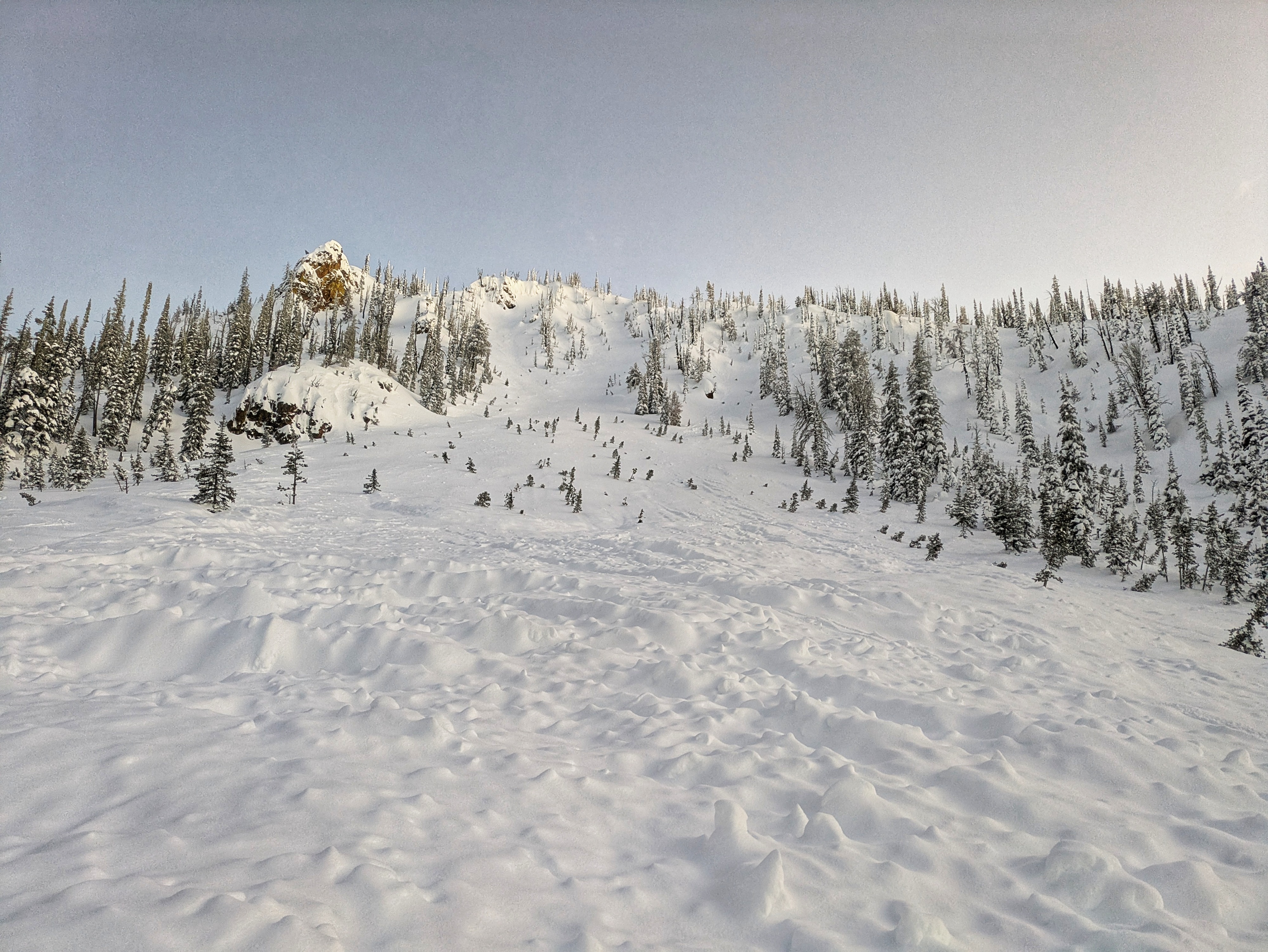
This was a late-day bop to see how the storm had shaken out up north. I observed an impressive amount of large slab avalanches that released within the past 24 hours (see avalanche entries) at middle and upper elevations. Probably as much D2+ activity as I've seen on Copper in a single cycle. D1-1.5 wet loose avalanches were actively releasing in the afternoon at middle (observed) and presumably lower (not observed) elevations. No collapsing. A bit of localized cracking in wind slabs along ridgetops.
Weather
- Rain Elevation
- 7500
Snowpack
Heavy rain fell here up to at least 7300', likely late in the day on Sunday. Lighter rain had fallen up to 7500' or a bit higher. Above the rain line I found 45-60+cm of very dense snow. This snow had been actively transported by winds during the storm and it was tightly packed and internally bonding. It would take some serious winds (prob high gusting extreme) to put this snow back into motion. Crusts from rain were refreezing on my exit from the field after sunset, but there was a ton of warm, gooey snow underneath still.
Avalanche
- Size
- D2
- Count
- 9
- Aspect
- NE
- Trigger
- NC
- Elevation
- 8900 ft
At highway level D1-1.5 wet loose avalanches were actively happening this afternoon. Many storm slabs had already released at this elevation, likely during intense rain on snow on Sunday night, producing lots of D1.5 piles of heavy/wet debris. Highway level is roughly the boundary between lower and middle elevation in this zone, I suspect there was a lot of low elevation activity as well but I did not observe it. As I climbed the slides I encountered became larger. Most steep avalanche terrain had produced a large slab avalanche. Some failed within the new snow, some failed at the new old interface. I wouldn't be surprised if the largest slides had picked off a mid-february interface to fail on (would prob be 2/14), but I didn't observe this directly and subsequent snowfall and wind had masked the evidence. I reported the slides I could easily see, but as I glassed around from on high I could see signs of many other large avalanches. This area experienced a widespread natural avalanche cycle with many, many slides size D2 and larger.