

Quick report
There's a world of difference from the trailhead to the top of the ridge. In the parking lot, its mainly dirt and asphalt. However, as you ride past about 4500ft, the snowpack becomes noticably deeper. Even still, it's not the best year and conditions are thin. Open creeks, poorly frozen lakes, downed logs, and TONS of christmas trees make riding heads up.
It was easy to find weak snow grains in the snowpack, but they're all pretty shallow and the snow above is very light and fluffy. At the moment these persistent weak grains don't seem to be causing an issue. But, that's why we were out there. We wanted to track 'em.
Weather
- Cloud Cover
- overcast
- Wind Loading
- previous
- Rain Elevation
- 1000
- Recent Snowfall
- 2
- Snow Avail For Transport
- moderate amounts
Cold, gray sky, wintery day. Winds were generally light to calm out of the SW. A few snow flurries, but not even enough to add a new dusting.
Snowpack
Lower elevations: There's about 3-6 inches of recent snow. In some places, this is on bare ground. Where there is snow, it's thin! Snow depths ranged from 1-3 feet.
Above about 4500ft: We found 8-10 inches of recent snow over the last crust (2/7).
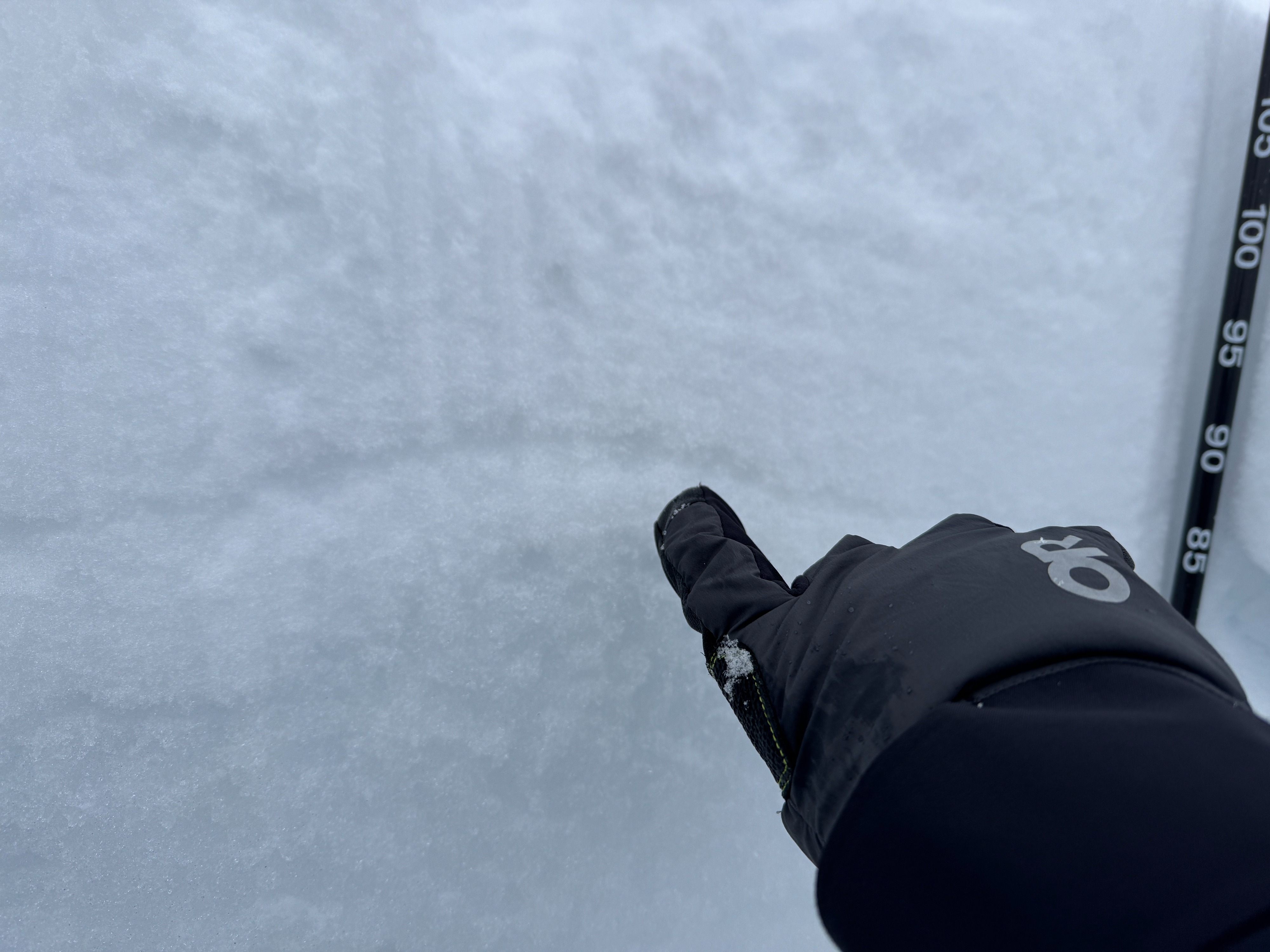
Northerlies: We repeatedly found small 3-5mm surface hoar and facets (1-2mm) at the 2/13 interface. Often, a clean pit wall would show the dreaded 'dull gray line' indicative of buried surface hoar. The only snowpack test that highlighted these grains was a shovel tilt test. Compression and Extended Column Tests didn't yield any notable results. This is probably due to the very soft, fluffy snow above. At the moment the slab, just doesn't seem stiff enough to propagate a failure.
The 2/7 crust was burly and slick! You could feel it nearly everywhere. Just above this prominent layer we found 1-2mm facets in every snow profile and handpit (N, NE, E, SE, W, NW, 4000-5000ft). We weren't able to dig on a southerly aspect. Similar to the 2/13 layer, test results were unimpressive, but that might just be because the slab-weak layer interaction just isn't quite there. They're certainly weak persistent grains.
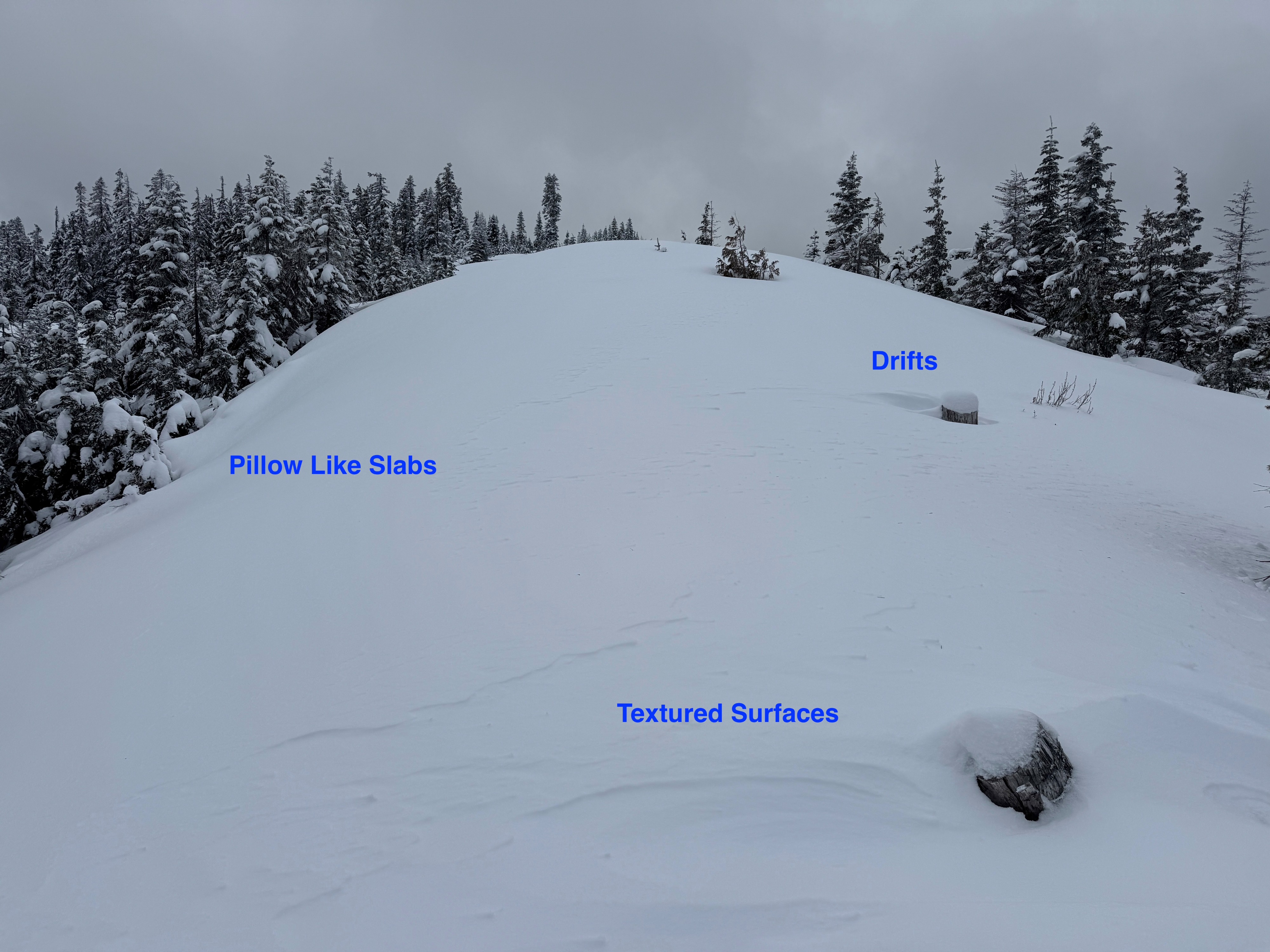
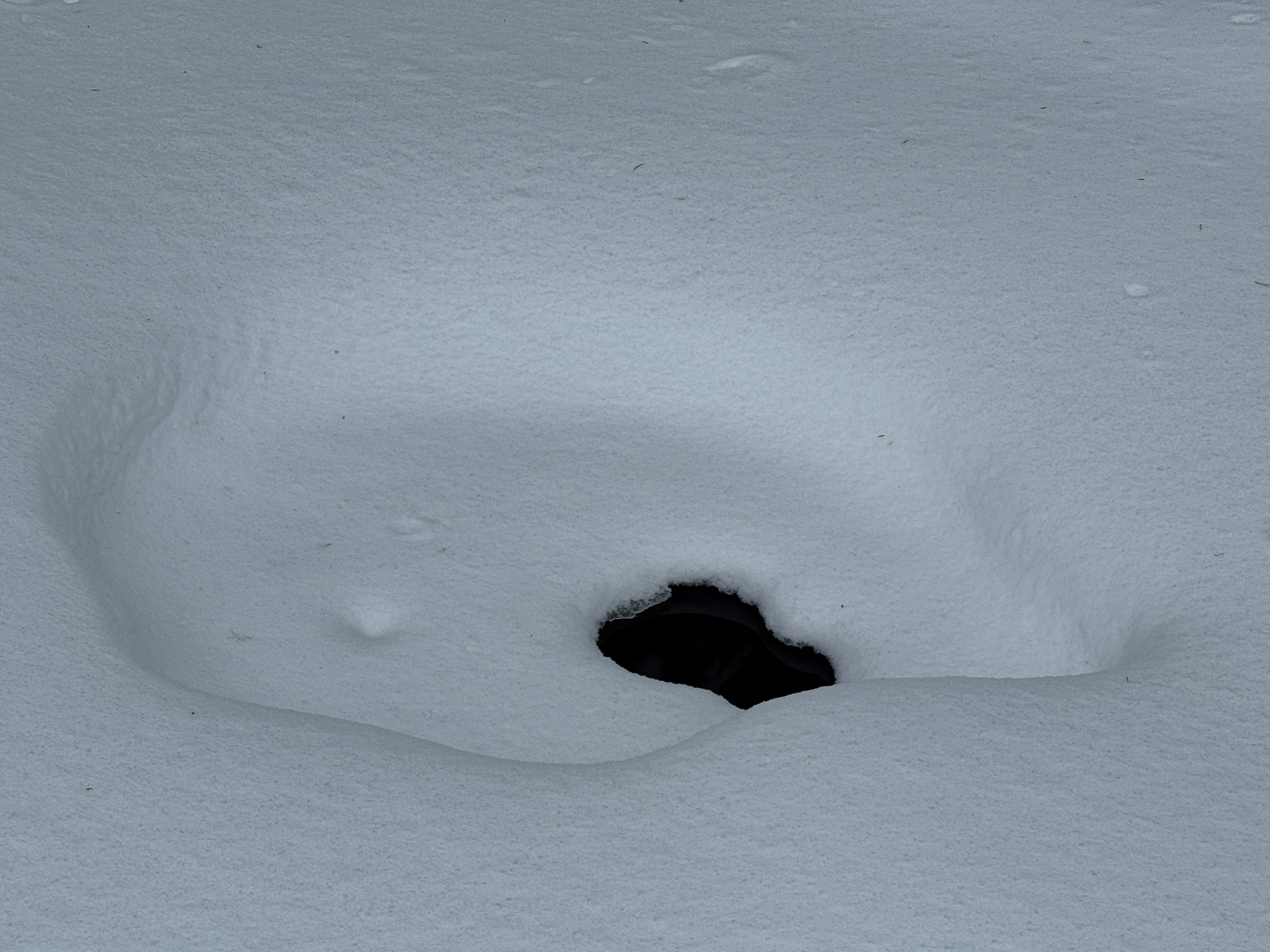
Wind Loading: Along more exposed ridges there was obvious signs of recent wind transport. Textured surfaces and subtle drifts often lead to firmer pillow-like slabs. We jumped on numerous small test slopes and found minimal cracking. Only one up-track test yielded any notable results Maybe if the terrain was higher?
Avalanche
We were able to trigger a few very small loose dry avalanches on very steep slopes. They didn't travel very far.