
Quick report
- Cracking
- isolated
- Collapsing
- specific
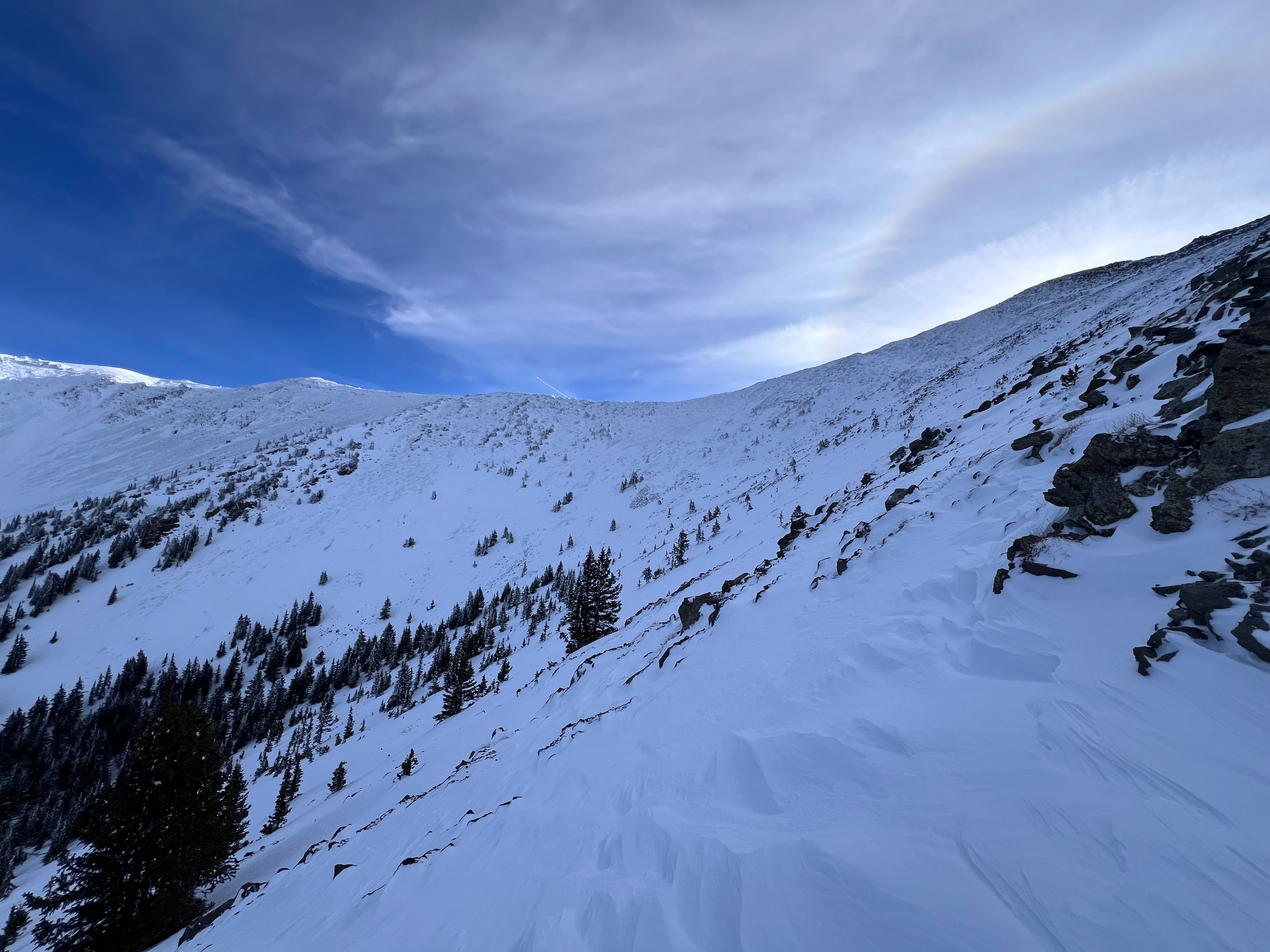
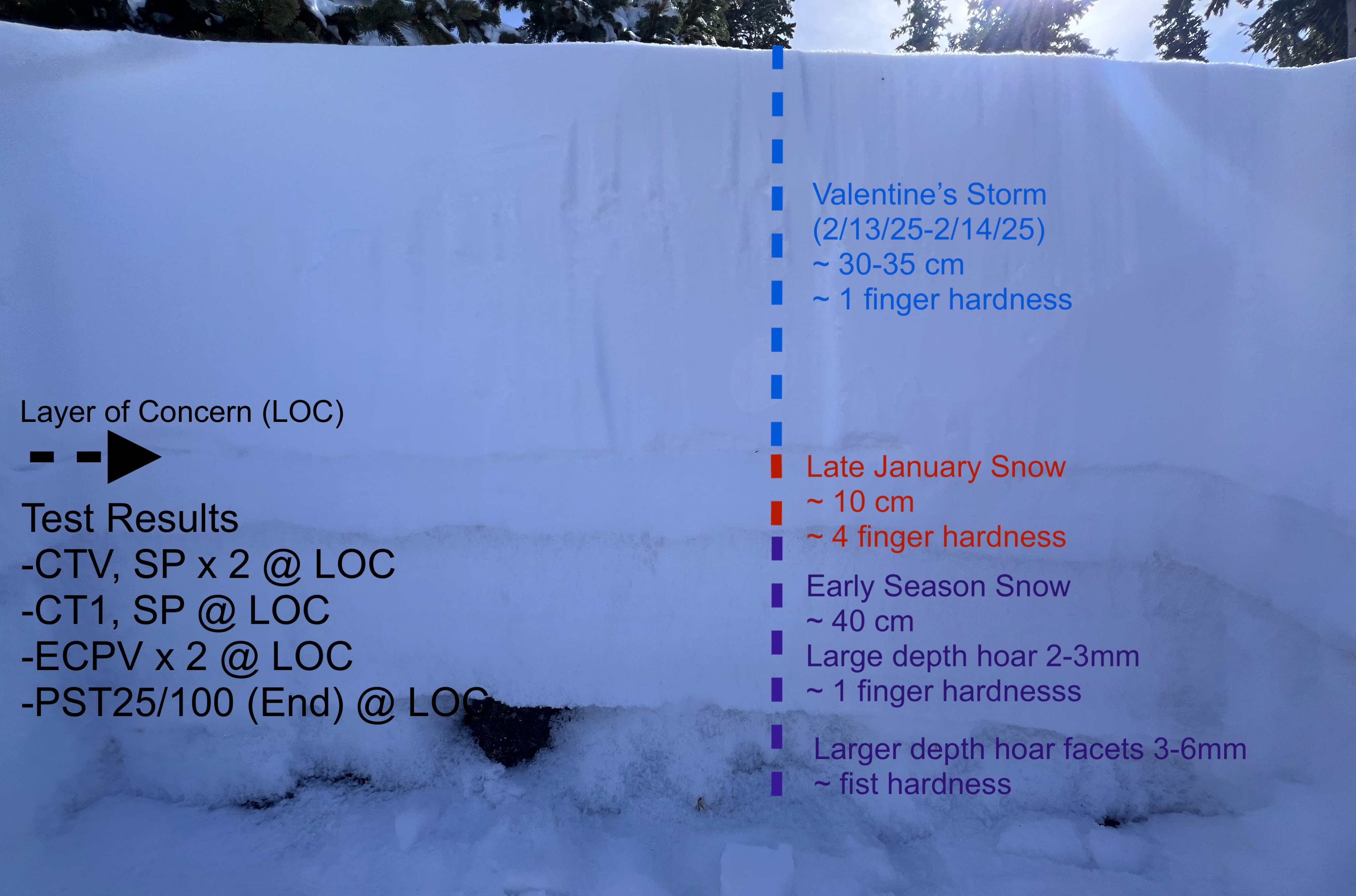
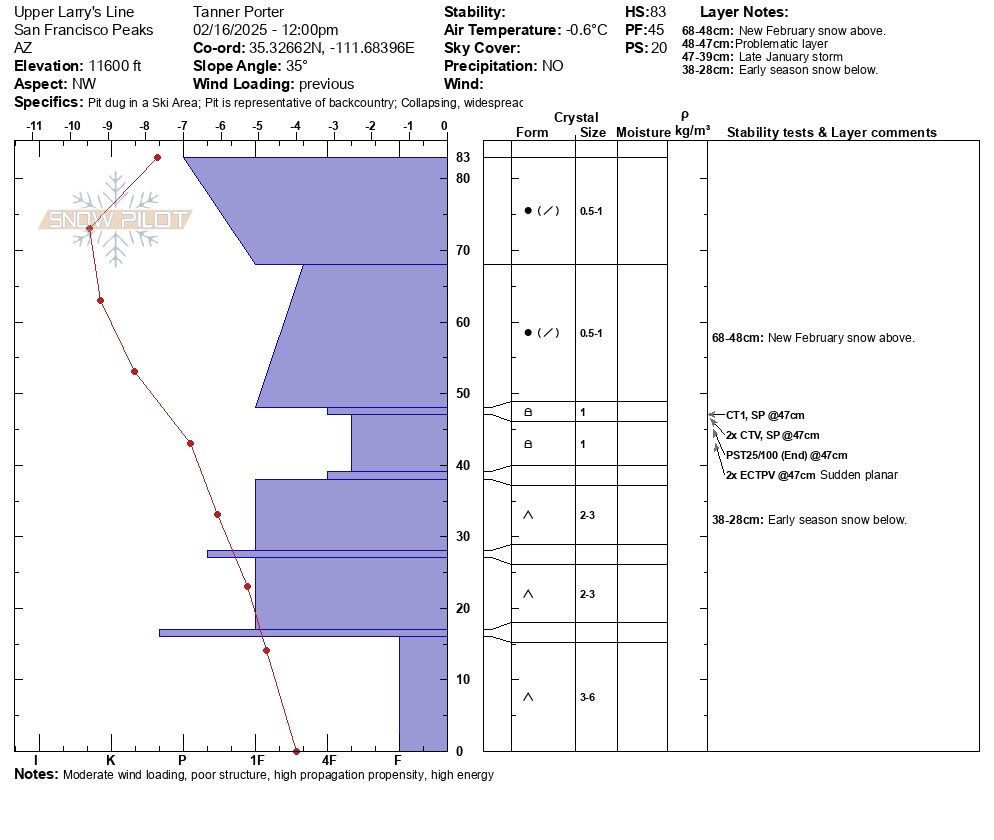
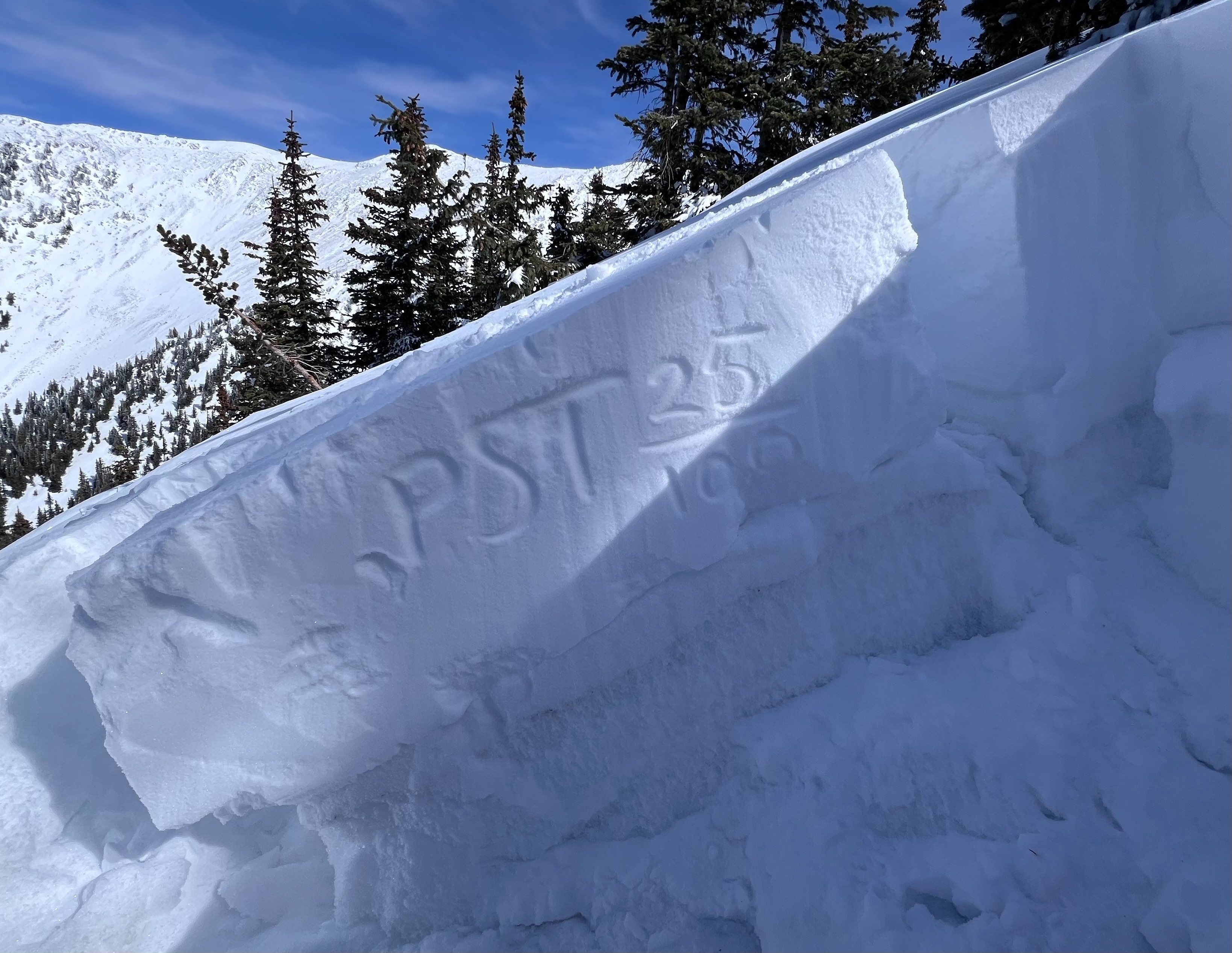
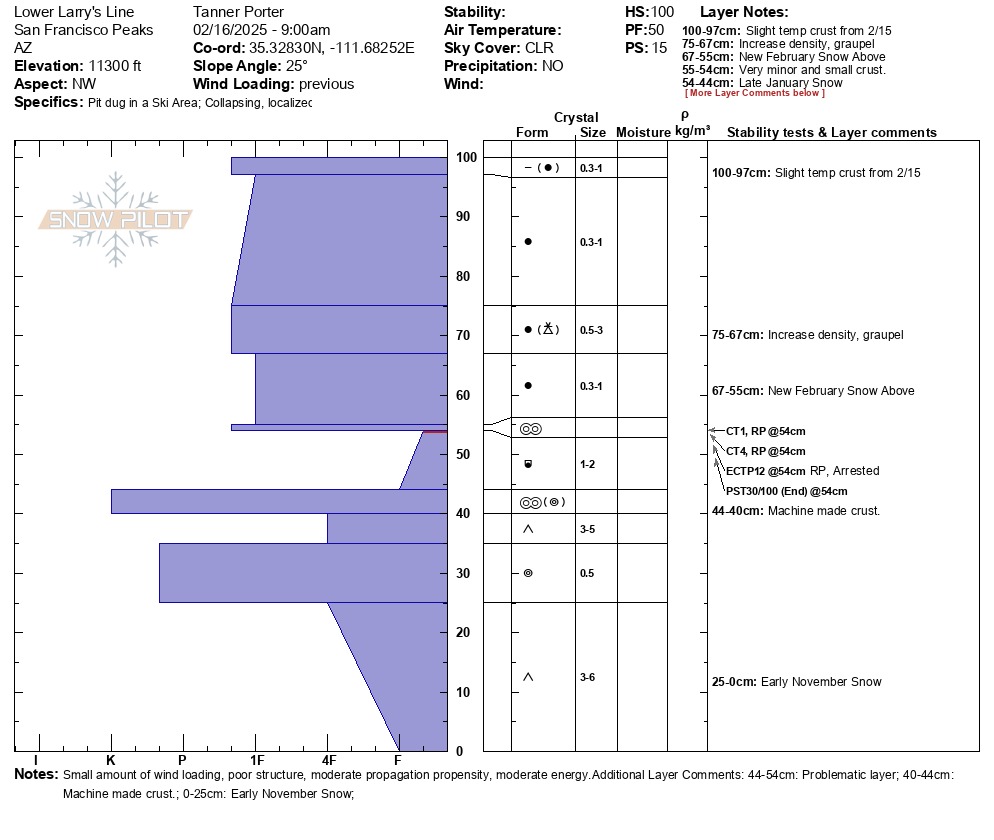
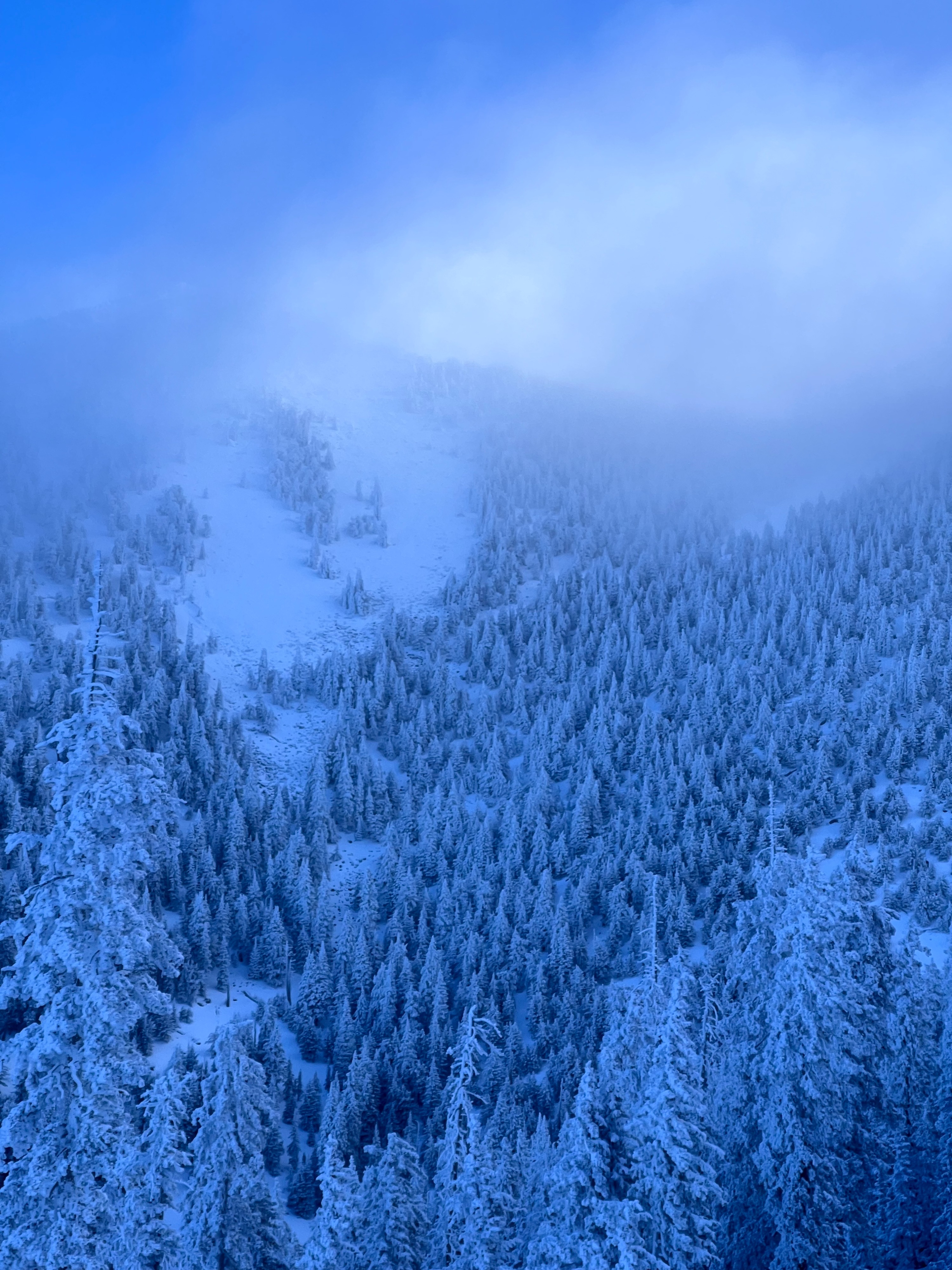
The 2024-2025 winter is off to a slow start. Accessing the Kachina Peaks Wilderness via skis and snowboards is not advised and is hazardous. The last storm, which delivered a total of 18" of snow at 10,800' was followed with significant NNW winds. These winds stripped many slopes, leaving only a few inches of snow behind. Based on our observations, most of these winds were at high velocities, which limited wind-slab formation on leeward slopes, likely sublimating much of the snow that was transported. On protected and less exposed slopes, the 18" of snow remained but is settling fast. As far as the snowpack and avalanche danger, based on our minimal observations and data points, in areas that previously had snow, expect avalanche danger to be elevated. The January-February snow interface was highly reactive on Saturday (2/16/15) with all test results failing on that interface. In addition to test results, we experienced numerous large collapses (whumpfs) within this interface. All this adds to dangerous avalanche conditions on higher elevation slopes that harbor the snow that fell in late January and was buried by the recent Valentine's Day Storm system.
Collapsing was widespread, especially later in the day on slopes and areas that held snow from the late January storm and new snow interface. Overall, the snowpack structure was poor, the propagation propensity was moderate to high, and the energy was moderate to high.Weather
- Cloud Cover
- clear
- Wind Loading
- light
- Snow Avail For Transport
- moderate amounts
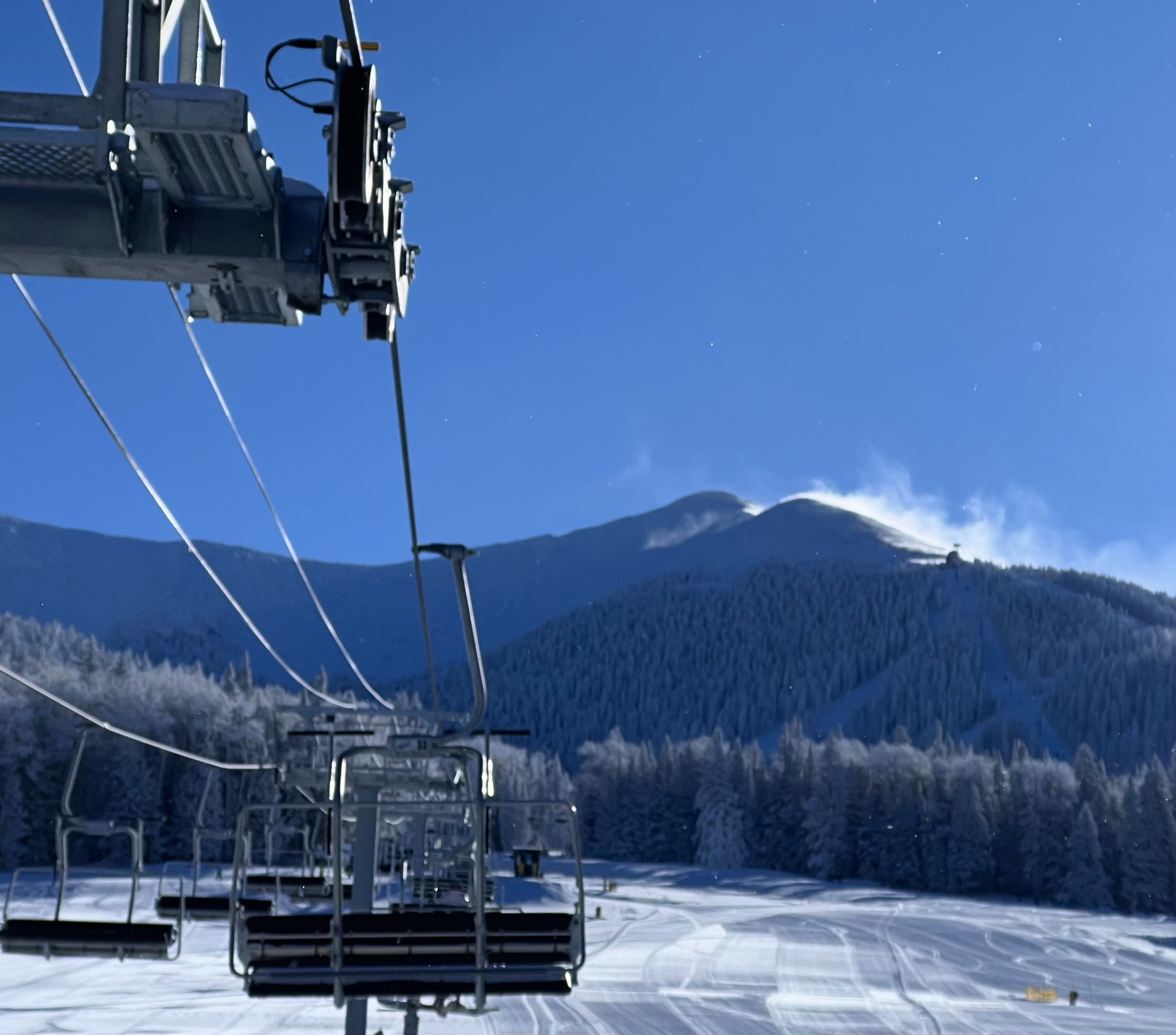
Light winds, clear day, following ~18" of snow accumulation at 10,500' 2/13-14. New snow depth was variable, with many slopes being stripped by the wind.
Snowpack
The first pit was dug at ~11,300 above Spur catwalk. There was a layer of machine-made snow midpack that is not representative of all areas. However, all test failures occurred above on the February-January snow interface. The second pit was dug higher (~11,700) and did not have machine-made snow. We expect these test results to be generalizable to zones with snow before the February storm that are near and above treeline.