
Quick report
- Collapsing
- specific
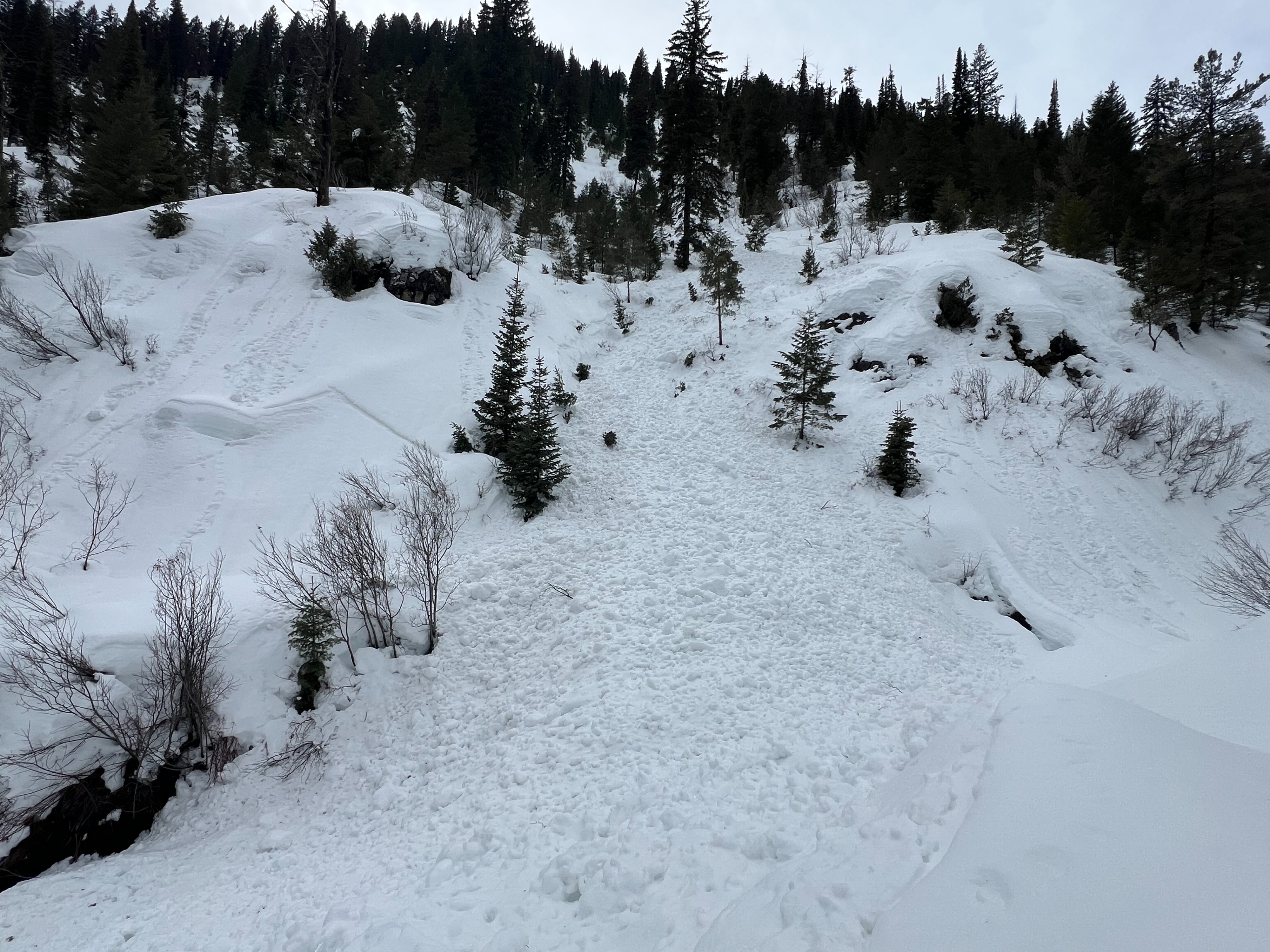
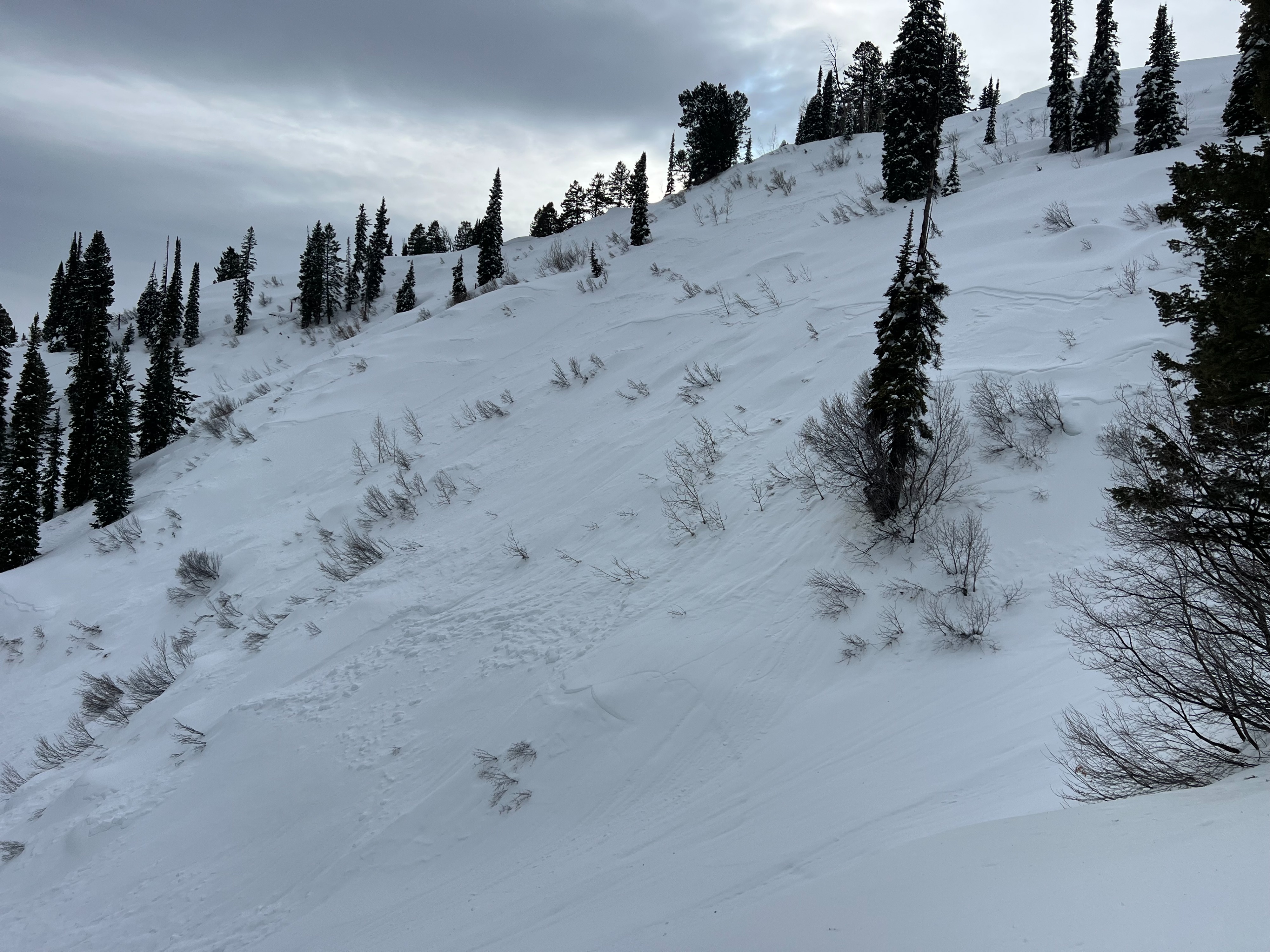
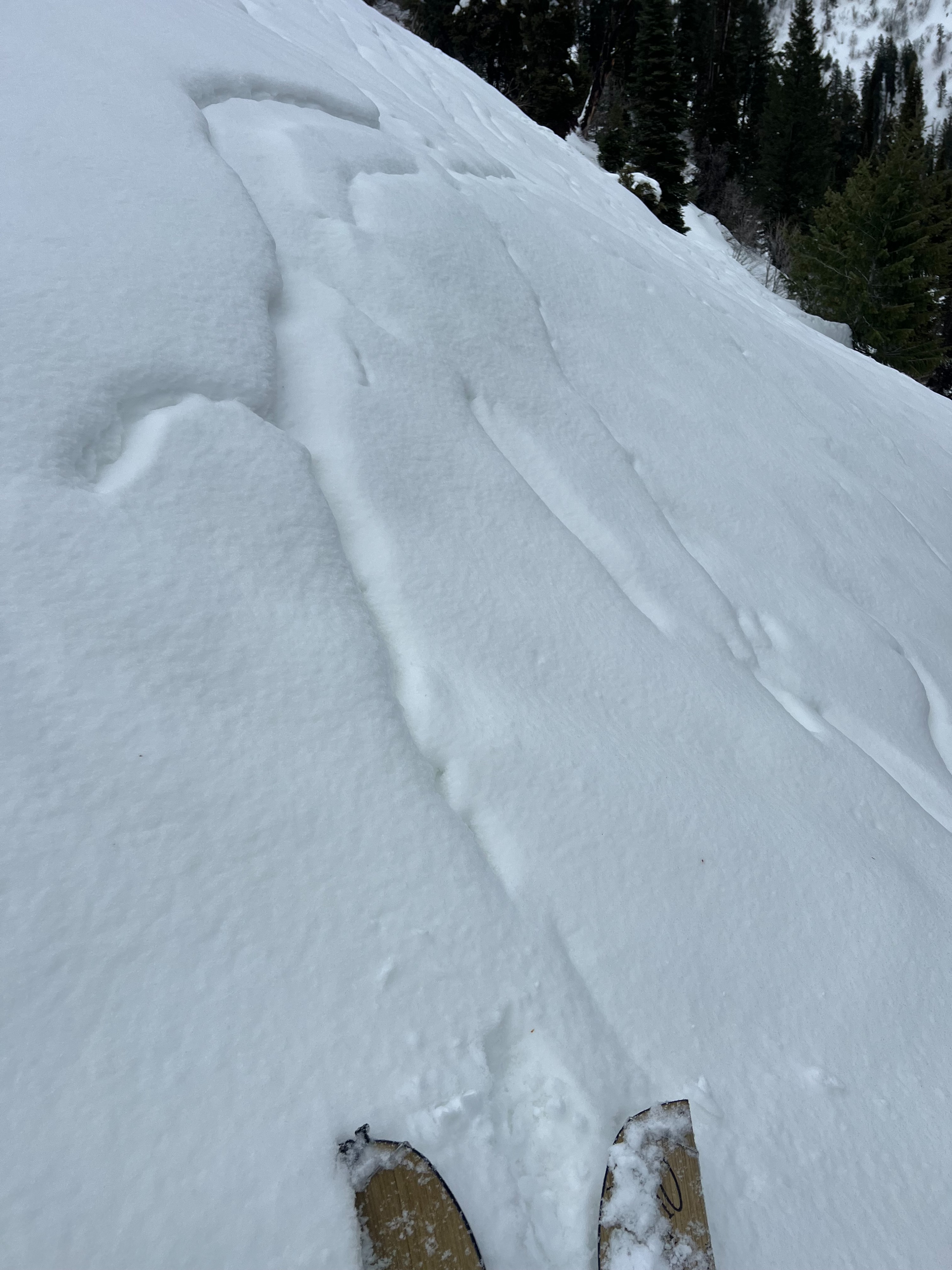
Found red flag avalanche conditions with fairly widespread natural avalanches within the last 48 hours. I experienced a couple of collapses from 7,000-8,000'. No cracking surfaces as 24 hour snow came in very dense and wet. Dry natural D1 avalanches yesterday were shallow with large propagation cross-slope. Most avalanches failed on midstorm density breaks (graupel) less than 8" deep. Steeper slopes over 35 degrees produced deeper D1.5 slabs around 12" failing on the new to old snow interface. Widespread wet loose avalanches were observed in the lower elevations and likely occured during peak raining in last 24 hours. Wet loose D2 avalanches were observed in creeks and funnels where debris piled up enough to bury a person.
A mixed bag of conditions exists out there. We'll start with lower elevations. I found rain with full saturation through the majority of snowpack up to around 7,000. This snow is weak and will need a solid refreeze until it fully stabilizes. Warm temperatures tonight into tomorrow won't do it and wet loose avalanches will remain easy to trigger. Around 7,500' the snowpack became drier with only the top couple inches saturated from sleet/snow mix. This saturated surface continued to 8500 before turning around due to time constraints.
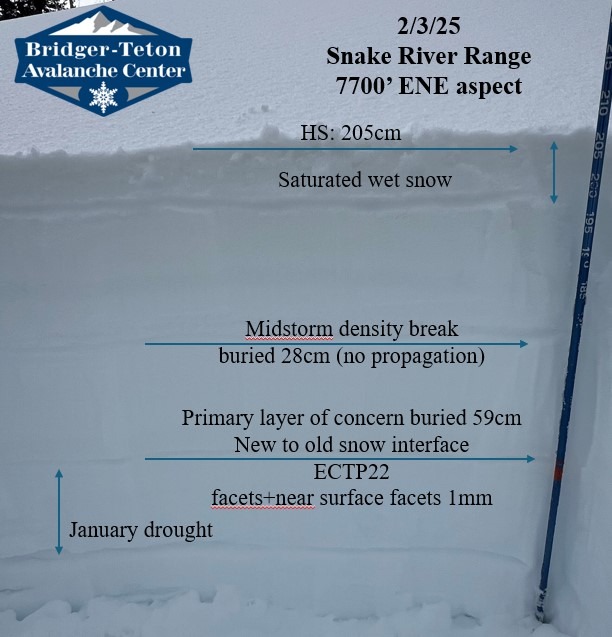
18-24" of snow exists above 7500' that has fallen between Feb 1-3 that resembles more maritime snow quality (dense and moist). There was no propagation in any of the midstorm density breaks (including graupel). Below the recent snow lies two main layers of concern formed during dry periods mid January. The primary layer of concern is the the new to old snow interface buried Jan 31 which was the only layer to produce unstable test results (ECTP22 down 60cm on 1mm near-surface facets). This new to old snow interface is comprised of persistent grains which will last beyond the initial storm instability. This layer is buried deep enough now that there could be no obvious signs of instability before triggering a large avalanche. Keep this weak layer in mind as you enter the mountains.
Avalanche
- Size
- D2 R1
- Type
- WL
- Count
- 2
- Aspect
- E
- Trigger
- N
- Elevation
- 6503 ft
Numerous others observed driving the Snake River Canyon on the opposite side of the river from 6,000-7,000 on all aspects due to rain on snow event 2/2 -2/3.