
Quick report
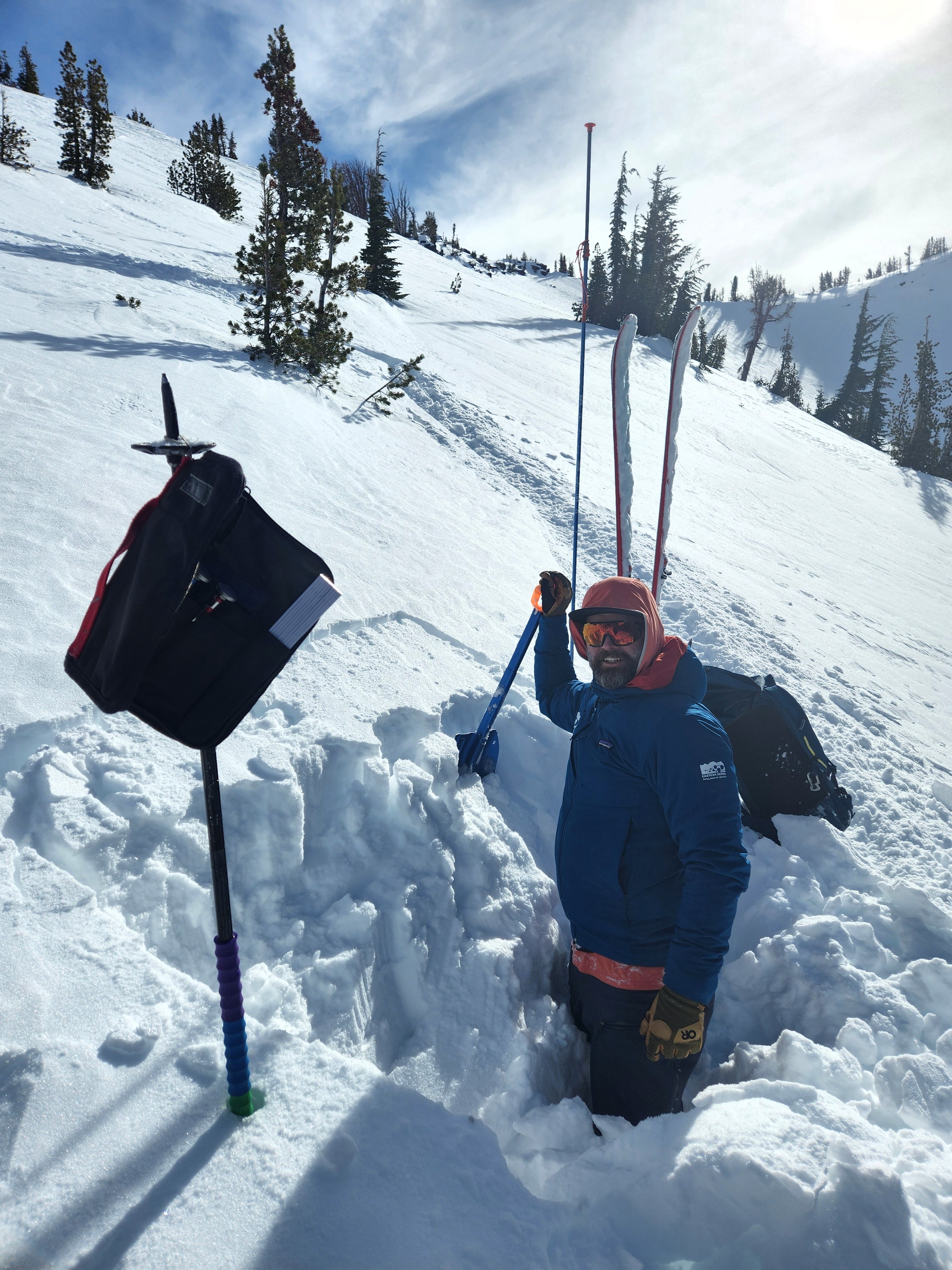
We toured around the Red Cone area to test the persistent weak layers in the snowpack before the incoming storms this weekend.
- The depth hoar at the base of the snowpack is the most concerning layer.
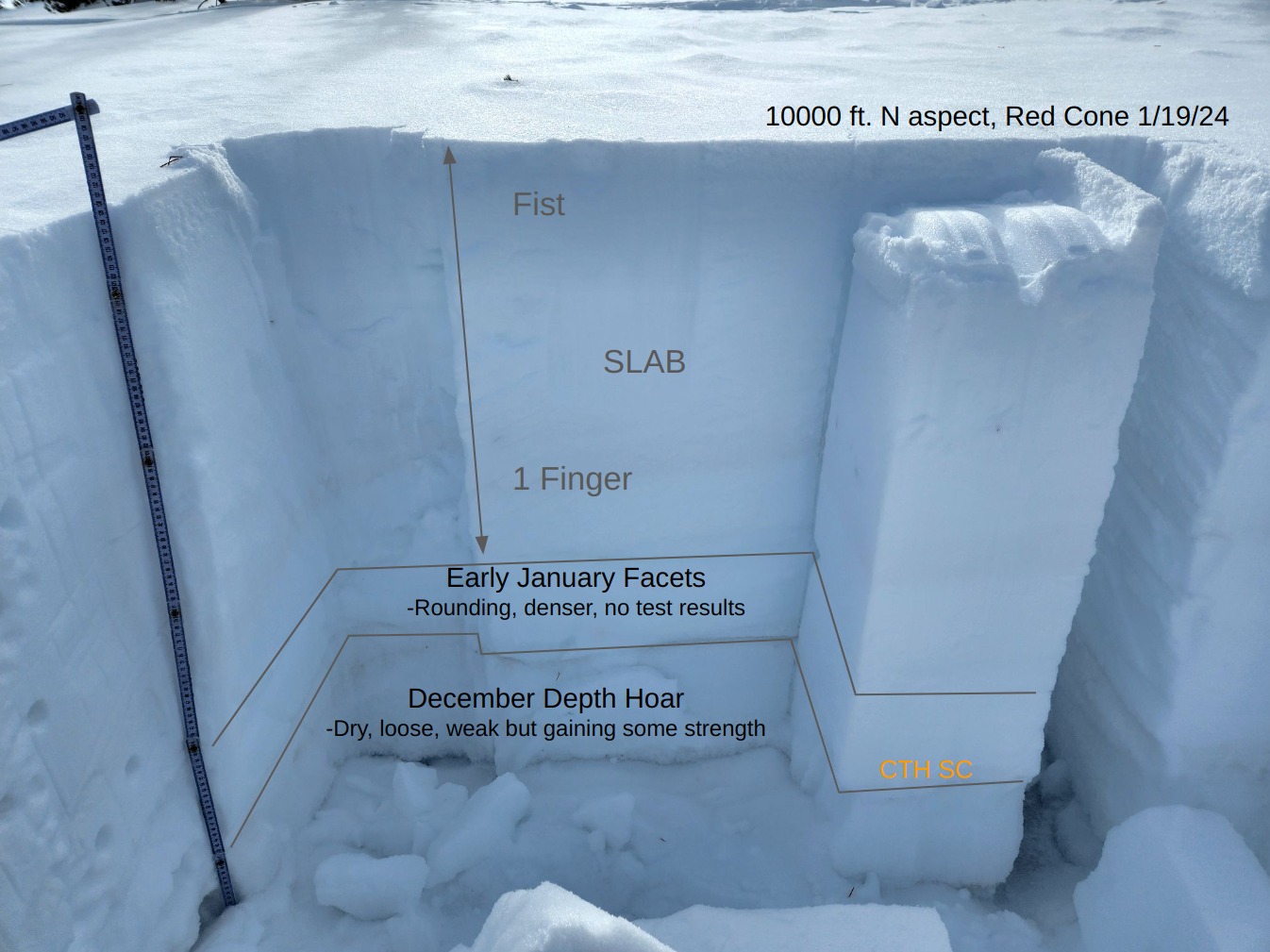
- We found depth hoar and facets under a stiff slab mid-slope on a west aspect near treeling where we got propagation in our snowpack tests in the depth hoar.
- It was warm again today, but the snow on northerly slopes stayed dry. There was almost no wind.
While the persistent weak layers aren't doing much at the moment, small storms have produced natural avalanches on those layers throughout the first half of the month. The storms this weekend are expected to be the biggest yet. We're concerned about new loading waking up these pesky grains in the snowpack.
Weather
- Air Temp
- Above Freezing
- Cloud Cover
- scattered
- Wind Loading
- none
- Snow Avail For Transport
- small smounts
Periods of mostly cloudy skies throughout the day. Very calm with no increase in winds while we were out until mid-afternoon.
Snowpack
The snow surface below treeline did warm and moisten yesterday and south and east aspects were crusty. The snow on open northerly slopes stayed dry. There were a few signs of small rollerballs from yesterday on northerly slopes under tree cover and near rocks. South and east-facing slopes warmed again today by 11am, but crusted over by 2pm.
We identified the early January facet layer, and the December depth hoar everywhere we looked into the snowpack. However, the Facet layer, buried on January 2nd, was rounding, denser, and showed no test results. The December depth hoar near the ground is currently the primary layer of concern in this area. We found them buried on a north aspect near treeline and got a sudden collapse in our small column test but no propagation. We also found both layers under a stiff slab mid-slope on a west aspect near treeline. There we got propagating in an extended column test on the depth hoar. We got no direct feedback from the snowpack today - no collapses, cracking, or new avalanches.