
Quick report
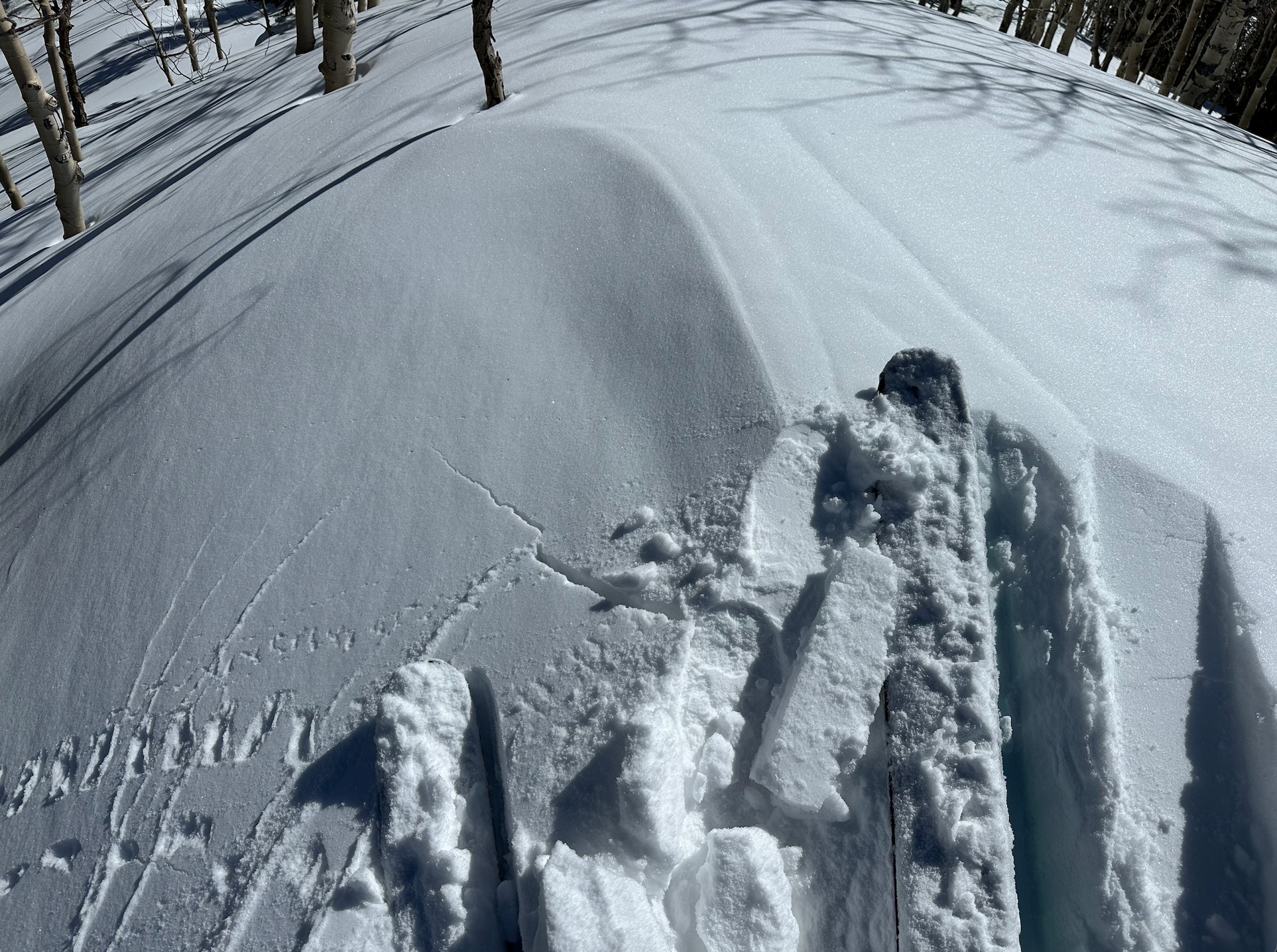
- Cracking
- specific
- Collapsing
- isolated
We traveled through some of the shallowest snowpack in the CBAC forecast area and found less concern for avalanches below treeline compared to most areas in the Southeast Mountains. As soon as snow depths reached about 120cm, the snowpack quickly went from less concerning to the most concerning. Snow depths in the 120 to 150 cm range seem to be a sweet spot for likely human-triggered avalanches. The February slab hovers above large surface hoar at optimal depths for human-triggering and basal depth hoar can't be trusted. We found some surprisingly nice riding conditions but avoided steep terrain.
We experienced a single collapse near treeline on northeast-facing terrain that likely collapsed the surface hoar at the early February interface about 60cm down. Frequent small cracks around skis on the 2/25 interface where graupel, at the base of the recent storm snow, fell above small grained facets...only down 6-ish inches in sheltered areas.Weather
- Cloud Cover
- few
- Wind Loading
- previous
- Snow Avail For Transport
- small smounts
Warm day overall with light winds and moderate gusts near treeline.
Snowpack
We chose to travel through this area looking for the shallowest snowpack in the Southeast Mountains forecast zone. Below treeline the height of snow ranged from 80 to 115cm with little slab formation; a small amount of 1-finger hard snow is present in the January Slab but did not produce any signs of instability, and produced slab fractures in stability tests. The snowpack below treeline in this shallow area is mostly faceted throughout but has just enough support for skinning and nice skiing conditions. At the upper reaches of below treeline around 10,500 feet, the slab gained enough strength to propagate a crack and produce slab avalanches at the early January interface.
Near treeline snowpack depths increased to about 130cm and genuine avalanche problems appeared. There is a clear problem in the upper snowpack and on basal facets. We got propagating test results in the upper snowpack in two locations, 2/13 and 2/2. The surface hoar at 2/2 was huge, 1-2cm. We experienced one moderate-sized collapse in this area on the surface hoar.
This area is not representative of the Southeast Mountains in general, but near treeline, it had some of the worst-looking structures I have seen this season. Slabs above 10,500 are at optimal depths and hardness for triggering in the upper snowpack and basal weak layers are a major concern for failure particularly with an incoming storm.