
Quick report
We took advantage of the great weather to get further into the mountains and reset our knowledge of the snowpack after the recent warm storms, inversions, and sunshine. We found more good views than good skiing. Evidence of warmer temperatures at higher elevations was widespread. No trees had snow left on their branches up to ridgelines, and rollerballs peppered all aspects and elevations. The softest snow surfaces were in the valleys, where temperatures stayed cold.
At mid and upper elevations, variable surfaces of all kinds existed, from breakable freezing rain crust at mid-elevations to not quite supportable wind board at upper elevations. We experienced minimal signs of instability and other than one large avalanche, most natural avalanches were small. Even in large, complex alpine terrain, there was a lack of large crowns.
Weather
- Cloud Cover
- clear
- Wind Loading
- previous
- Snow Avail For Transport
- none
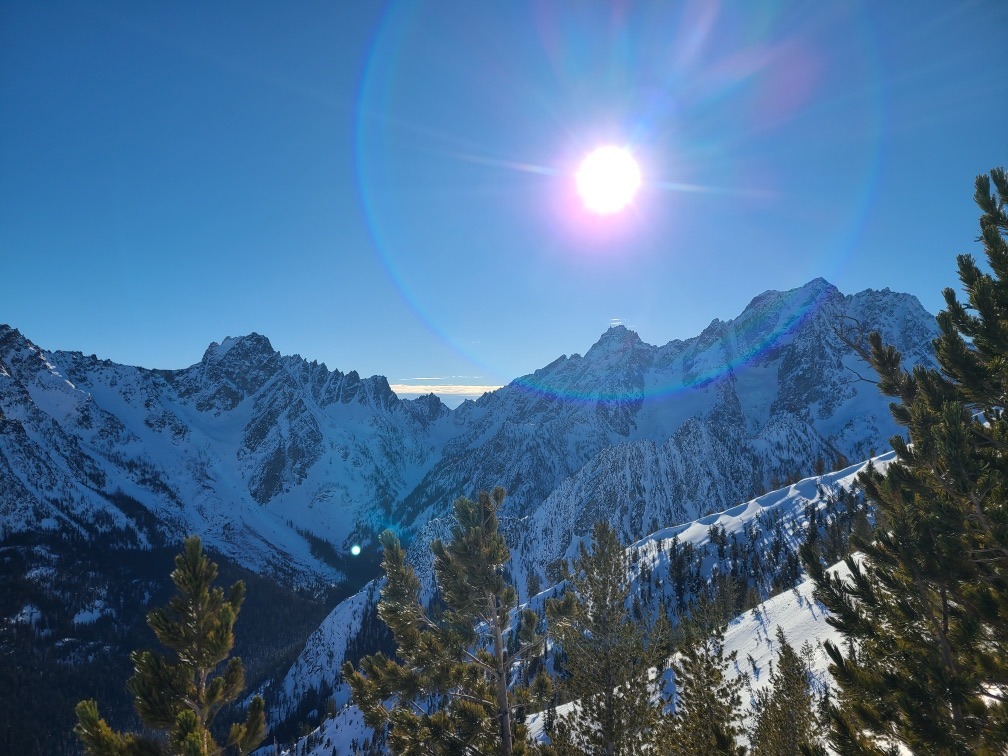
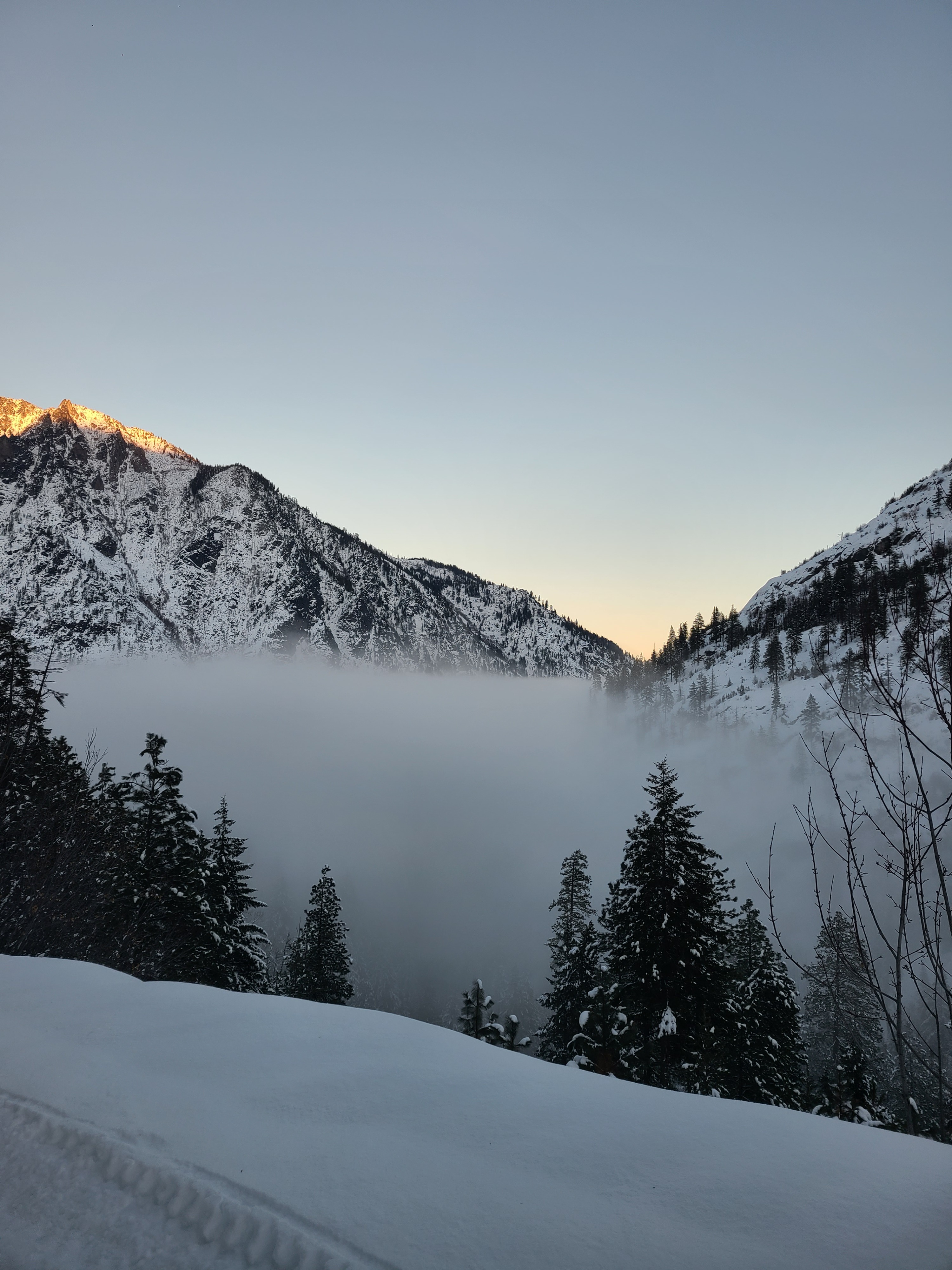
It was a beautiful, clear day in the mountains. We experienced moderate winds in the morning, but they decreased throughout the day, and we had a comfortable ridgeline transition in sunshine and calm winds at 7000ft. The inversion temperatures were notable at around 4600ft, where temperatures were much warmer than in the valley. In the late afternoon, the inversion clouds once again pooled into the lower elevation valley, and we dropped back into the fog at 3000ft in Icicle Creek at 4pm.
Snowpack
The snowpack still seems thin for January in the Icicle Creek area.
We found 70-80cm of snow below 4000ft. These lower elevations stayed cold beneath the inversion, and the surface is a very thin zipper crust with occasional surface hoar. The top 30cm of snow is soft and beginning to weaken and facet.
Starting at 4600ft, a breakable freezing rain crust is topping the recent soft snow below. The snow surfaces were extremely variable. It seems at more sheltered locations where the surface was soft, but textured, this crust was dappled and easy to travel through. However, where it fell on stiff, smooth, wind-pressed surfaces, it formed a more uniform crust that made travel challenging. This crust existed until about 6400ft. Above that, snow surfaces were still variable, just due to wind instead of freezing rain. A stout, mostly supportable wind crust from 5-20cm thick existed on the surface up to the ridge at 7000ft.
We dug a snow profile at 6000ft and found just 130cm of snow. The surface was a 0.5cm thick freezing rain crust over 20cm of recent snow. At this interface, I identified some small, faceted grains that produced sudden planar results in small column tests (CT23 SP). An Extended Column Test produced non-propagating results on this layer (ECTN 22). Below the recent snow, the midpack is primarily consolidated, small rounded grains. However, I did identify another layer of faceted snow down 40cm that produced no results in stability tests. The Solstice Crust is buried 70cm deep and presents as a series of crusts 15cm thick. Below the Solstice Crust is a mixture of faceted grains and melt forms of variable hardness.
We poked out onto a south face at 7000ft. The surface snow was becoming moist at 2 pm, and temperatures seemed just cool enough to prevent the snow from becoming wet and punchy.
Avalanche
- Size
- D2
- Aspect
- NW
- Trigger
- N
- Elevation
- 6000 ft
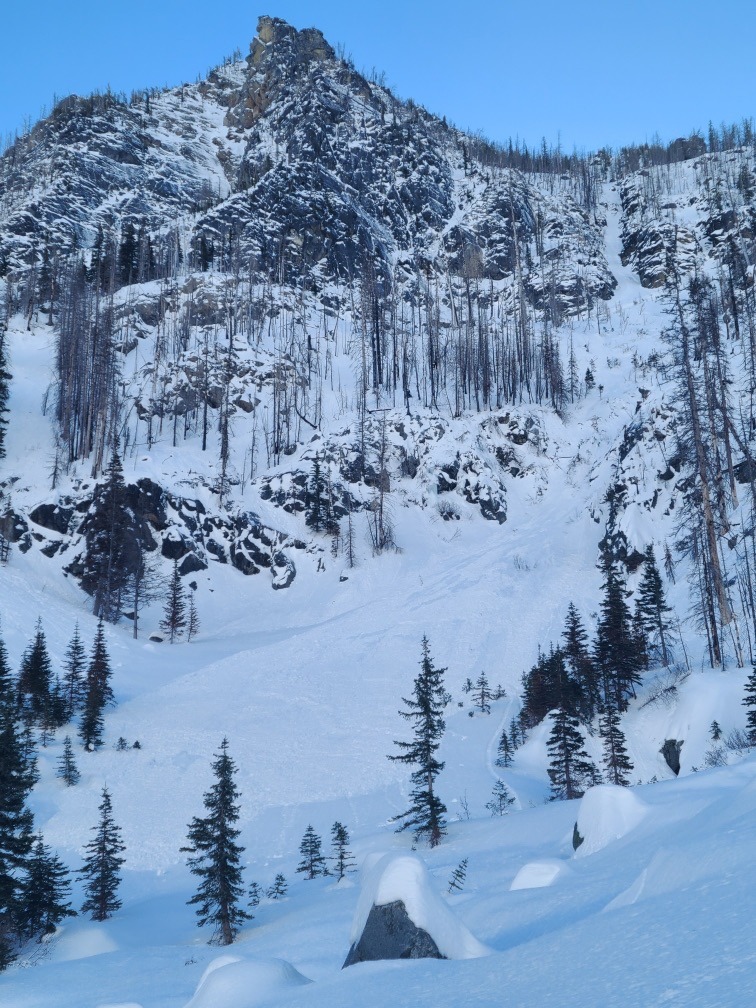
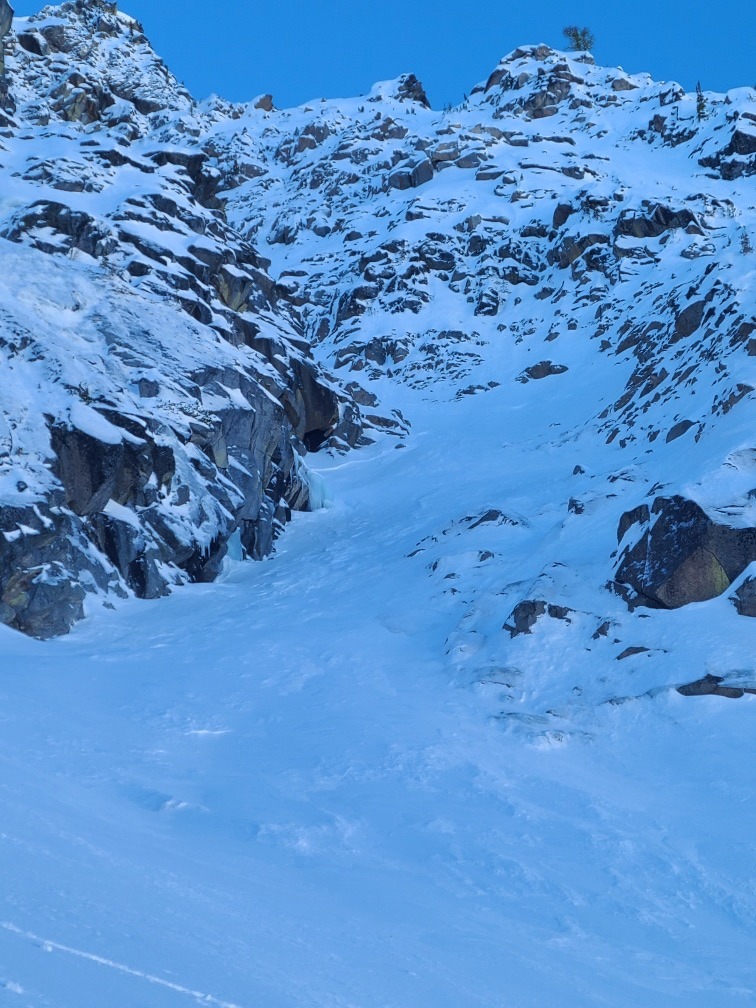
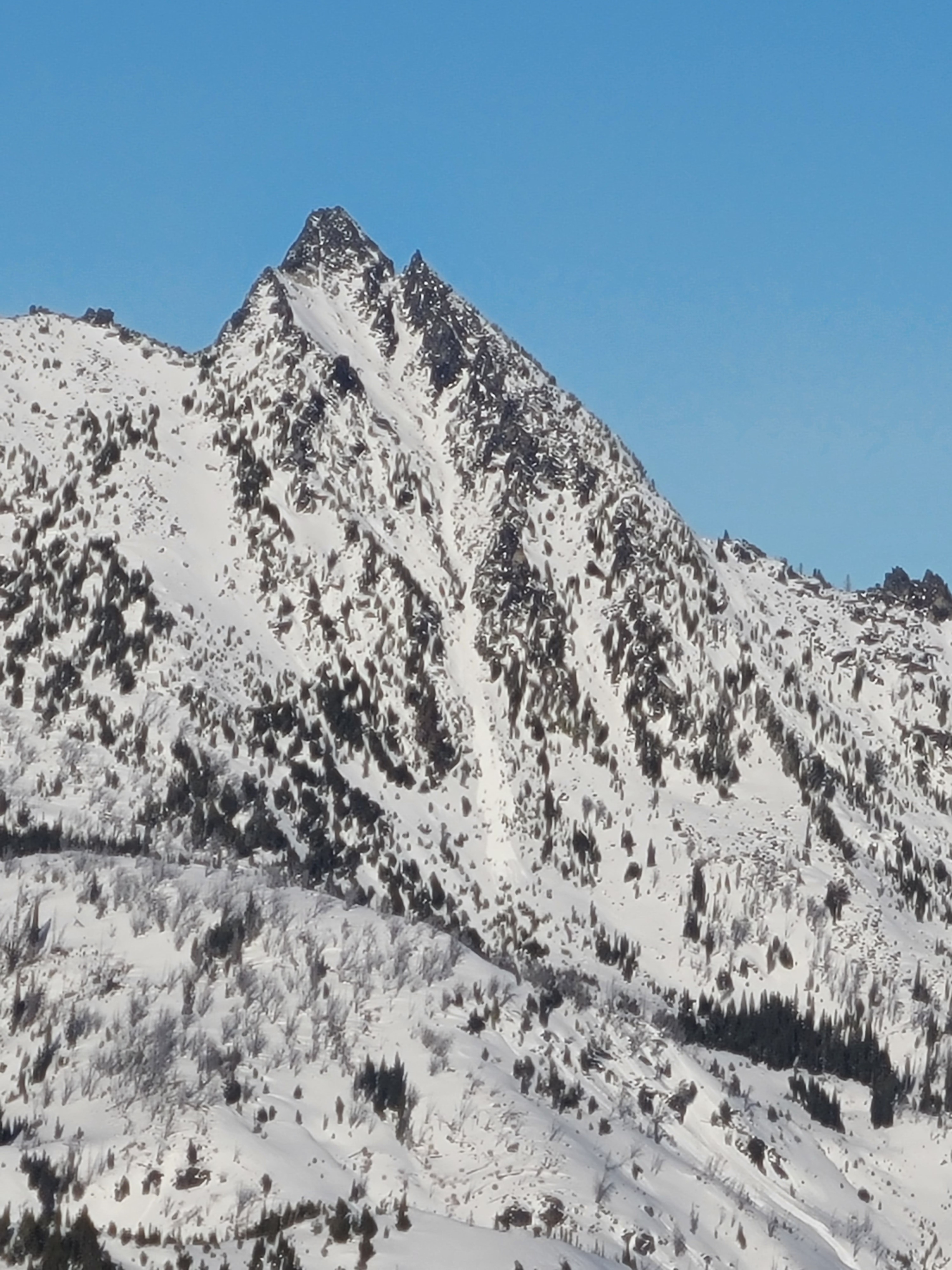
There were wide spread rollerballs and wet loose avalanches on all aspects due to the recent sun and warm temperatures. A few small crowns were visible just beneath cliff bands as well. We expect these likely ran during the weekend storm. More notable was a larger avalanche that appeared more recent, maybe 24-48hrs old. It ran out of steep, cliffy terrain and may have been a slab avalanche triggered by snow shedding off the cliffs above. We could not identify a prominent crown, but the debris had the look of a soft slab, not a wet loose avalanche.