
Quick report
- Cracking
- isolated
Despite the limited snow in the parking lot and on the road, we found good riding conditions above 6000 feet, with about 5 inches of low-density new snow on a supportive crust.
Moderate to strong westerly winds were starting to form wind slabs in open areas. We saw only minor cracking in wind-loaded snow, but suspect reactivity only increased after we left.
We found multiple crusts in the upper two feet of the snowpack, plus weak surface hoar and crust-facet layers between 2-3 feet deep.
Snowfall rates increased throughout the day. We drove home around 4pm during periods of heavy snow.
The avalanche hazard felt moderate but was trending towards considerable, especially at the highest elevations.
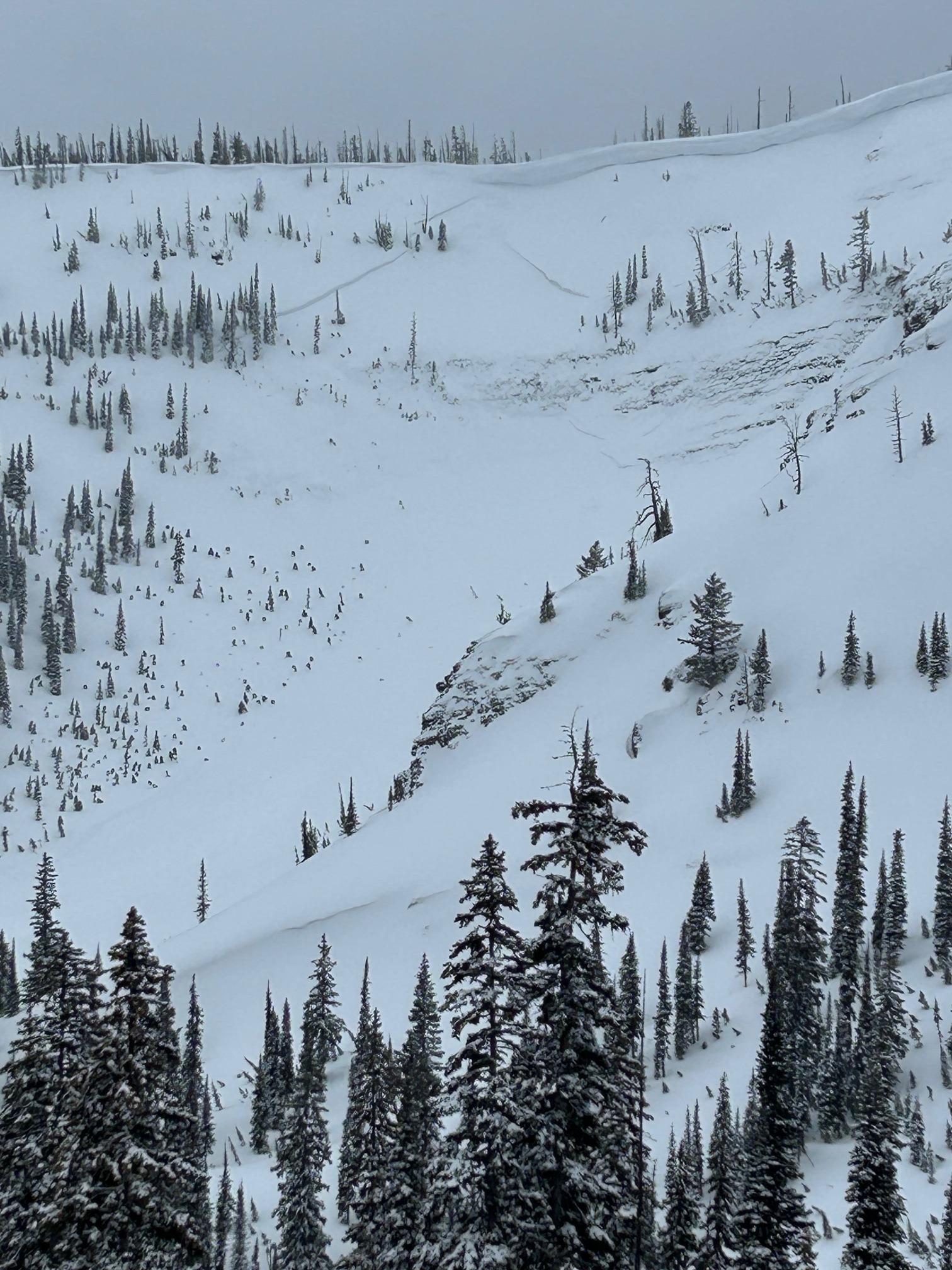
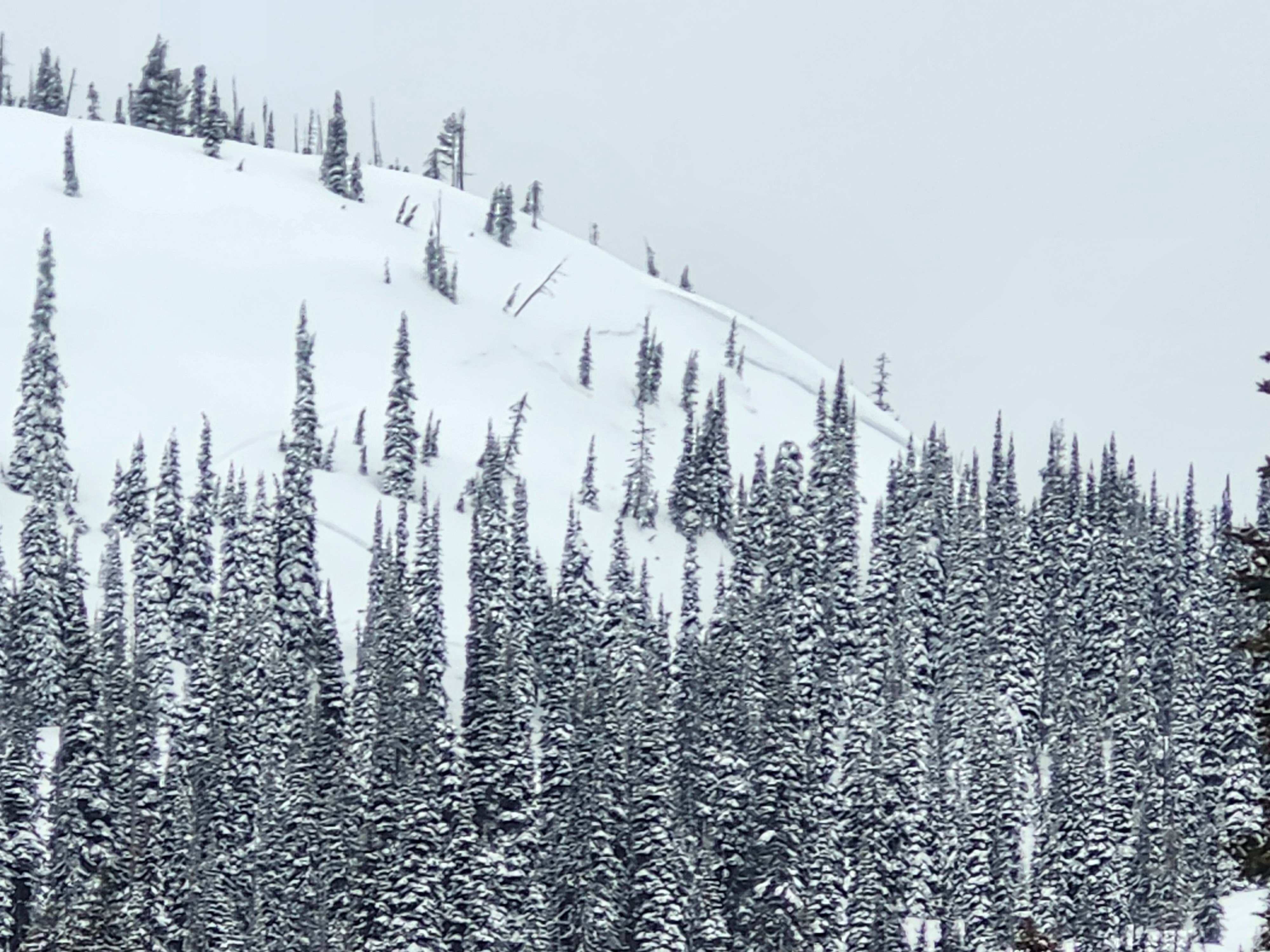
We saw three naturally triggered avalanches, and one snowmobile-triggered avalanche, all approximately 72 hours old. We had localized cracking in isolated wind-loaded areas.Weather
- Air Temp
- Just below
- Cloud Cover
- overcast
- Wind Loading
- moderate
- Rain Elevation
- N/A
- Recent Snowfall
- 15
- Snow Avail For Transport
- moderate amounts
Moderate wind loading only in isolated areas where we travelled, although we suspect intense wind loading at higher elevations. Temperatures were above freezing at the lowest elevations, and we had trouble keeping sleds cool on the road. Snowfall started in the afternoon.
Snowpack
Above 6500 feet there was 3-5 inches (10-15cm) of low-density new snow sitting on a supportive crust.
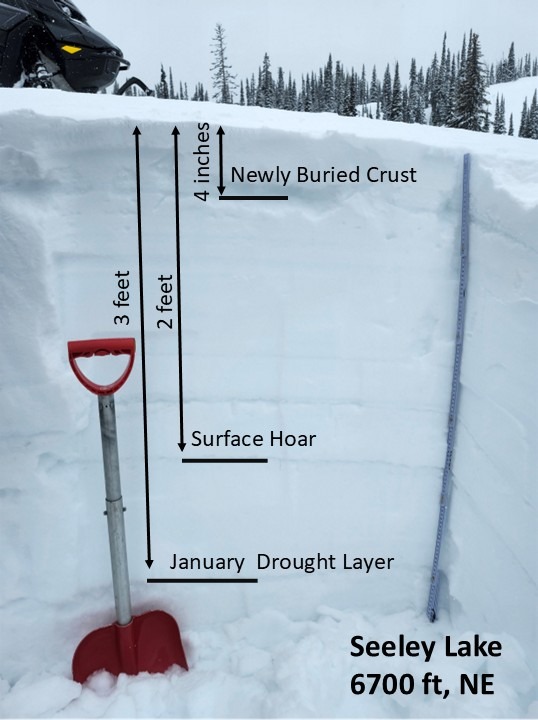
We dug on a north east aspect at 6700 feet, and found three crusts (including the aforementioned one), in the upper two feet of the snowpack. These crusts formed in the past three weeks during above-freezing temperature events. We had a number of non-propagating extended column test failures on these layers.
The February 14th surface hoar was buried 2 and a half feet deep (73 cm), and the January 23 drought layer was a crust-facet layer 3.3 feet deep (99 cm). We did not get reactivity on either of those persistent weak layers in standard snowpack tests. With non-standardized extra-hard taps, we got a non-propagating failure on the surface hoar.
We suspect the snowpack looks similar around the compass at this elevation. The only difference is the Feb. 14 layer may be facets and crusts rather than surface hoar on solar slopes.
Avalanche
- Size
- D1.5 R1
- Type
- HS
- Count
- 4
- Aspect
- NE
- Trigger
- AM
- Elevation
- 7100 ft
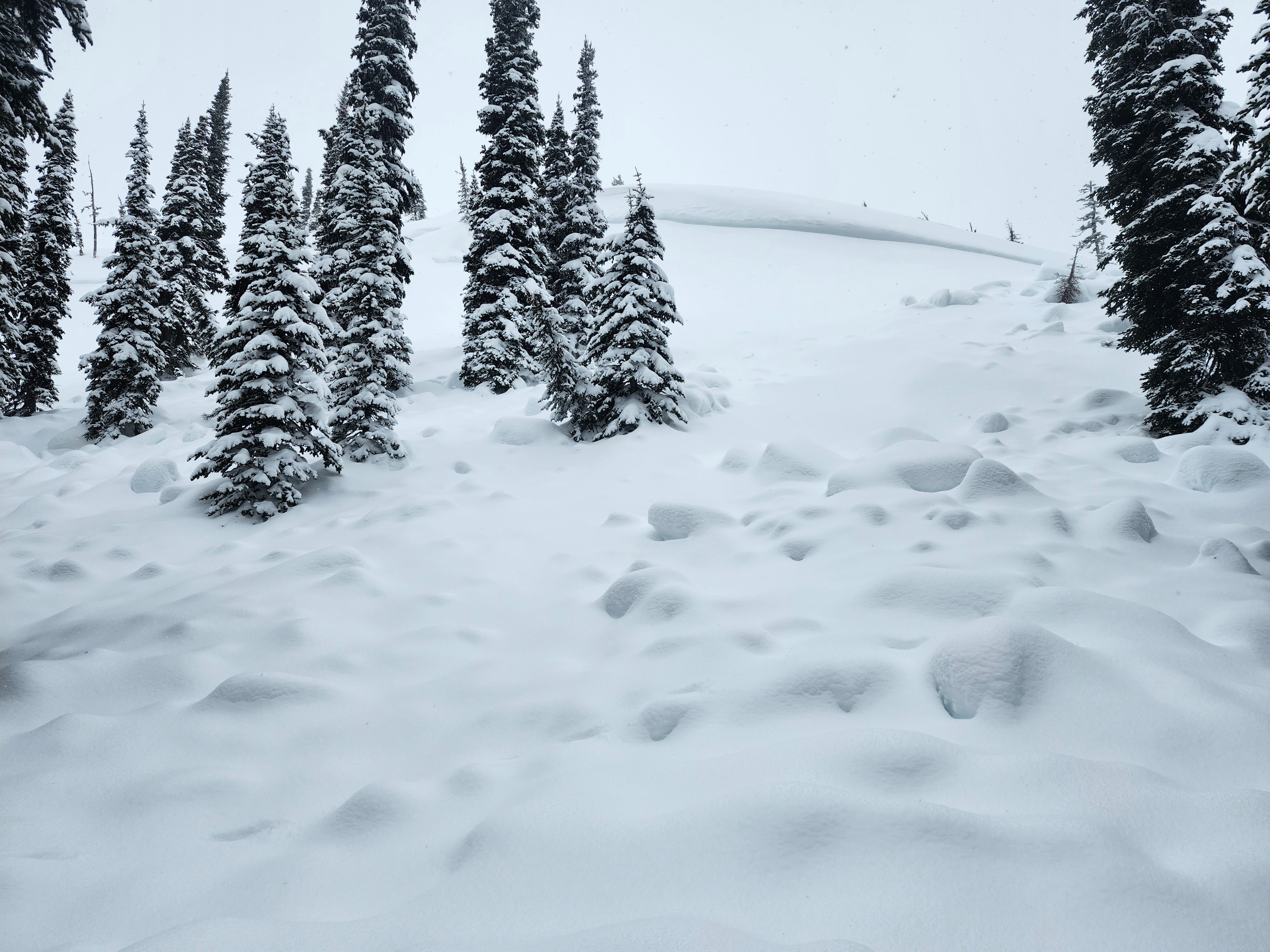
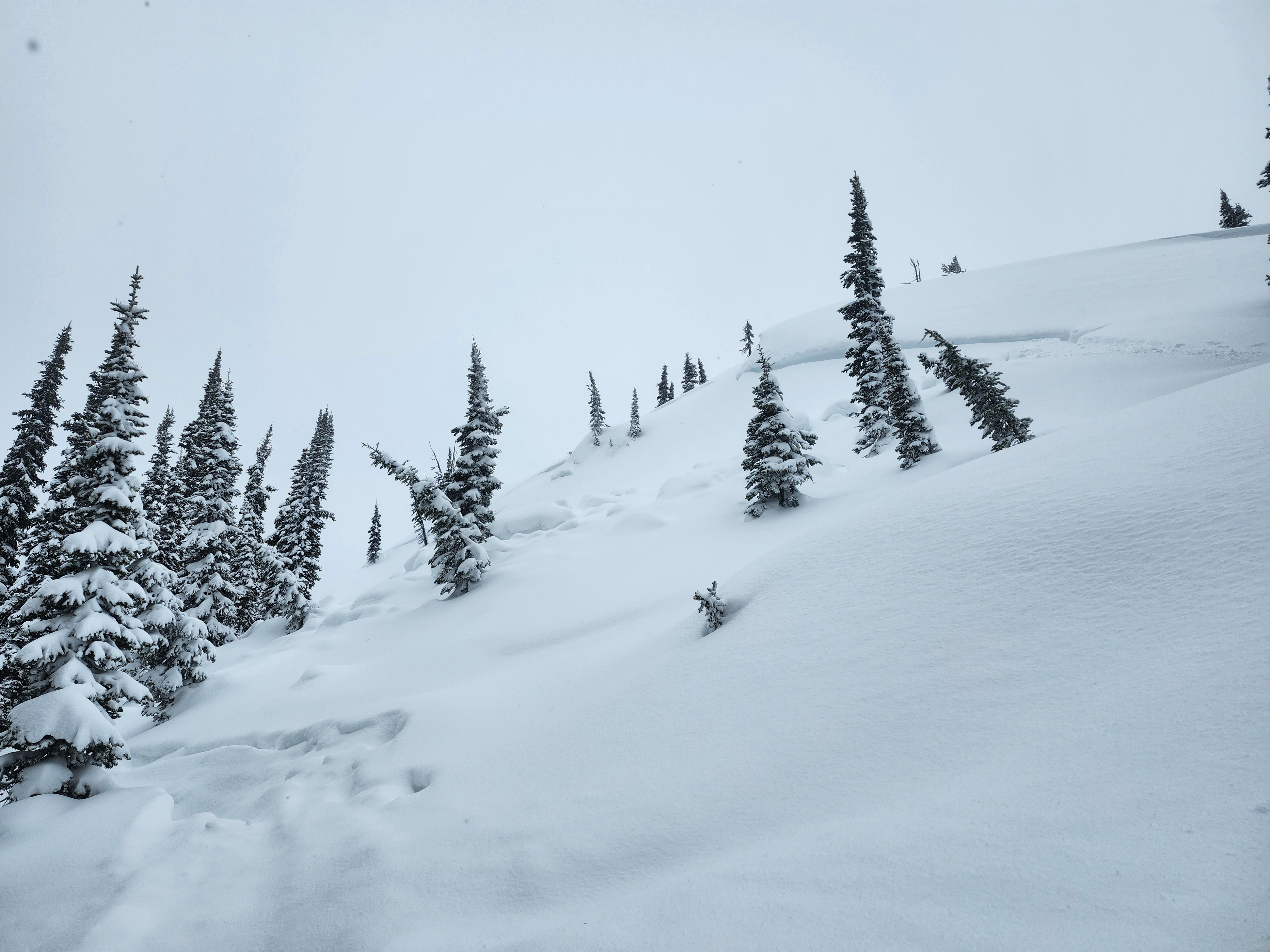
We saw four avalanches up to size 2, all of which we suspect were 72 hours old. One was snowmobile-triggered, and the other three were likely naturals. All three were on wind-loaded NE aspects. We were able to reach the crown of the rider-triggered avalanche and confirmed that it ran on surface hoar. We suspect the larger two of the three naturals also ran on this layer, and are unsure about the smaller one. All four avalanches most likely occurred on 2026-03-08 warm-up, and may have been wet slab avalanches rather than persistent slab avalanches.