
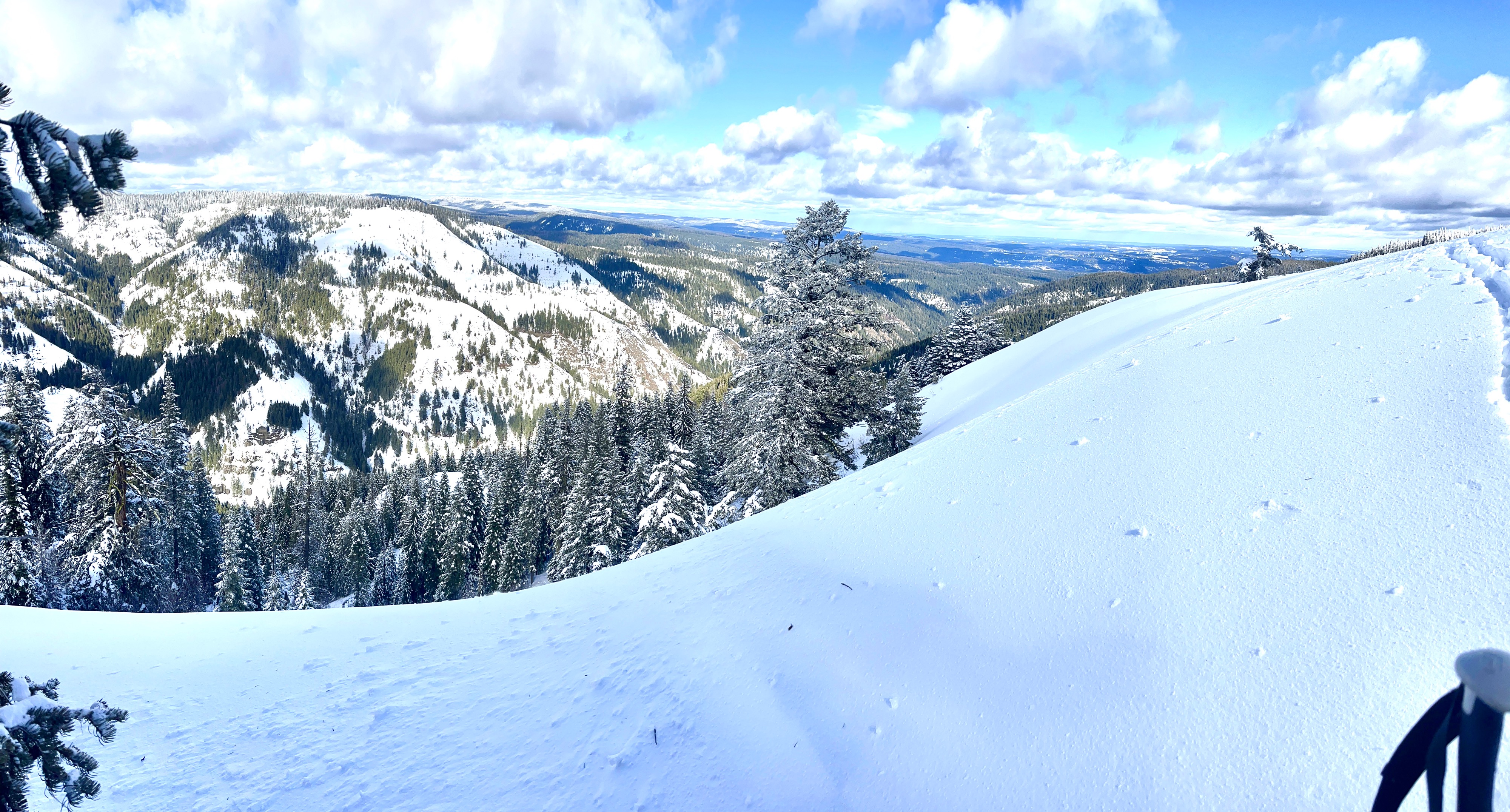
Quick report
The snowpack in the Blue Mountains is gaining strength and is consolidating. However, the presence of buried surface hoar on north-facing terrain warrants caution and respect. Be vigilant...the warming temperatures through the weekend could increase the likelihood of triggering this weak layer. If you collapse this weak layer in a shallower area on the slope (say around rocky terrain or wind-scoured areas) or roll over a steep convexity the propagating fracture could trigger a large and destructive avalanche.
The warming trend over the coming days will increase the likelihood of being able to trigger wet loose avalanches on steep >35 degree slopes on south-facing terrain features. Yesterday, the temperatures were near freezing at 5000'. At 4000' they were 34 degrees. While Thursday might not be warm enough to get snow on sunny slopes sliding downhill, this problem will only grow as temps climb through the weekend. Keep an eye out for red flag conditions if the snowpack doesn't freeze hard for several nights in a row.
Weather
- Air Temp
- 30
- Cloud Cover
- scattered
- Wind Loading
- light
- Recent Snowfall
- 0
- Snow Avail For Transport
- small smounts
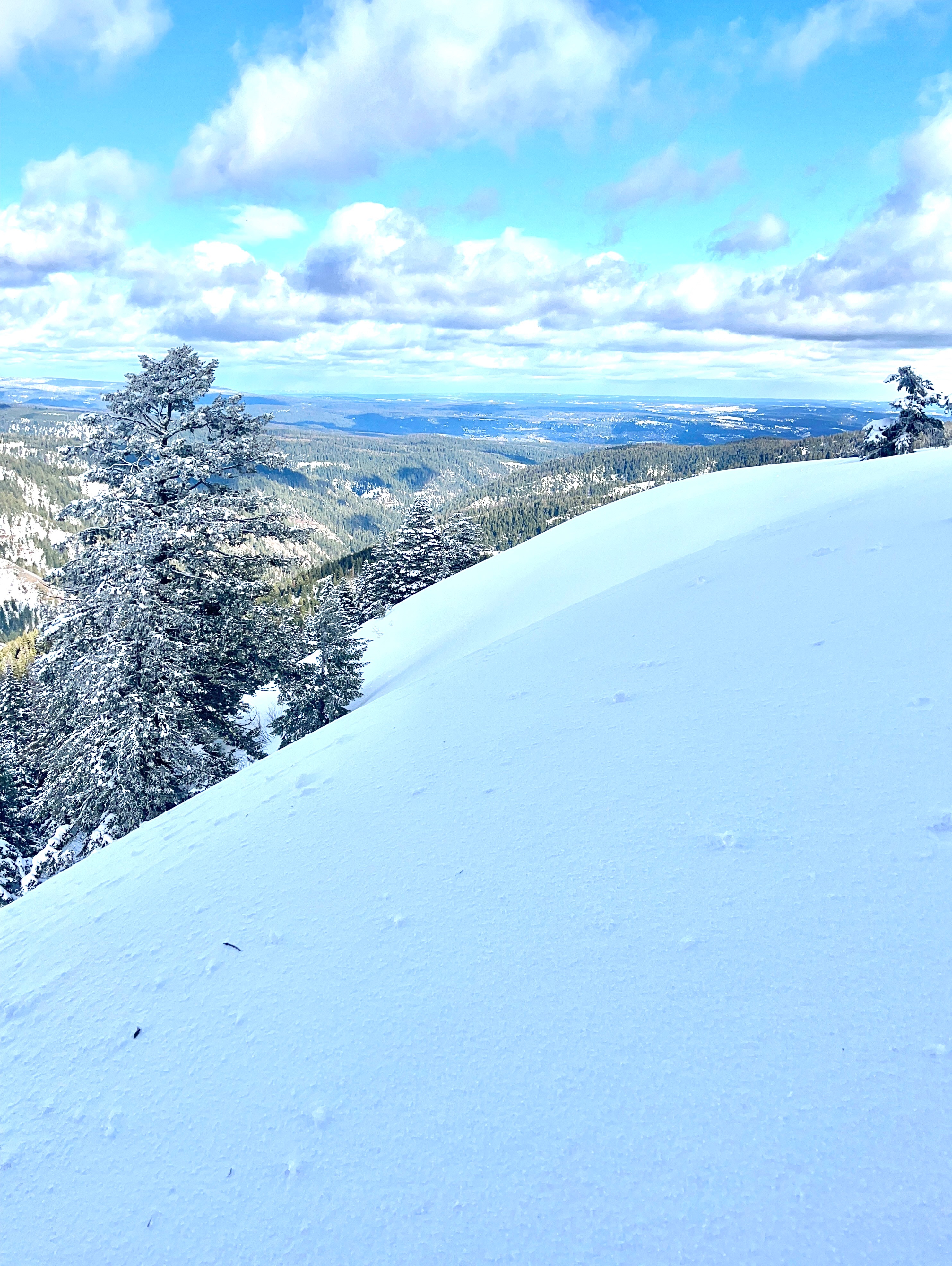
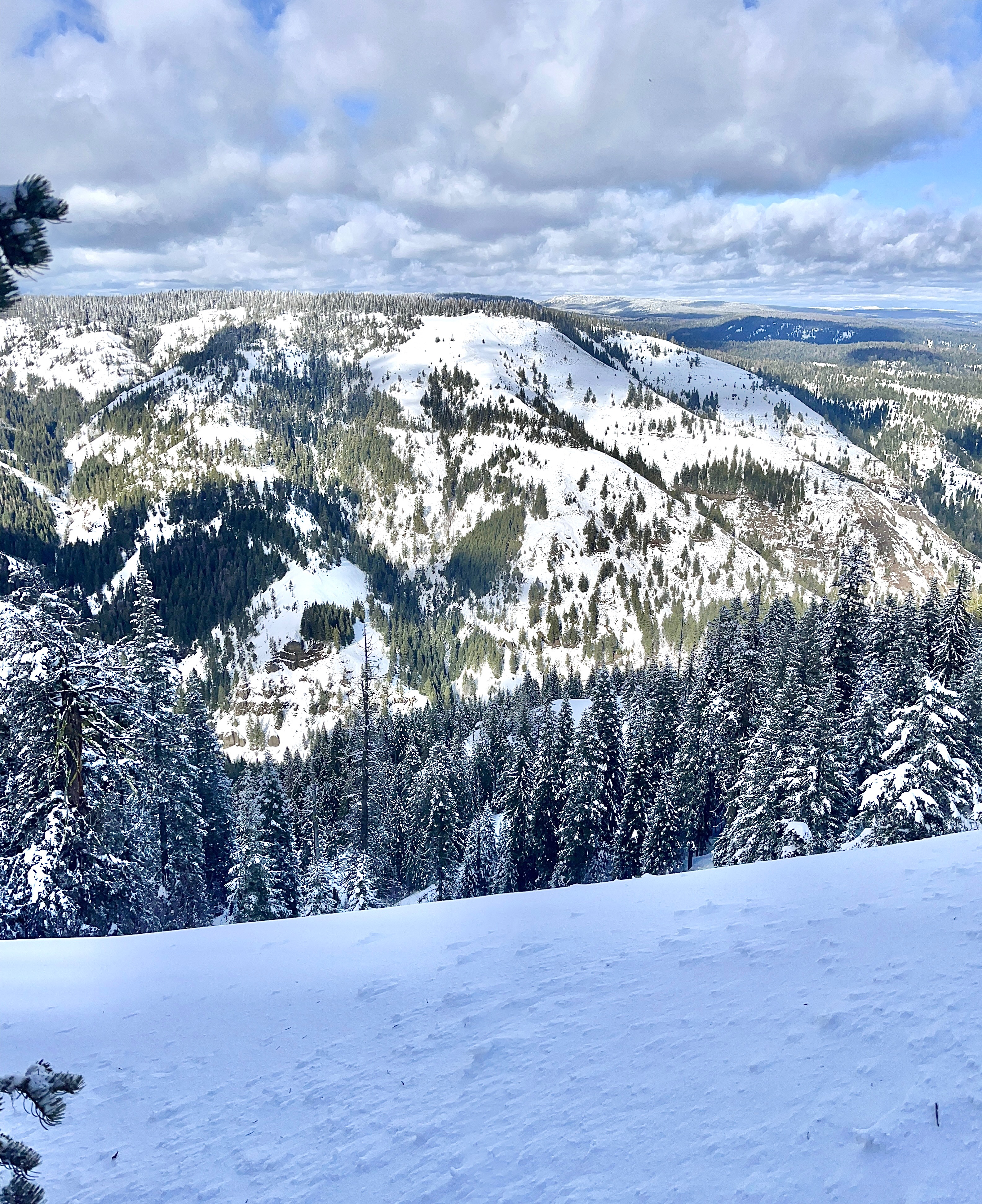
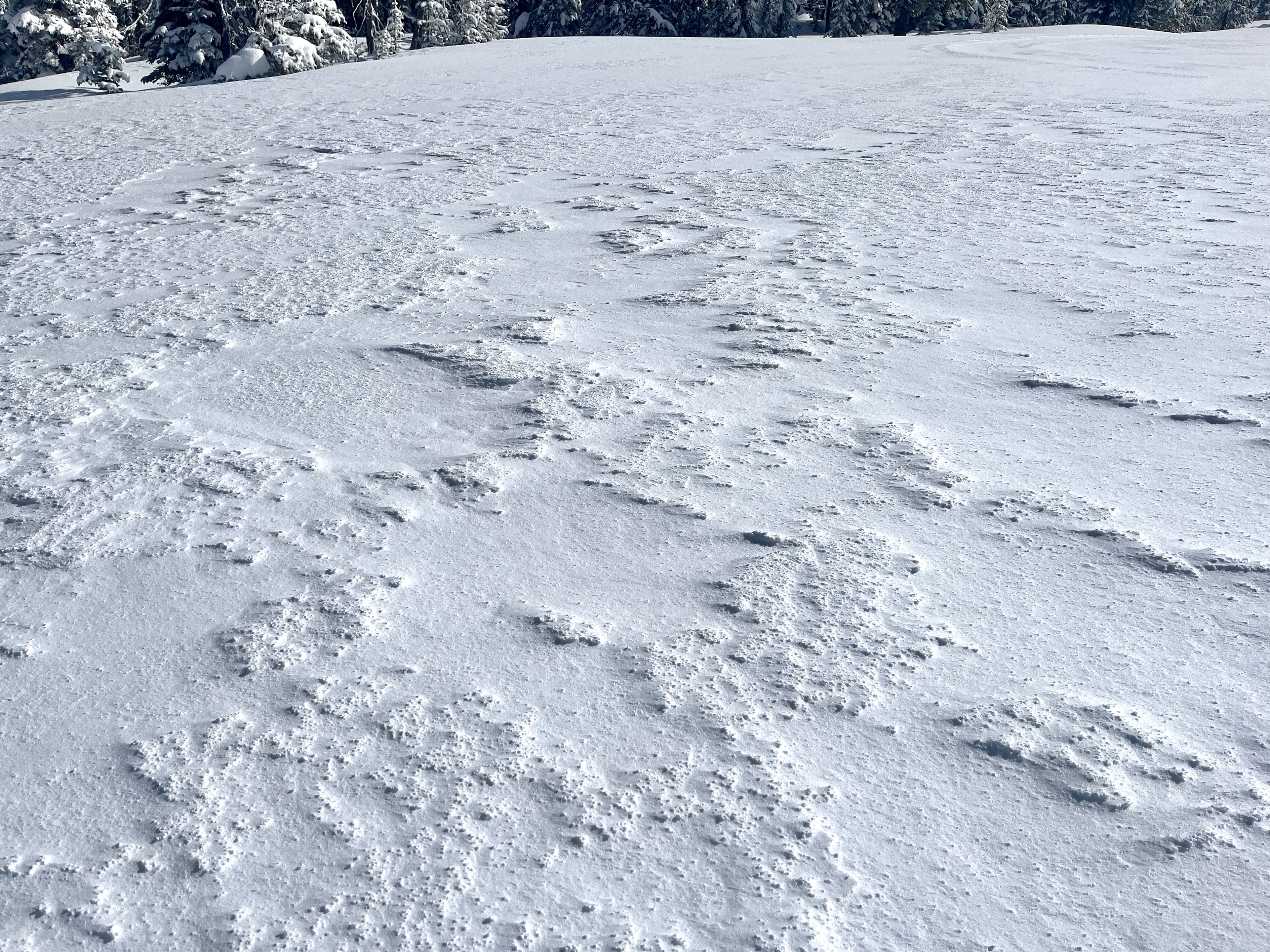
Mild weather overall. Temps above 5000' near freezing with light northerly winds. The cloud cover was partly cloudy. At 4000' in elevation the temperature was 34 F.
Snowpack
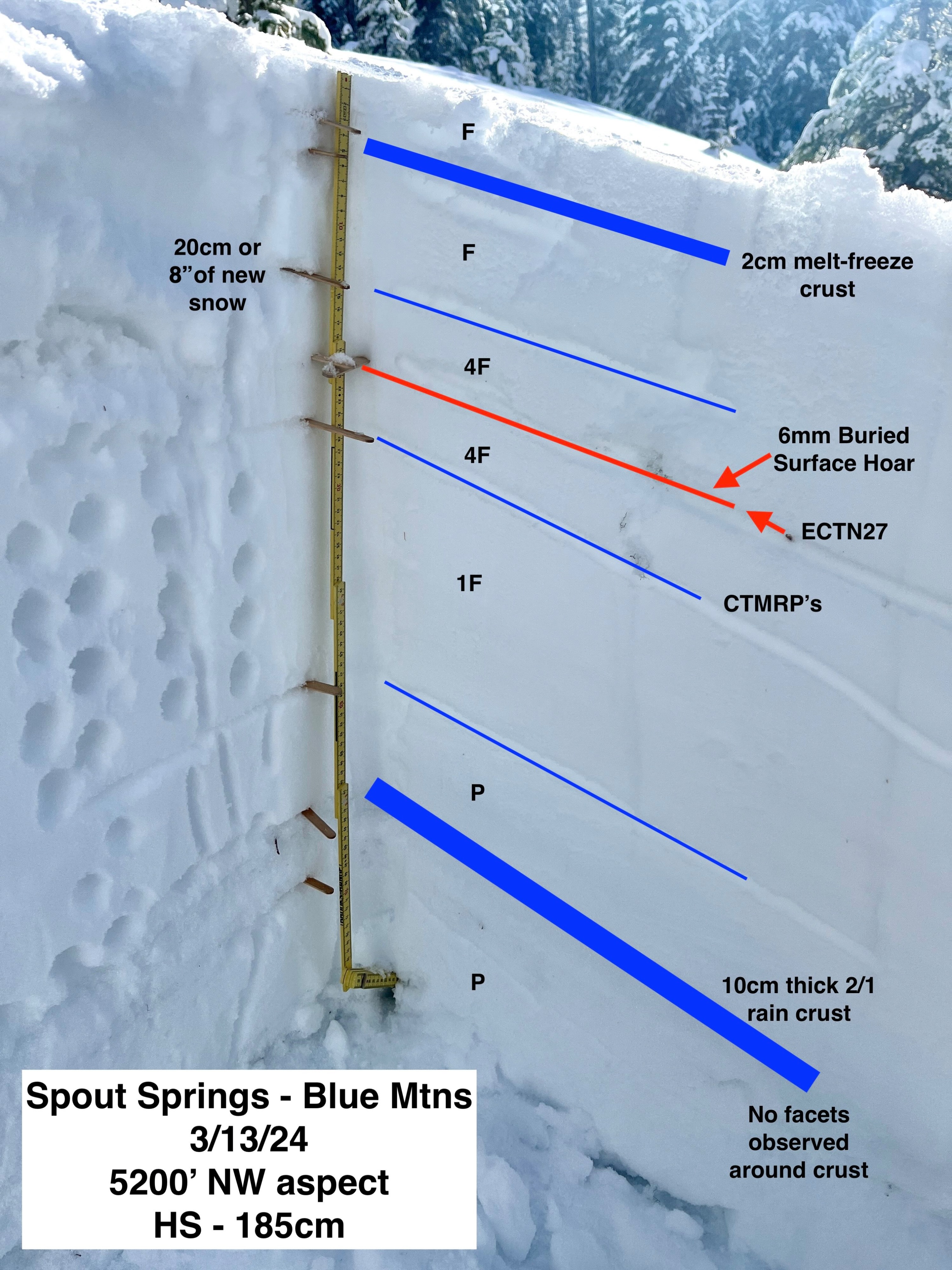
Up at Spout Springs yesterday I found a thin layer of buried surface hoar down 8" at the new/old snow interface on a north-facing slope near 5200' in elevation. Surface hoar is notorious for being a persistent and reactive weak layer when buried. If you collapse this weak layer in a shallower area on the slope (say around rocky terrain or wind-scoured areas) or roll over a steep wind-loaded convexity the propagating fracture could trigger a large and destructive avalanche.
I did not find any facet layers above or below the stout 2/1 rain crust that is down 60cm or so on north-facing terrain. This was just one pit in one location. In other local mountain ranges, we have been finding a weak layer of facets above the 2/1 rain crust creating a persistent slab problem.