
Quick report
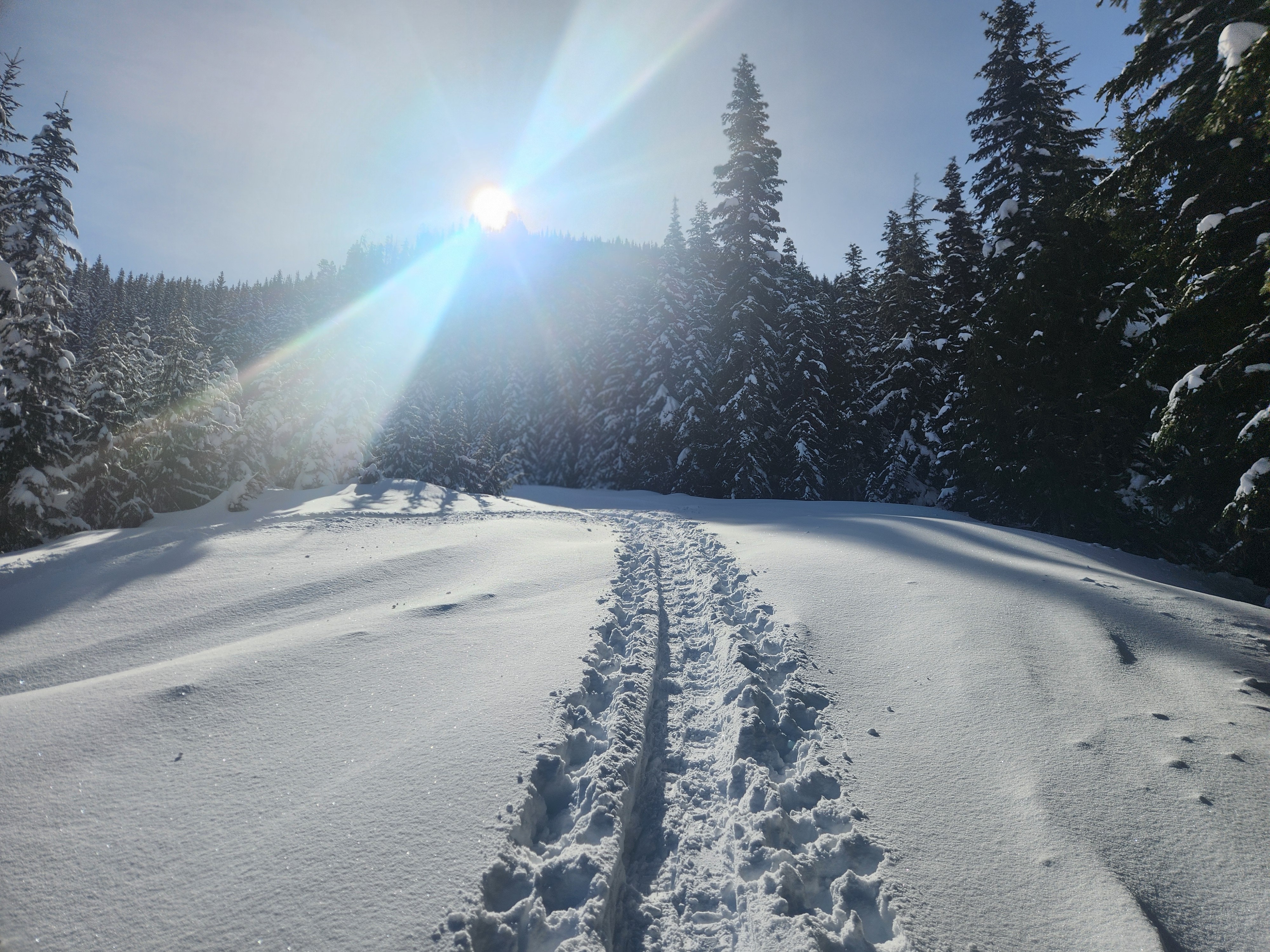
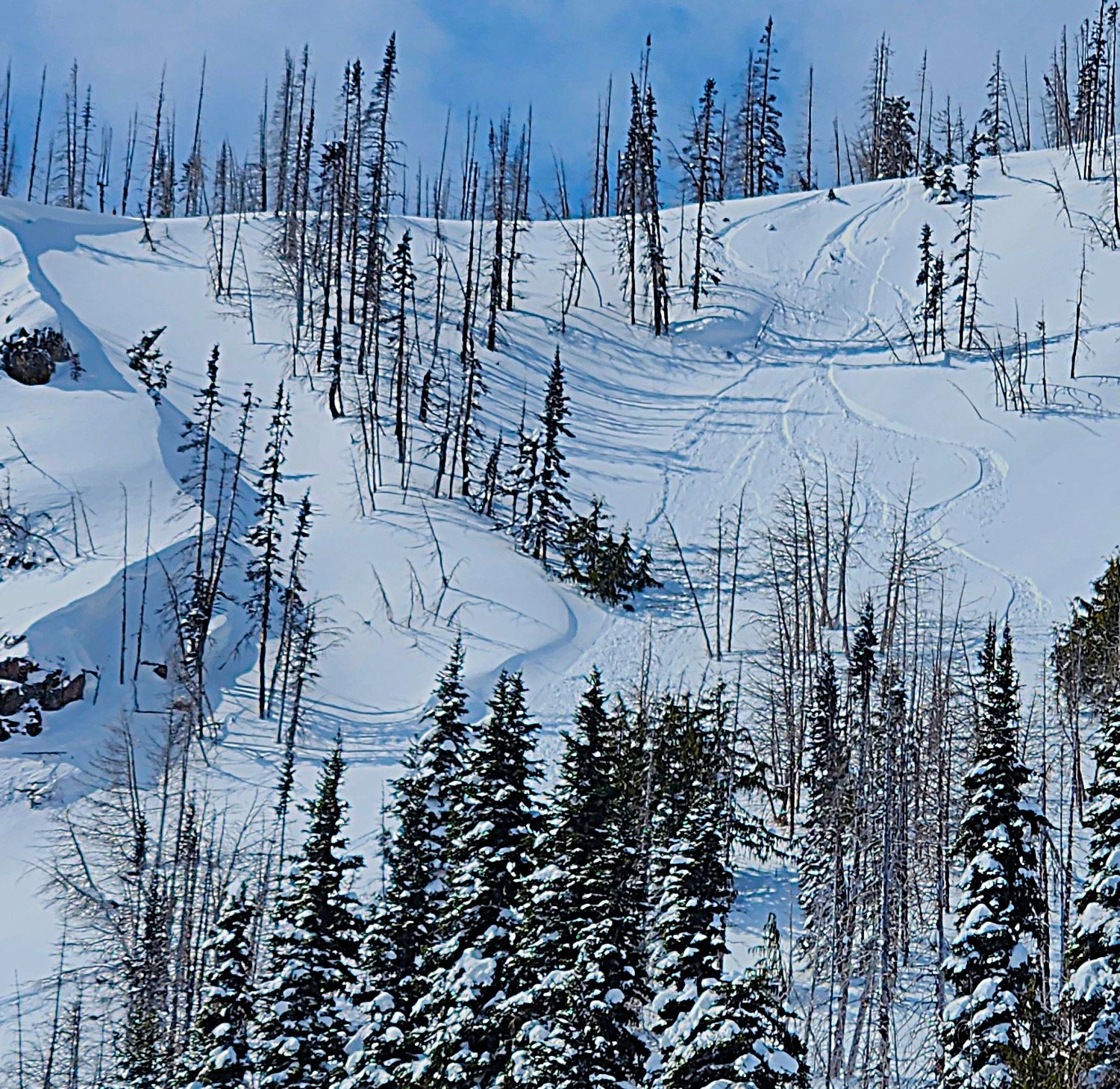
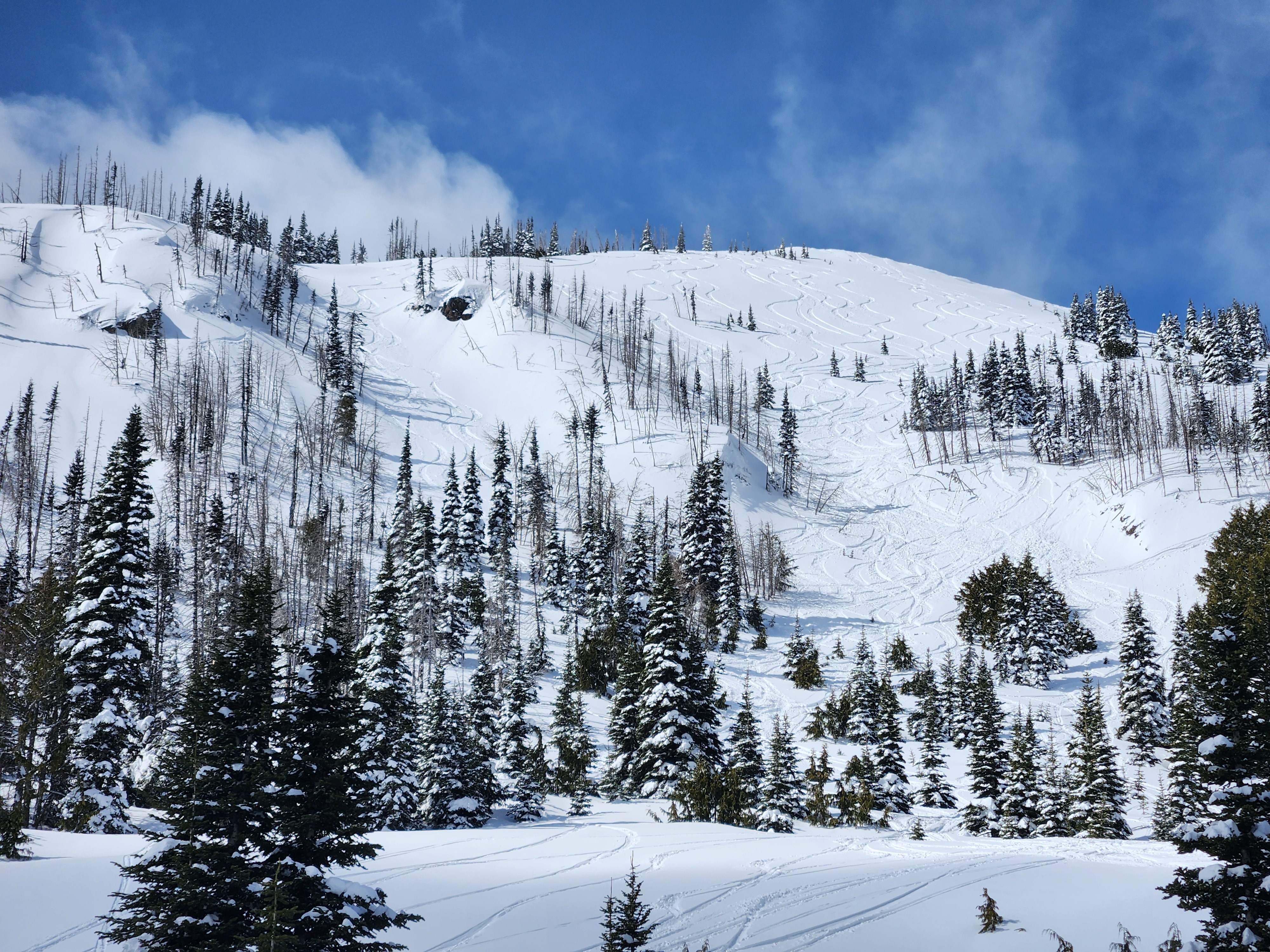
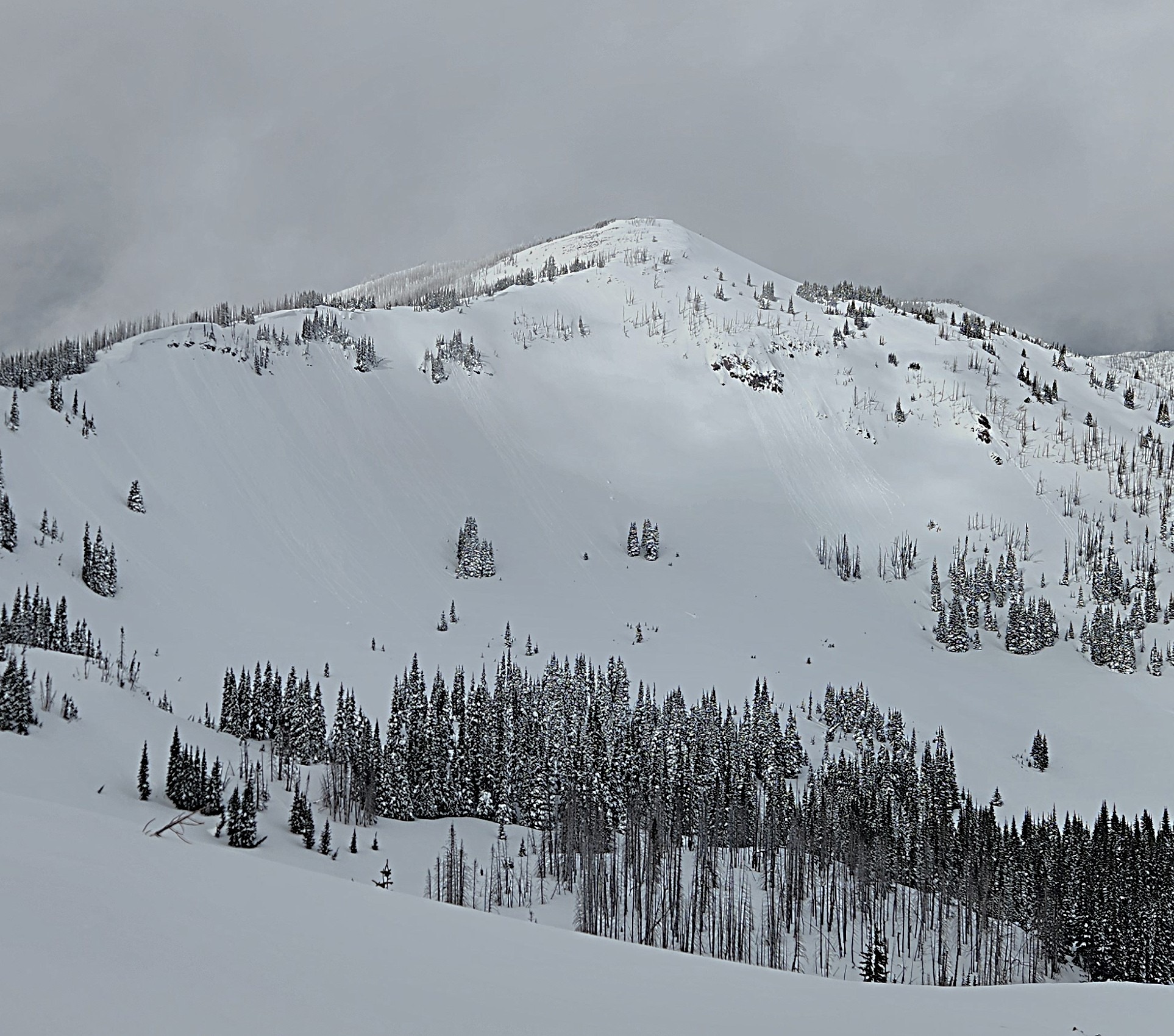
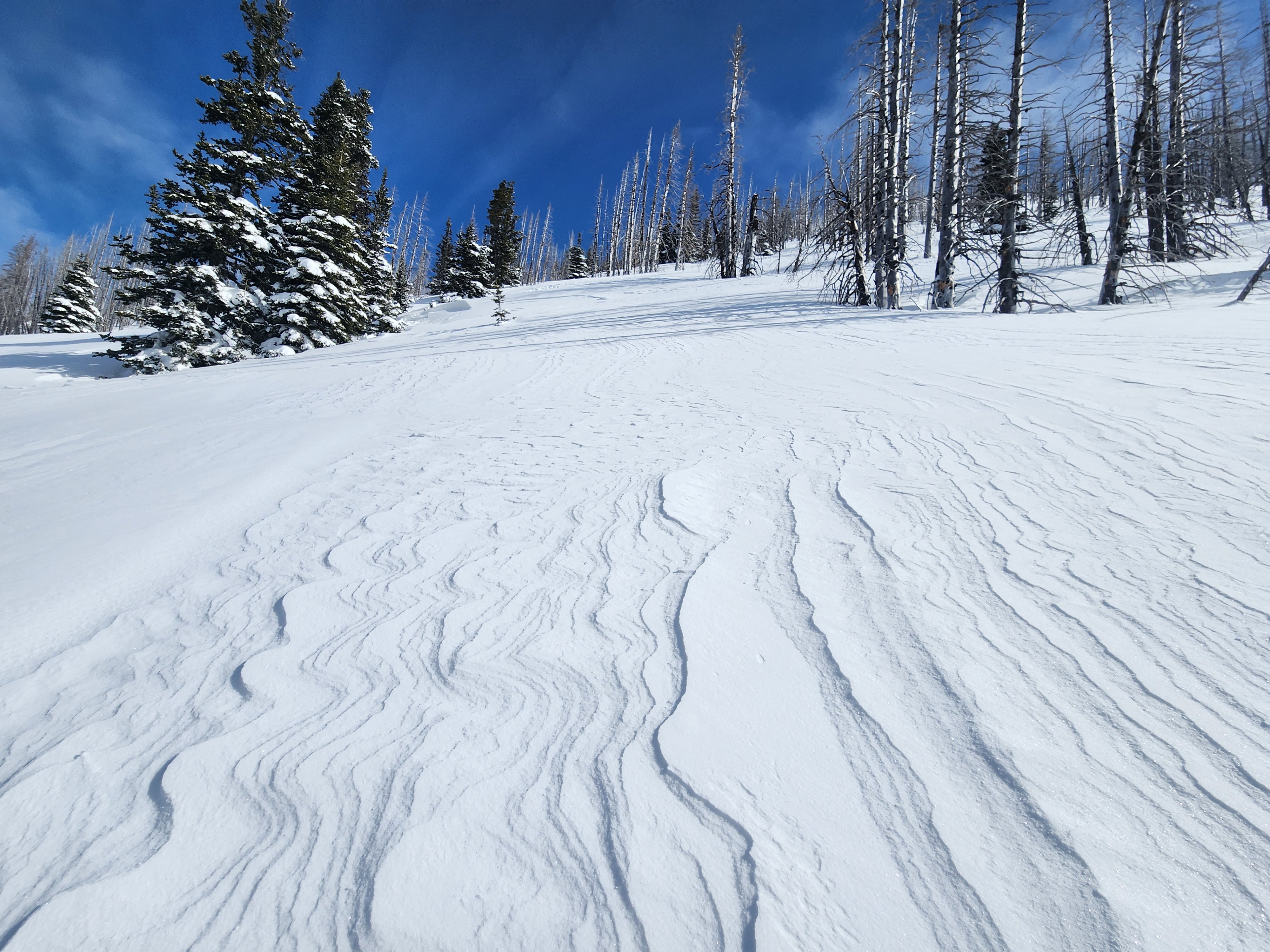
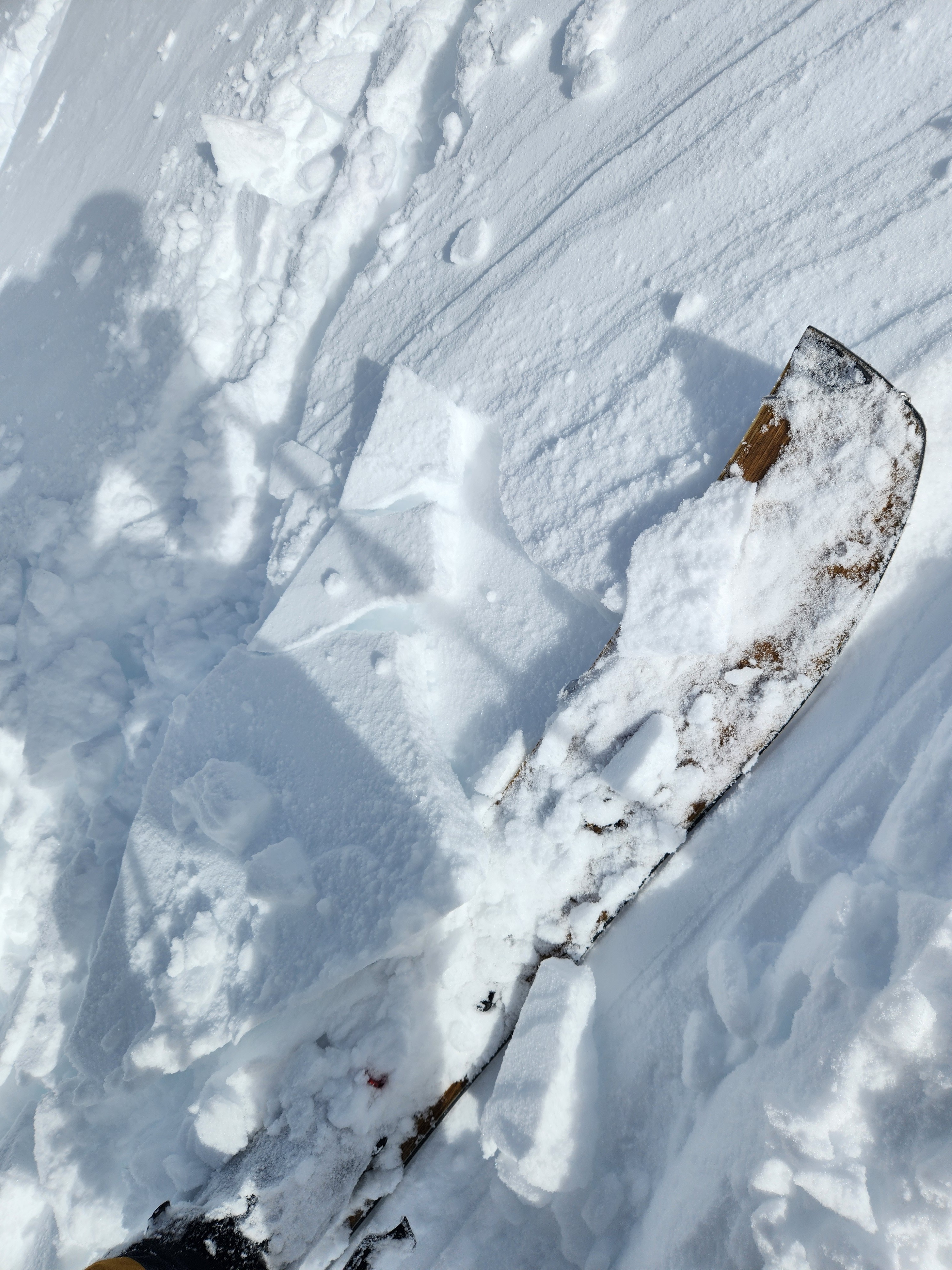
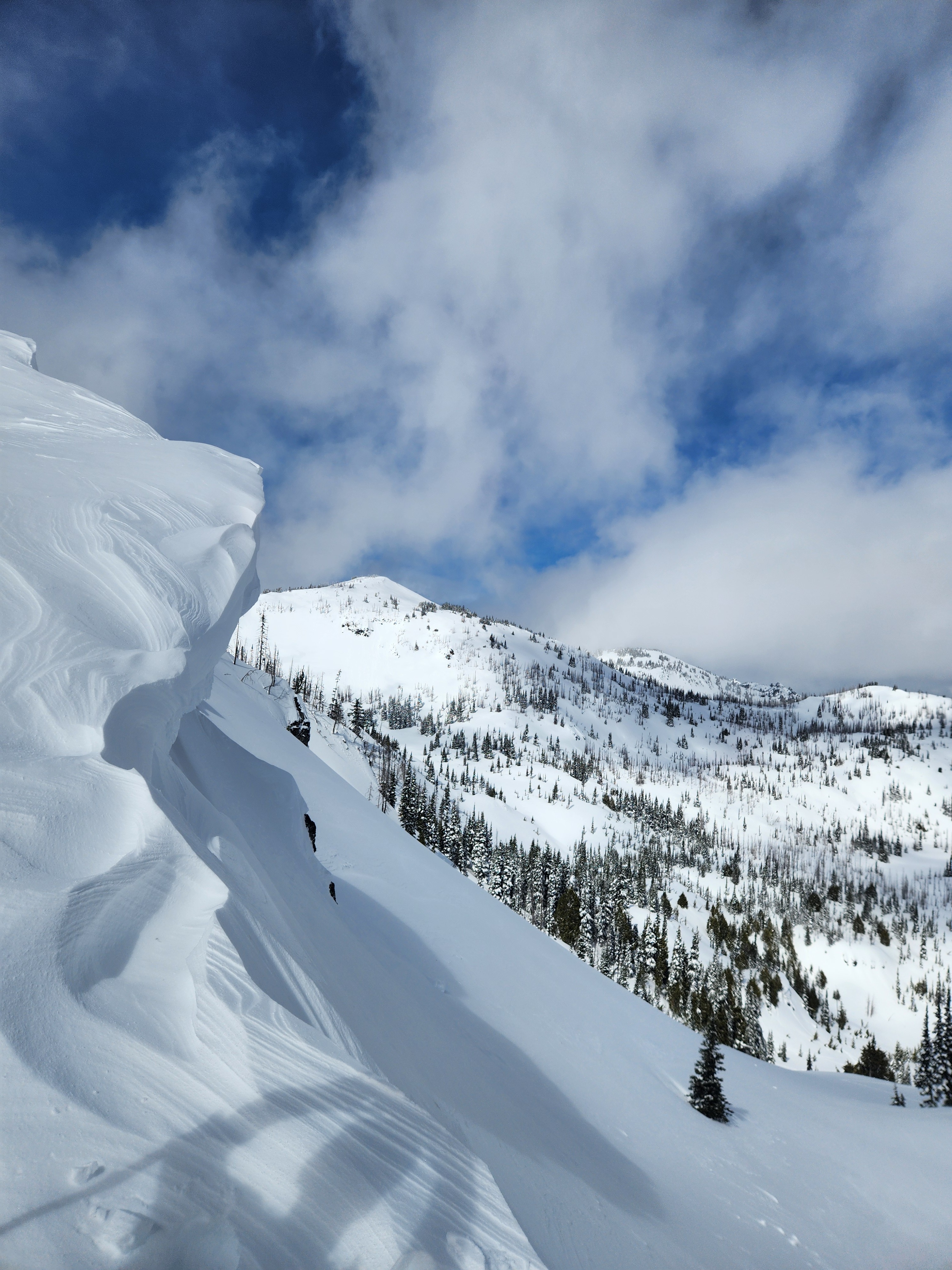
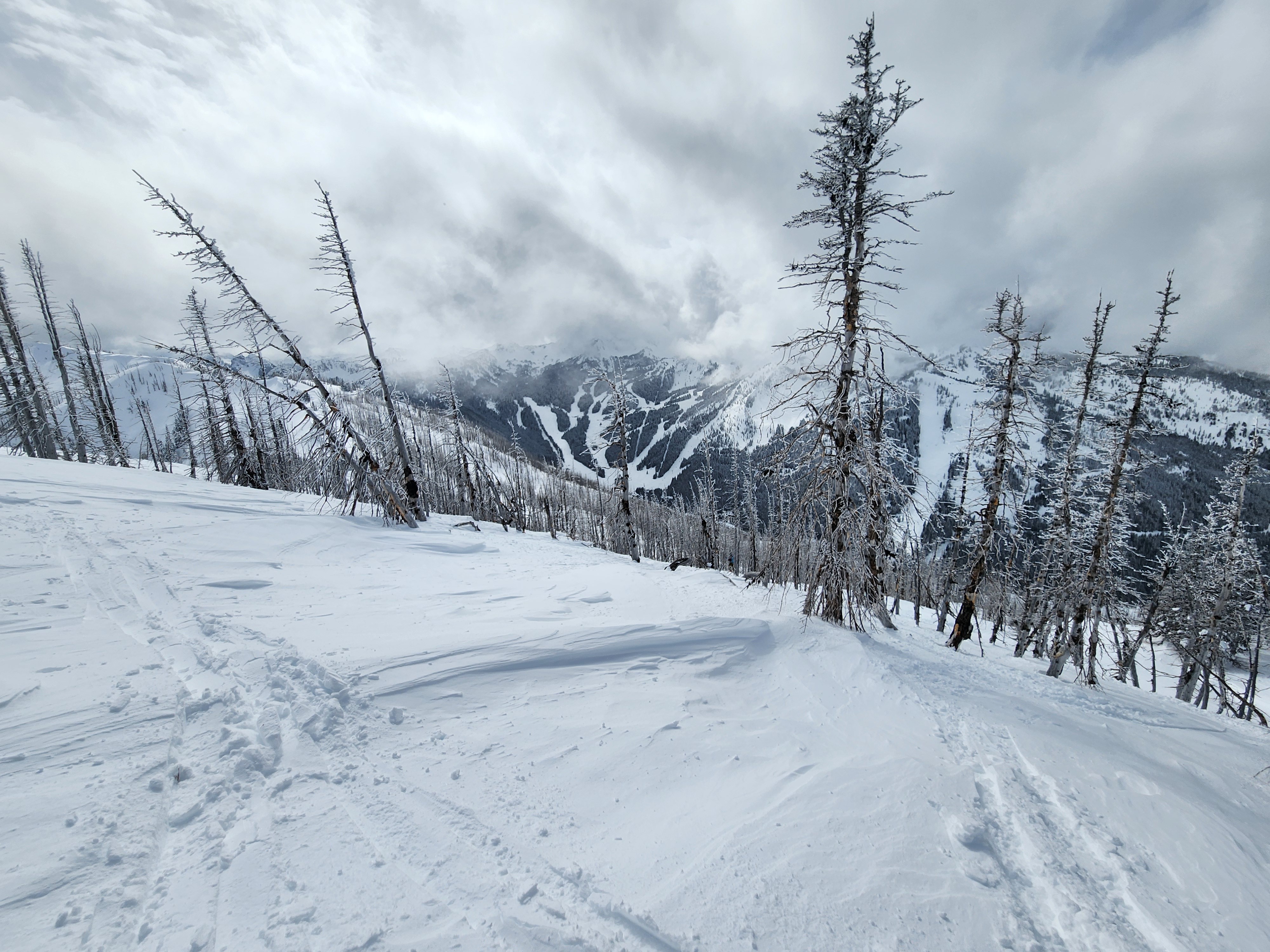
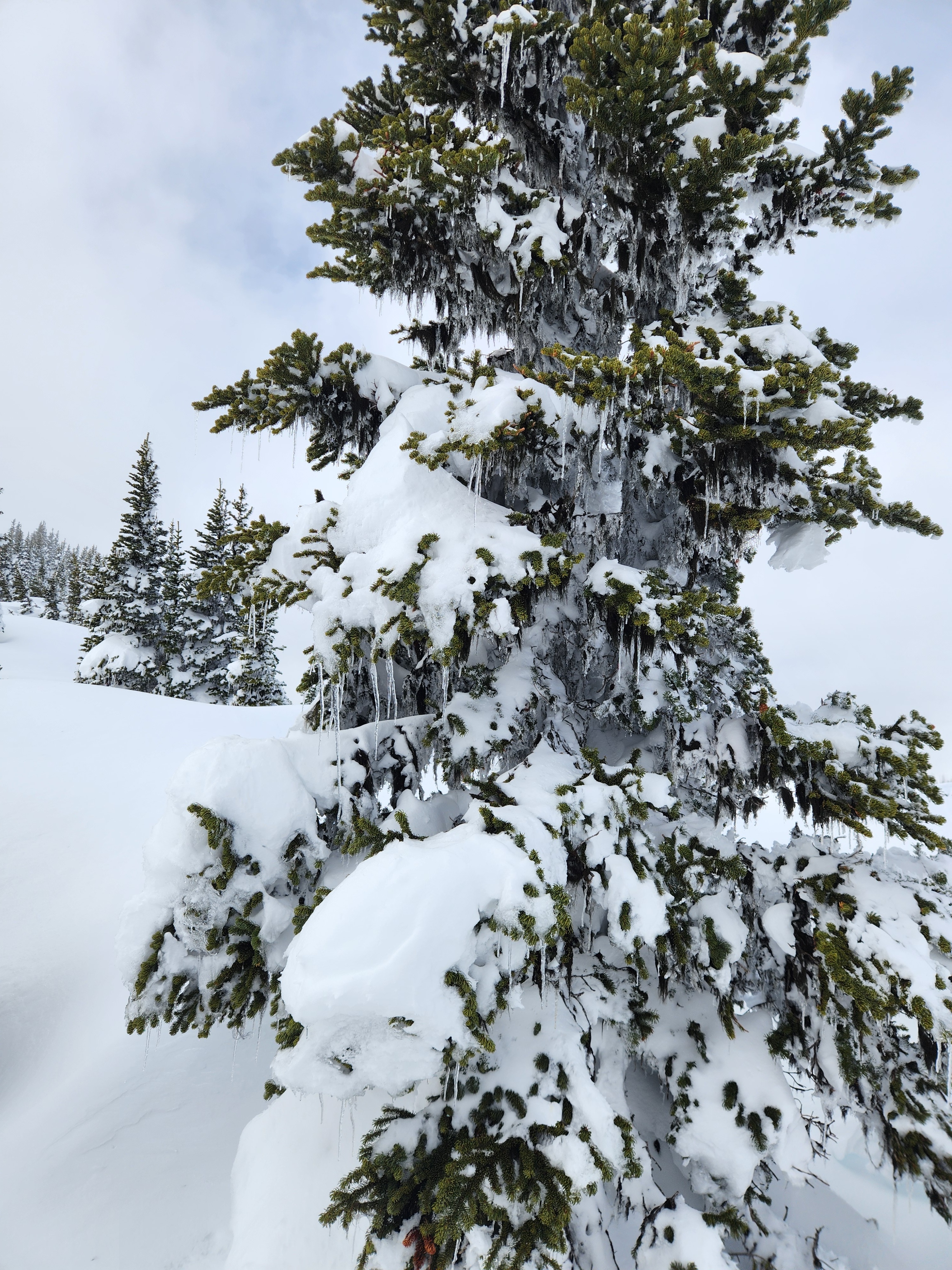
It was a busy day in the backcountry near Crystal, as many folks took advantage of soft powder while they could before the rainstorm. The day started out sunny, but cloud cover built throughout the day, keeping wet problems fairly isolated to just a few steep rocky slopes, especially those facing east and southeast. Aside from one or two skier-triggered sluffs on very steep slopes and a small smattering of rollerballs and very small wet point releases, we didn't observe any notable signs of instability. There were plenty of signs of prior wind effect, but kicked cornices, test slopes, and ski cuts proved unreactive. We observed plentiful ski tracks on many steep slopes in both basins where we traveled and saw no signs of reactivity outside of the few aforementioned sluffs. Cornices are quite large and looming. The 6-8" of cold snow overnight warmed and became heavier throughout the day where it was exposed to the sun, but provided nice sliding conditions through the afternoon on north-west-southwest aspects.
It's been an incredible March; it had to end sometime!
Weather
- Cloud Cover
- broken
- Wind Loading
- previous
- Recent Snowfall
- 15-20
- Snow Avail For Transport
- moderate amounts
Early morning sun gave way to partly cloudy and broken skies by 11 AM. There were still sun breaks here and there until around 2 PM when it clouded over for good. Winds were light. It began to snow lightly at 4 PM.
Snowpack
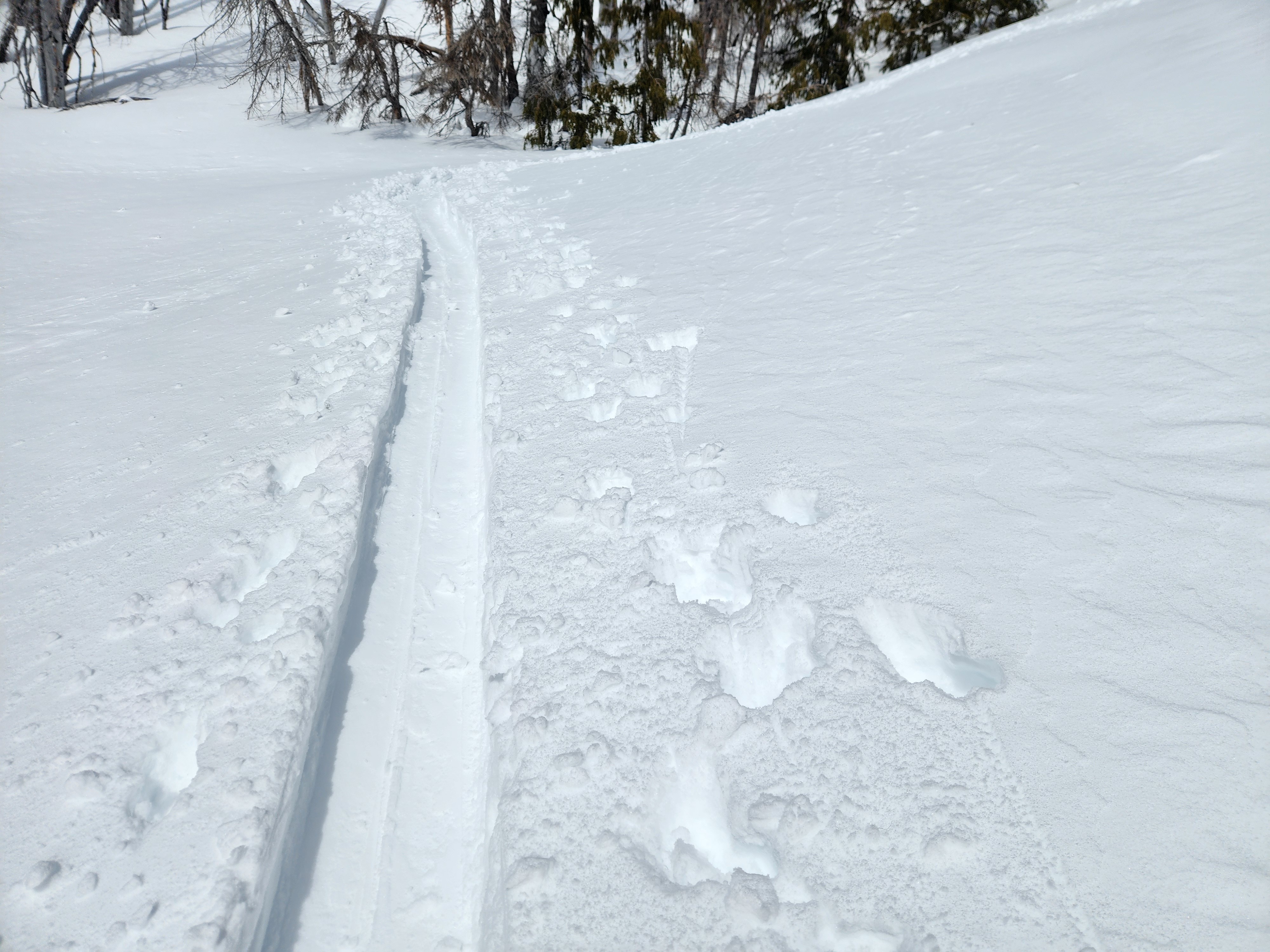
6-8" of right-side-up and fairly low-density snow sat on a ski-supportable interface that marked the transition from the snow that fell in the evening and overnight 3/21-3/22 from the snowfall that occurred the night of the 20th through midday on the 21st. Ski penetration in non-wind-affected snow was generally 6-8" down to the interface. No significant cracking was observed in the surface snow, outside of localized cracking through a thin 1-2" wind skin on lee slopes below ridgeline. The upper-pack is generally right-side-up, with a few interfaces still visible down to the AR crust.
The snow surface became heavier throughout the day, especially ENE-S aspects that received the bulk of the full sunshine in the morning hours.
I dug a pit on a north-facing slope at 6350ft.
HS 260 cm - AR Crust down 90 cm
Compression tests highlighted the upper interface 16 cm below the surface (CT13 Q3) and another 30 cm below the surface (CT17 Q2), though breaks were not clean or planar. I did observe a more significant result of CT23 SC down 90 cm on .3-.5 mm rounding facets just below the top of the AR crust, however, two extended column tests failed to propagate.
Avalanche
Just a few small skier-triggered loose avalanches on very steep slopes, and some rollerballs and small point releases on steep sunlit slopes, especially near rocks. Not widespread.