
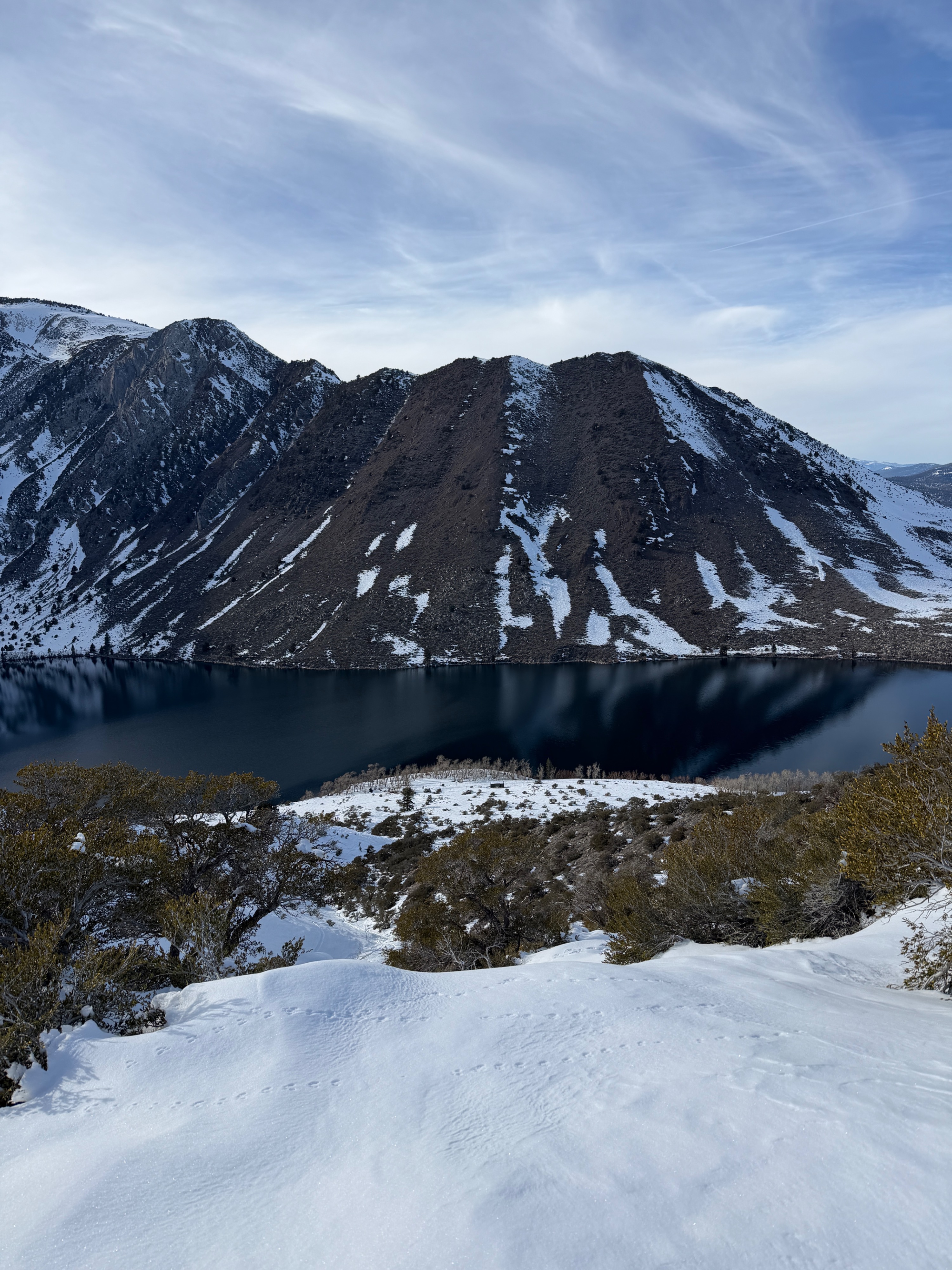
Quick report
Today, my goals were to hone in on the persistent slab problem. I found the 2/10 interface to be the most concerning boundary in our snowpack and did not initiate failure on deeper buried weak layers. The persistent slab seems to be entirely dependent on the quality of the slab overtop. In most places, recent snowfall was not exceptionally deep or cohesive. In places where southwest winds have transported (and are transporting) more than 40cm of recent snow, I found a quality slab. I found the locations of wind deposition exceeding 40cm to be on the line of isolated in areas where I travelled. The 2/10 weak layer has a more continuous distribution.
Our persistent slab problem is a wind-drifted slab on persistent grains. The distribution of weak, faceted snow is the same as where wind deposition is occurring.
I found no signs of instability while travelling.Weather
- Air Temp
- 25
- Cloud Cover
- broken
- Wind Loading
- light
- Recent Snowfall
- 0
- Snow Avail For Transport
- small smounts
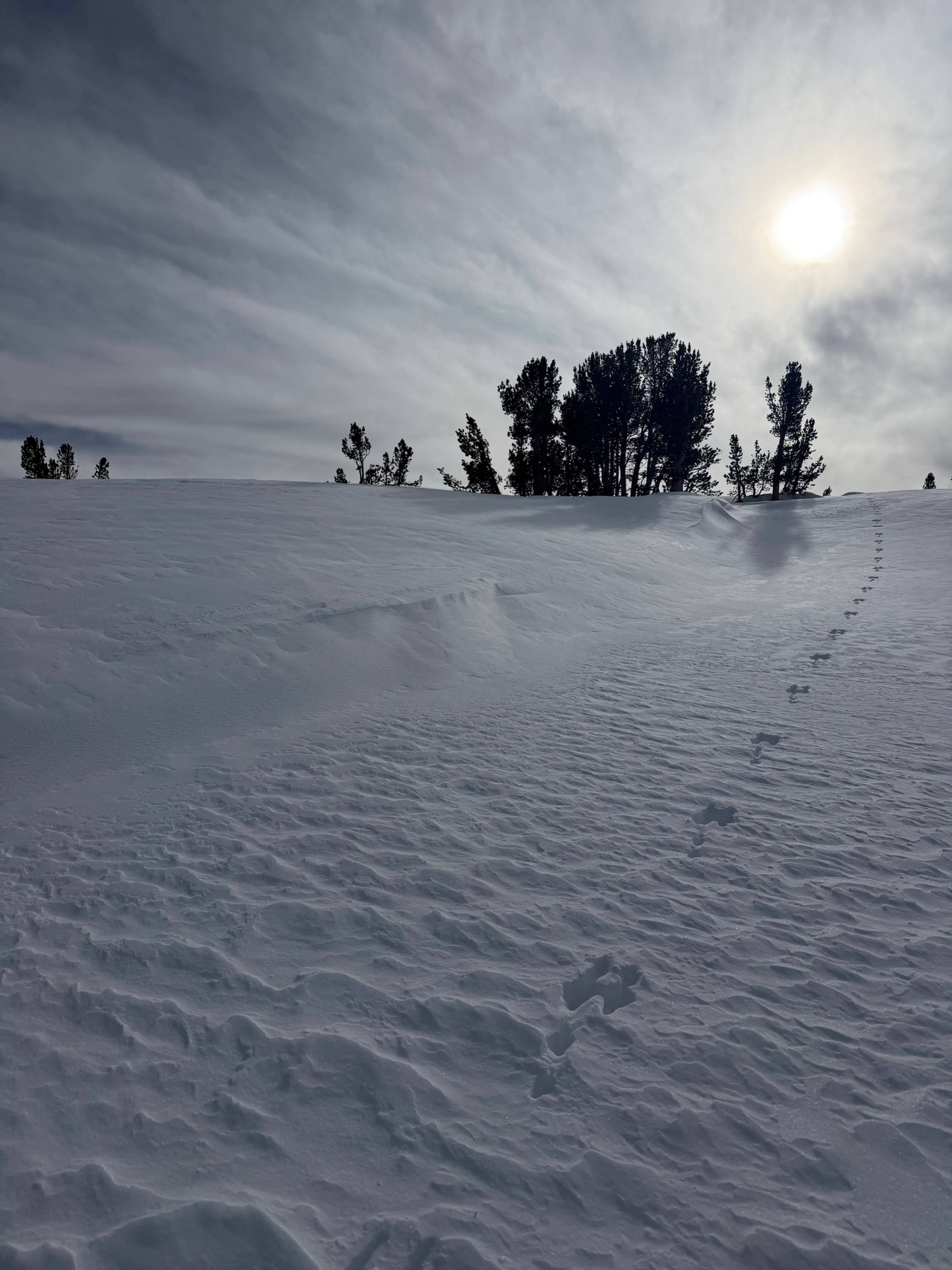
Winds were light, gusting moderate out of the southwest. Cloud cover increased throughout the day. Snow was blowing near and above treeline.
Snowpack
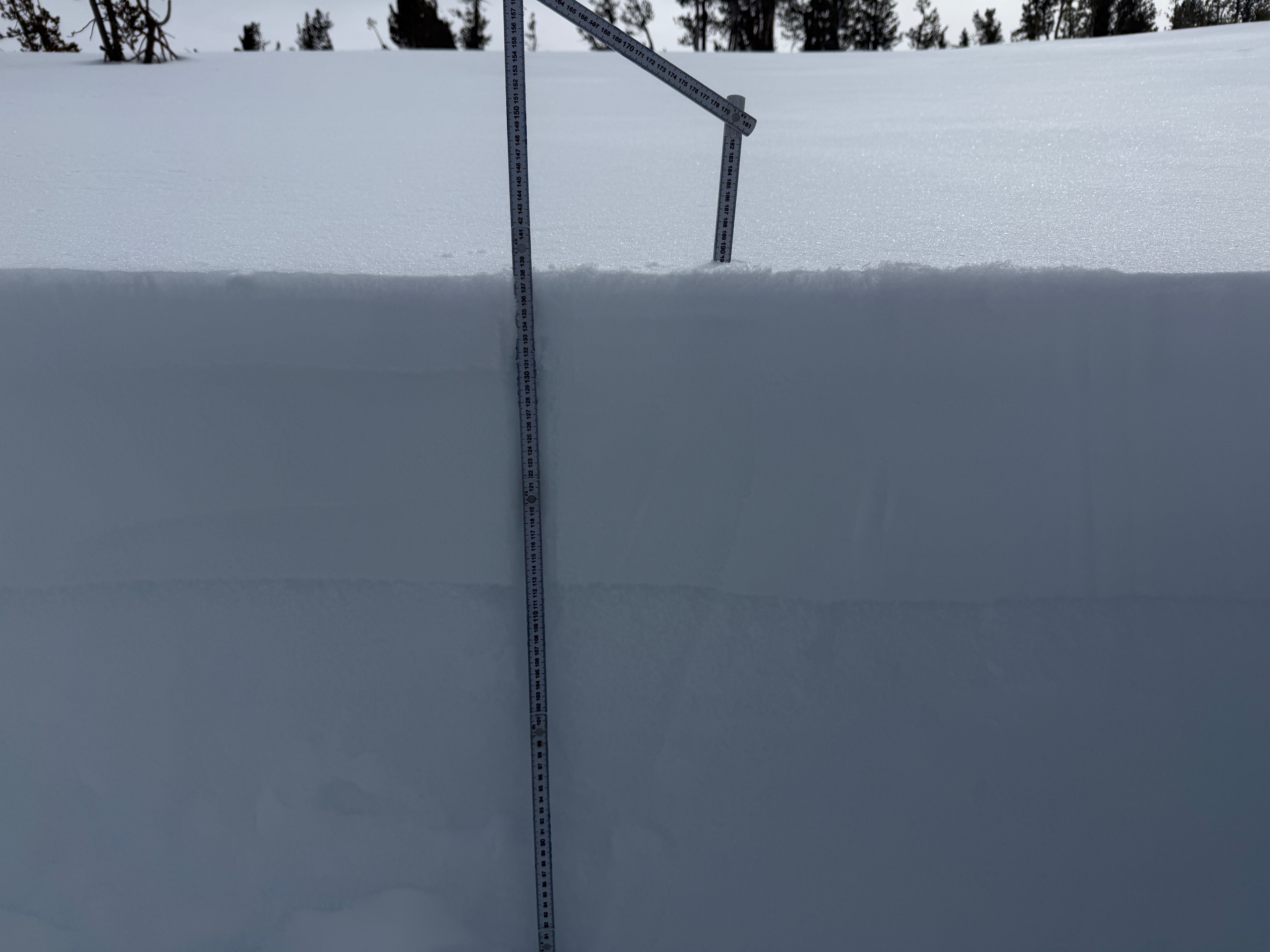
I found 25cm of settled snow since 2/10. In the convict lake area I found:
- The overall structure of northerly aspects above 9600' in the convict area is poor. Large facets from "Dry January" exist beneath the recent snow, and I found the 1/1 crust down 80cm. The entire snowpack below 2/10 consists of facets and crusts. Below 9600' a burly, buried melt-freeze crust capped poor structure.
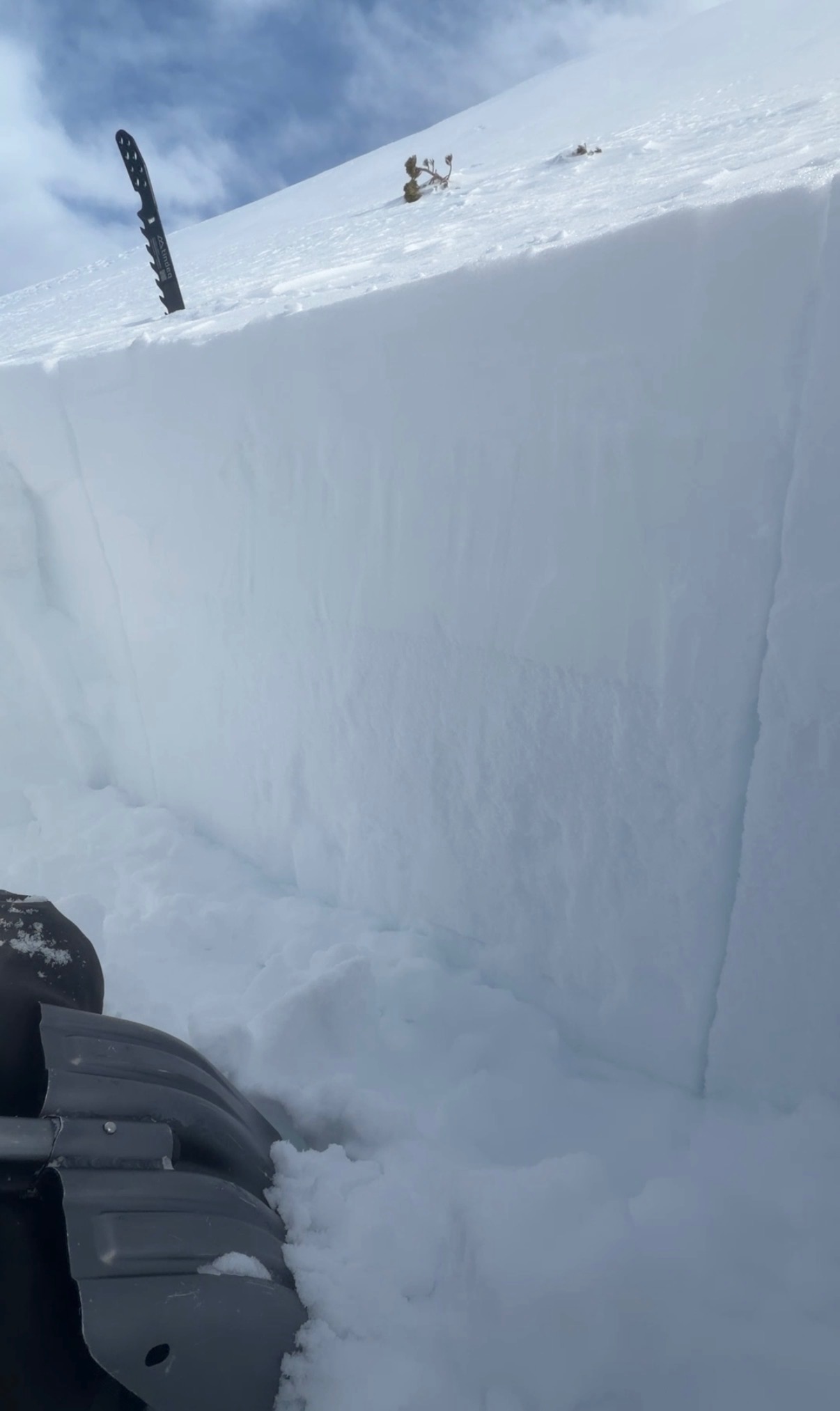
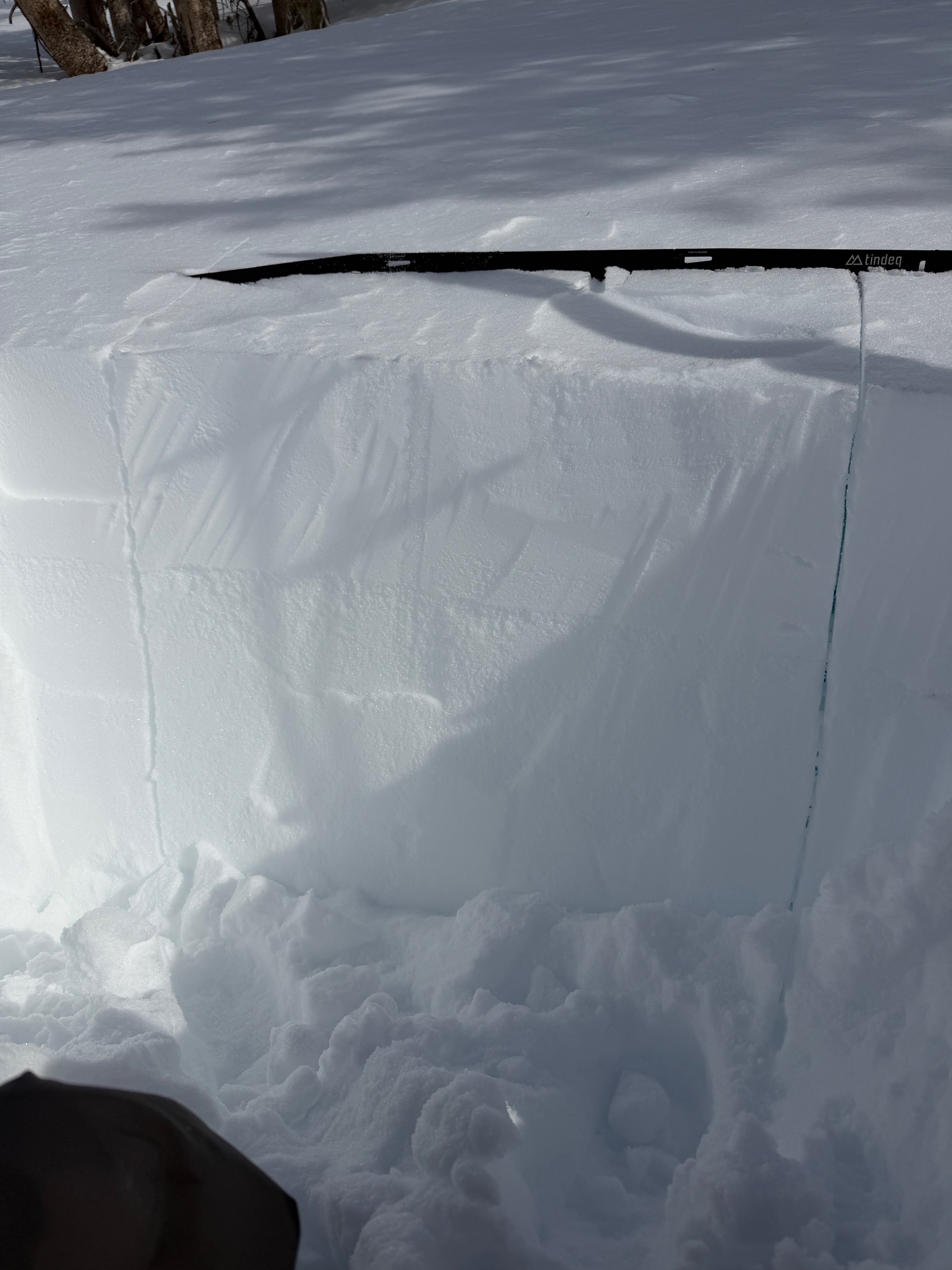
- The persistent problem is entirely dependent on the slab. In areas less affected by wind, the 25cm of low-density snow from 2/10 is a minimal load and is not cohesive enough to propagate failure without additional inputs (warm, wind, more snow).(ECTN x alot) In places where the wind has recently deposited more than 40cm of snow, I found the slab cohesive enough to propagate on weak facets. (ECTP easy x 2) The layer of concern, and where I targeted most of my day, was the 2/10 interface. I did not initiate any failure on weak layers deeper than 2/10.
- Despite the absence of a strong slab in many of my holes, I observed easy propagation at the 2/10 interface in a PST. PSTend (57/127) down 30cm.
- Our new snow is faceting near the surface in wind-protected areas.