
Quick report
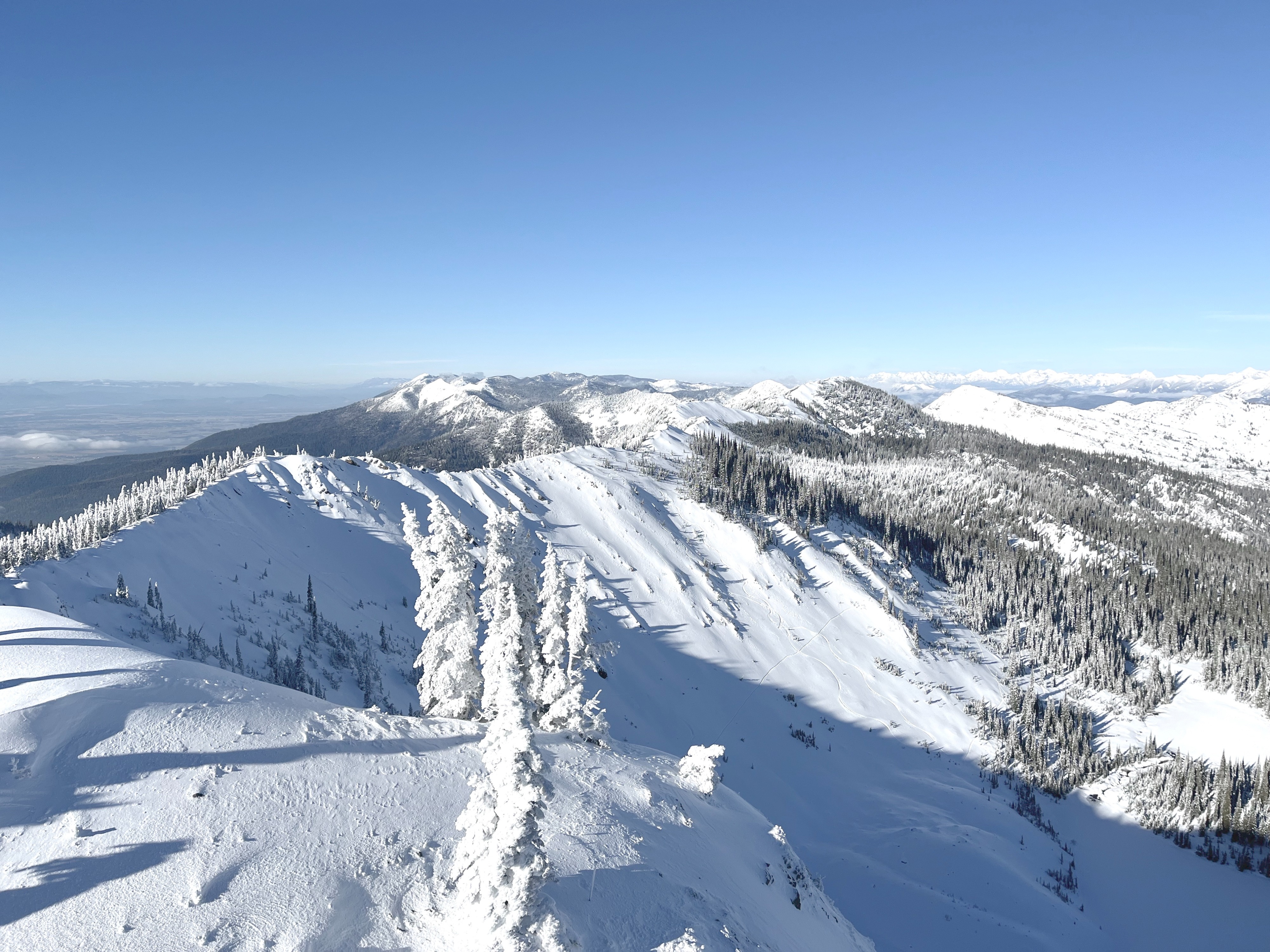
Today we went to the northern Swan Range to work on weather stations and collect field observations. Overall we were pleasantly surprised at the quality of the snow and lack of red flags. We also hit fewer rocks than originally expected thanks to a supportable rain crust.
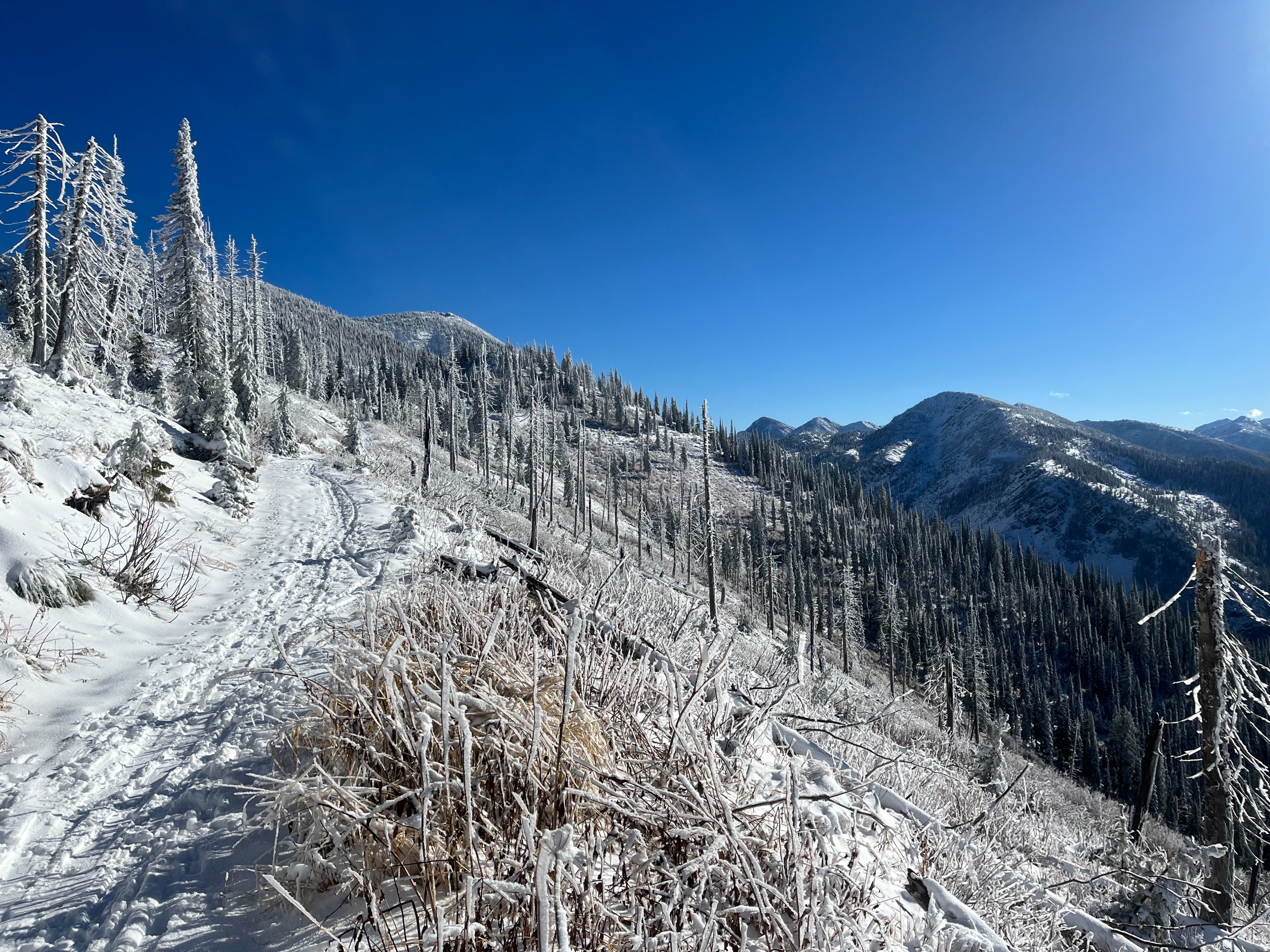
- We parked the truck at 5800 feet in about eight inches of new and old snow.
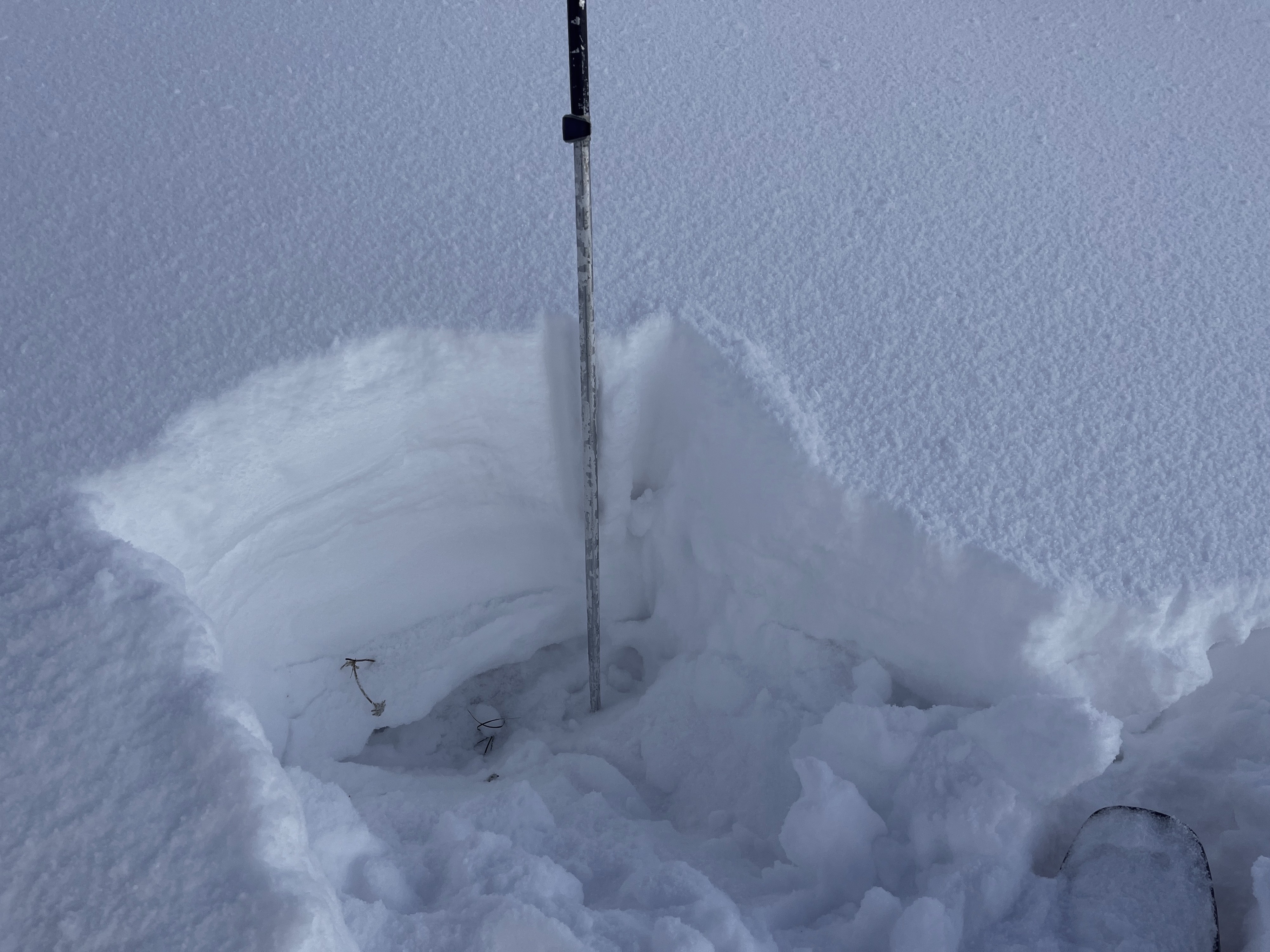
- From 5800 feet to 6500 feet, we found eight to ten inches of unconsolidated snow resting on hard rain crust.
- New snow accumulations at upper elevations (6500 and above) were slightly greater, and the total snowpack height was roughly two feet.
- We observed no signs of unstable snow on northerly aspects (no whumpfing, no cracking, and no recent natural avalanches).
- We did observe natural rollerballs on solar aspects at around 1200.
- During our descent on a southwest aspect, we triggered two very small and harmless loose wet avalanches. See the avalanche tab for more information.
Weather
- Air Temp
- Below Freezing
- Cloud Cover
- clear
- Wind Loading
- previous
- Recent Snowfall
- 15-20
- Snow Avail For Transport
- small smounts
A beautiful day out in the mountains. Clear skies. Observed calm winds except at upper ridgelines along the Swan Crest. We felt moderate to strong winds at our high point of 7200'.
Snowpack
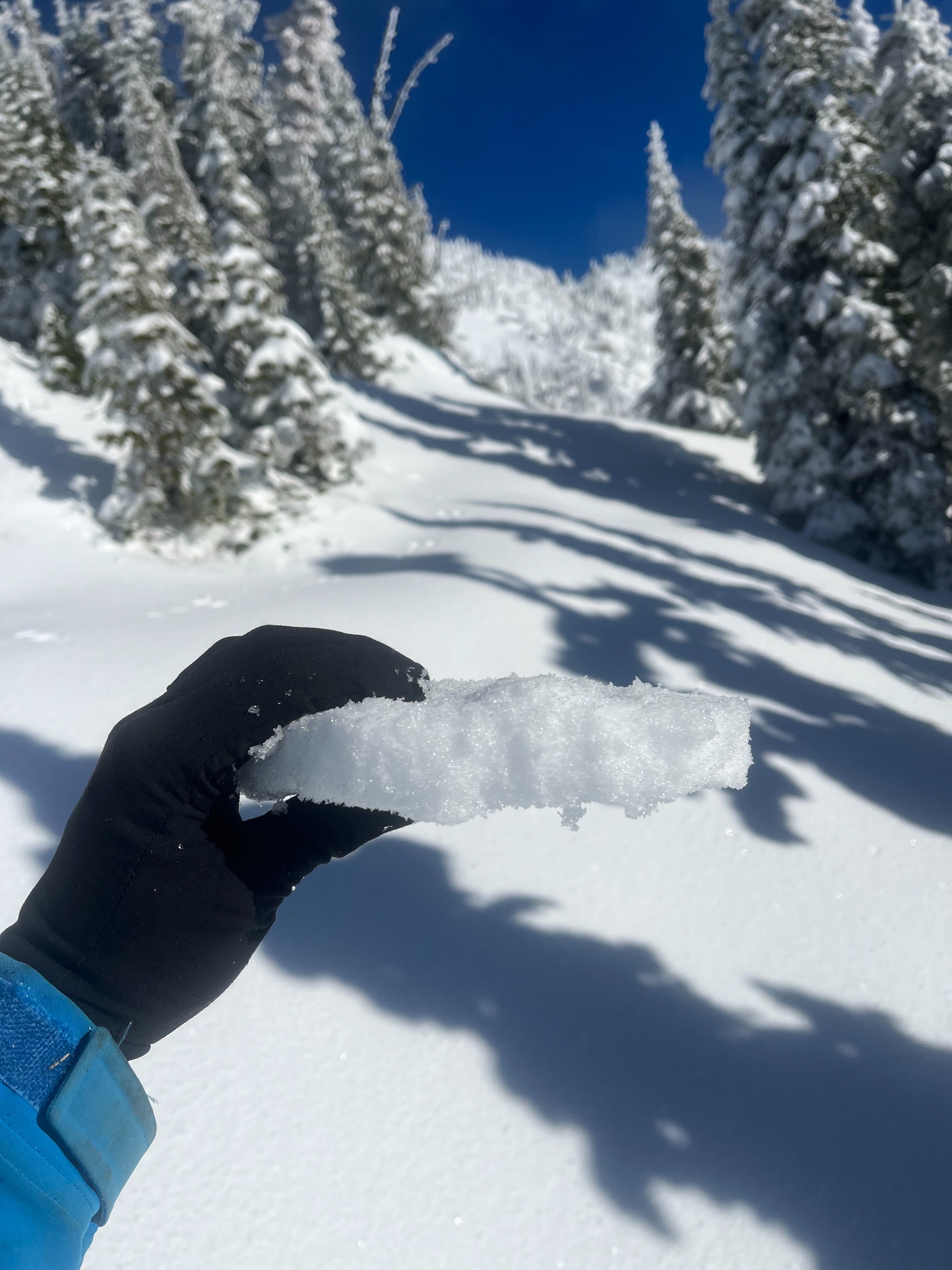
The rain crust observed near the ground existed on all aspects and at all elevations where snow existed. The crust hardness ranged from knife hard to pencil hard depending on elevation. Beneath this crust, we found one to three inches of moist facets to the ground. There was no observed hardness difference above the crust. Surface snow is faceting on shaded aspects, and expecting a new suncrust on solar aspects.
Avalanche
- Size
- D1 R1
- Type
- WL
- Aspect
- SW
- Trigger
- AS
- Elevation
- 6500 ft
Intentionally triggered two small wet loose avalanches. Both were harmless in size. These occurred on solar aspects in the afternoon. We observed natural roller balls prior to human triggers.