
Quick report
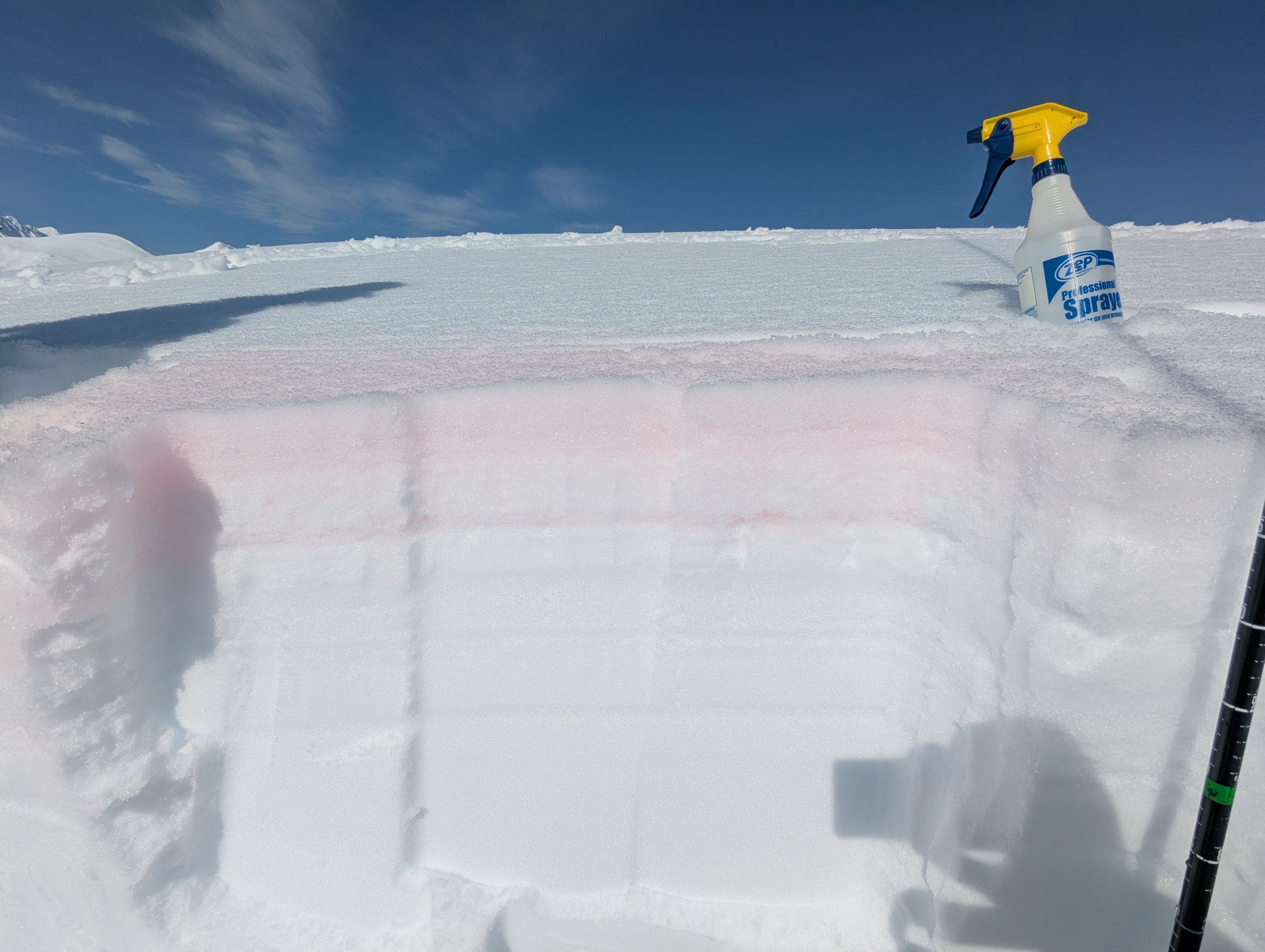
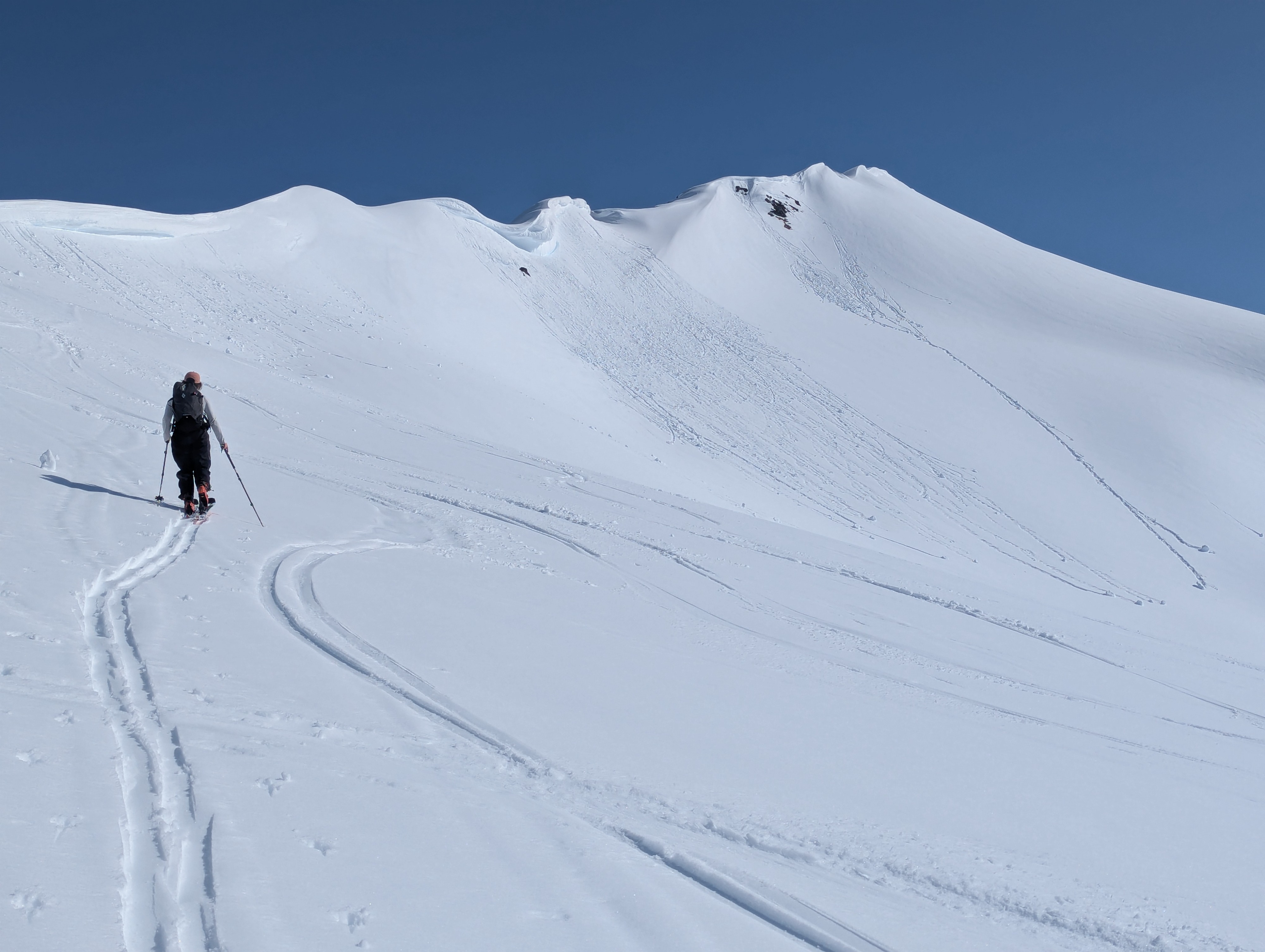
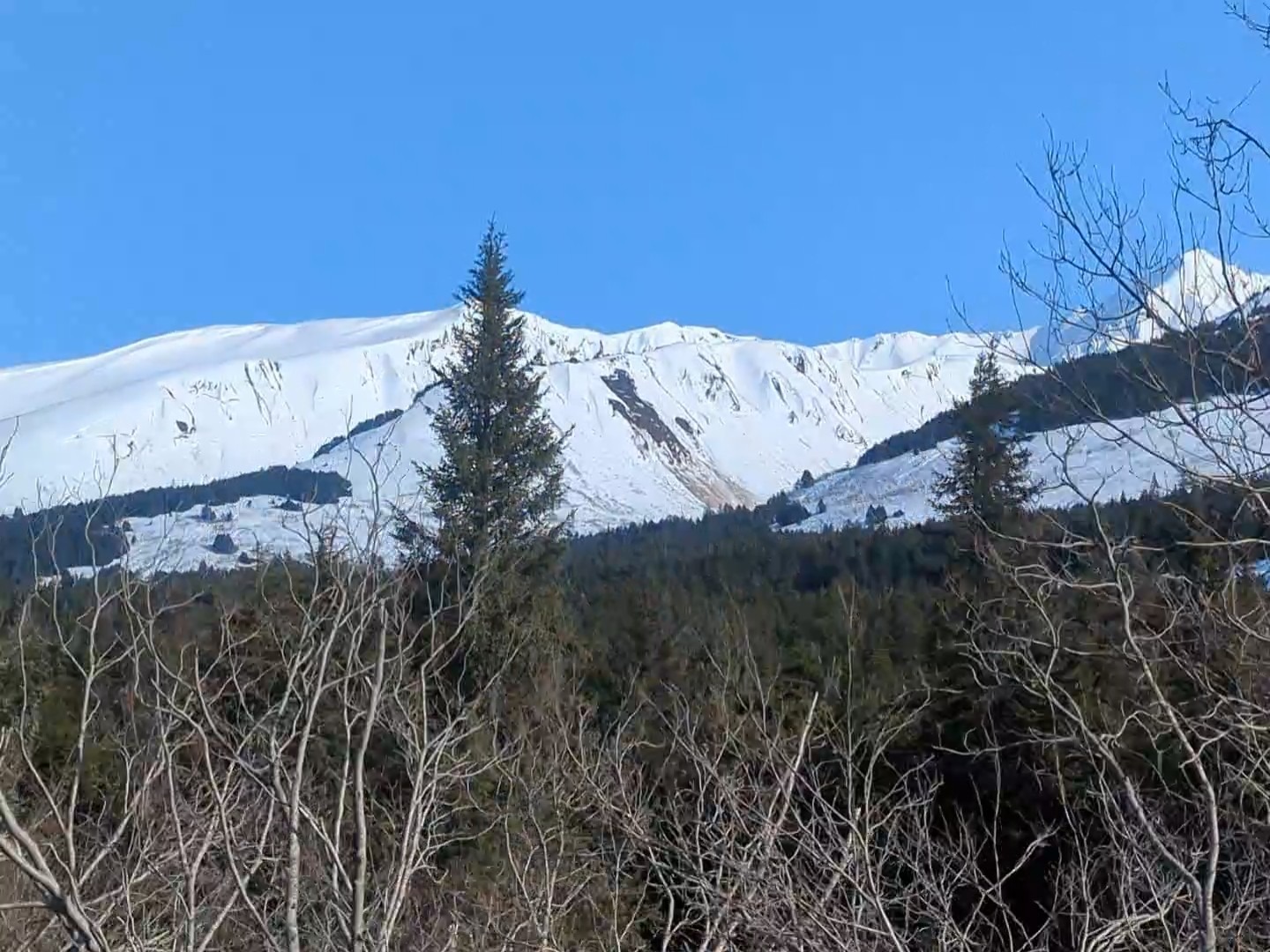
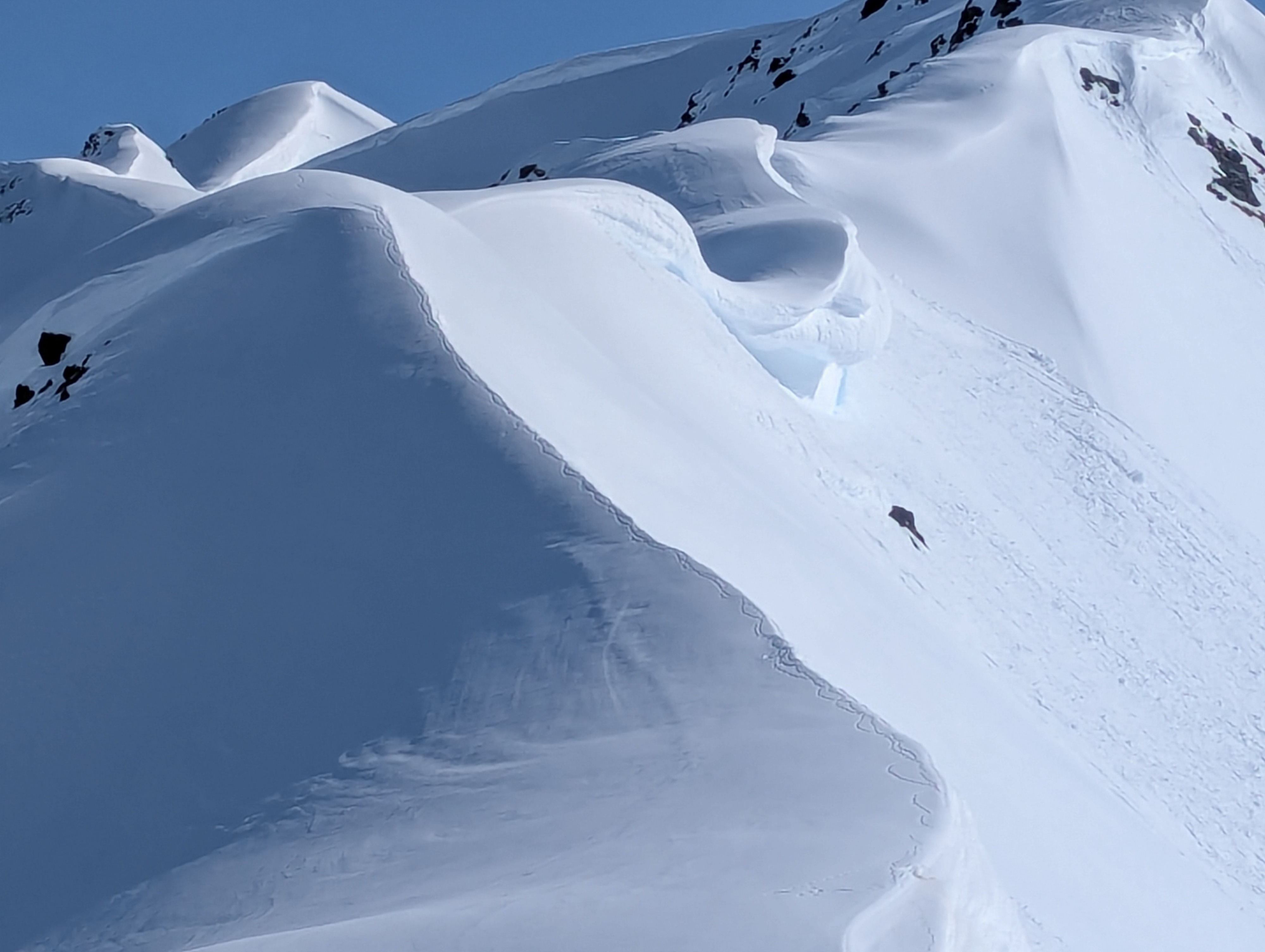
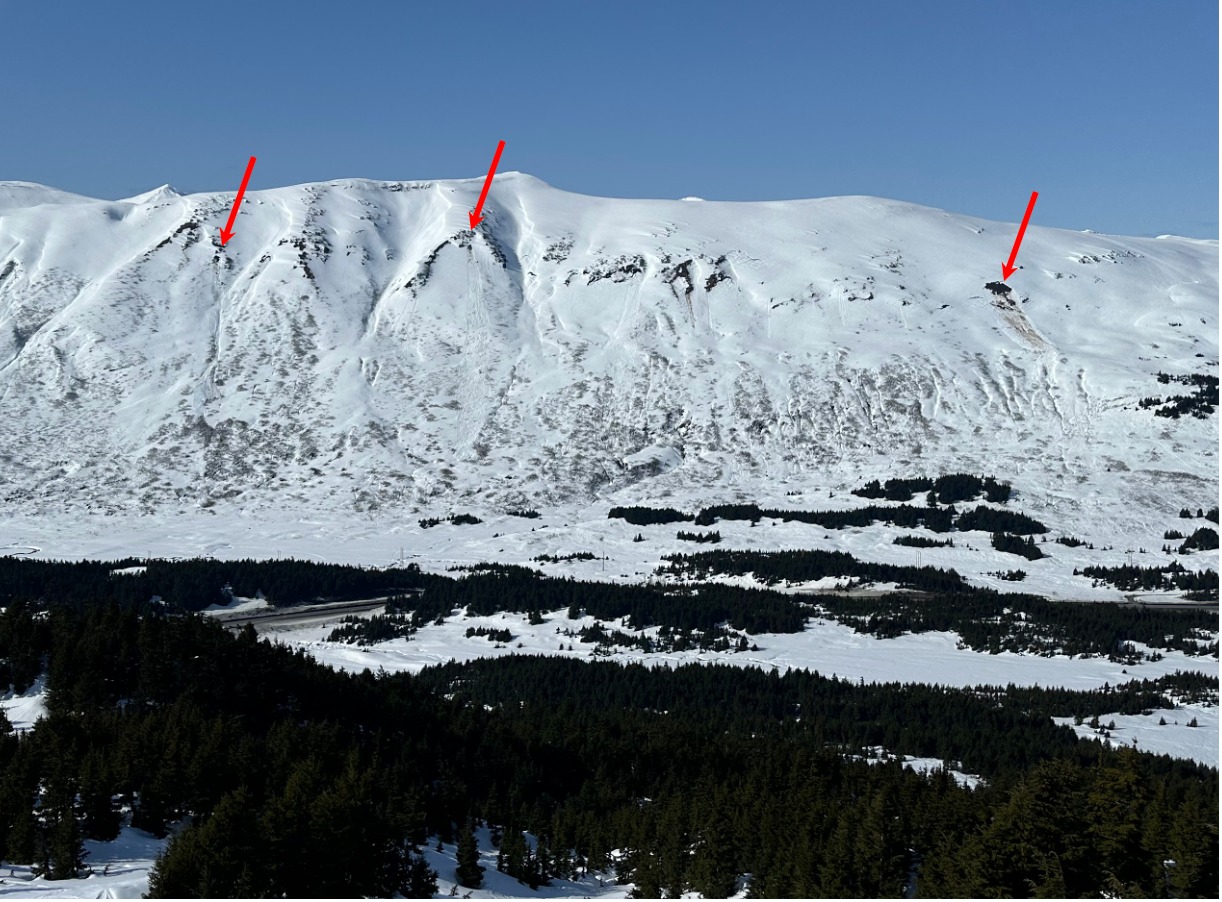
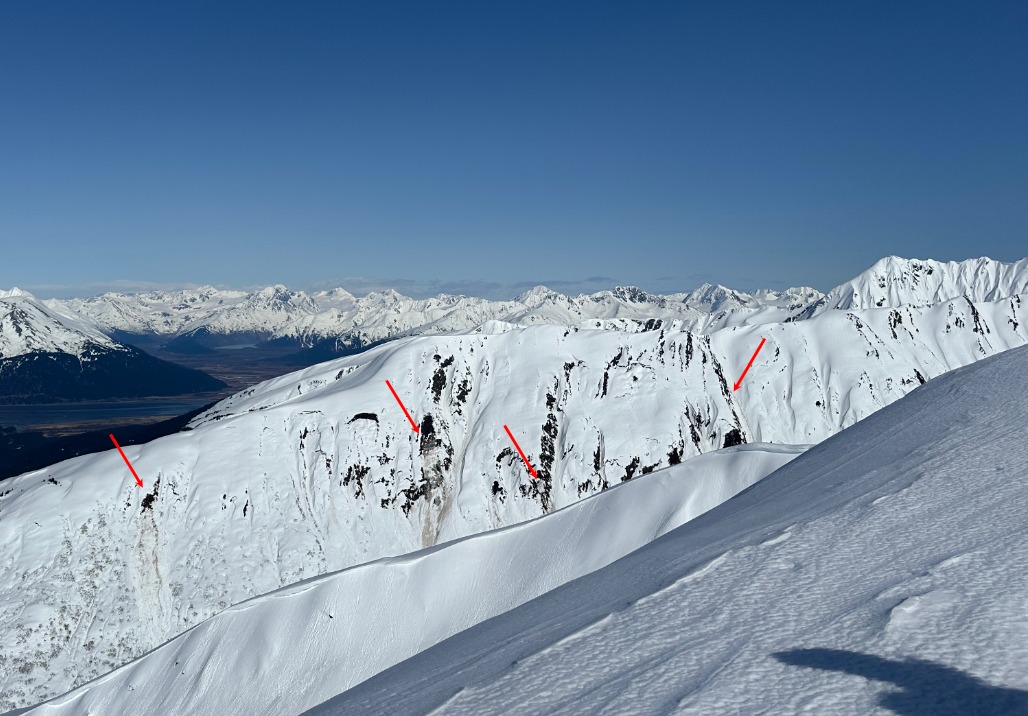
We toured up the normal Tincan uptrack to assess the spring freeze-thaw snow conditions. Below treeline, we found a supportable melt-freeze crust 3-4" thick. As we turned a corner onto a southern-facing aspect, this crust had melted from the warm temperatures of the day and direct sunlight. We dug two snow pits at 2000' and at our high point of 3200' on southern-facing slopes to assess how deep melt water from the warming was penetrating into the snowpack. At both snow pit locations, the top 25-30cm of the snowpack was wet. Widespread activity from wet loose avalanches on both sides of the pass were running long distances, entraining snow beneath and stopping just shy of the valley bottom. While the wet snow on the surface of the snowpack is relatively shallow, looking forward, we could see wet slab activity hazards increase as the snowpack continues to melt.
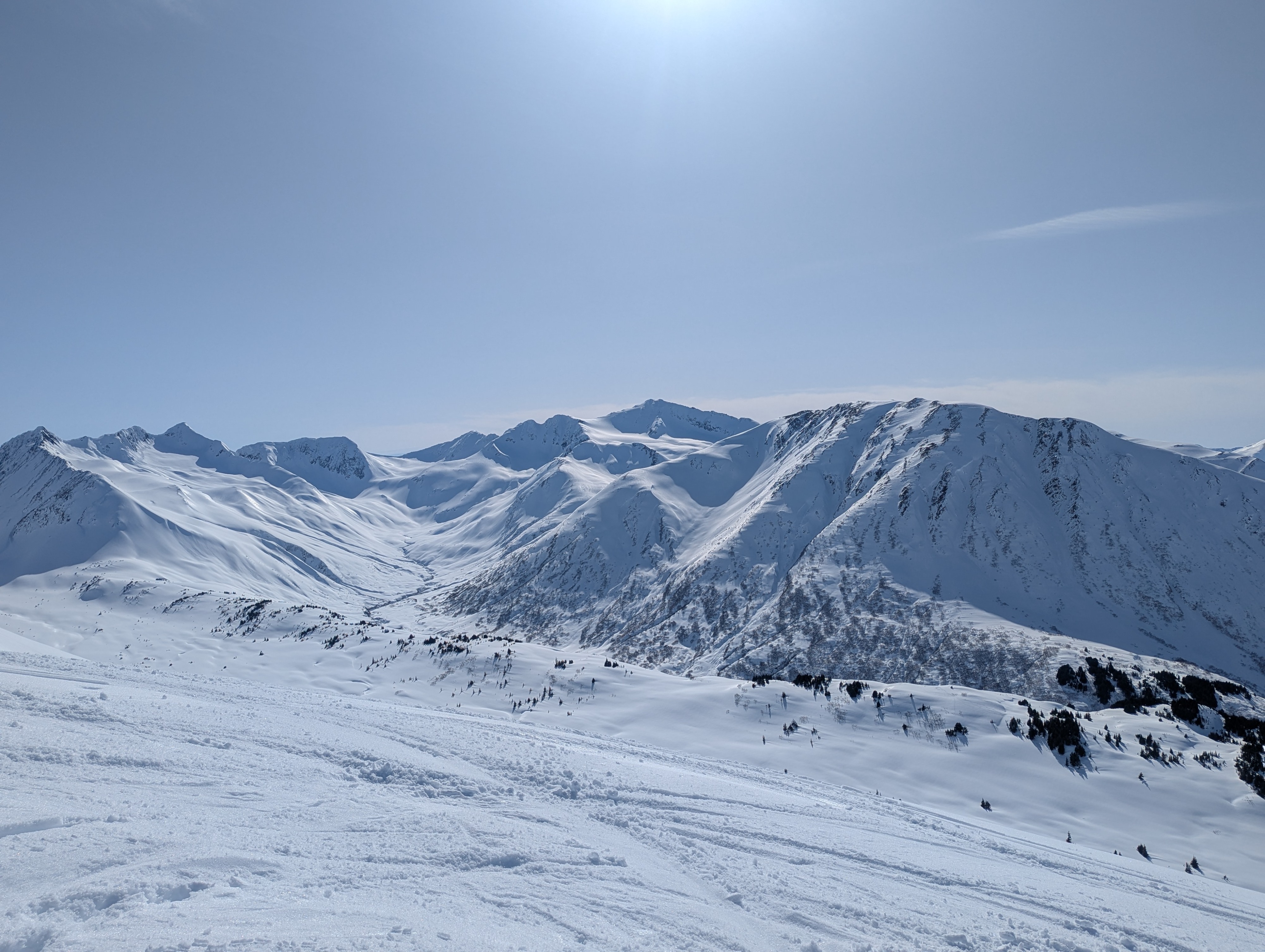
Dozens of recent natural glide and wet-loose avalanches were widespread on both sides of the valley.Weather
- Cloud Cover
- clear
- Wind Loading
- none
- Recent Snowfall
- 0
It was a warm, sunny day with light winds noticeable at the ridgeline. Departing ~5 pm the car read 51 F.
Snowpack
From the car to ~1500', we skinned up on a supportable melt freeze crust ~3-4" thick. On solar aspects, the snow surface quickly became soft. We dug two snow pits on south-facing slopes at 2000' and 3200' to assess the freeze-thaw snow conditions. In both snow pit locations, we found that meltwater had softened the top 10-12" of the snowpack. Both snowpits had several melt-freeze crusts in the top 1 m of the snowpack, however, we did not observe any obvious weak layers. We skied corn snow from our high point to ~2000', the snow transitioned and became sticky in areas softened by the sun or breakable crust on aspects with less direct sun.