
Quick report
- Cracking
- isolated
- Collapsing
- isolated
Weather
- Cloud Cover
- broken
Cloud cover increased after the morning, becoming broken. A light snow shower moved through with no accumulation. Calm wind.
Snowpack
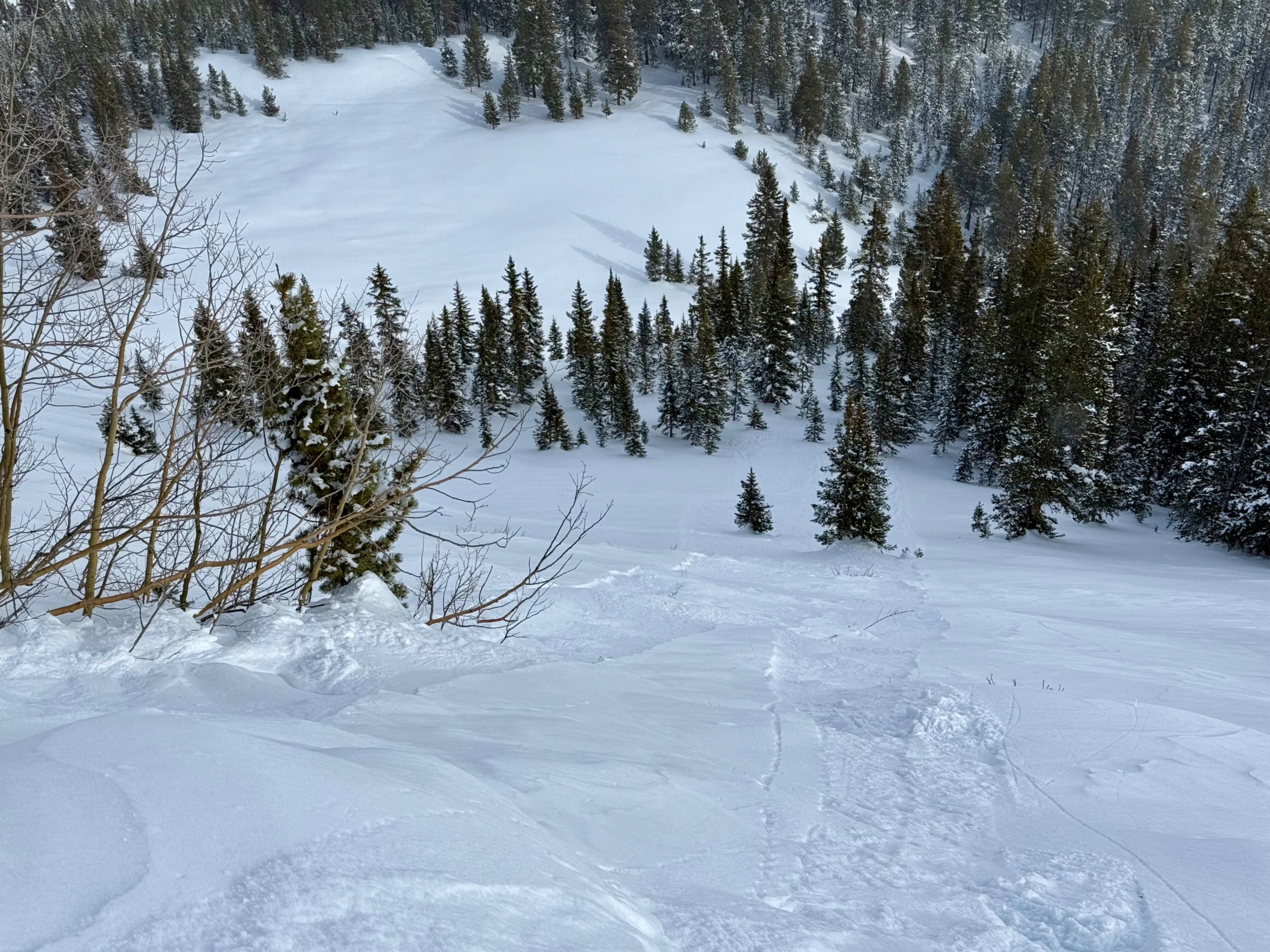
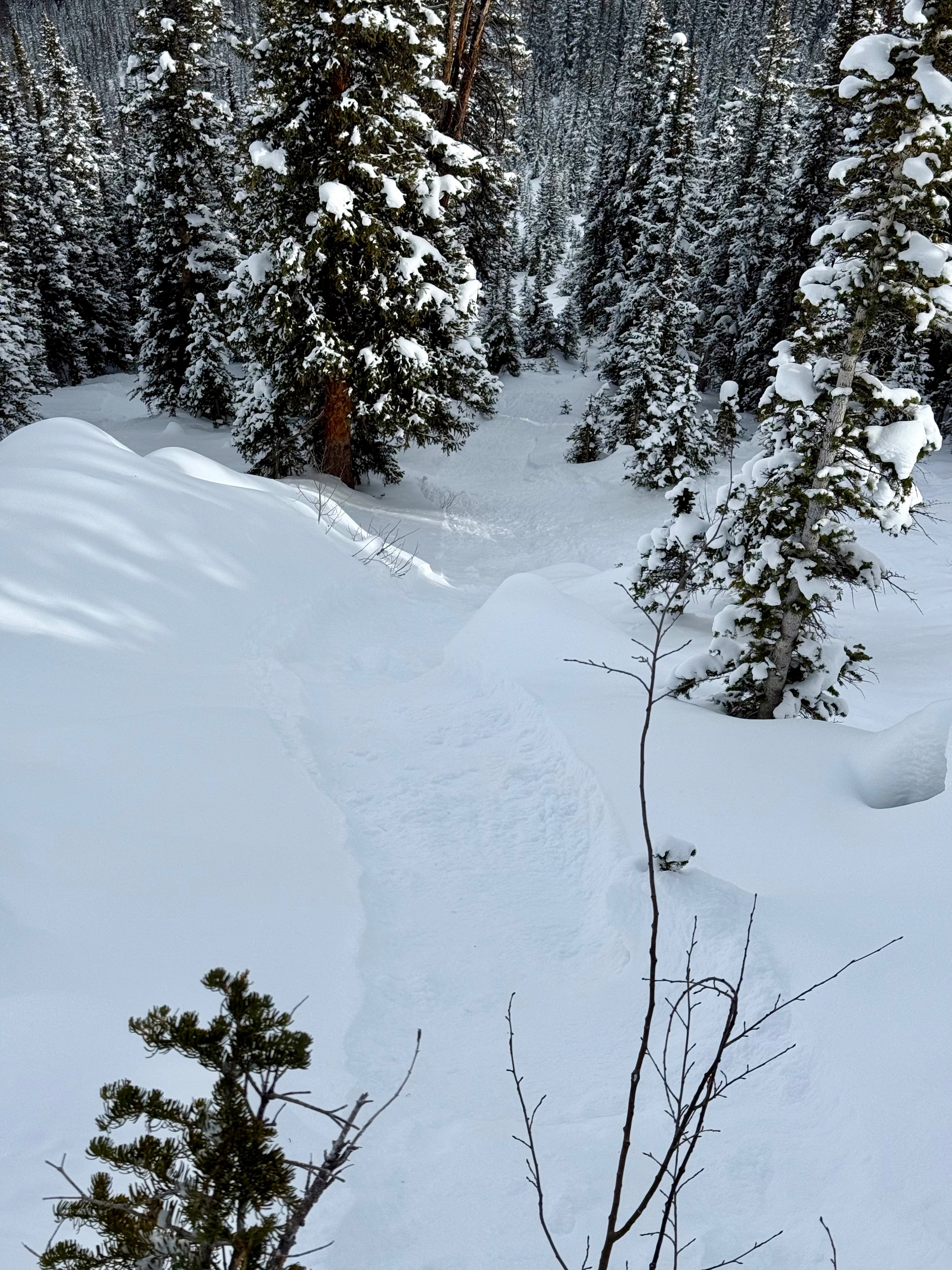
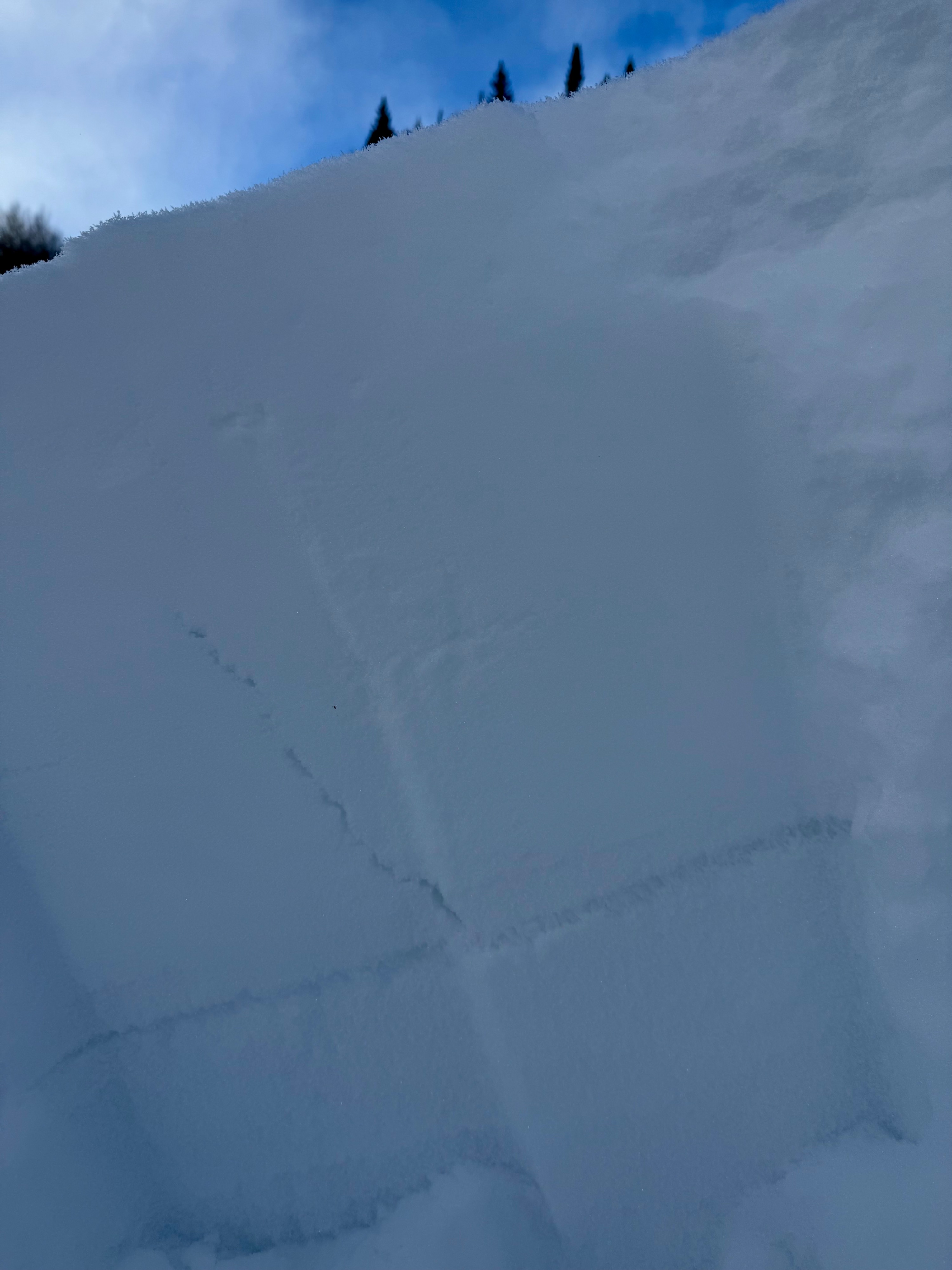
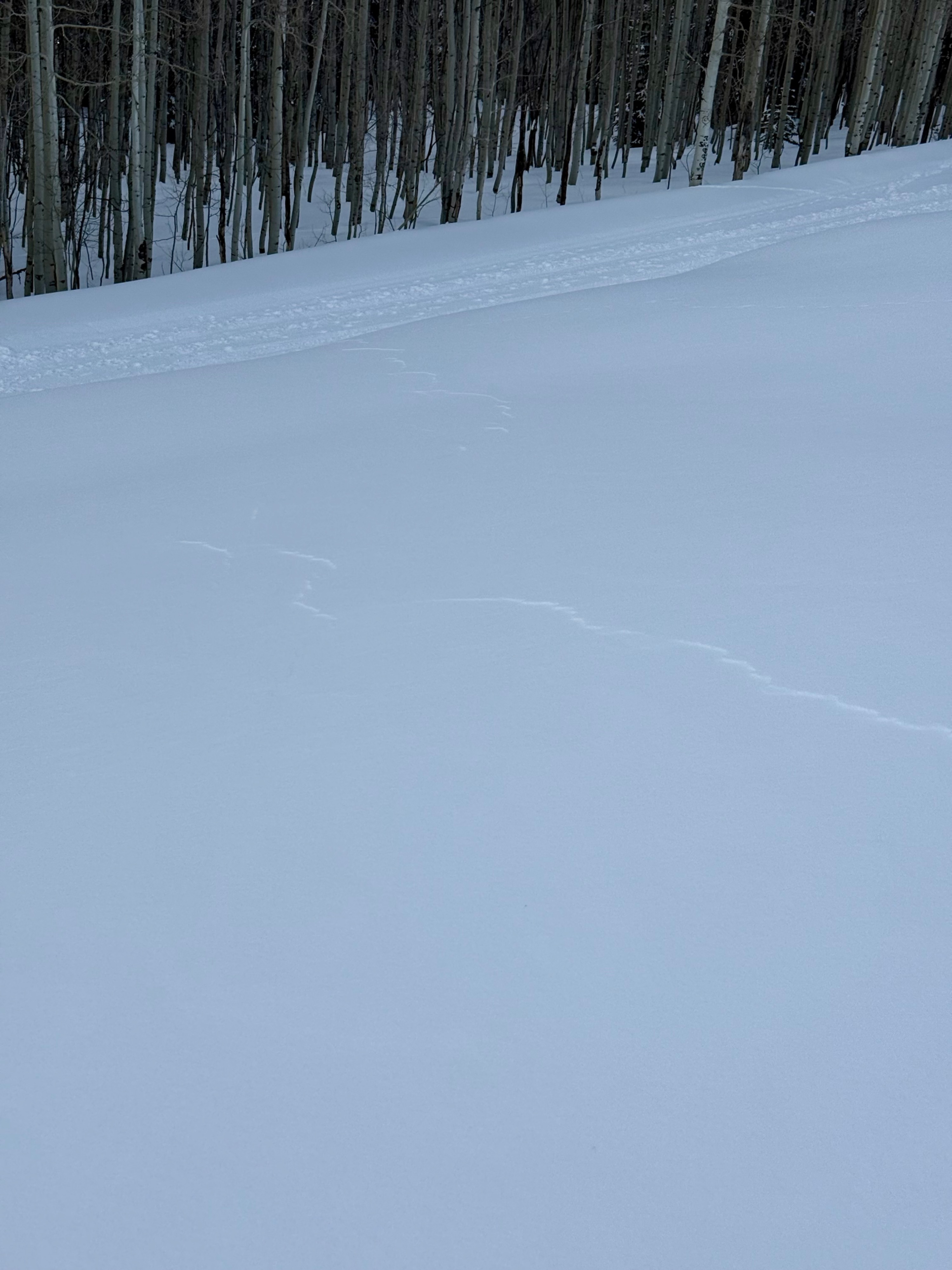
I hunted around for the persistent slab problem and found the most reactive snowpack in a few low-angle meadows right near Gothic Rd. The main difference in this location was the weak layer. At this location, the December drought layer was a 1cm surface hoar that was standing upright. A collapse would often run 10ft to 50ft, and the shooting cracks were often parallel with the slope angle. 2 collapses managed to run 100ft or so. I was able to get these collapses right up to the steep slopes dropping into the East River at one location, but those steep slopes didn't have enough snowpack left on them to produce a slab avalanche.
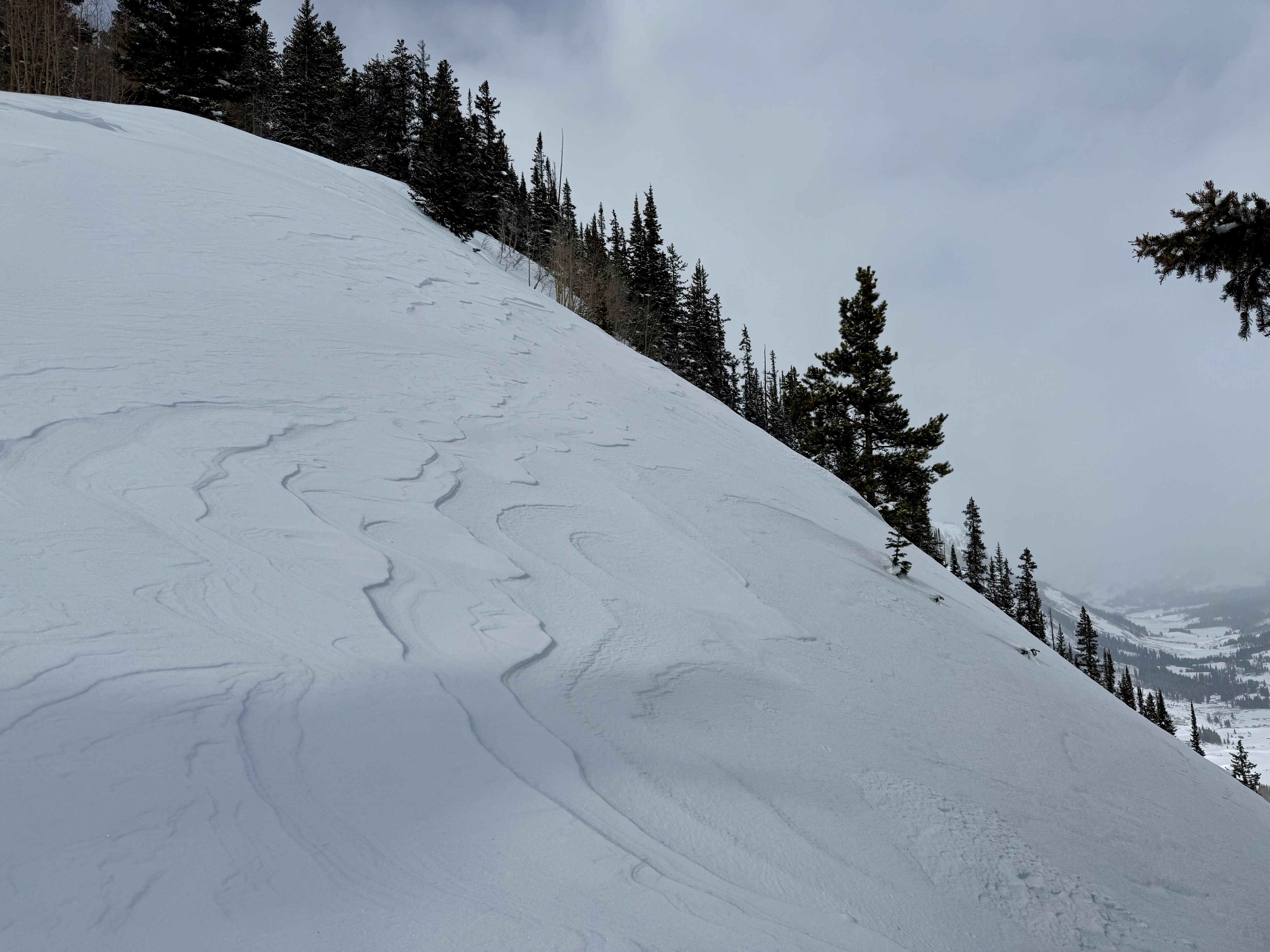
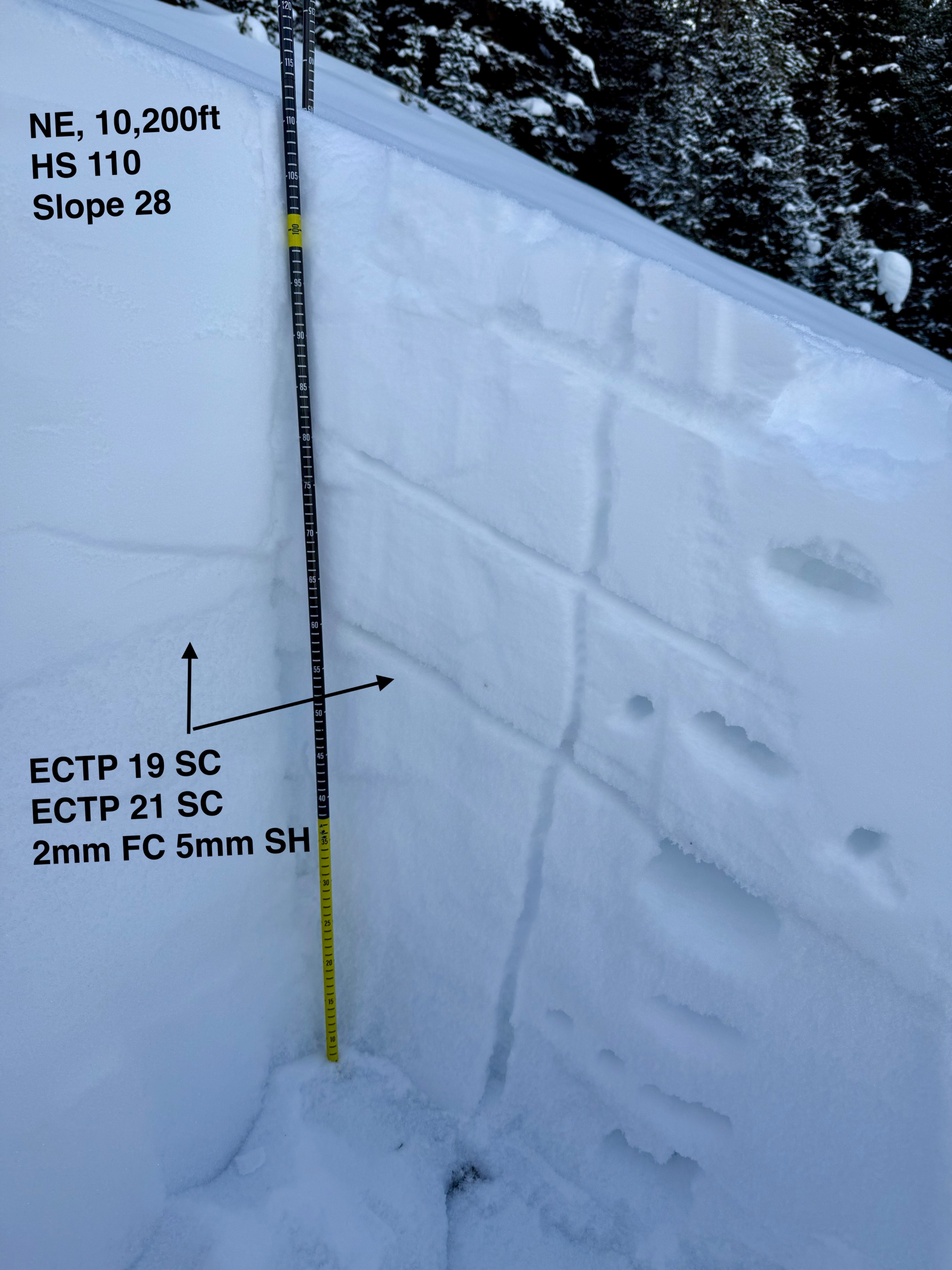
I traveled above 4 steep start zones on Snodgrass. Some of these start zones were blown out, and small hard slabs were blown back uphill right at the top. Small sluffs were easy to push down these 40-degree slopes, and those sluffs entrained the upper 10 to 15cm of snow. PSa structure appeared to be isolated in the steepest slope angles. Maybe these start zones avalanched in the Christmas or New Year's cycles and haven't formed a new slab. The PSa structure appeared to be more common in the more moderate slope angles. I dug a test pit in one of these locations and got an ECTP 21 and an ECTP 19 on 2mm facets mixed with 5mm surface hoar. The slab was 45cm thick and had a little 1F left at the bottom of it. I wasn't able to produce a collapse while traveling through this snowpack, until I got down to Gothic Rd, as described above.
Ski Pen was around 15cm. If you pushed to hard in a turn or bounced, sometimes your skis would push through the slab and get hung up in the weaker snow below.