
Quick report
- Cracking
- widespread
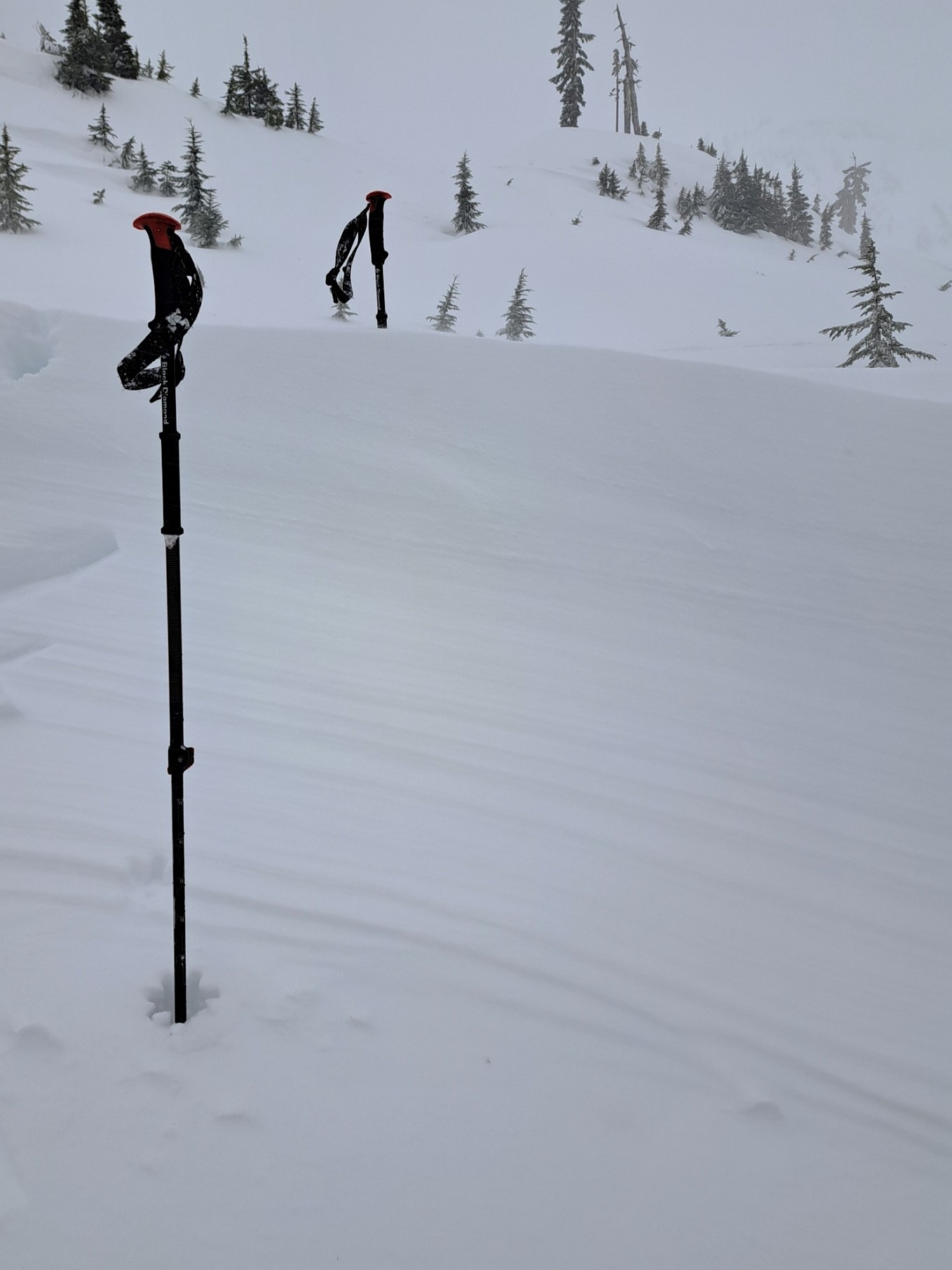
Very stormy conditions and intermittent visibility kept us on low-angle slopes with minimal exposure to bigger slopes overhead. Sticking to mellow terrain and stomping on small test slopes didn't produce much in terms of results, but there was too much wind-loading to really want to get into anything steeper until the storm eased up. It will take better visibility to see the extent of any natural avalanche activity - and more obs - to figure out if facets at and just below the old snow surface are contributing to instability reported by other observers.
Those in steep, wind-exposed terrain triggered avalanches on Saturday, but poking around mellower terrain and small test slopes didn't produce many long shooting cracks or small slab avalanches . Signs of instability limited to lots of localized cracking and unsupported, wind-drifted features failing under load. It's possible that strong winds were creating unstable slabs farther down-slope than usual, so you really needed to get into a bigger slope to find consistent instability.Weather
- Cloud Cover
- obscured
- Wind Loading
- intense
- Snow Avail For Transport
- large amounts
Very windy and stormy throughout the morning with strong winds transporting snow well down into low-elevation terrain.
Snowpack
Anywhere from a few to 100cm of dense wind-drifted snow above the 12/7 rain crust. Strong to extreme winds made for a highly variable pattern of loading and scouring with moist, with 1F slab found in many areas. A snowpit in a partially sheltered mid-elevation site showed 35cm of new snow with a mildly inverted (4F over F+) hardness profile over 1F snow from last weekend. ECT didn't produce propagation and CT's didn't show a clean shear, even at the old-new interface. Well-settled rounded grain, melt form and crust layers below.
Avalanche
None were observed, but visibility was too poor to see if there were naturals in Upper Bagley and other areas.