
Quick report
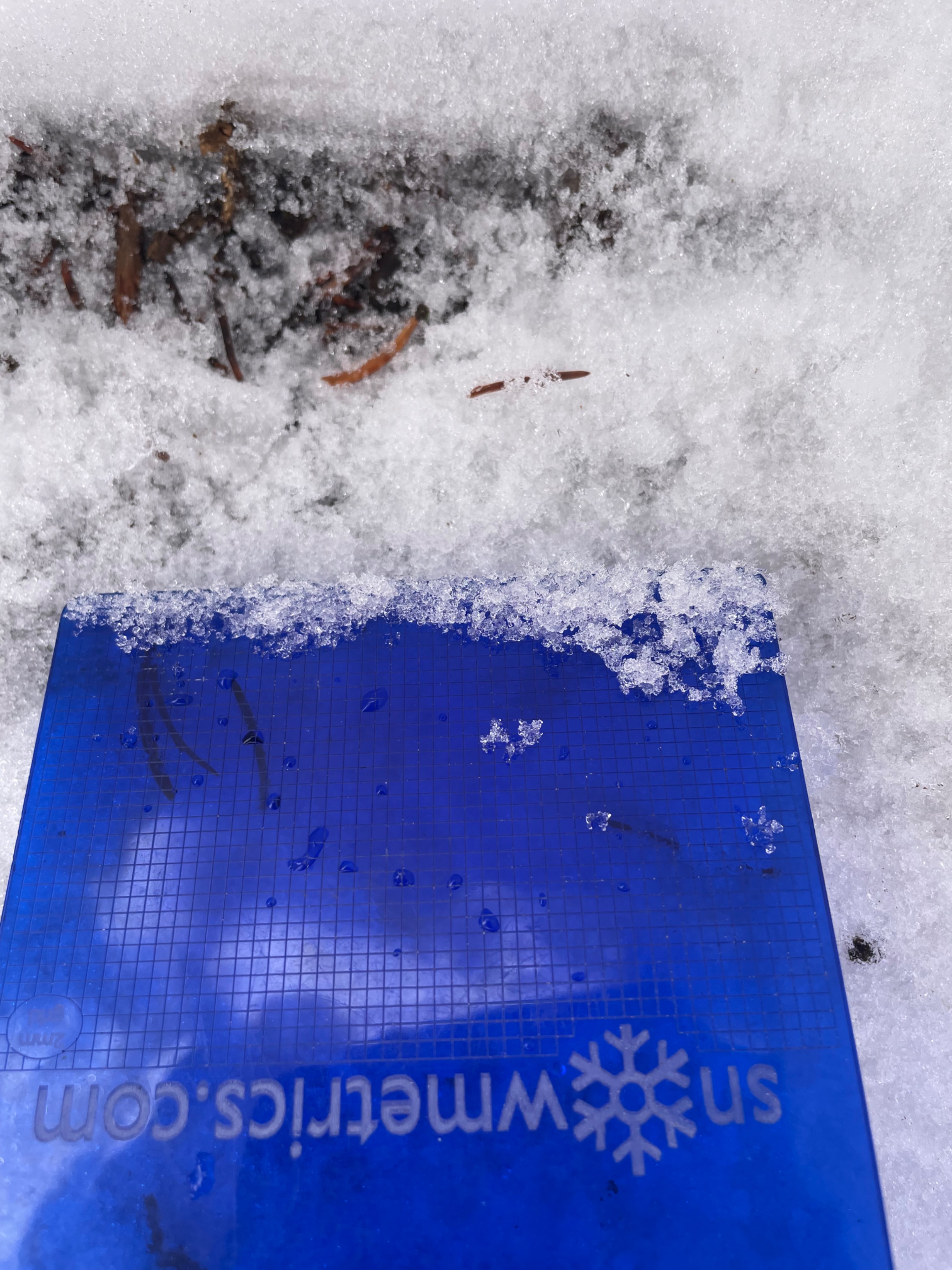
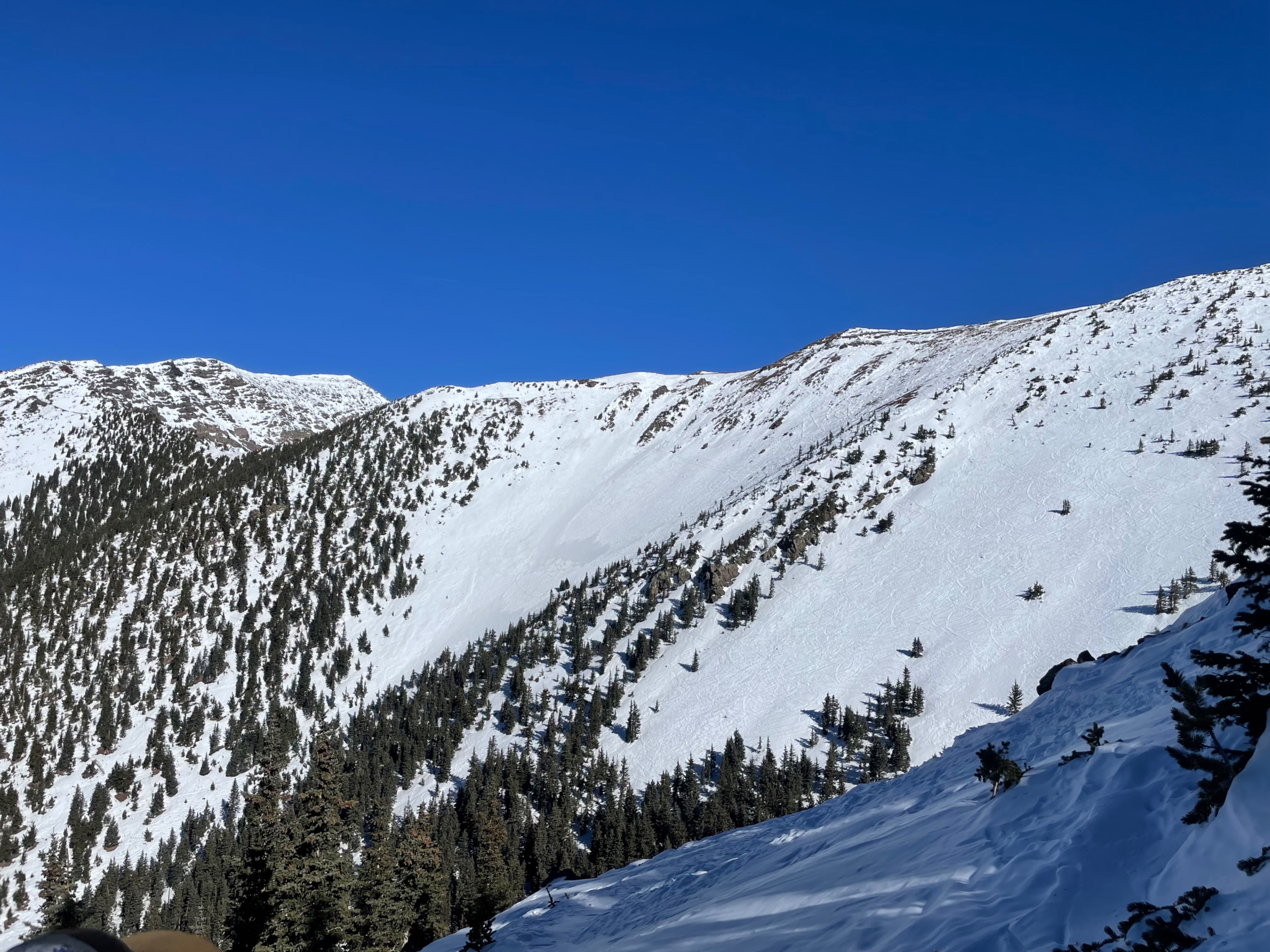
The objective of this observation was to assess the snowmelt in the past 4-7 days, and examine the impact of the warm, sunny weather on the snowpack. In particular, we were interested in the crystal type at the bottom of the snowpack and its moisture content.
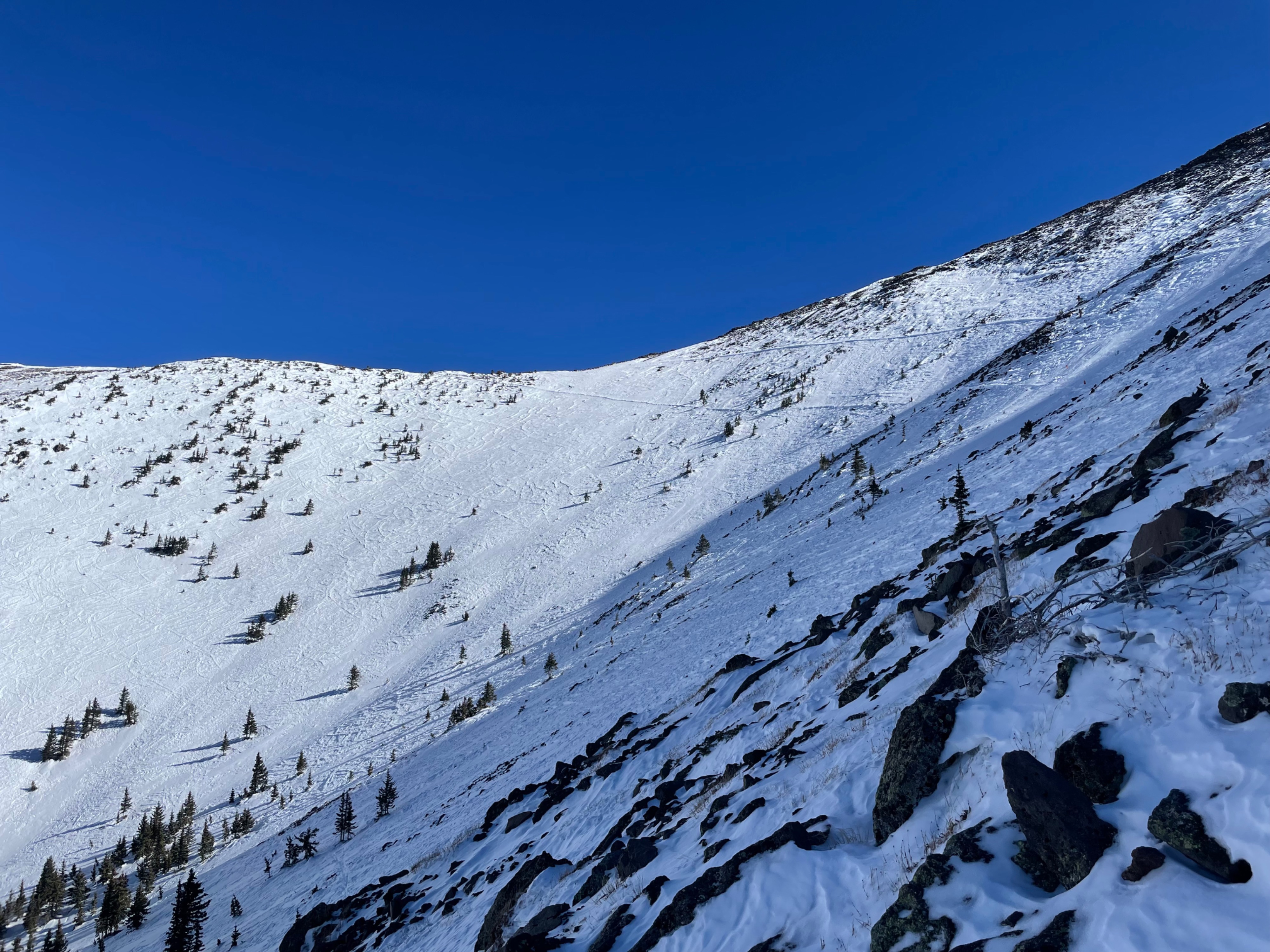
Summary: The warm weather of the past week has created an unusual set of conditions on the Peaks, especially for December. The snow environment could perhaps be described as spring-like conditions on a mid-winter wind-affected mountain. Snow depths range from 0 cms on ridgelines to 80 cms in deposition zones to 150 cms in catchment zones. Snow surfaces range from bullet-proof 3-5 cms melt-freeze crusts where sharps are required for traction, to styrafoamy wind-hardened surfaces. There seems to be minimal facet growth occurring in the bottom of the snowpack. It is unknown how much facet growth has occurred on N facing slopes. The mountain is highly wind and sun-affected. Snow surfaces are corning up, but the window of time between softening and then re-freezing is very brief.
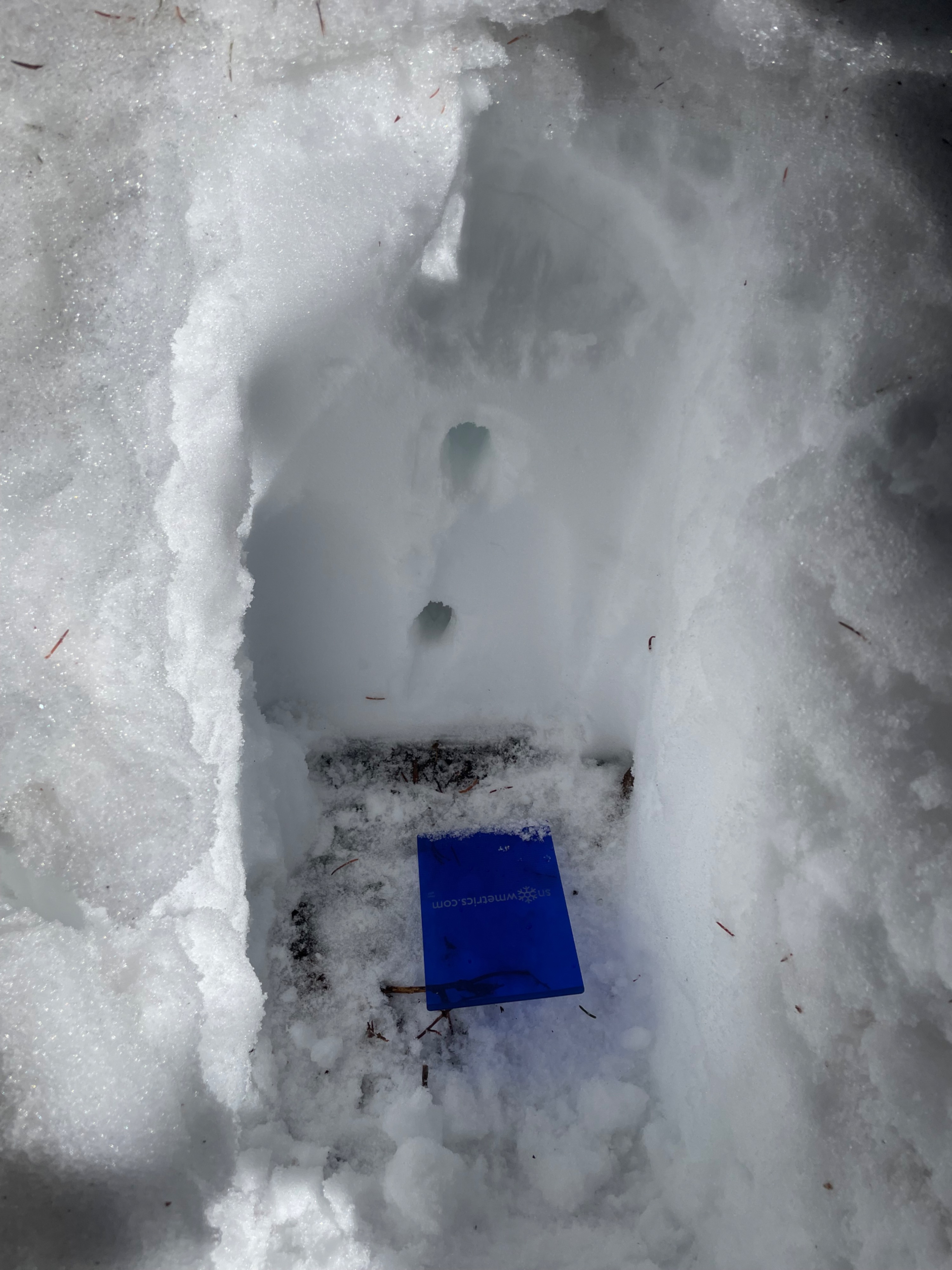
Snowpack: We punched two holes in the snowpack, both near 11,500'. The first was on an unprotected south-facing slope. At 10:30 AM, much of the southside terrain had an impenetrable melt/freeze crust, but more protected areas had only a thin (1 cm) breakable crust. Snow depth on south-facing slopes at approximately 11,500 is varying between just 30 cms in sun-exposed areas to 150 cms in wind-drifted areas. Snow depth at the pit location was approximately 50 cms. On these south-facing slopes, grains at the bottom of the snowpack were moist and had only 2-4 cms of facet growth. Below the breakable crust, was another 3-5 cms of pencil melt-freeze crystals. The snowpack hardness then transitioned from fist to 1 finger until moist faceted crystals of fist hardness were found near the bottom.
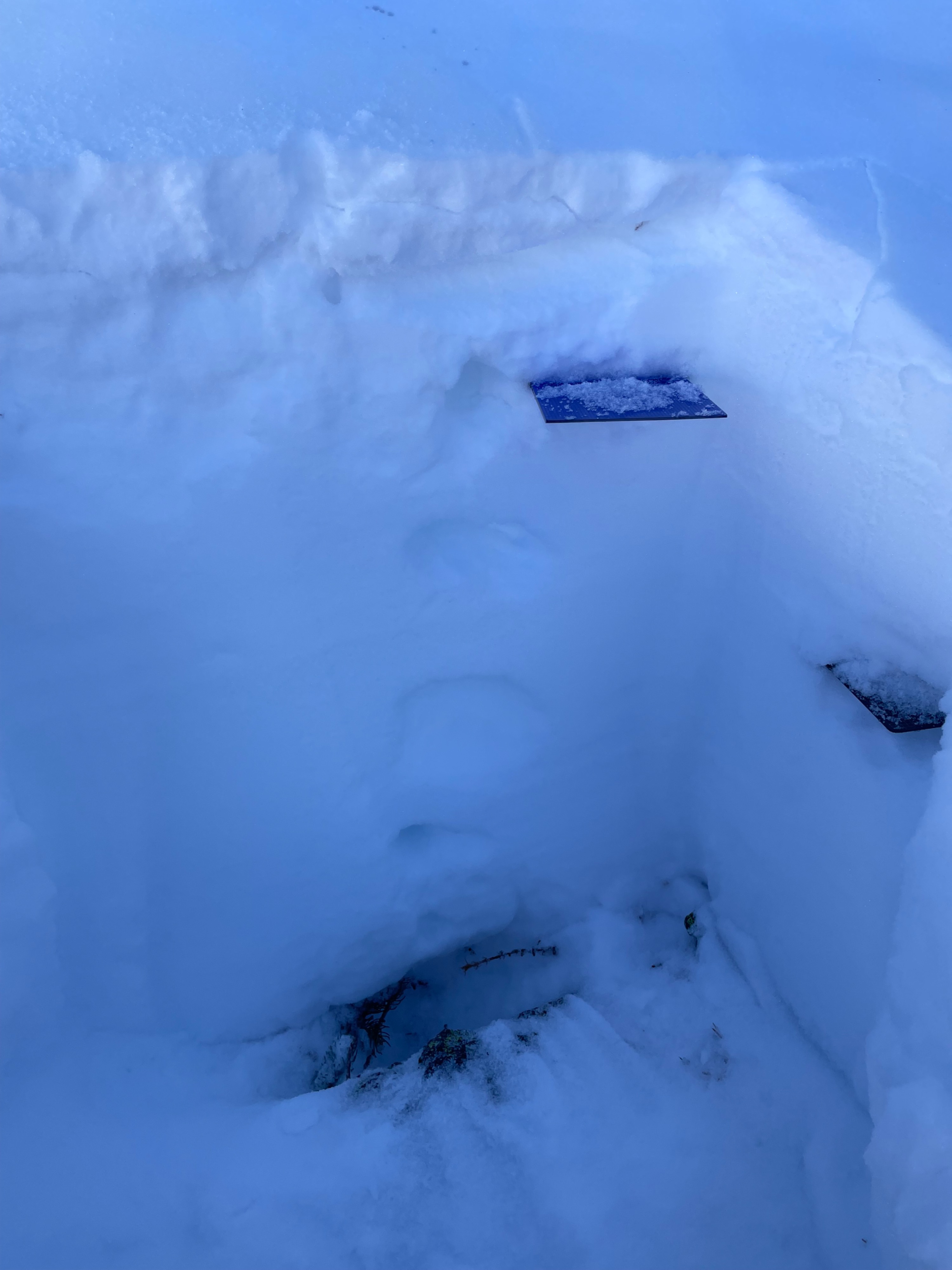
The second pit was near Larrys Line at 11,550' on a west-facing slope. Snow depth in this area was approximately 70-80 cms. In this location, there was a breakable melt-freeze crust of 2-3 cms resting on 10 cms of wind-hardened snow. Below this wind layer was fist hardness rounds transitioning to 1 F until reaching fist hard facets near the bottom few cms of the snowpack. These basal crystals were also moist and fist hardness.
Free-flowing water has been found on southwest-facing slopes in the bottom of the snowpack, and in Sun Dance bowl, the melt-freeze crust has created a bullet-proof ice layer of 3-5 cms.
Conditions: Above treeline elevations have the best skiing and riding opportunities, but accessing these areas is difficult. Obstacles still exist, but the most significant challenge in the upper elevation areas is finding a consistent surface and nailing the timing so that melt-freeze crusts are softened rather than ice or breakable. There is a complex mix of frequently changing snow types on the mountain right now making for challenging recreational opportunities.
Weather
- Air Temp
- 38
- Cloud Cover
- clear
- Wind Loading
- previous
- Recent Snowfall
- None
- Snow Avail For Transport
- none
Clear, warm, and calm.