
Quick report
- Collapsing
- isolated
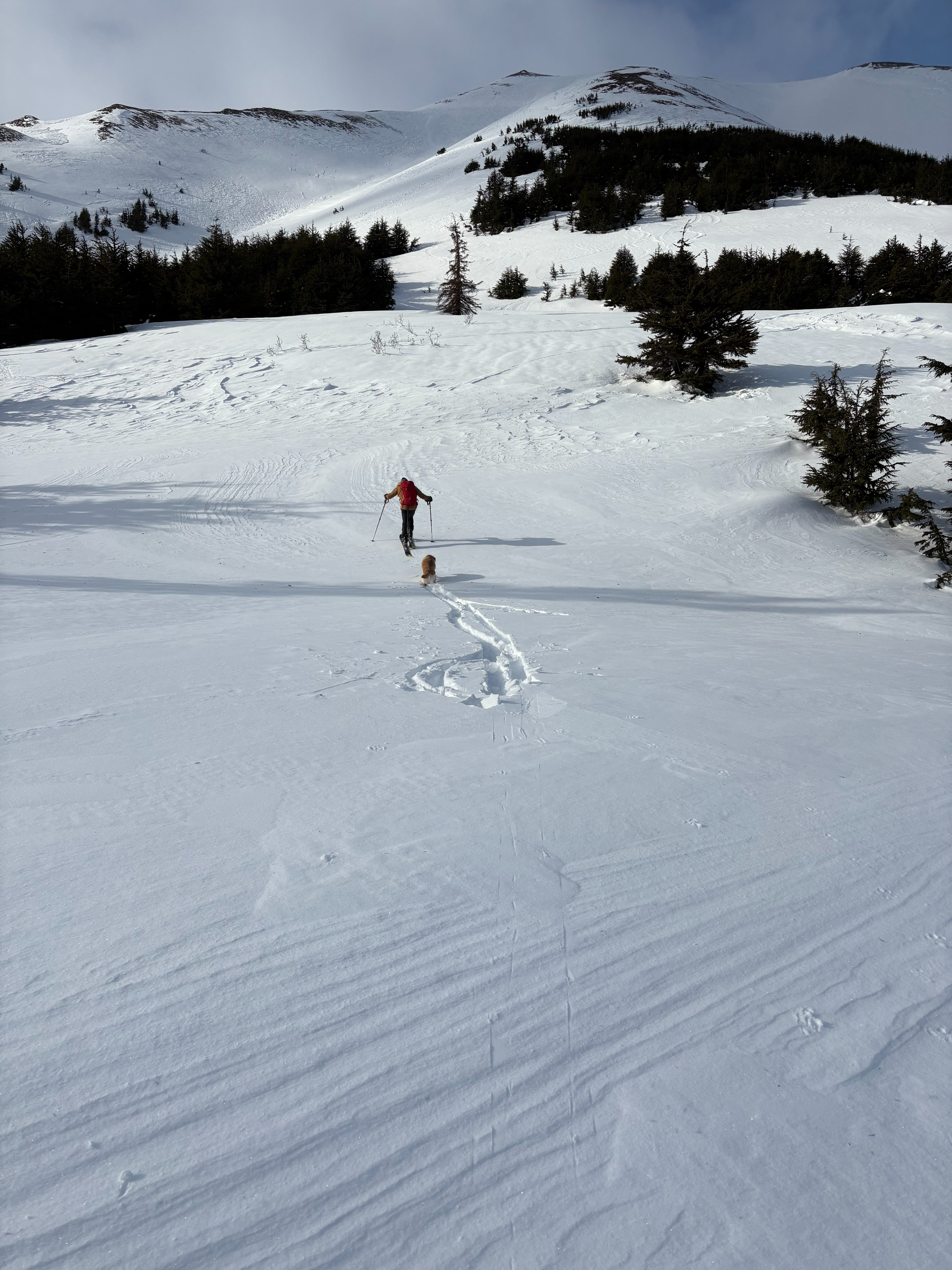
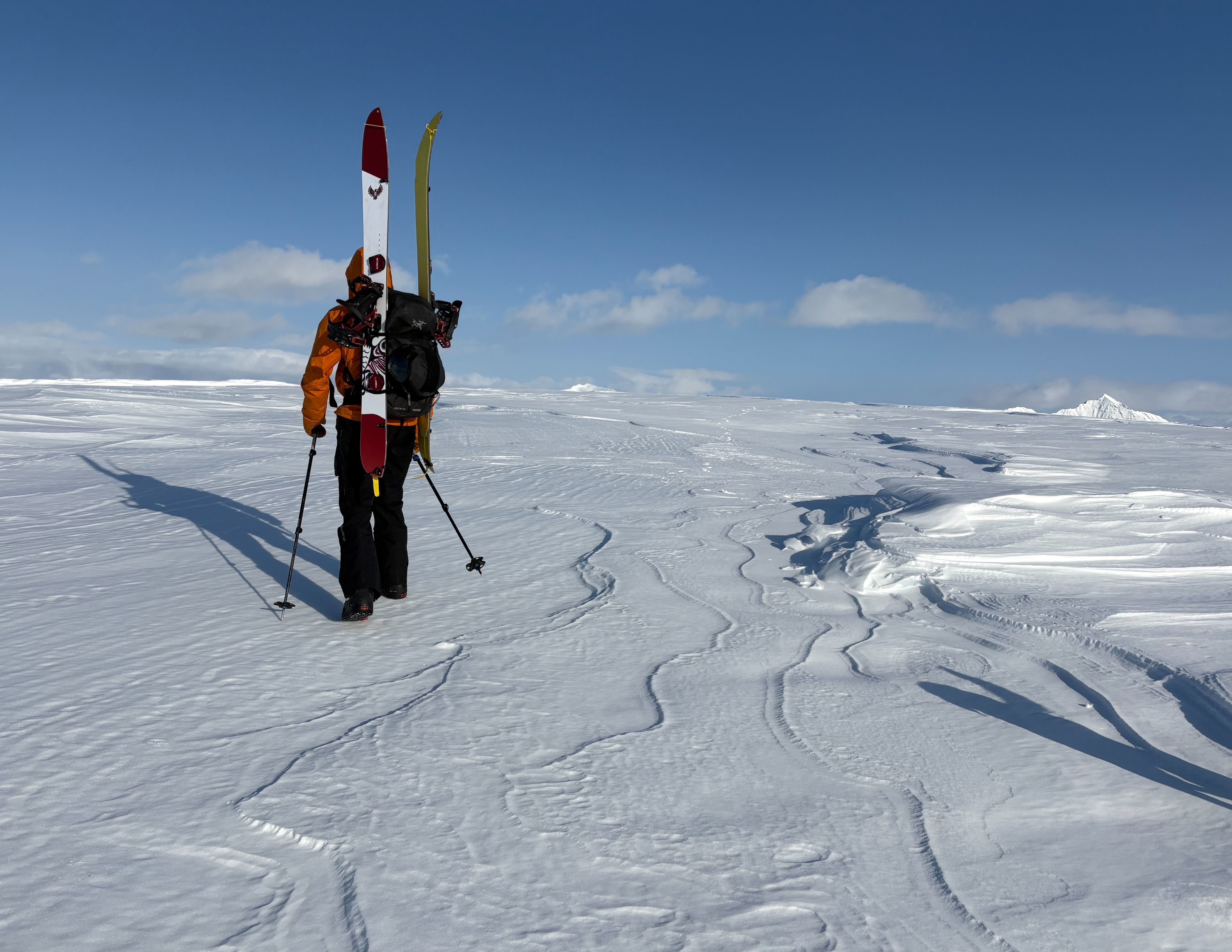
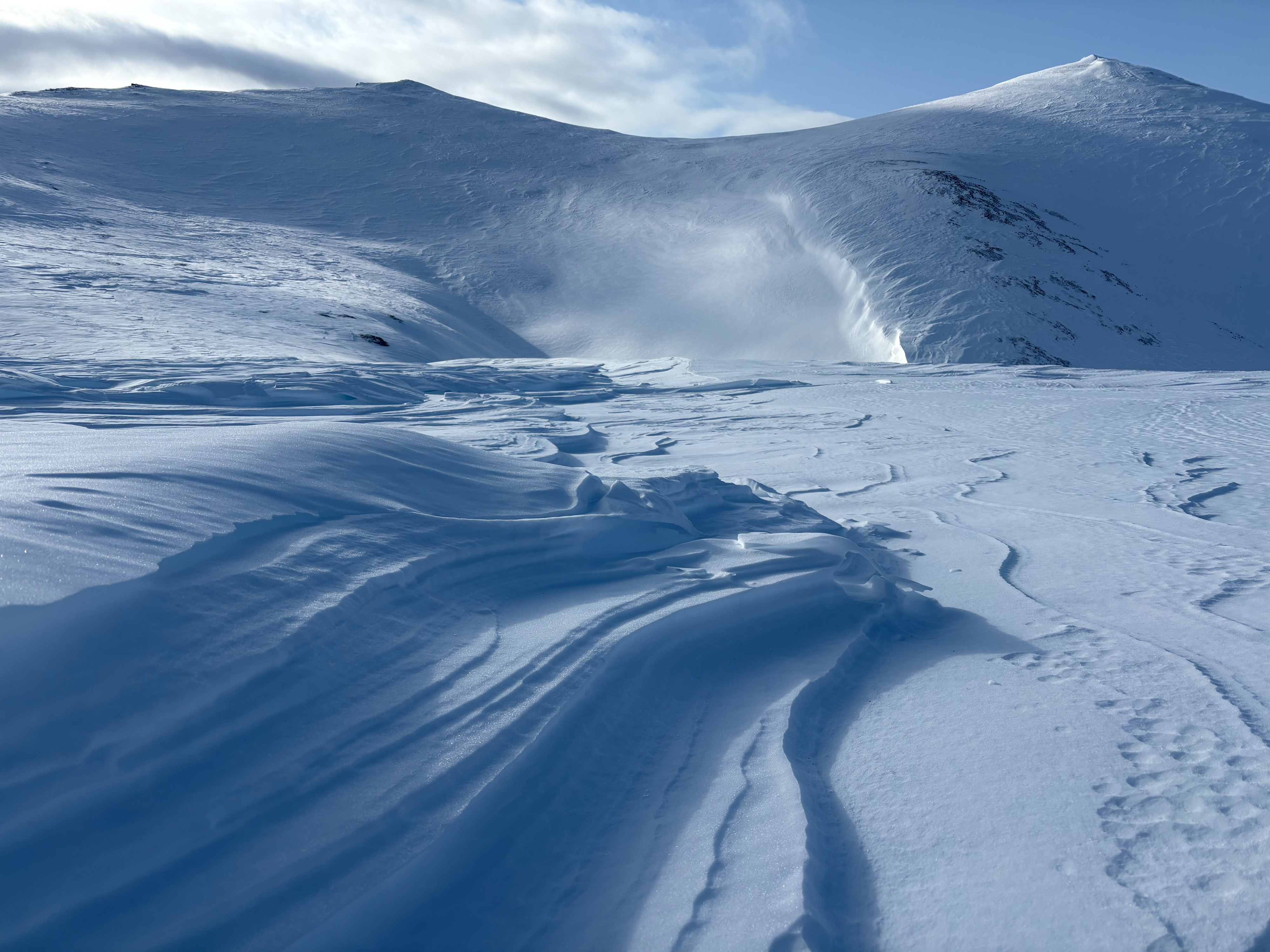
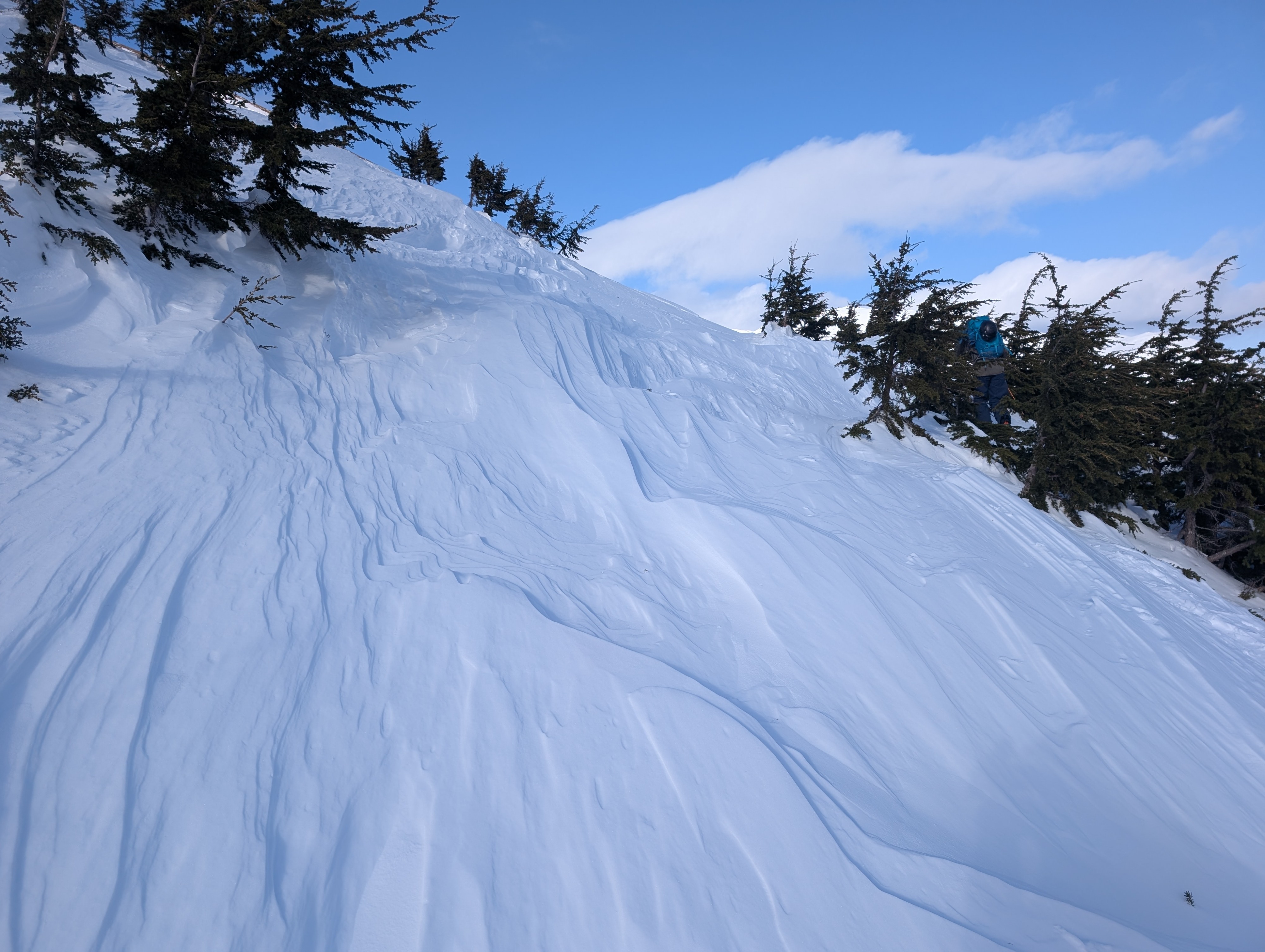
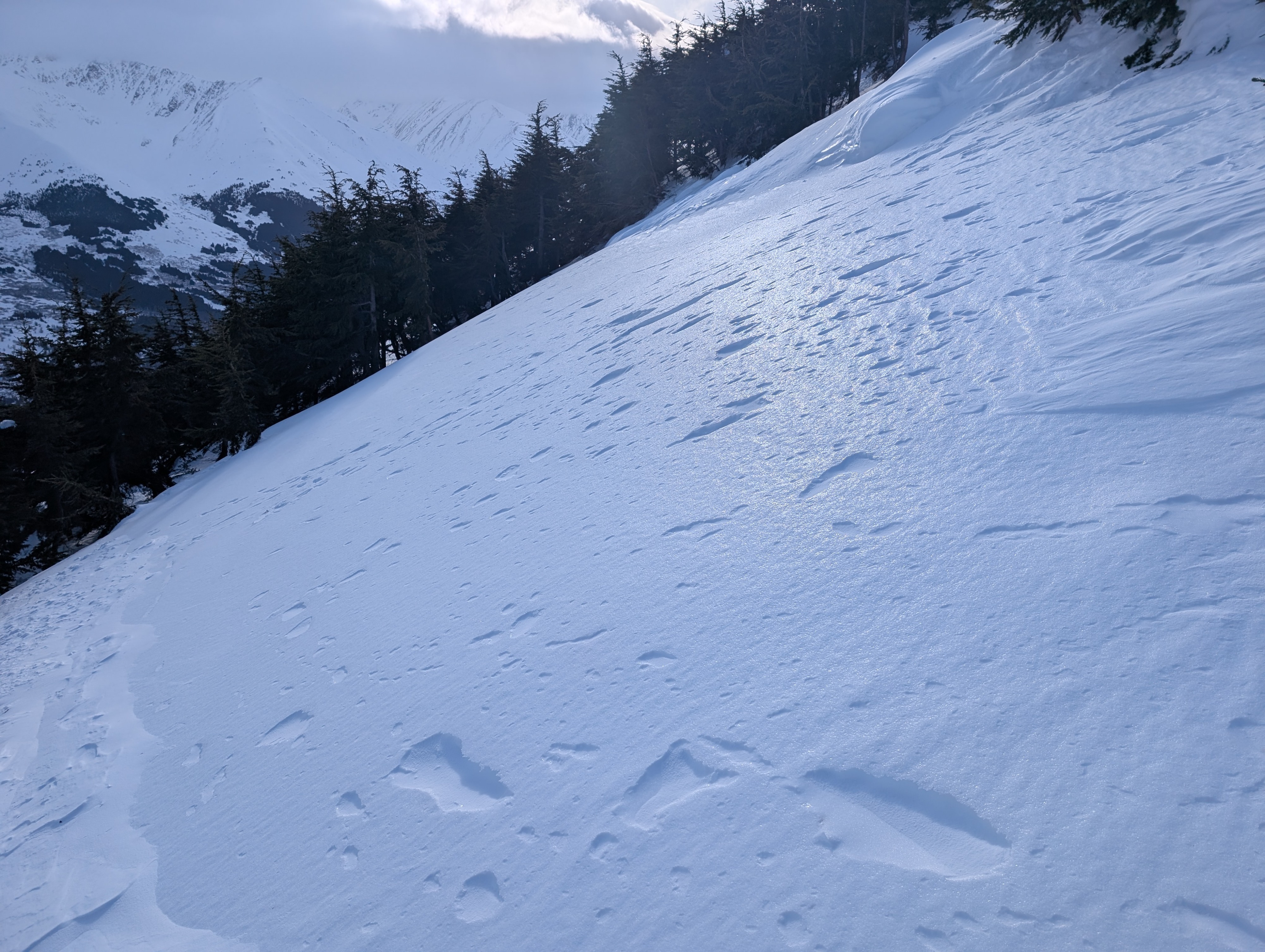
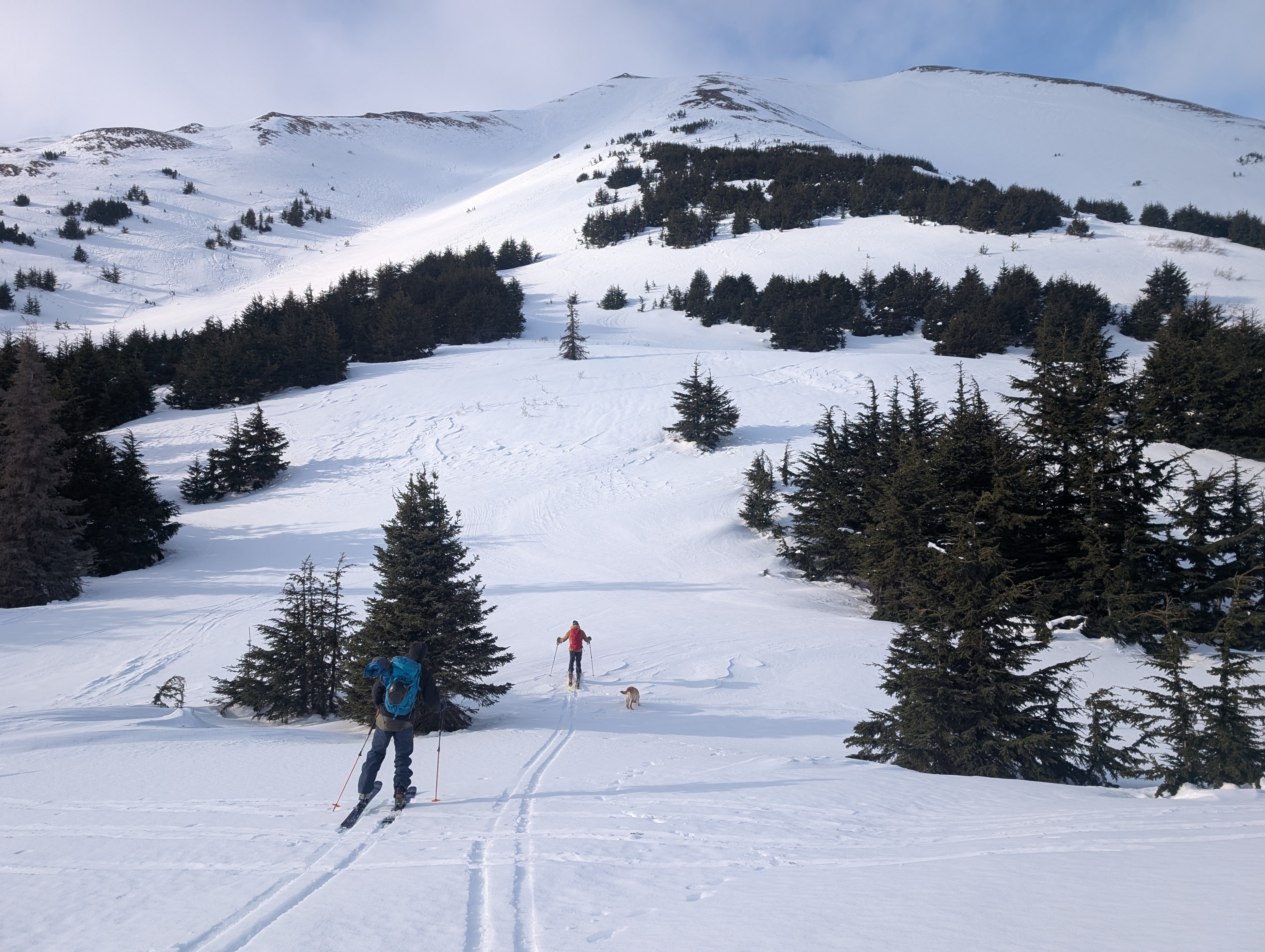
We toured and bootpacked up Colorado with the goal of digging at a higher elevation on the ridge while making frequent, quick snow observations along the ascent. From the parking lot to the ridgeline, we encountered highly variable surface conditions. In protected mid-elevation terrain, we traveled over a few inches of soft powder. At all elevations, we crossed sastrugi and wind-crusted surfaces, and on many south-facing slopes we found a thin, breakable sun crust. These conditions matched what we expected given the strong winds and warm temperatures observed late last week through Monday.
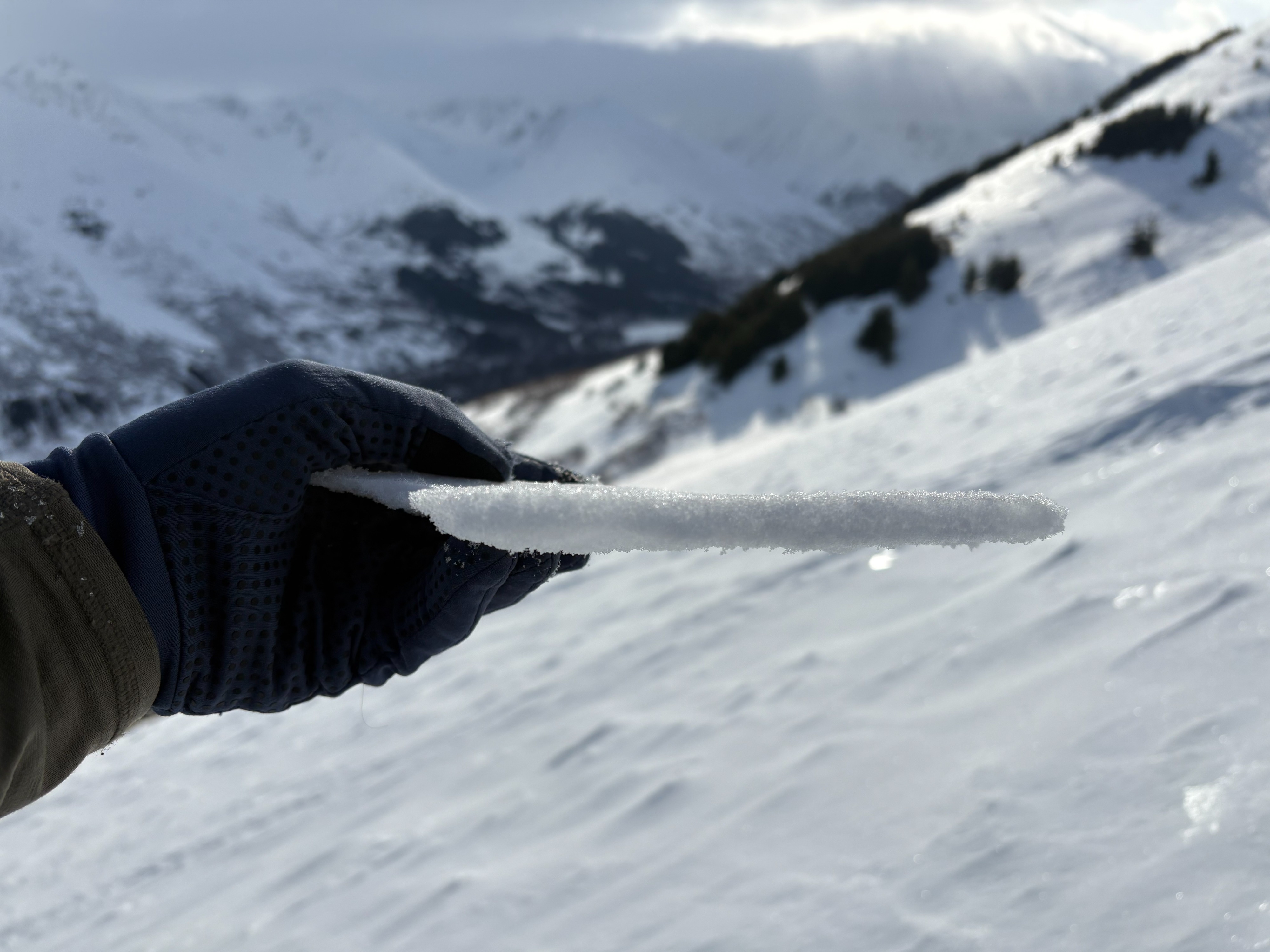
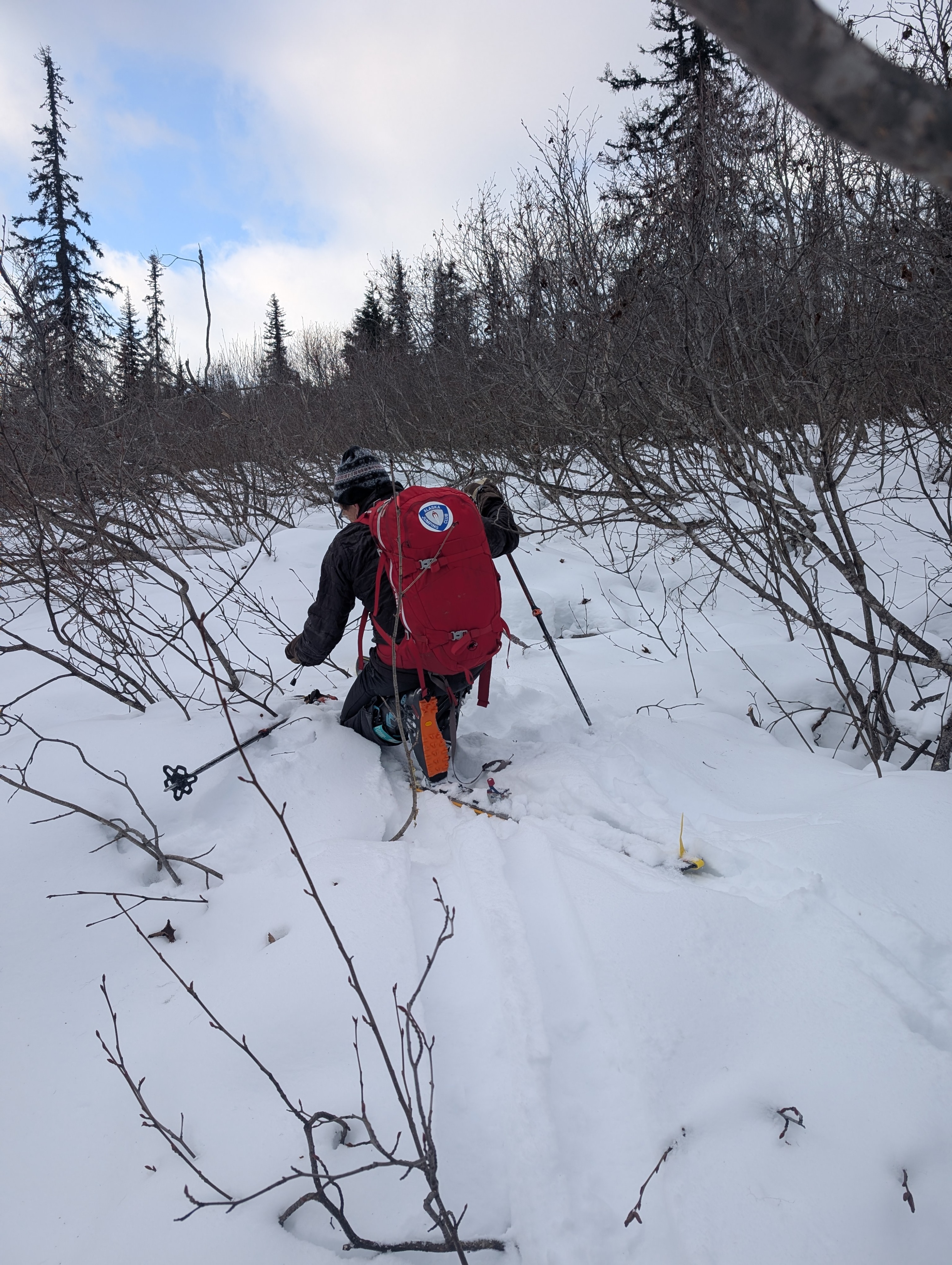
We experienced two whumpfs near the top of treeline between 2,600 and 2,800 ft. We investigated by digging a snowpit and identified the December facet layer as the likely culprit. While this layer remained stubborn in our pit near the whumphs (ECTX), it continues to represent a concern. A thick slab overlies this weak layer, and our ability to trigger collapses while traveling highlights the ongoing hazard.
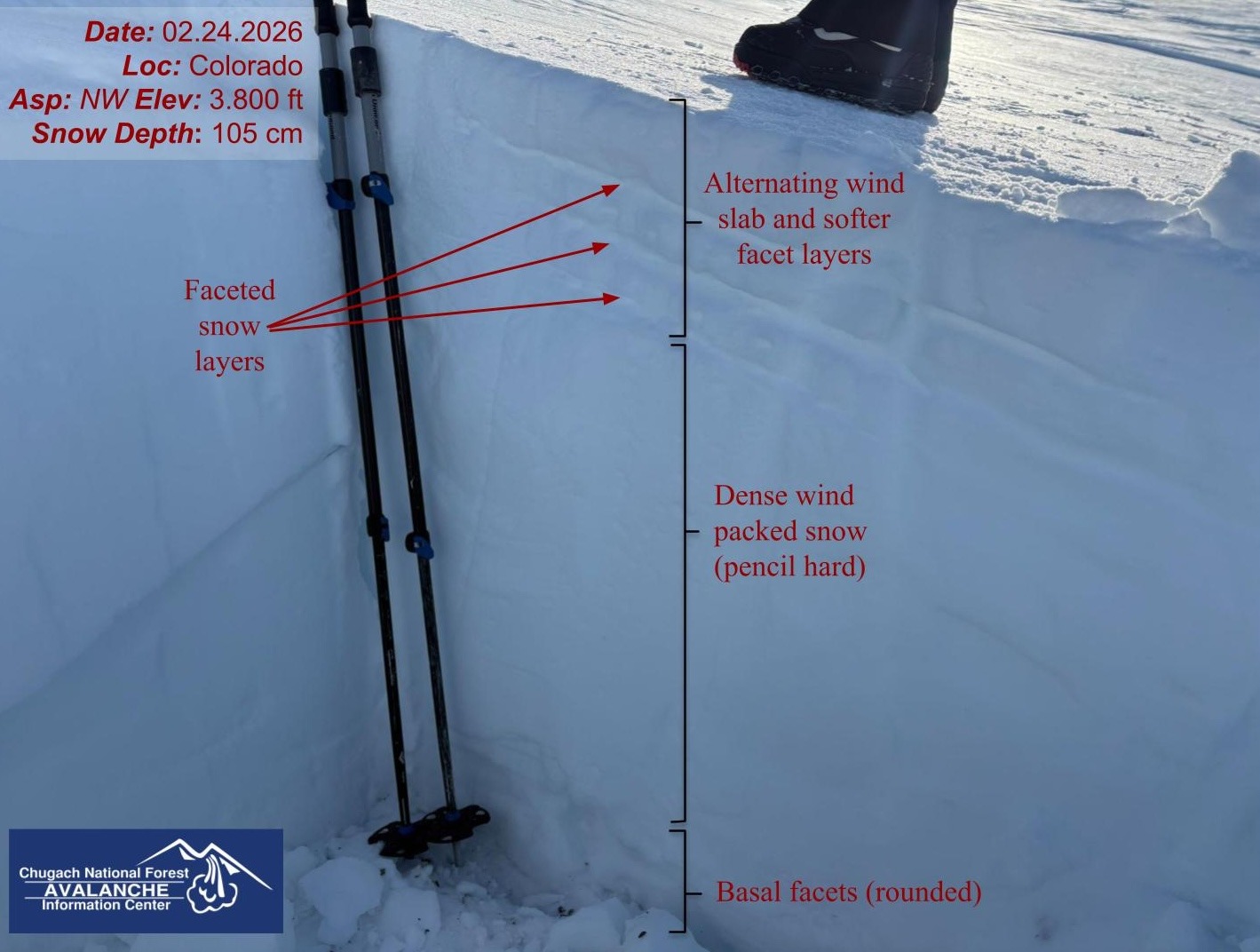
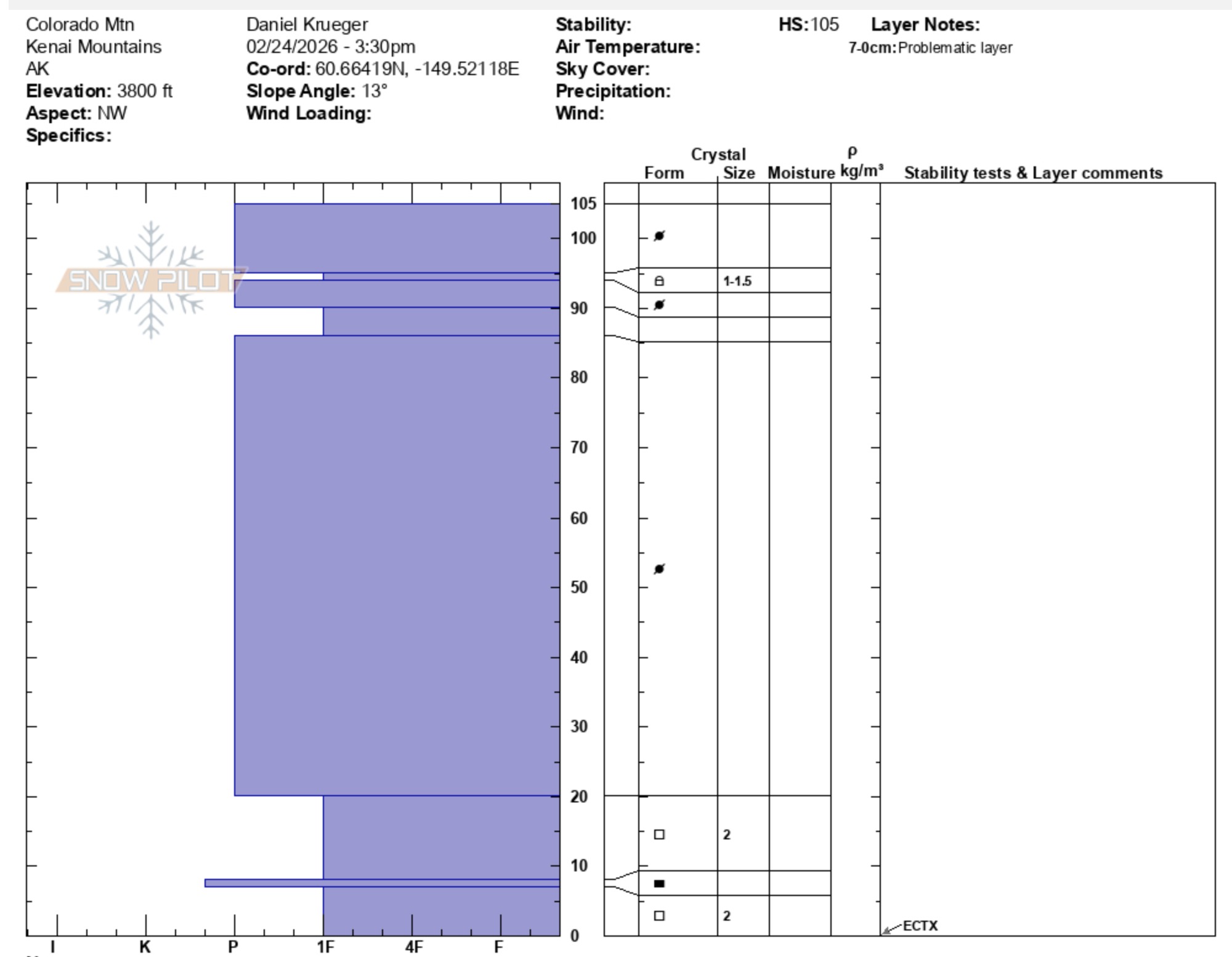
Above treeline, strong winds had heavily impacted the snow surface. Large sastrugi covered the terrain, and we found no slope untouched by recent winds. We reached the ridge at 3,800 ft and struggled to find a location that wind had spared. We dug a snowpit on a northwest-facing slope at this elevation and did not find concerning structure or instability test results. However, given the widespread scouring, it is difficult to rule out that poor structure may exist in more sheltered terrain where wind has preserved more of this season’s snow.
With winds forecast to increase overnight, we remain concerned about fresh wind slab development in the coming days. Although much of the snowpack has crusted, we observed active snow transport today, indicating there is still small amounts snow available for wind loading. Additionally, while the deep persistent slab problem may seem dormant, poor snowpack structure continues to be a factor in our decision-making while traveling in avalanche terrain.
We experienced two whumpfs between 2,600 and 2,800 ft.Weather
- Cloud Cover
- broken
- Wind Loading
- previous
- Snow Avail For Transport
- small smounts
Mostly cloudy skies with occasional sucker holes provided limited solar input and did not soften surfaces. Cool temperatures and a steady northwesterly breeze persisted throughout the day.