
Quick report
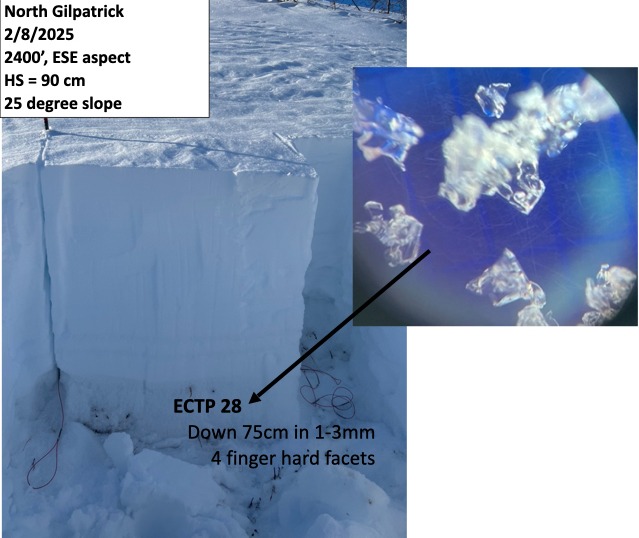
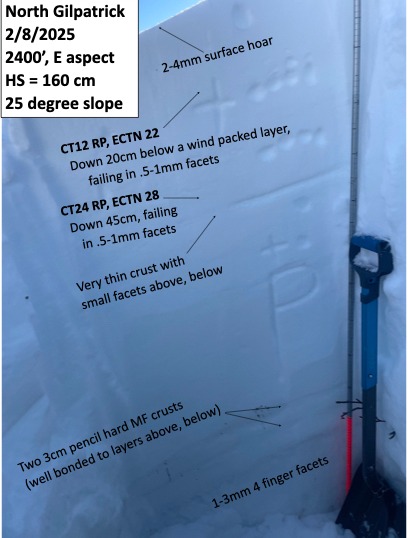
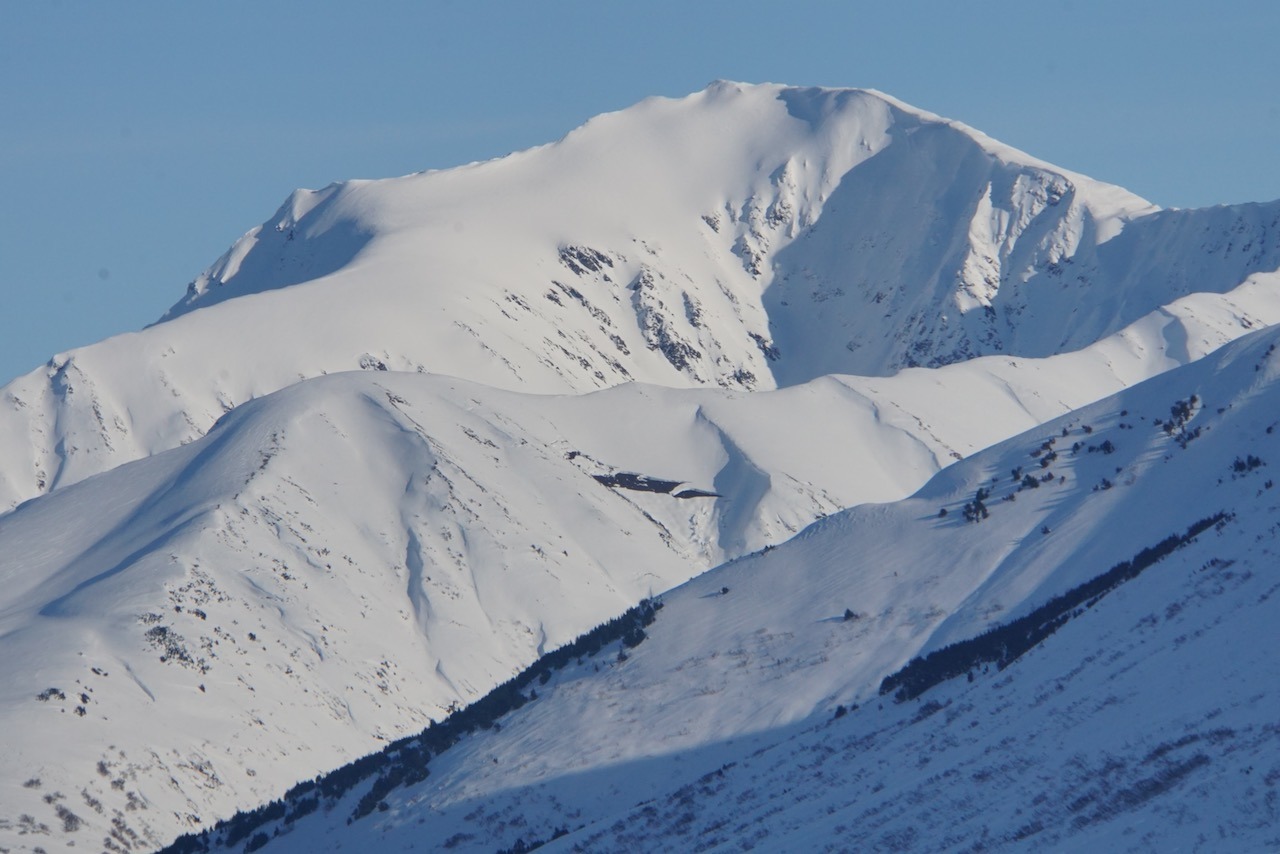
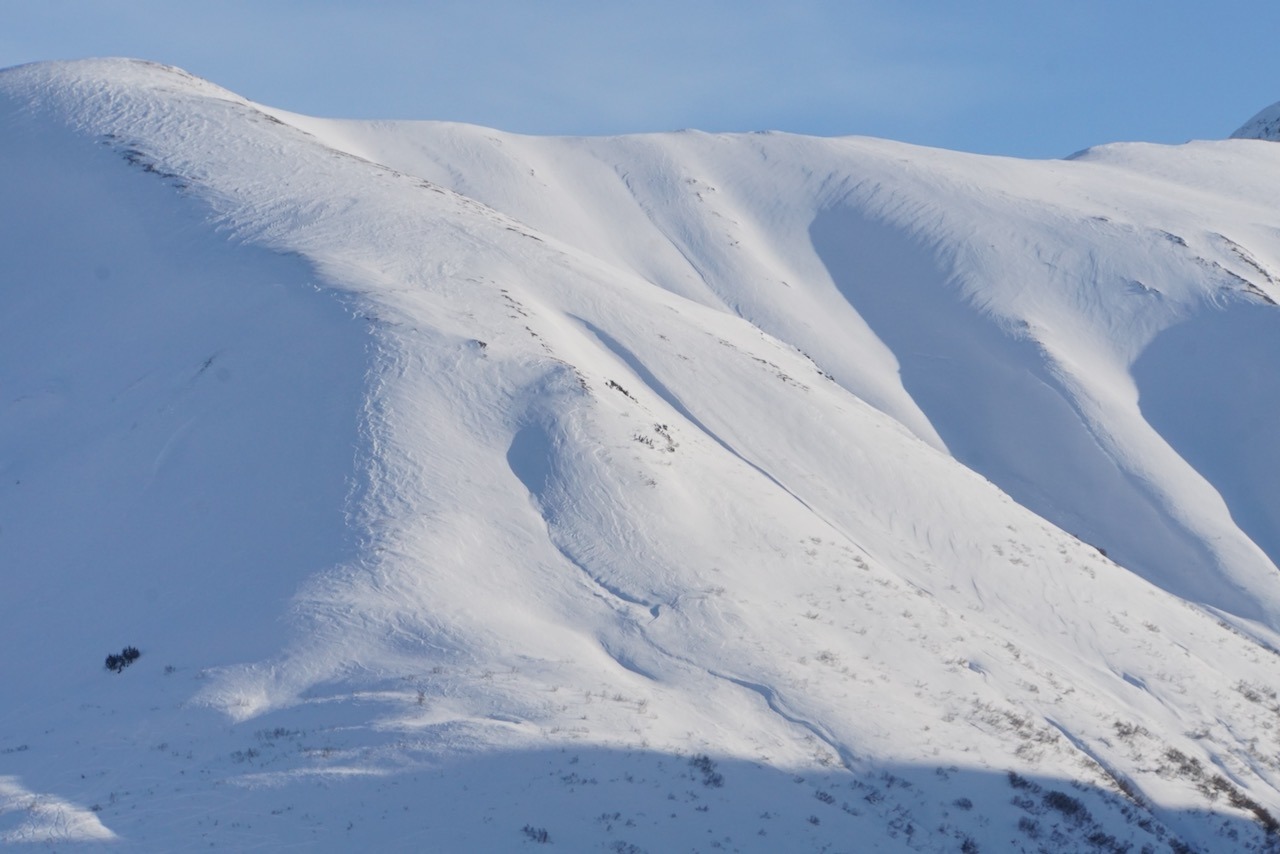
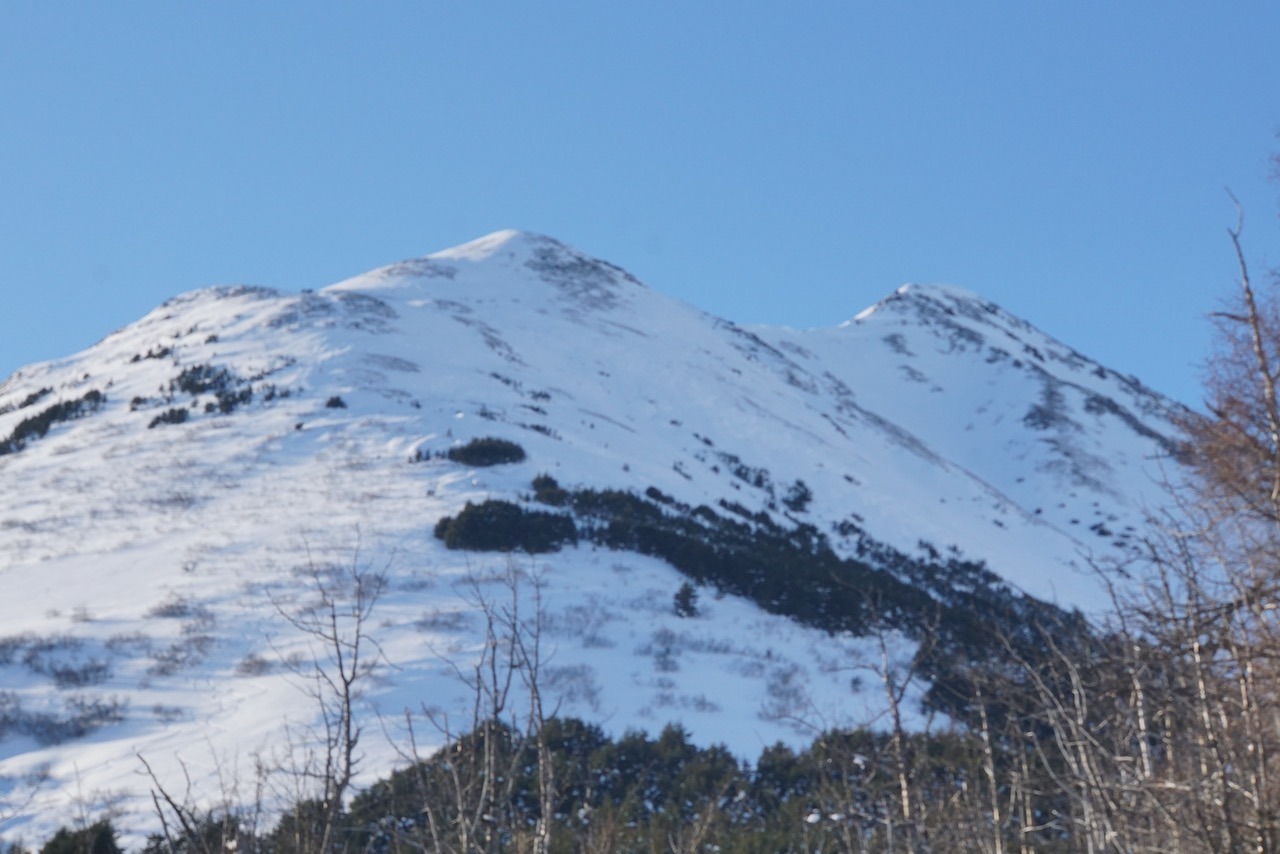
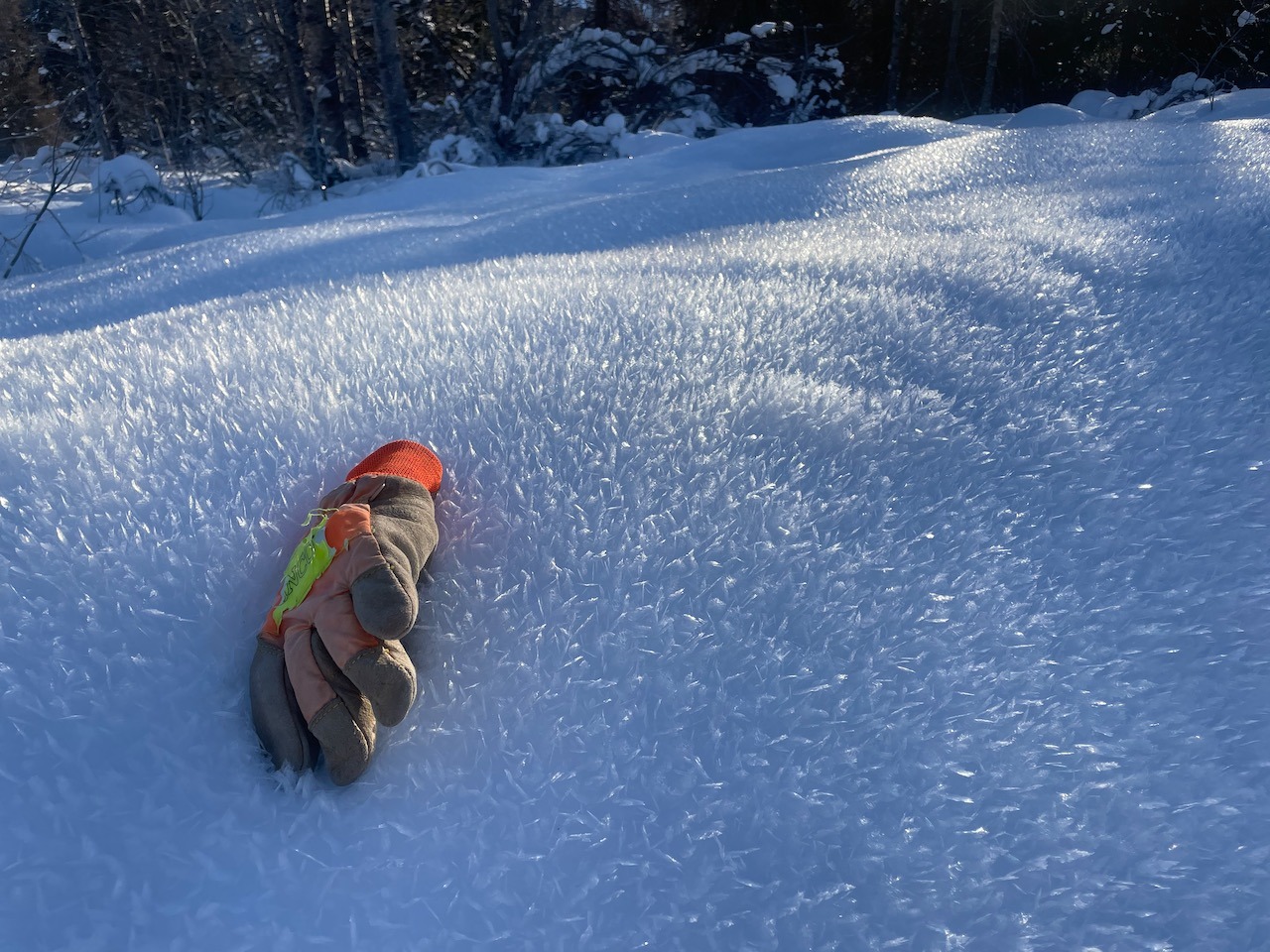
Route: North Gilpatrick to 2400' Weather: Sunny, calm, and generally clear skies, with occasional patchy low clouds to the south and east. Temps in the teens, warming to 20s during the day. Signs of Instability: Lots of glide cracks present in the Summit Lake region, including a massive one that continues to open on a south aspect below Manitoba (pictured below). Some very minor rollerball/loose activity below a steep south facing rocky area on Summit Peak. Snow Surface: Sheltered areas by the road had 4-6" of soft faceted snow over a thin breakable crust that dissipated by 1600'. Above this, winds had impacted most of the snow surface where trees aren't present... while there were occasional places to link together a few turns in soft snow, a thin wind skin or old wind slabs up to 6" thick were the most common surface condition to our high point of 2400'. Massive surface hoar could be found in clearings down low (see photo below), with smaller 2-3mm surface hoar present at our high point, often sitting on a firm wind packed layer. Finally, the steep, south facing sides of small terrain features had thin melt freeze crusts on them, the result of stronger February sun in recent days. Snowpack: Probing at our high point found a lot of spatial variation, the result of winds throughout the season. We dug two pits to the ground, the first 90cm deep to evaluate crust/facet combinations and lower snowpack instability, and the second in a recently wind loaded location (160cm deep) to evaluate whether old wind slabs were still reactive in tests. Results and structure are below. Failures in small facets below older wind slabs did not propagate in stability tests. Most notable was the ECT in the shallower pit, which failed with propagation in 1-3mm facets down 75cm after 28 taps. While it took a lot of taps to initiate the failure, it did so with a noticeable ~2cm collapse of the block. This layer of well-developed facets was also present in the wind loaded pit location, down 140cm.