
Quick report
- Cracking
- specific
- Collapsing
- widespread
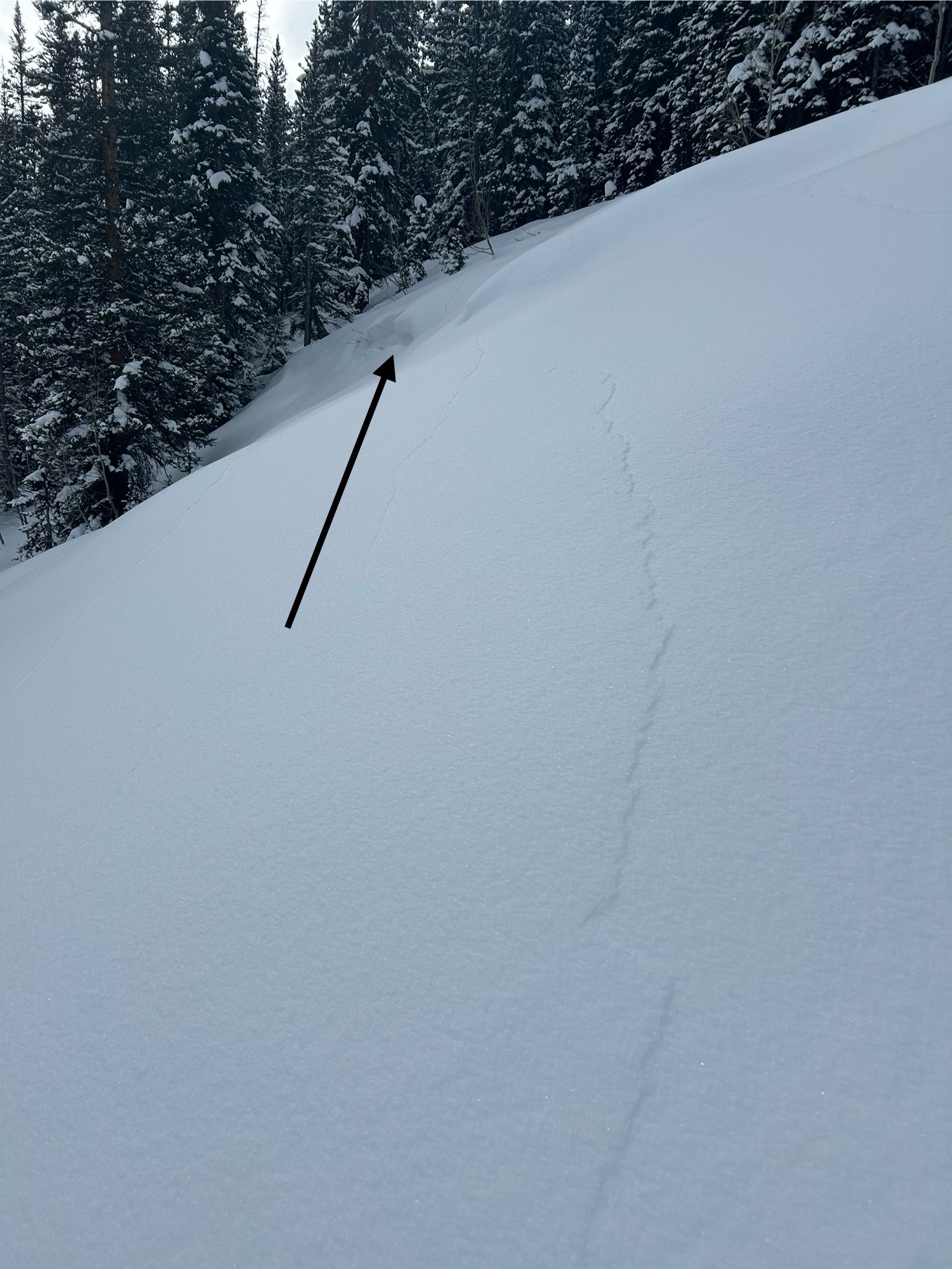
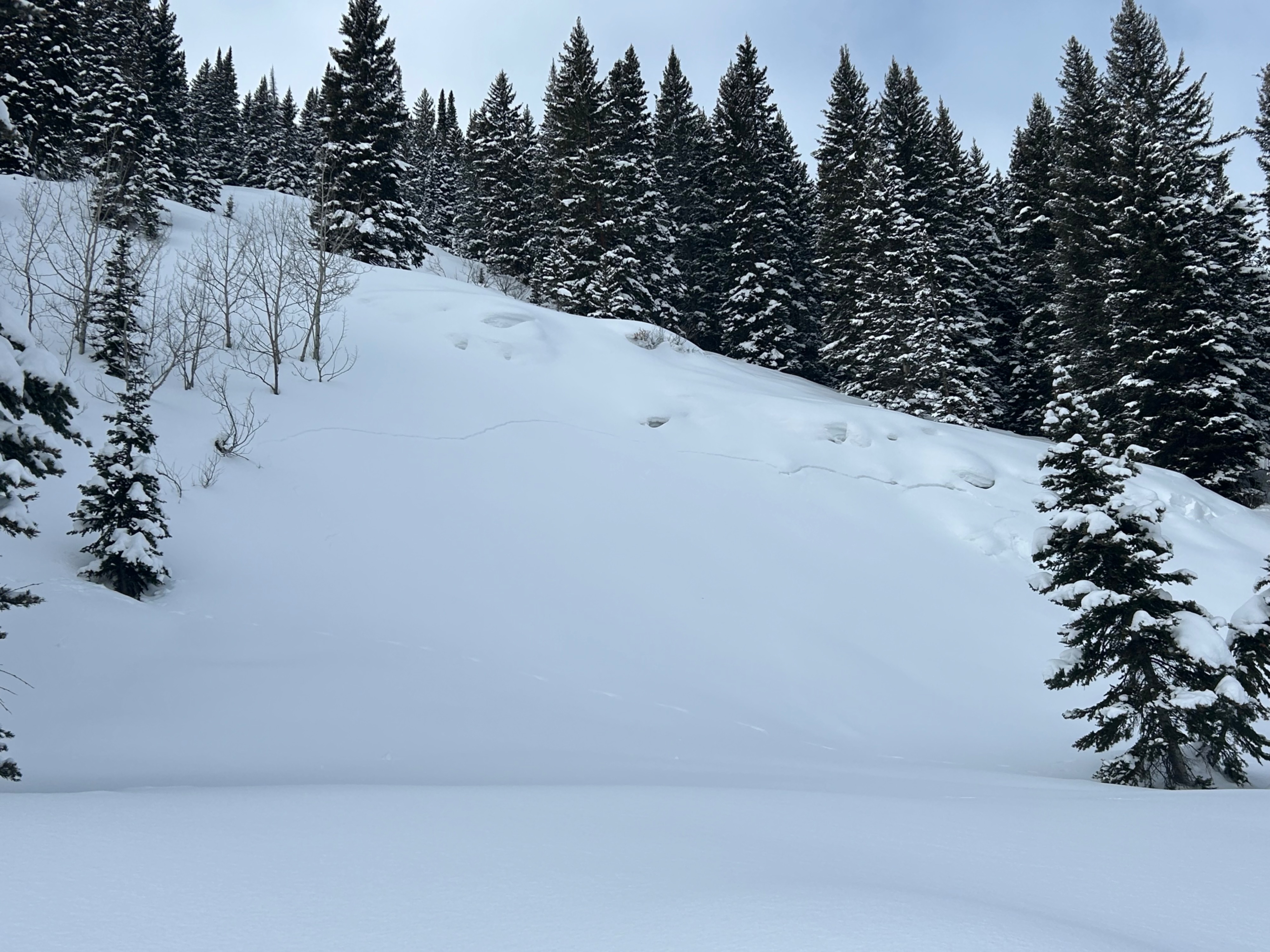
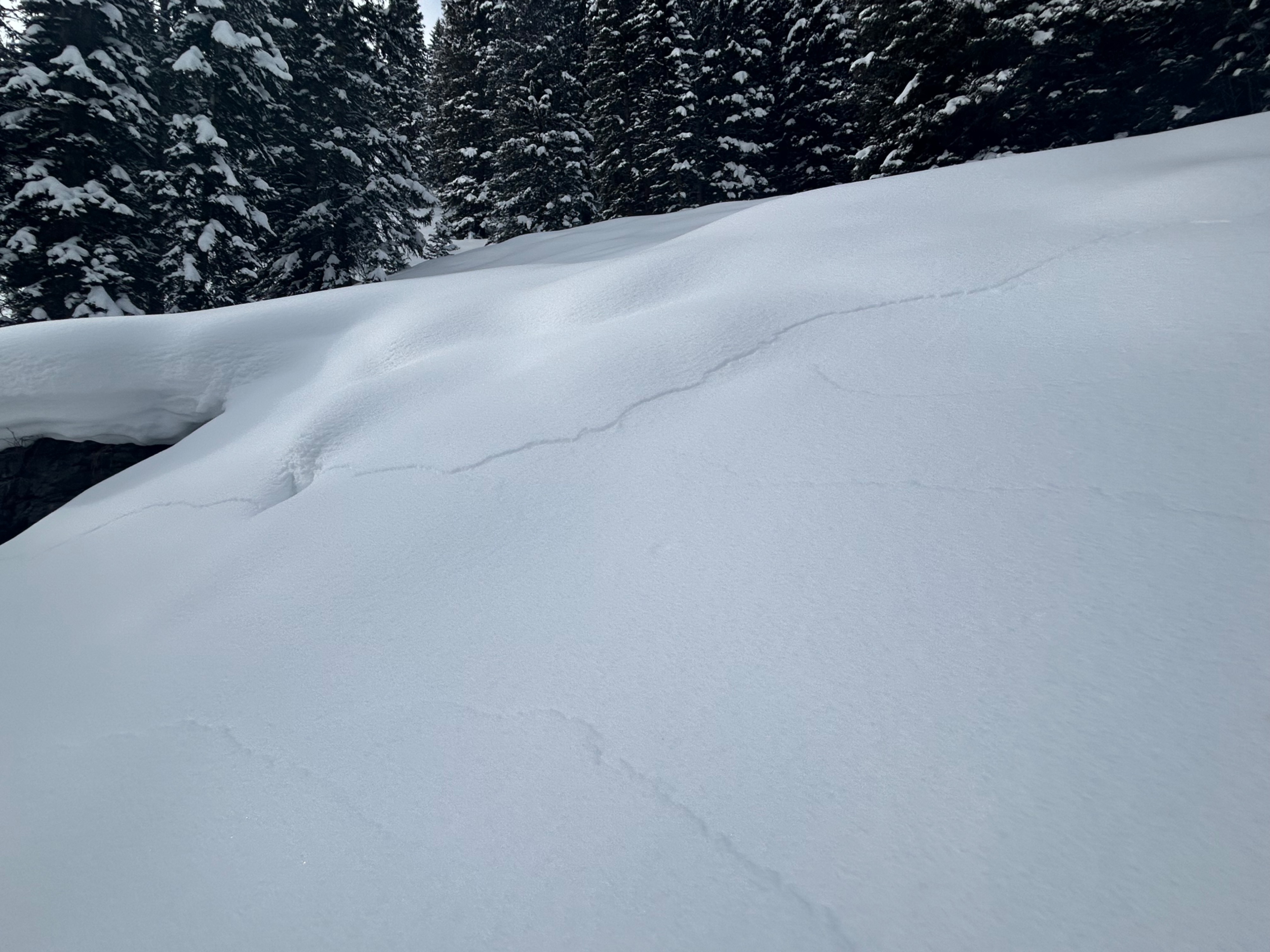
We went to an area in the Northwest Mountains where we expected to find persistent slab feedback to assess if the avalanche danger is decreasing. It certainly is not. Frequent collapses, shooting cracks, and a large remote trigger painted a clear picture of dangerous conditions. Travel here required very careful route finding using dense trees, recent bedsurfaces, low slope angles, and southerly aspects: we avoided traveling on or under any open or sparsely gladed terrain features still holding onto the holiday slab on the shady side of the ridge. Some of the terrain has flushed in the past 2 weeks, while a good portion of it remains intact.
On they shady side of the compass, collapsing was widespread below treeline, traveling across terrain features up to a few hundred feet. Collapses were typically on command with a good ski stomp. We observed fewer collapses near treeline as slabs and snowpack depths got deeper, but with some hunting or crossing wind affected terrain, we could produce some good rumblers, one of which remotely triggered a D2. No signs of instability on southerly aspects or recent bedsurfaces.Weather
- Cloud Cover
- overcast
- Wind Loading
- none
- Recent Snowfall
- 15
- Snow Avail For Transport
- moderate amounts
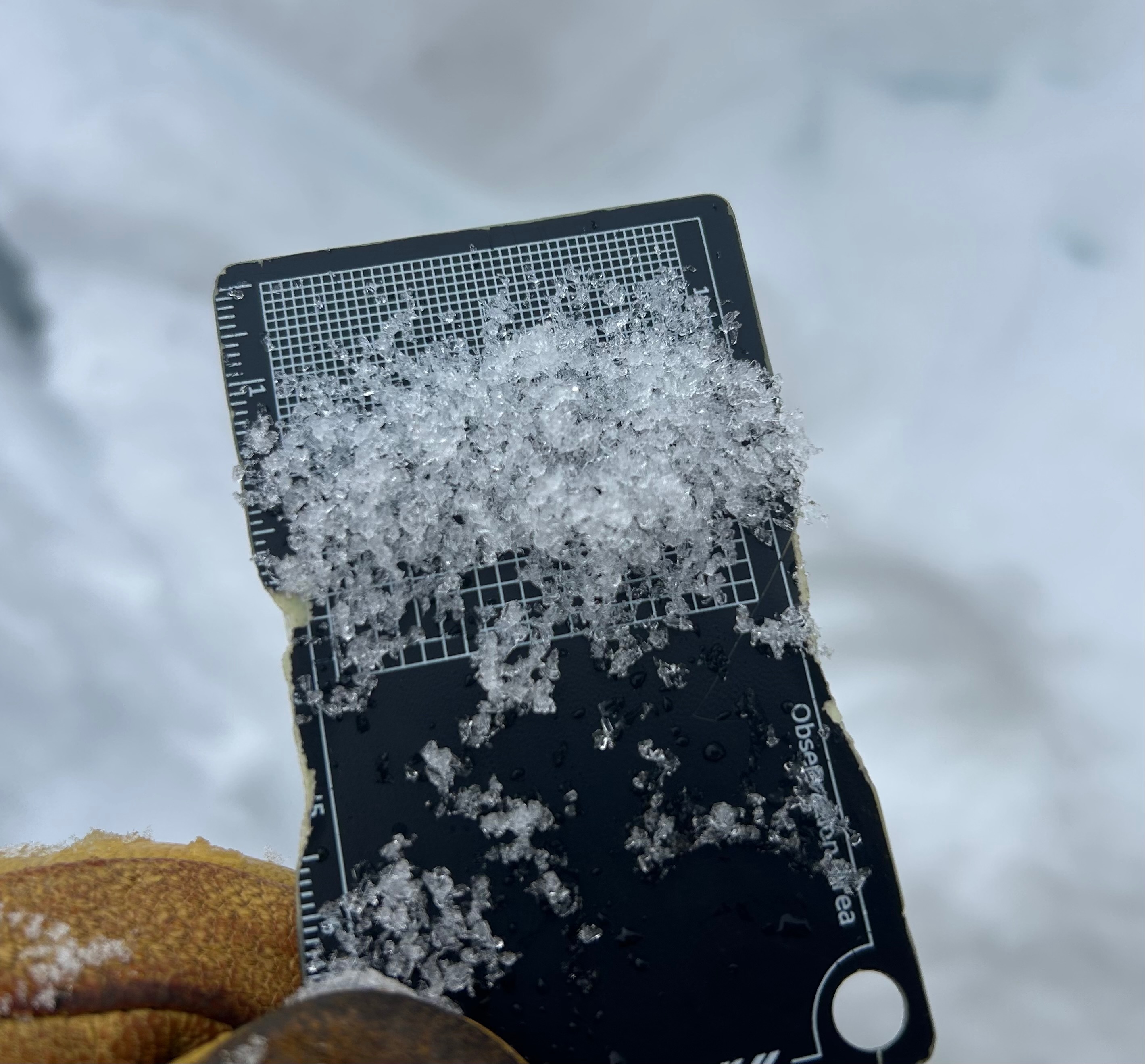
About 4" to 6" of settled storm snow from Saturday night's storm. There were isolated drifts right at ridgeline about a foot deep and the size of a small couch from northwest winds.
Snowpack
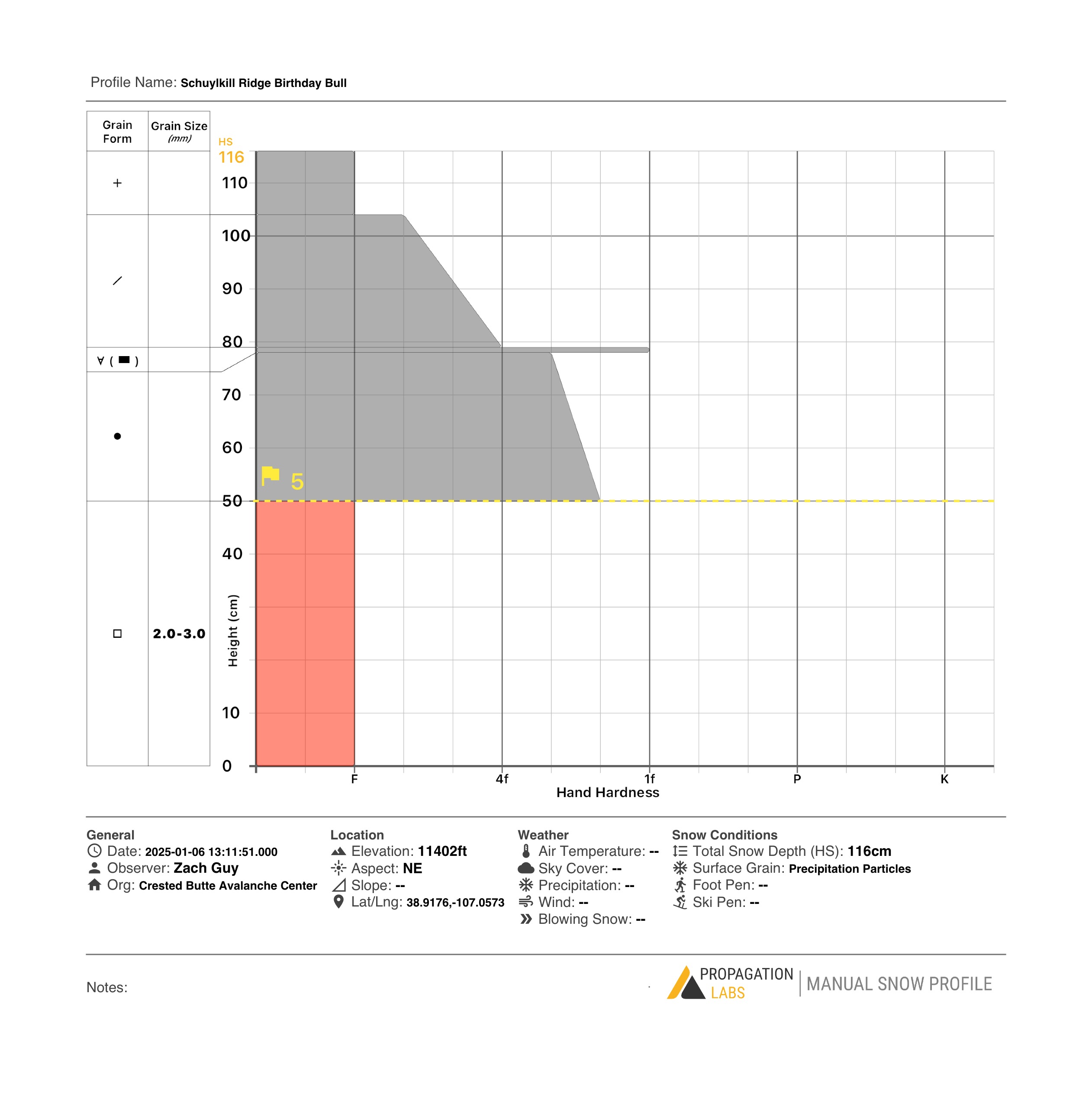
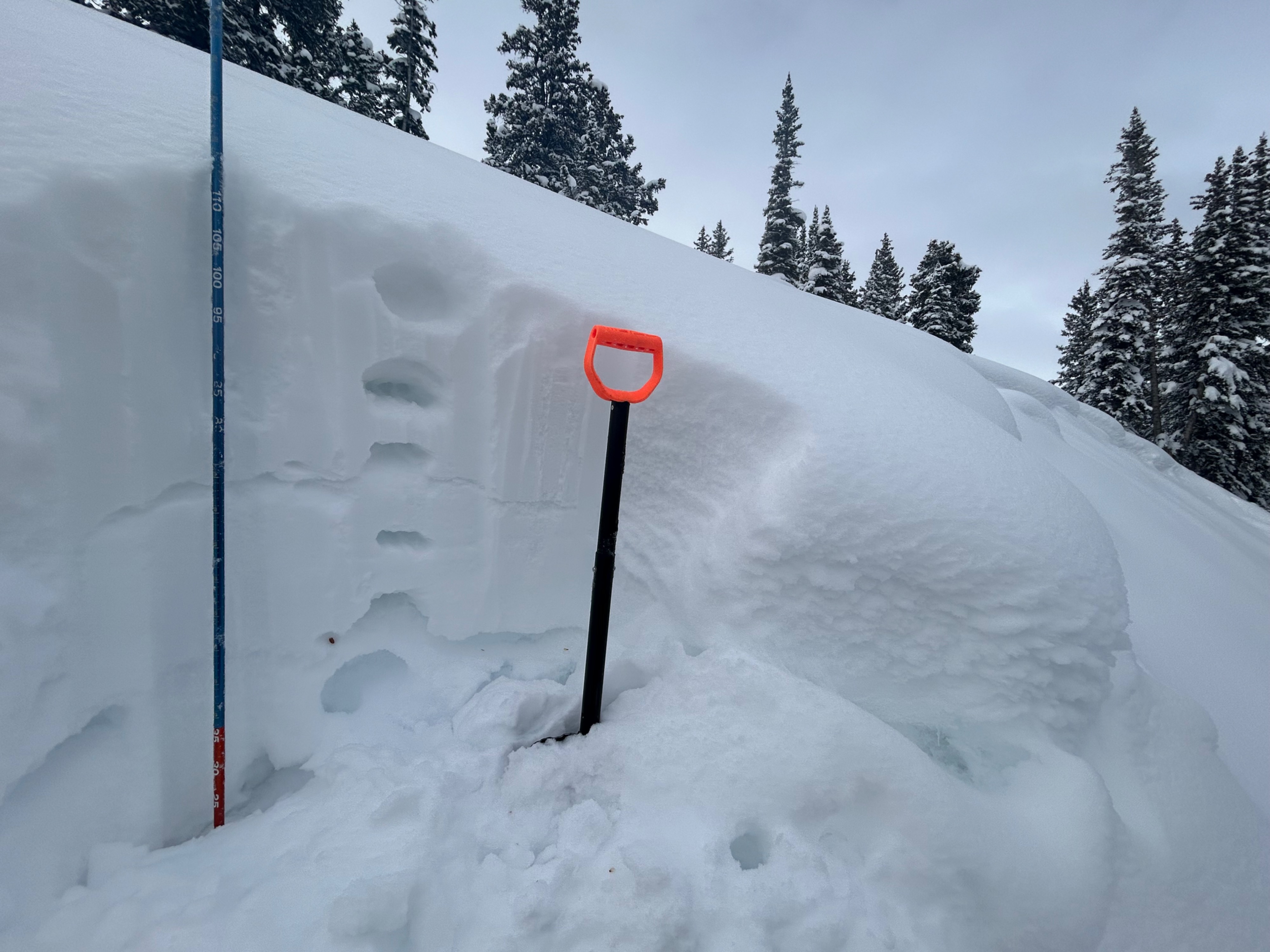
Near ridgeline above 11,000', snow depths in low angle terrain are about 150 cm and were quiet underfoot, even with aggressive stomping. We got a few collapses by traveling across slopes with thinner snow depths from wind erosion. In steeper terrain that avalanched during the Thanksgiving cycle, snow depths were around 110 cm or less, and the snowpack structure still looks terrible here, with large, weak facets below 2ft slabs, showing no signs of strengthening. Below treeline, the slab thickness (~18") and weak layer characteristics are also ideal for human triggering, with consistent collapses. On wind protected or wind eroded southerly aspects where we traveled, we found no avalanche concerns; the snowpack consists of a stack of several melt-freeze and rime crusts without any slab.
Avalanche
- Size
- D2
- Type
- SS
- Count
- 2
- Aspect
- NE
- Trigger
- AS
- Elevation
- 10900 ft
We remotely triggered one large persistent slab by stomping on a steep, northeast facing slope from ridgeline (while holding onto a tree for safety). The crown was about 2 feet deep. We also conducted a crown profile of the large birthday bowl avalanche around New Year's. The slab is 60cm thick over very weak 2-3 mm chained facets: no signs of rounding, just a garbage setup.