
Quick report
- Cracking
- specific
Despite the poor visibility from the blowing snow on Elephants Hump, we could still see enough of the terrain to identify at least four persistent slab avalanches that likely failed early on Saturday.
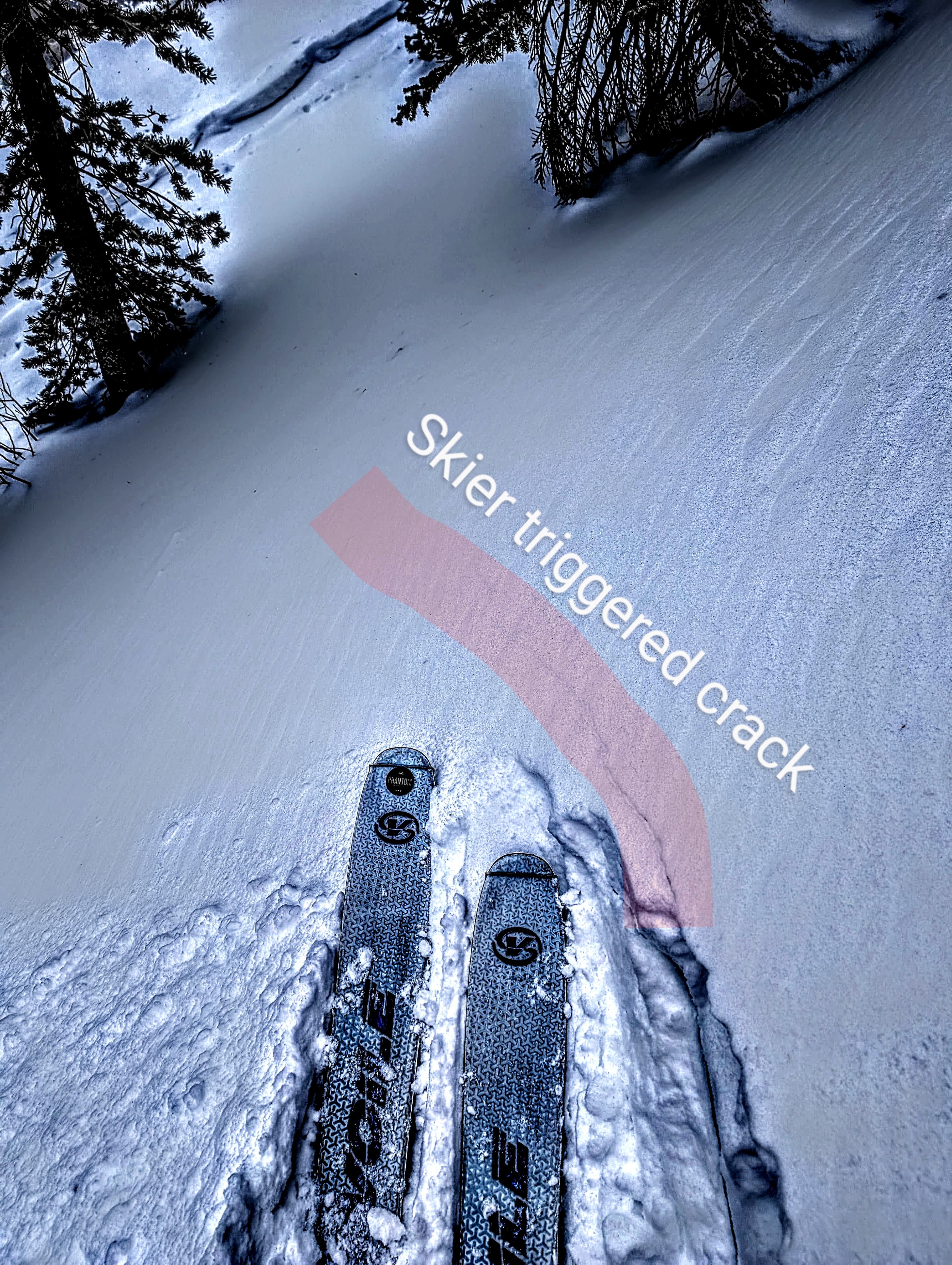
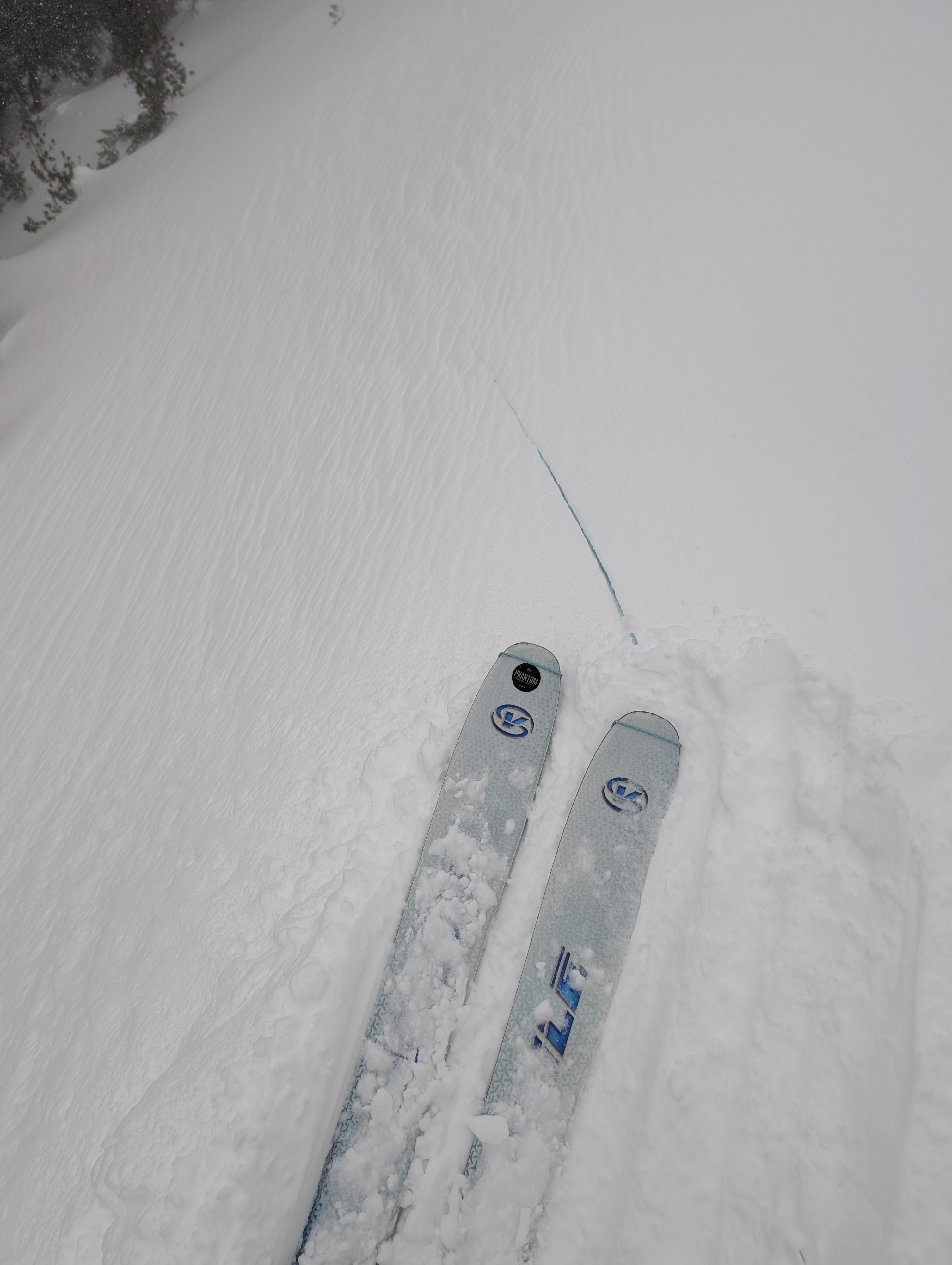
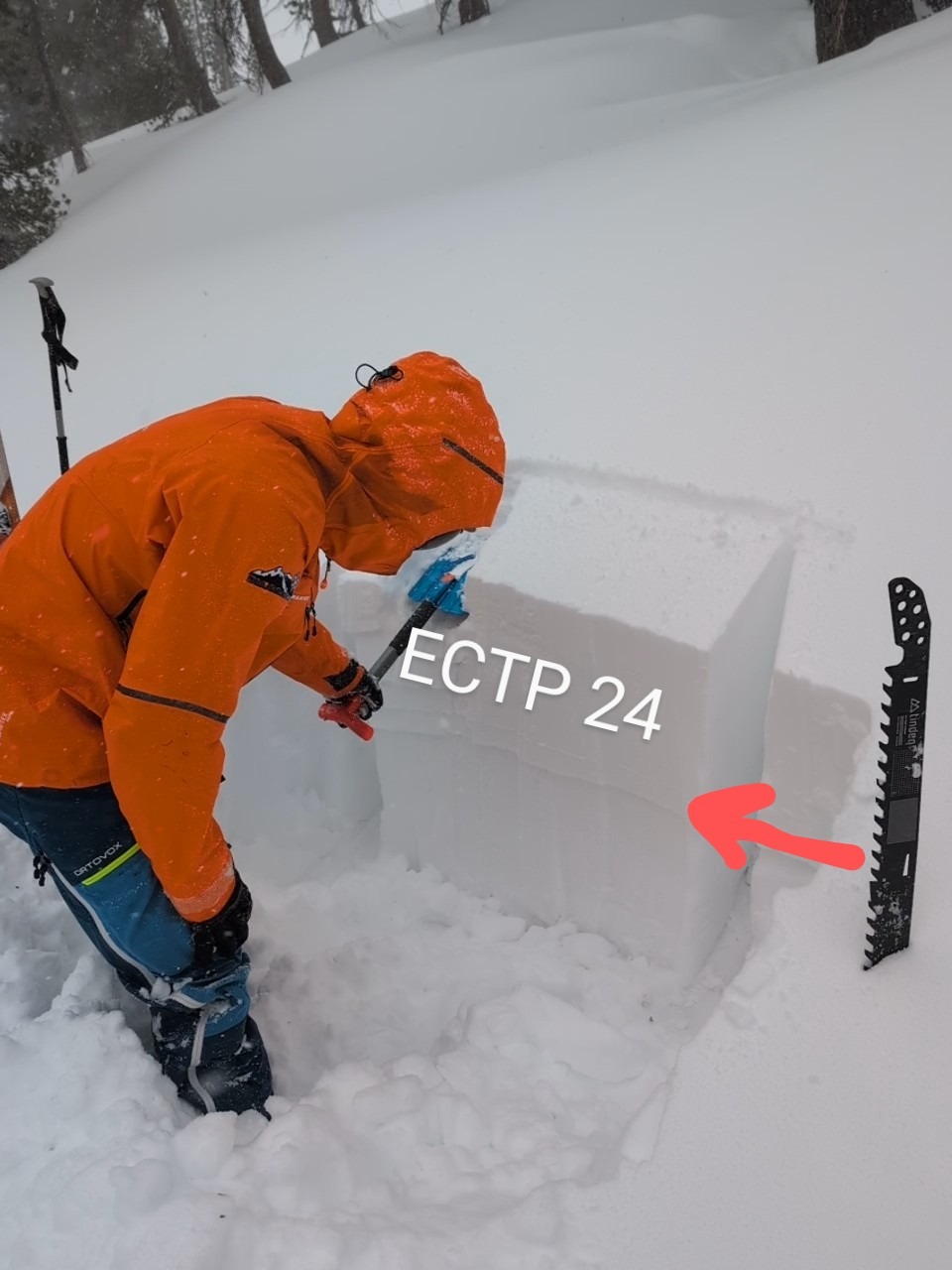
The weak snowpack structure that contributed to these avalanches also remained prevalent in this area. Each time we plunged a pole into the snow or stepped off our skis on N-NE-facing slopes, we sank through the new snow and felt soft, weak snow below it. We got unstable test results in a quick snowpit near one of these avalanches. We also triggered shooting cracks in protected areas and in wind-loaded places today (see instability section for details)
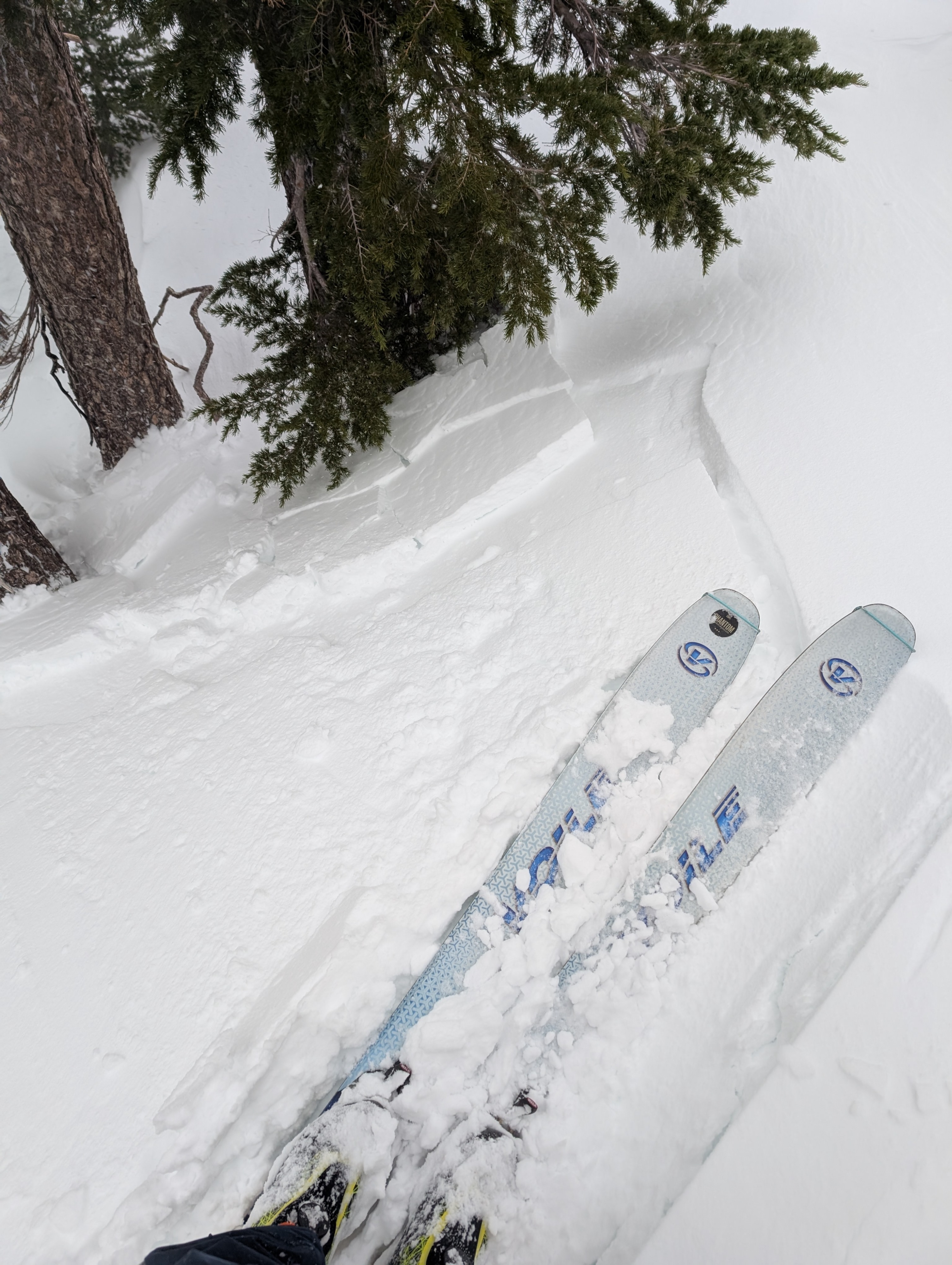
In addition to the evidence of ongoing persistent slab problems, today's blowing snow added to existing wind slabs and built new ones. Most of the latest wind slabs remained small and shallow, but one heavily wind-loaded test slope already had a new wind slab 8 to 12 inches deep.
We triggered shooting cracks that failed on facets below the recent snow up to 8 ft long in protected terrain and cracks that failed within the storm snow up to 12-15 ft long on wind-loaded test slopes. We also saw the remains of at least four persistent slab avalanches that failed naturally sometime on Saturday. As we drove home, we saw a wet loose avalanche that had hit the road around Emerald Bay.Weather
- Air Temp
- 31 °F
- Cloud Cover
- overcast
- Wind Loading
- intense
- Rain Elevation
- 6900 ft
- Recent Snowfall
- 8 cm
- Snow Avail For Transport
- moderate amounts
Gale force winds and moderate snowfall occurred during our tour. Temperatures seemed to warm up after 1 pm and snow line rose to 6900 - 7000 ft.
Avalanche
- Size
- D2 R4
- Count
- 2
- Aspect
- N
- Trigger
- N
- Elevation
- 8400 ft
At least four persistent slabs occurred in this area on N-NE aspects during the storm on Saturday 12/14/24. The subsequent snow and wind mainly had filled the crowns back in, but the debris was still visible at the bottom of the slide paths. These avalanches propagated across terrain consistent with how persistent slab avalanches behave.