
Quick report
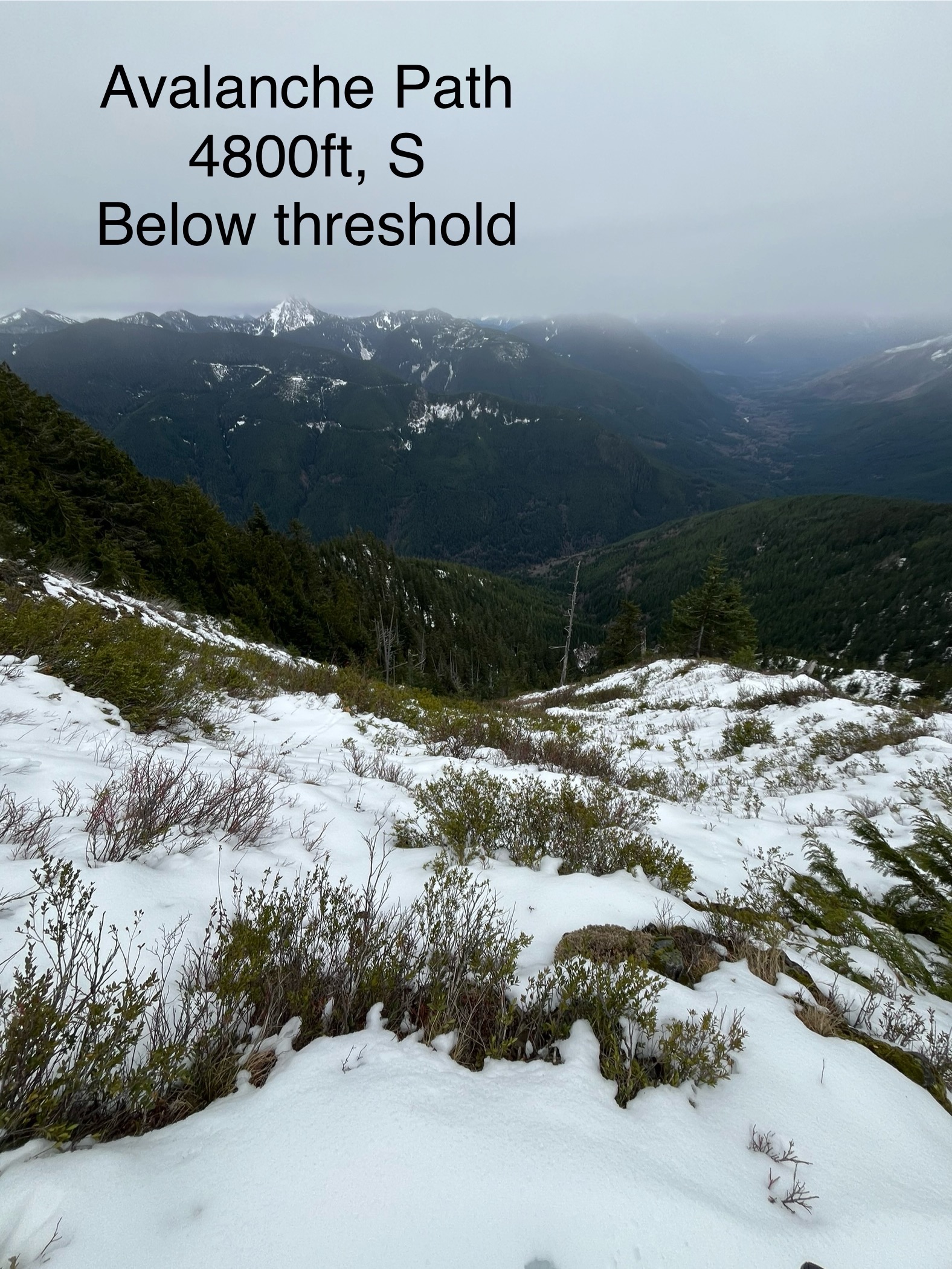
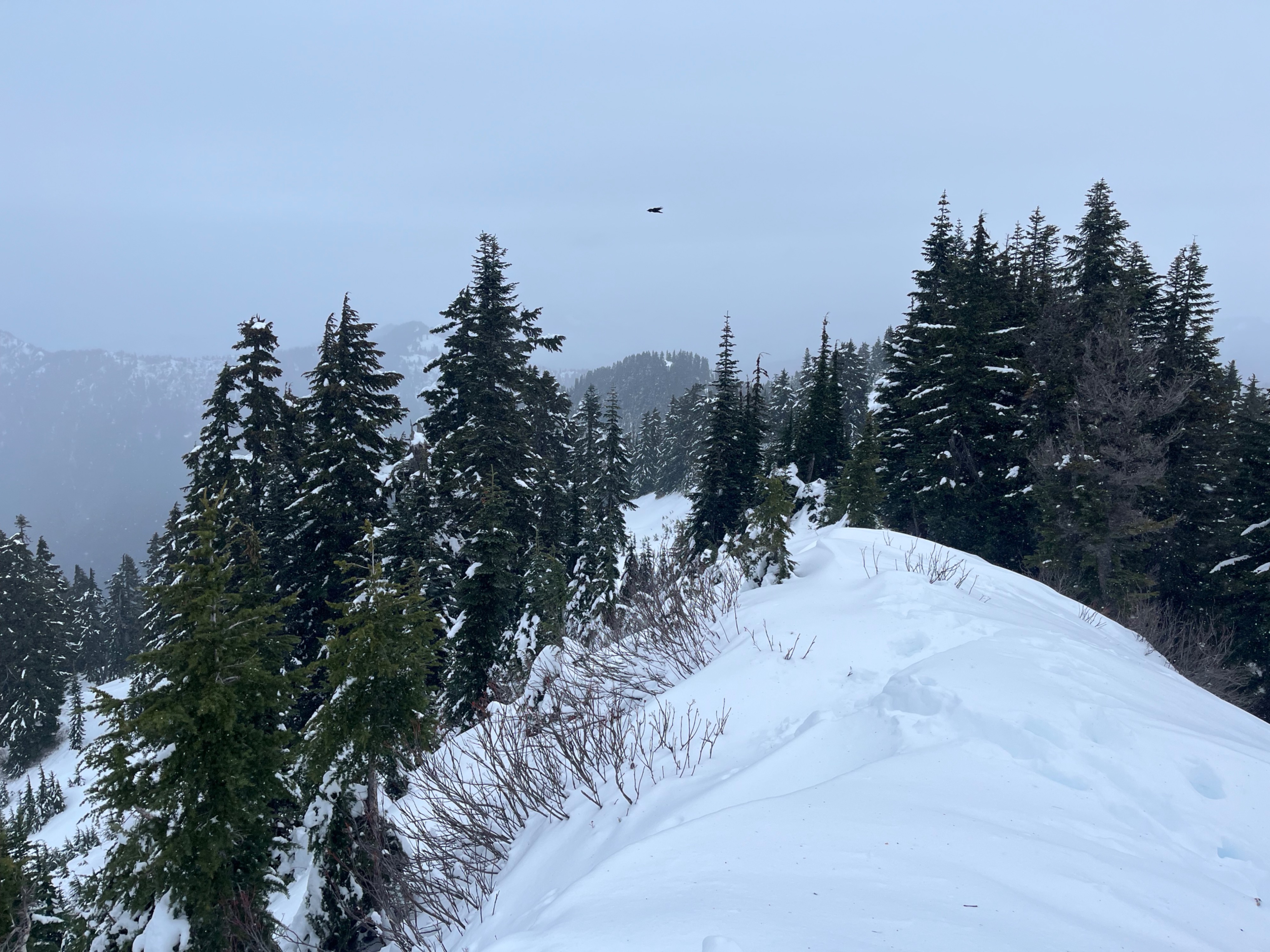
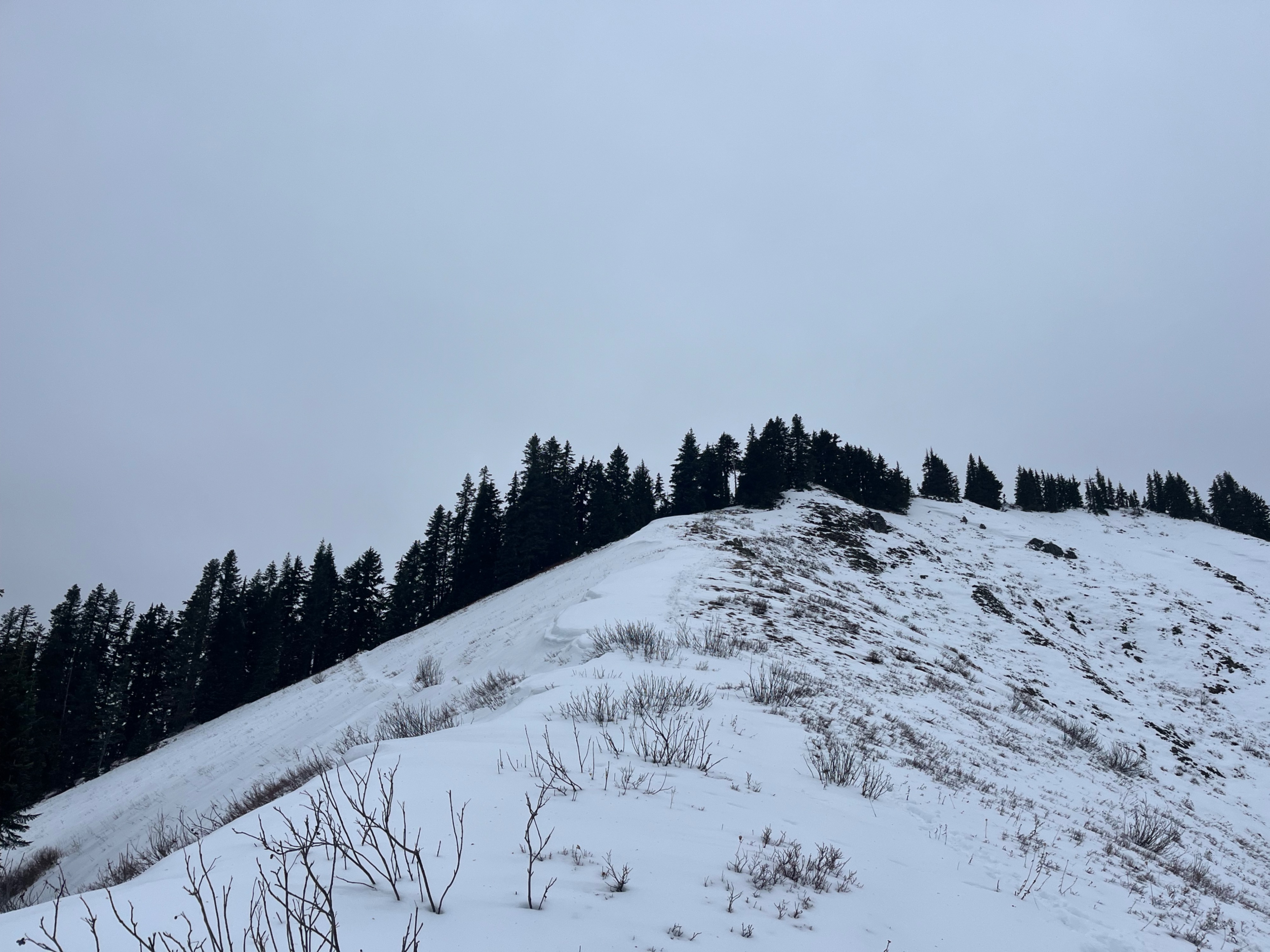
I wanted to investigate snow depths and layering for my first outing of the year in the West Central zone. Walking was the safest form of transportation for my trip, as there wasn't enough snow to slide on or require snowshoes yet. Aside from small pockets of deeper drifted snow near ridgelines at the highest elevation I traveled to (5500ft), all avalanche paths were below threshold.
Weather
- Air Temp
- 28
- Cloud Cover
- overcast
- Wind Loading
- previous
- Snow Avail For Transport
- none
Light-moderate wind and a mid-morning snow squall broke midday, leaving calm winds and higher clouds with a few blue patches.
Snowpack
Snow cover began at about 3000ft, and was around 20cm at 4000ft. By 5000ft, snow cover was about 30cm.
A crust was at or near the surface in all areas I traveled. In all areas below 5000ft, the surface crust was softer and thicker- about 5cm. Above 5000ft, there was up to 5cm of low-density snow sitting over the uppermost crust. In these areas, 2 thin crusts were present, like in the pit I dug near the summit, and failures occurred during isolation of a 30x30cm column between the crusts.
Soft snow at the surface, between, and beneath the crusts was cold, dry, and predominantly decomposing forms. At the surface, there were also needle-like surface hoar growths. Occasional angular, faceted crystals were identified in the soft snow adjacent to the crusts, although they were not in abundance.
Avalanche
A few old, very small point releases (D0.5-D1) were visible on steep, southerly slopes over 5000ft. Snow was patchy on these slopes already, and where these small loose avalanches ran, the slope was completely bare.