
Quick report
My goals today were to return to the Rock Creek area to try to establish an observed trend on the sensitivity of buried weak layers. A recent observation from Clancy noted meltwater percolating down to, and past, the 2/10 interface with easy propagating results on moist facets in a PST. PSTend 30/100 @ 63cm 2/25. He also noted direct feedback from buried weak layers, including cracking and slope-scale collapses.
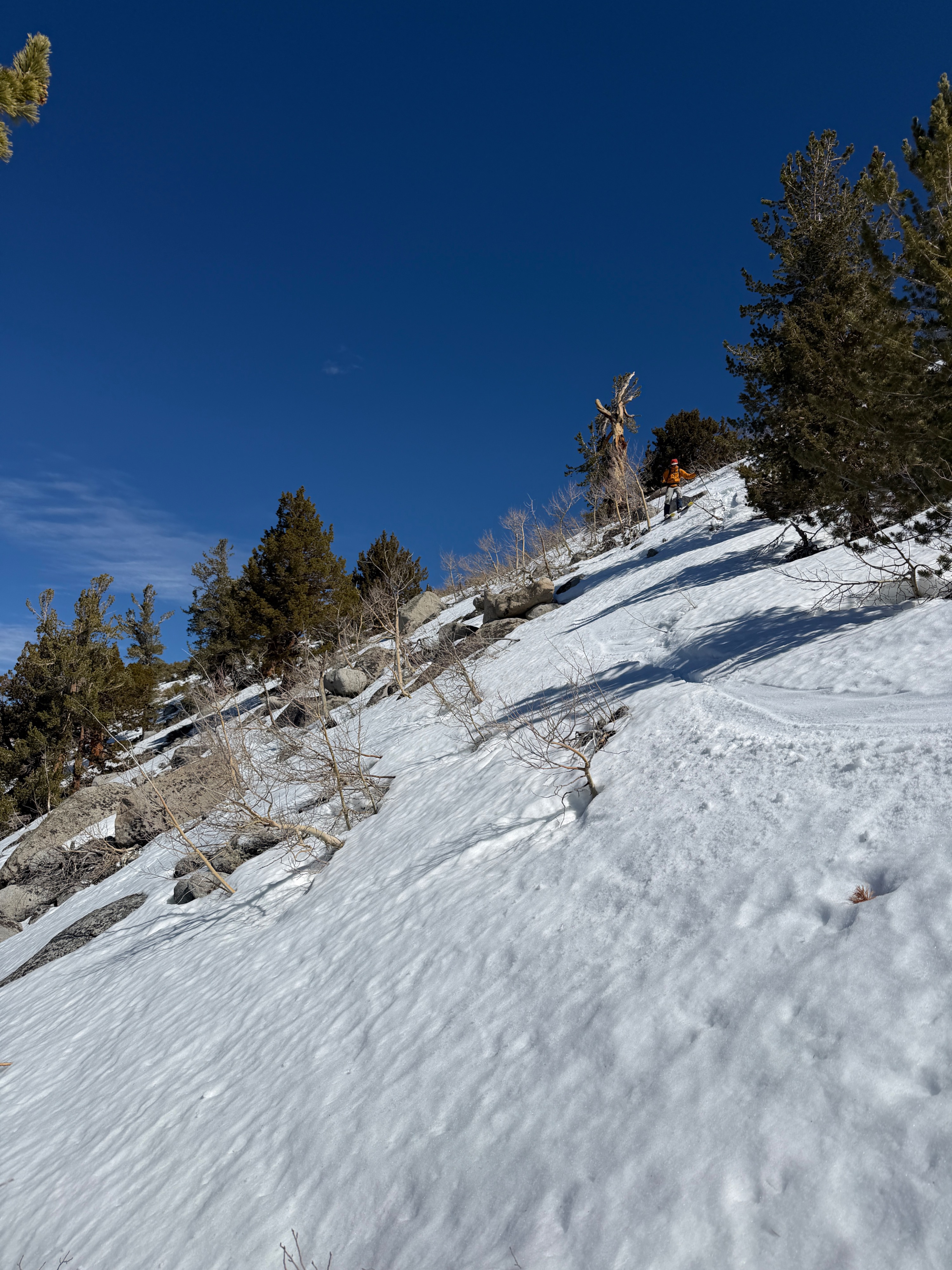
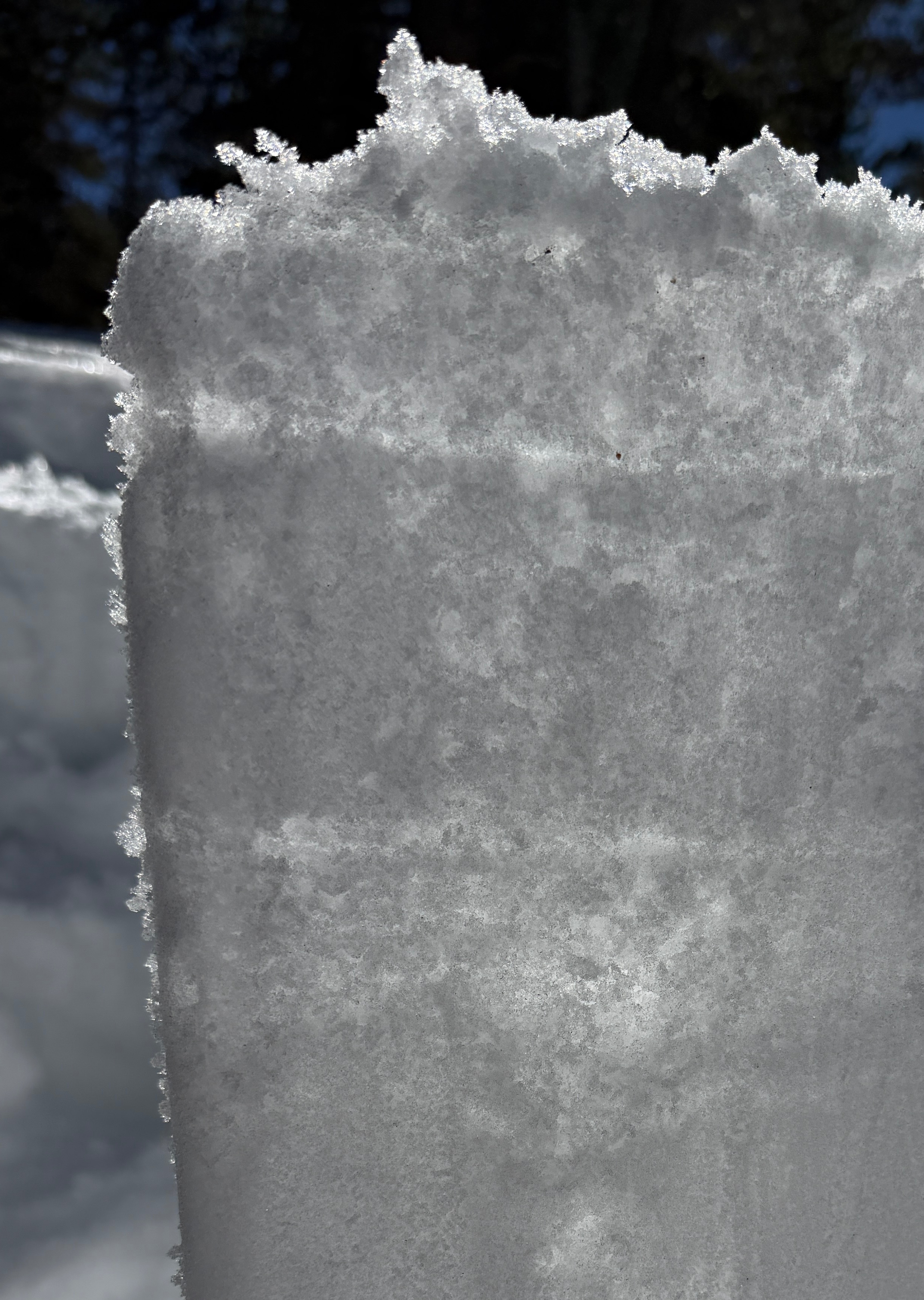
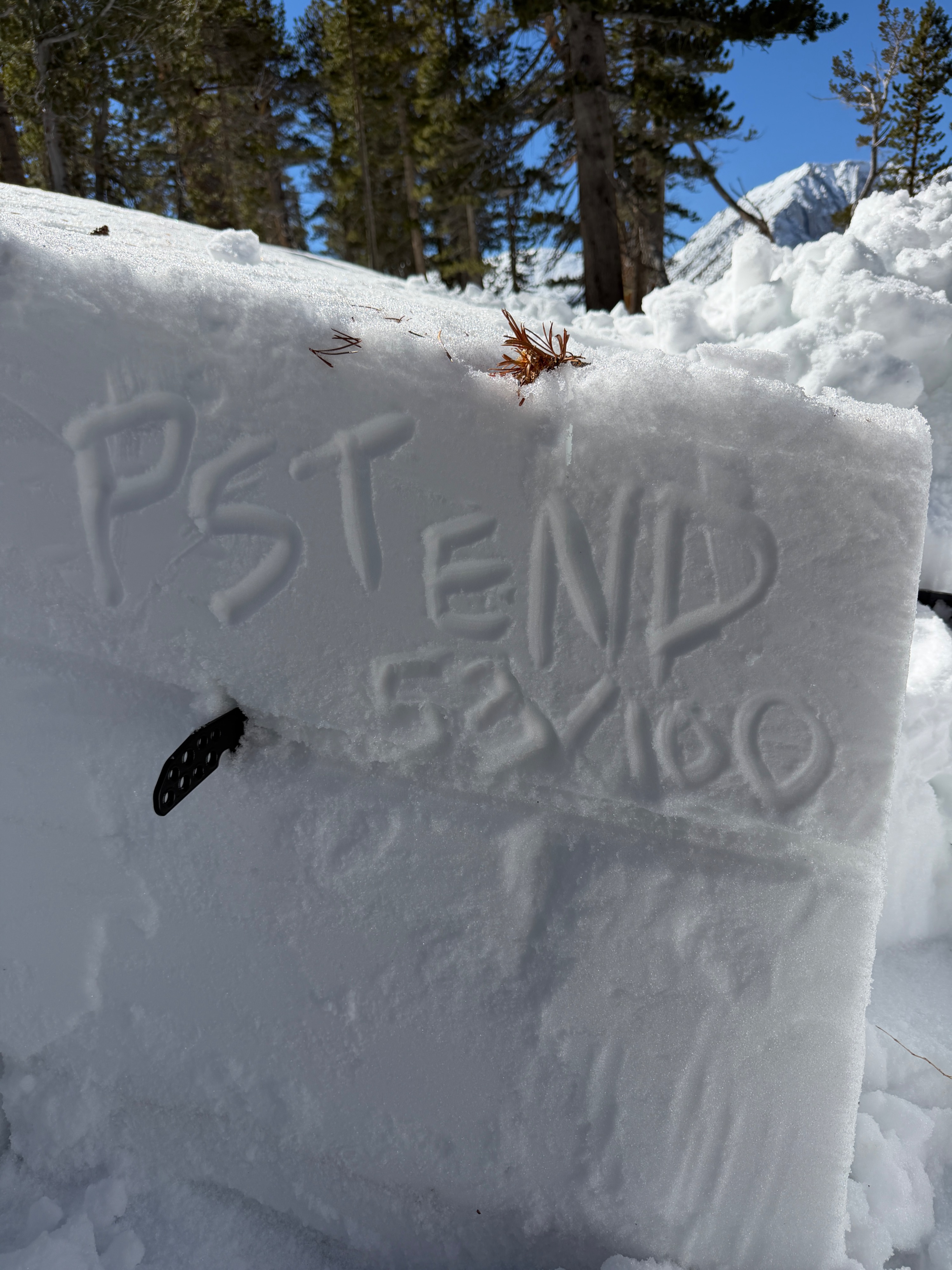
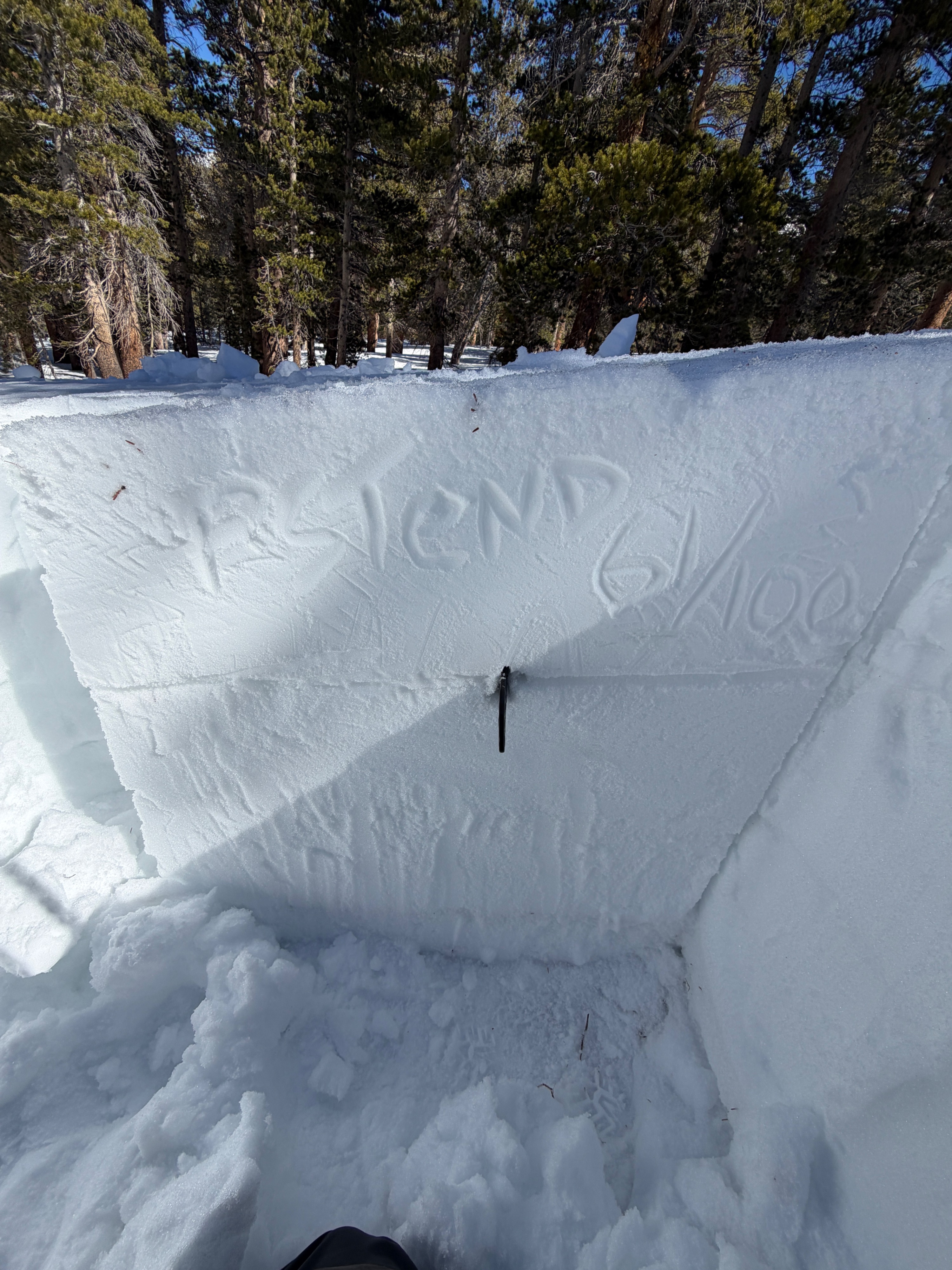
Today, no direct feedback from buried weak layers was found during the tour. I dug a hole slightly higher than Clancy, on a low angle, north aspect at 9980', and found a generally similar structure and moisture content. The 2/10 interface remained easy to pick out, and continued to be moist, not wet. One big difference between our 2 profiles is in the hardness of the facets buried 2/10. I also found harder propagating results in this layer, with moderate test scores. PSTend 53/100 @ 70cm, PSTend 61/100 @70cm.
We found deep, wet snow on all aspects after 12:30 pm, as surfaces softened. We had no direct feedback from buried weak layers.Weather
- Air Temp
- 48
- Cloud Cover
- few
- Wind Loading
- none
- Recent Snowfall
- 0
- Snow Avail For Transport
- none
Skies were mostly sunny, and temperatures were hot. Winds blew moderate, gusting strong, from the southwest.
Snowpack
The coverage is heinous on all aspects at low elevations, and in most places holding snow, the snowpack was composed of melt forms to the ground. At 9 am, travel was supportable on a surficial melt freeze crust. By noon 30, ski and boot penetration was full pack on all but northerly aspects above 9500'.
In a north-facing hole at 9980' I found:
- Multiple layers of refrozen meltwater in the top 20cm.
- A wet top 30cm capping moist, rounding facets buried 2/10.
- 2/10 remains easily discernible beneath the wet, overlying slab.
Attached are both Clancy's profile from 2/25 and mine from today, 2/28. Pits were not dug in the exact same location, but were close by and were similar in aspect and elevation.