
Quick report
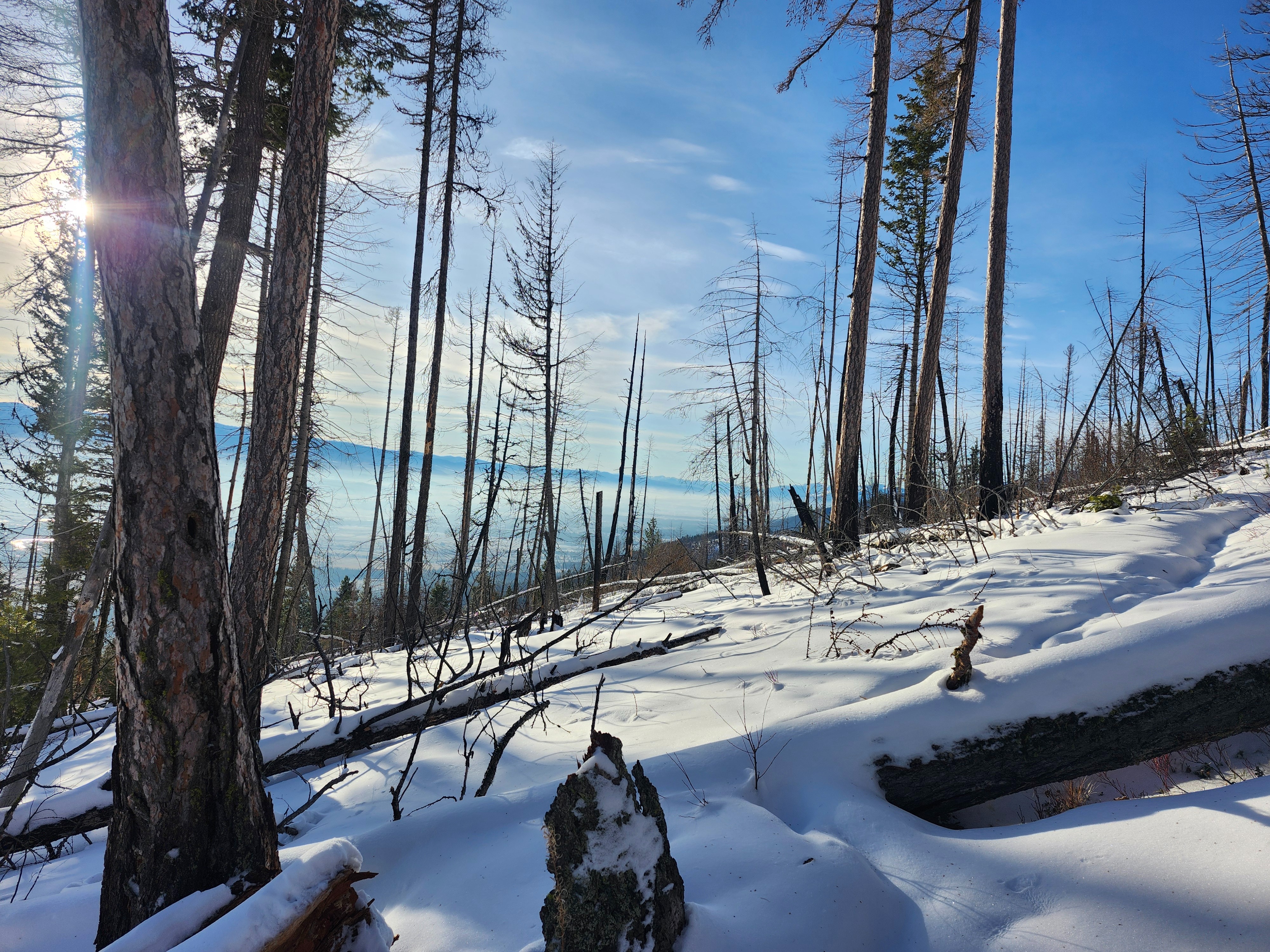
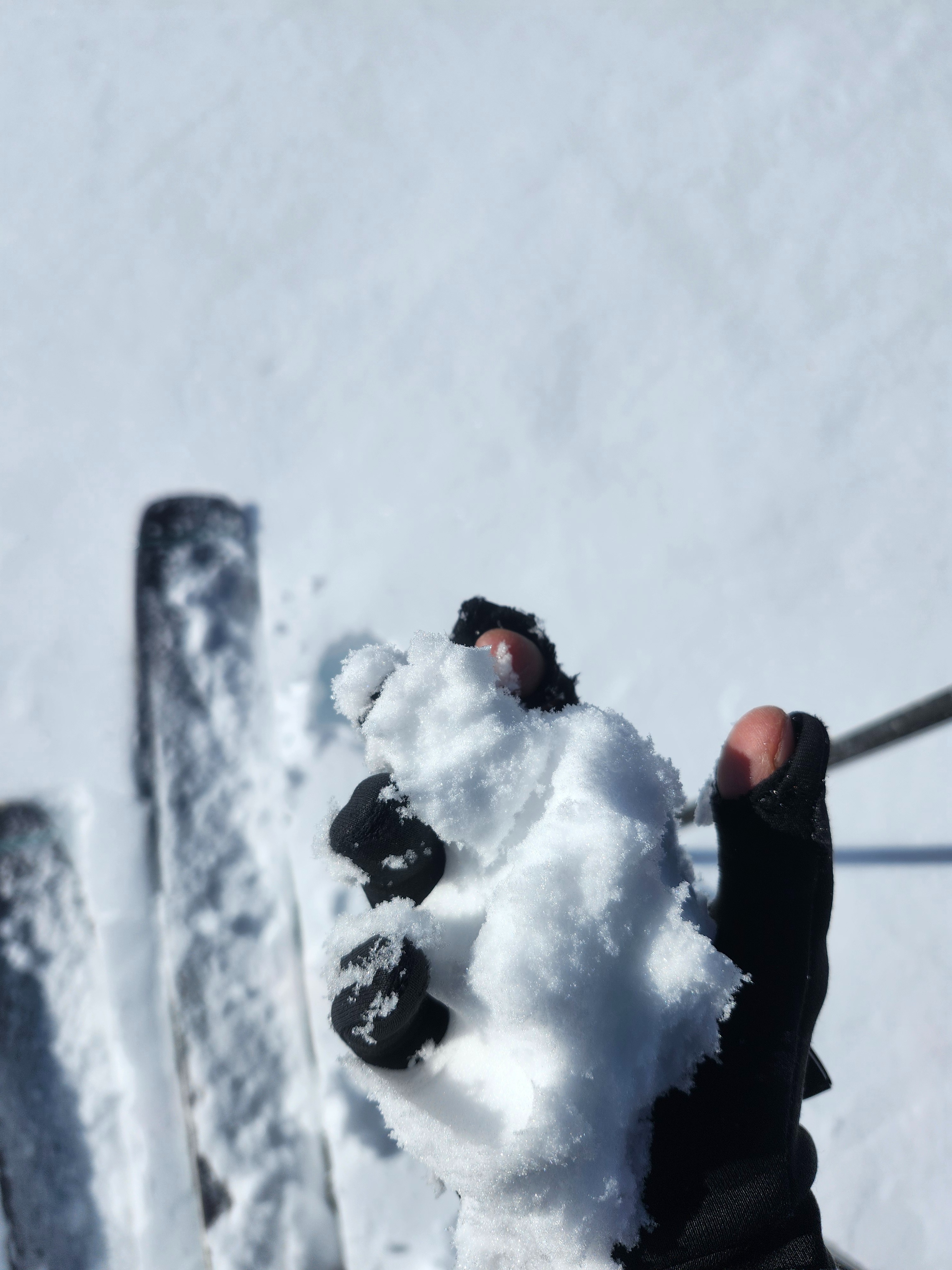
I drove up and out of the inversion, with temperatures hovering near freezing from the time I left the car to when I skied back down. Winds were calm to light from the southwest. With few clouds it was a beautiful day to be in the mountains. At the trailhead (5700 ft), there were 2-3 inches of soft snow over patchy old snow. Around 7000 feet there was suddenly a snowpack, with 10 inches (25 cm) of soft surface snow, and a 50 inch (125 cm) total snowpack.
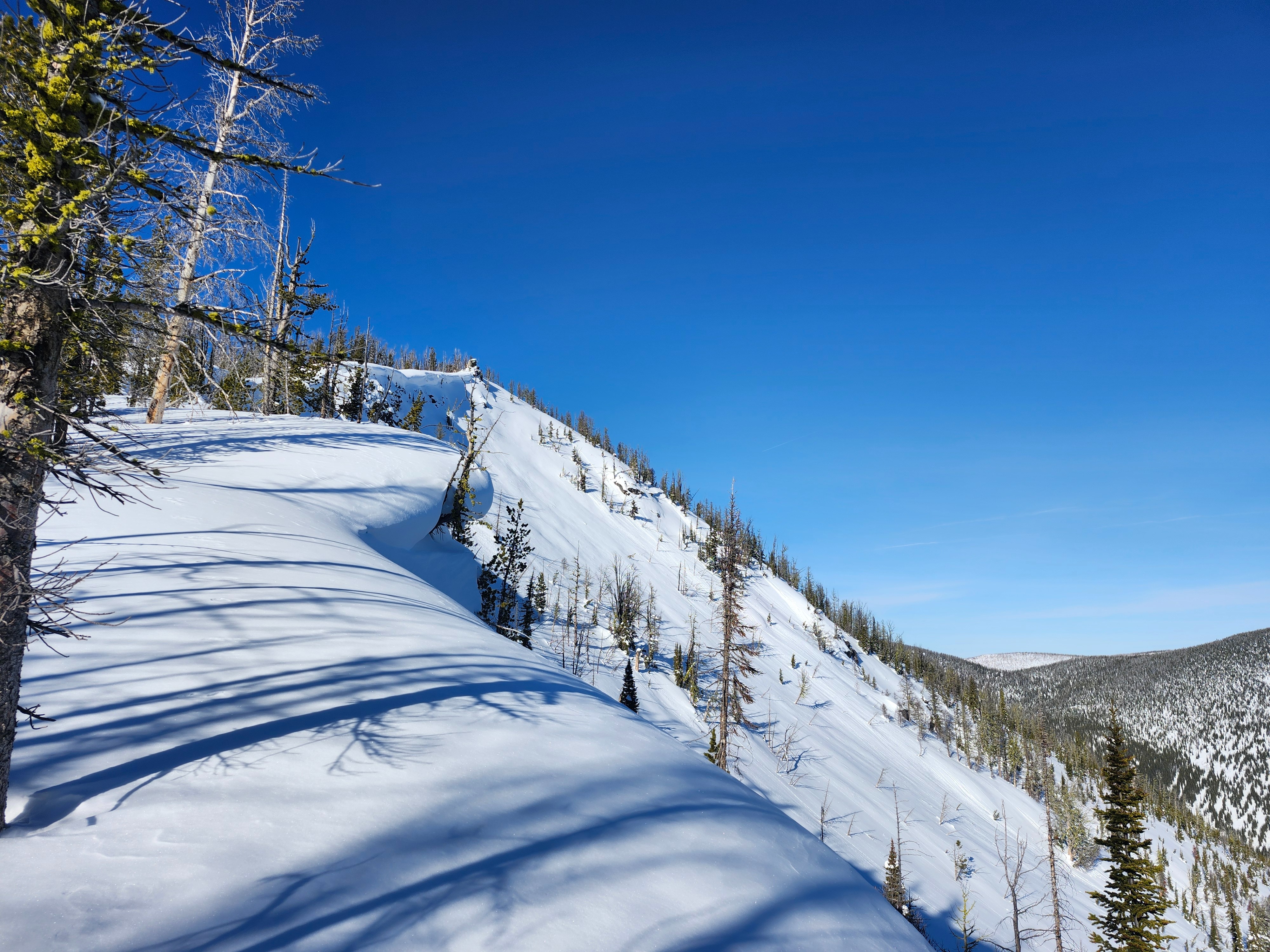
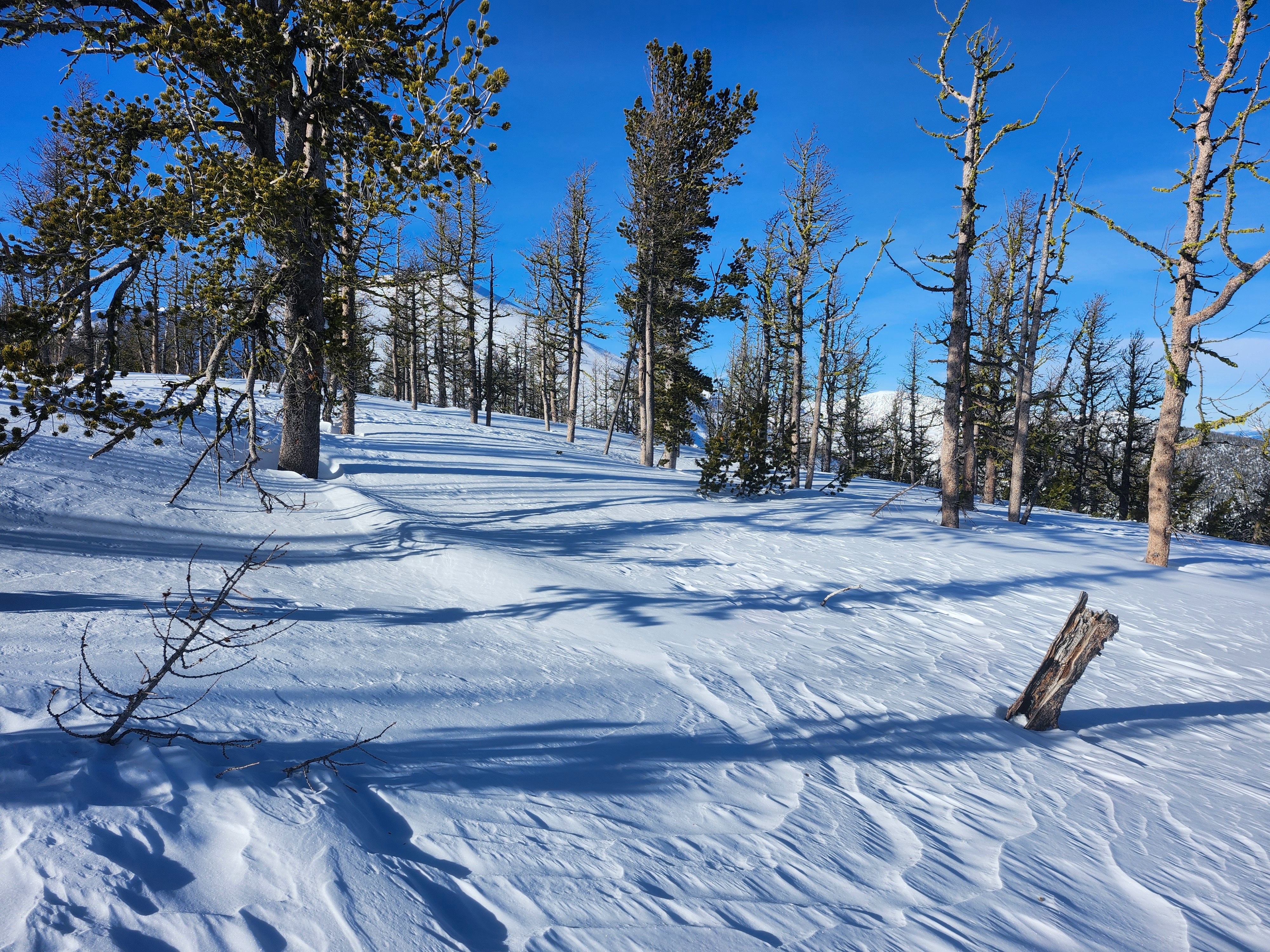
There was extensive evidence of previous wind loading. This included cornices, drifts, surface ripples, and wind slabs. In wind loaded areas, these slabs were up to a foot deep. Surface snow was becoming moist on south aspects at all elevations.
With binoculars I saw evidence of old avalanches in the distance, but they were too filled in and too far away to provide any details. There were a few dry loose sluffs in steep, cliffy terrain.
Weather
- Air Temp
- 34
- Cloud Cover
- few
- Wind Loading
- previous
- Rain Elevation
- N/A
- Recent Snowfall
- 0
- Snow Avail For Transport
- moderate amounts
Mostly clear skies and calm to light winds from the southwest. Temperatures stayed at or slightly above freezing. No new snow since Dec. 27th (Saturday).
Snowpack
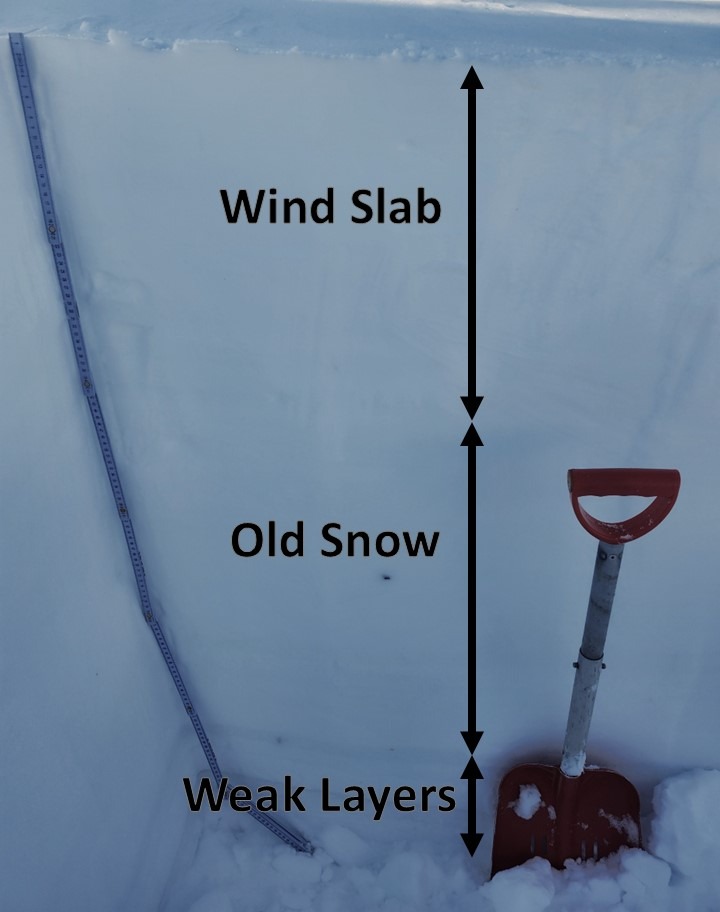
I dug at 8000 feet on a wind loaded northeast aspect. The top 40 cm (16 inches) was a soft wind slab layer (four-finger hardness), with a few laminates of slightly softer or harder snow. This wind slab showed planar failure on hard taps in a compression test (CT21 down 40 (RP)). Extended column tests resulted in non-propagating failures within the top 25 cm (10 inches) of the wind slab (ECTN20 down 15, ECTN27 down 23).
Below the wind slab was harder (pencil hardness) old snow overtop the persistent weak layer buried on December 19th, which was 100 cm (39 inches) deep. This persistent weak layer is a facet crust combination, likely created due to fluctuating rain lines during the pre-christmas storm, and faceting around crusts after burial. This layer was too deep to be affected by tests, but the weak structure was obvious with a relatively softer (1-finger) facet layer sandwiched between harder (pencil) crusts.
Avalanche
I saw some evidence of old wind slab avalanches, which likely happened three or four days ago during the storm. Crowns and debris were filled in, making it difficult to estimate size, get pictures, or determine with certainty whether an avalanche had actually occurred. I saw a few dry loose sluffs in steep, cliffy terrain.