
Quick report
- Cracking
- Observed
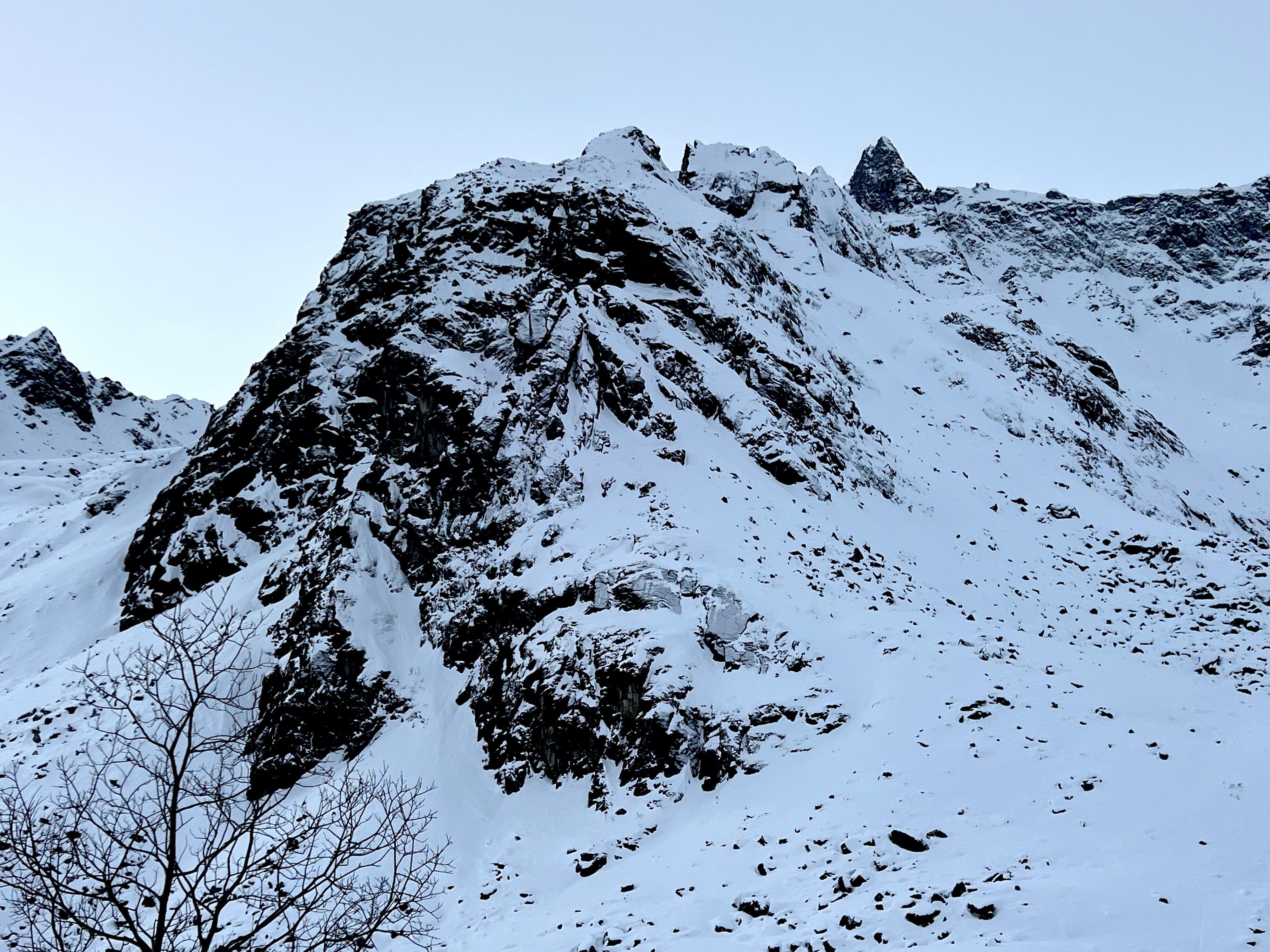
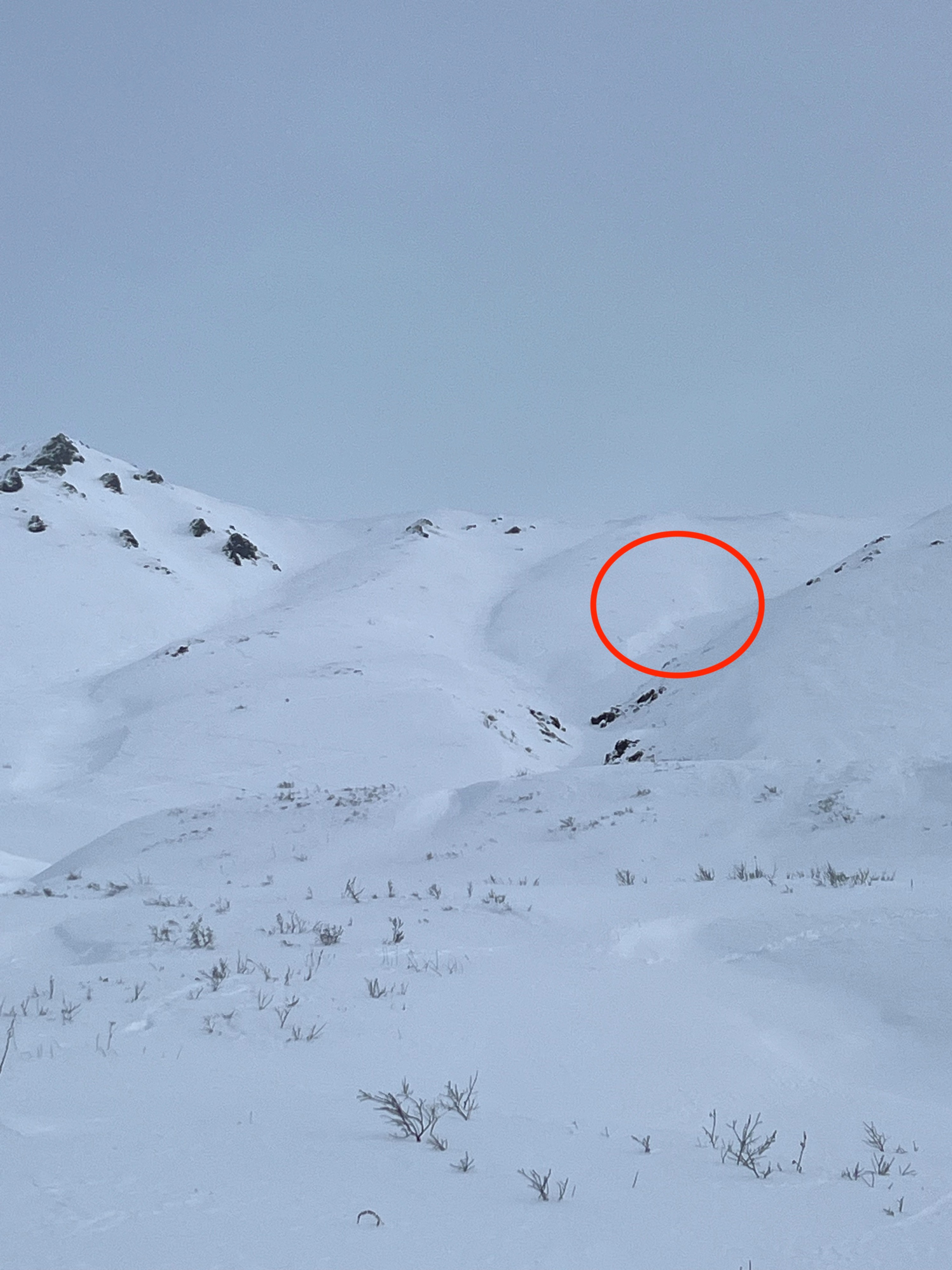
On our ride, we observed numerous small, natural dry loose avalanches throughout the forecast area in steep, upper elevation terrain. None of these fanned out or appeared particularly deep or wide (larger than D1). On a S aspect after switching to touring gear, we were able to get some isolated gullies at 3,800' to crack and propagate. Without adequate steepness, an inconsistent sliding surface and too much friction, these isolated pockets of instability did not avalanche downhill (see photo below).
Weather
- Air Temp
- 5
- Cloud Cover
- scattered
- Wind Loading
- unknown
- Rain Elevation
- N/O
- Recent Snowfall
- NO
- Snow Avail For Transport
- small smounts
Skies were overcast in the morning and transitioned to broken by noon and few by 1500. Temperatures hovered around 0 and single digits but felt quite a bit warmer on southerly aspects. Observed winds were calm to light and variable, with no ridgetop wind transport seen today.
Snowpack
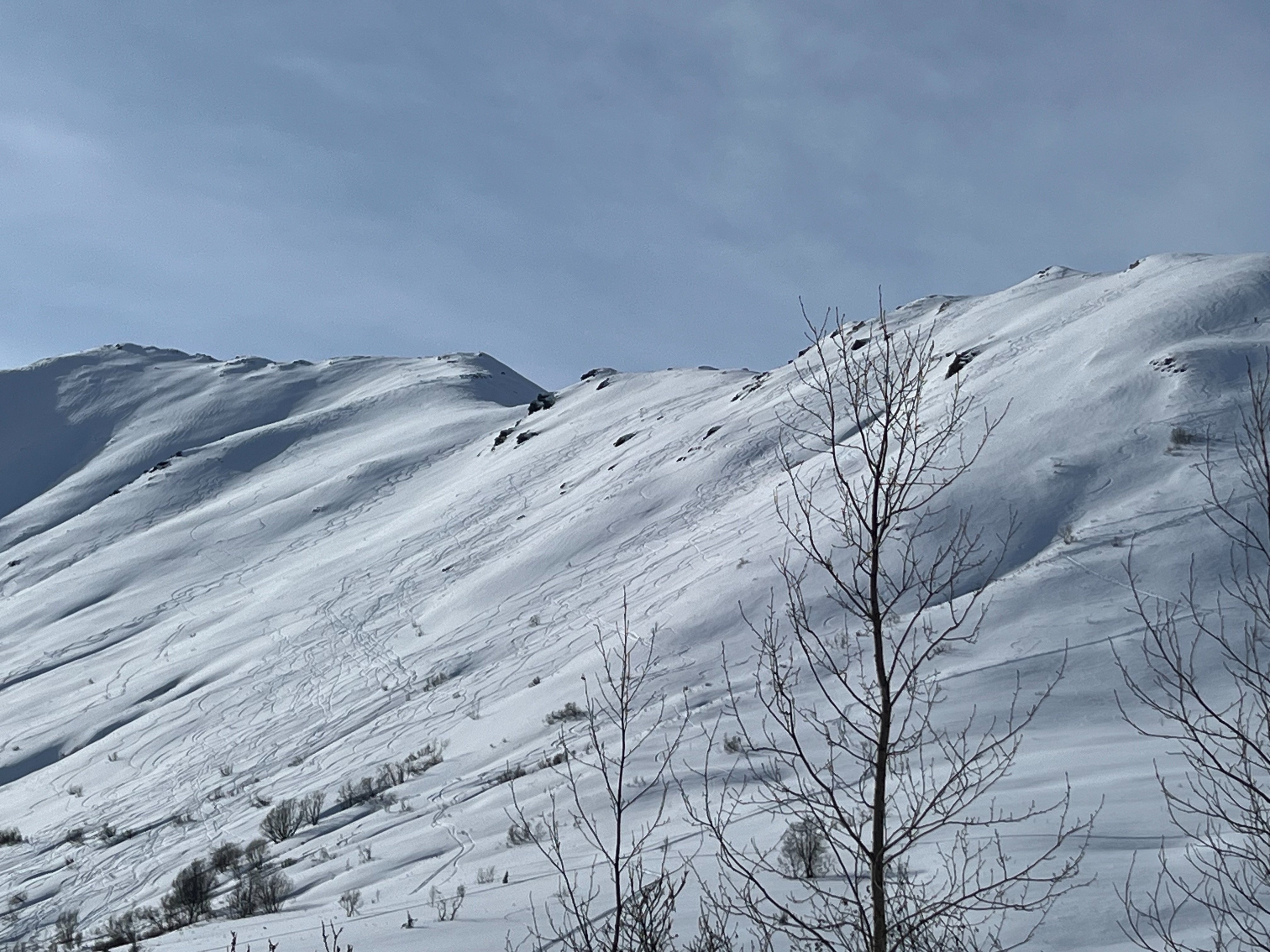
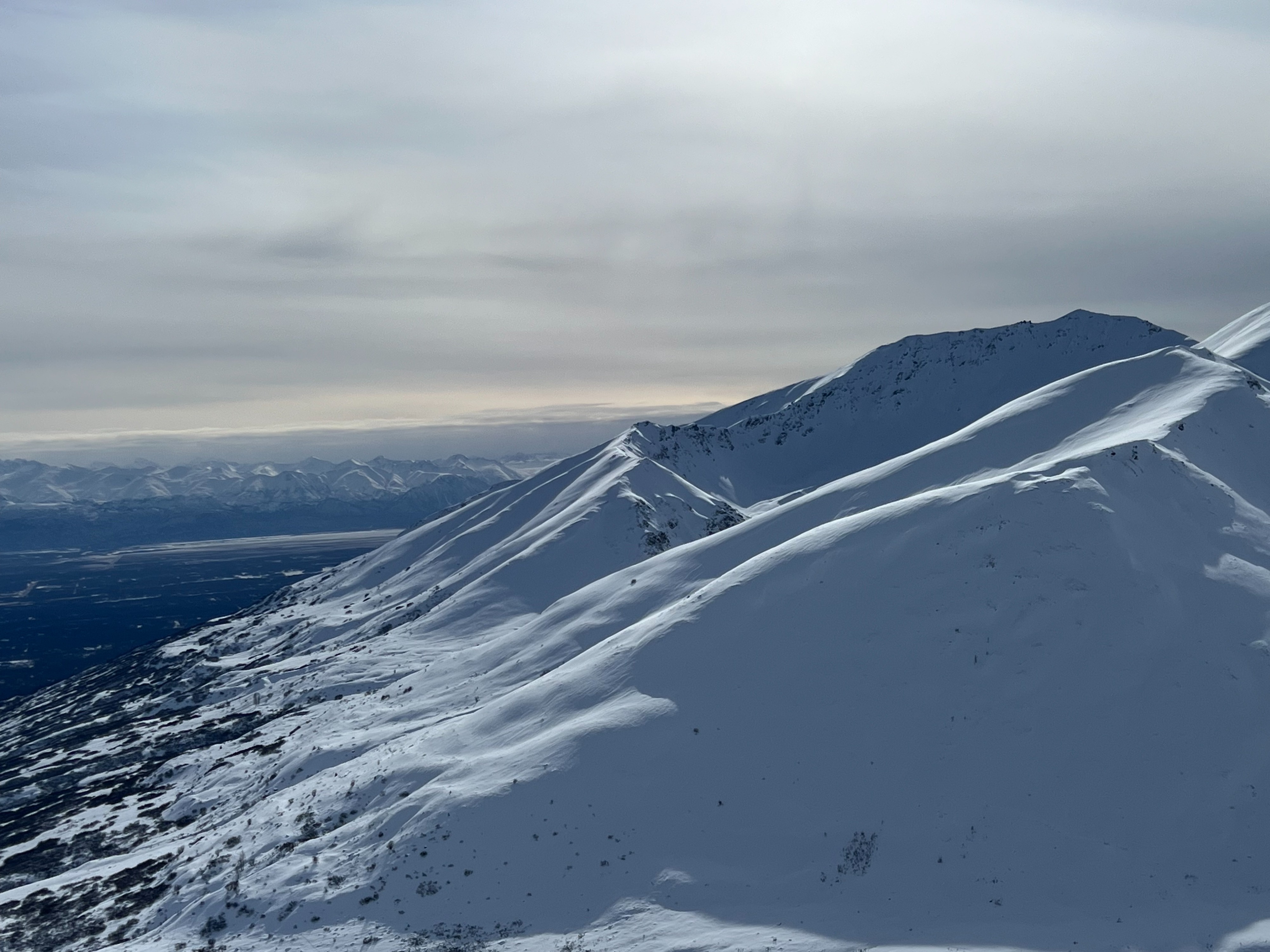
Signs of wind loading from the past several days (3/15 to early 3/17) in the forecast area were apparent (see photos below). However, as far as Hatcher Pass goes, the observed impact of winds on the snowpack was moderate: we did not observe much scouring. This corroborates with the last 48 hour period wind speeds that peaked in the high 20s while wind speeds were much greater in town at valley level. Even on some windward aspects, soft, lingering storm snow from our 5" of March refresh remains. In summary, wind slabs are still lurking in leeward and cross-loaded terrain, but the impact of this most recent period of wind has not destroyed our upper-snowpack surface conditions for riding. The avalanche hazard has seen a moderate bump with possible wind slabs in specific terrain. Our tour today indicated that you are most likely to find lingering wind slabs in isolated terrain features like cross-loaded gullies and convex-shaped entries to larger features.
Snowpack overall remains variable. We experienced everything from exposed tundra on exposed, windward slopes to bottomless soft snow. One meter of deep, unconsolidated facets still remain at upper elevation valley level beyond Sidney Creek, particularly around drainages and willows. Outside of these more protected, previously wind-drifted zones, snowpack remains less than a meter with a smattering of windboard and new snow.