
Quick report
- Cracking
- isolated
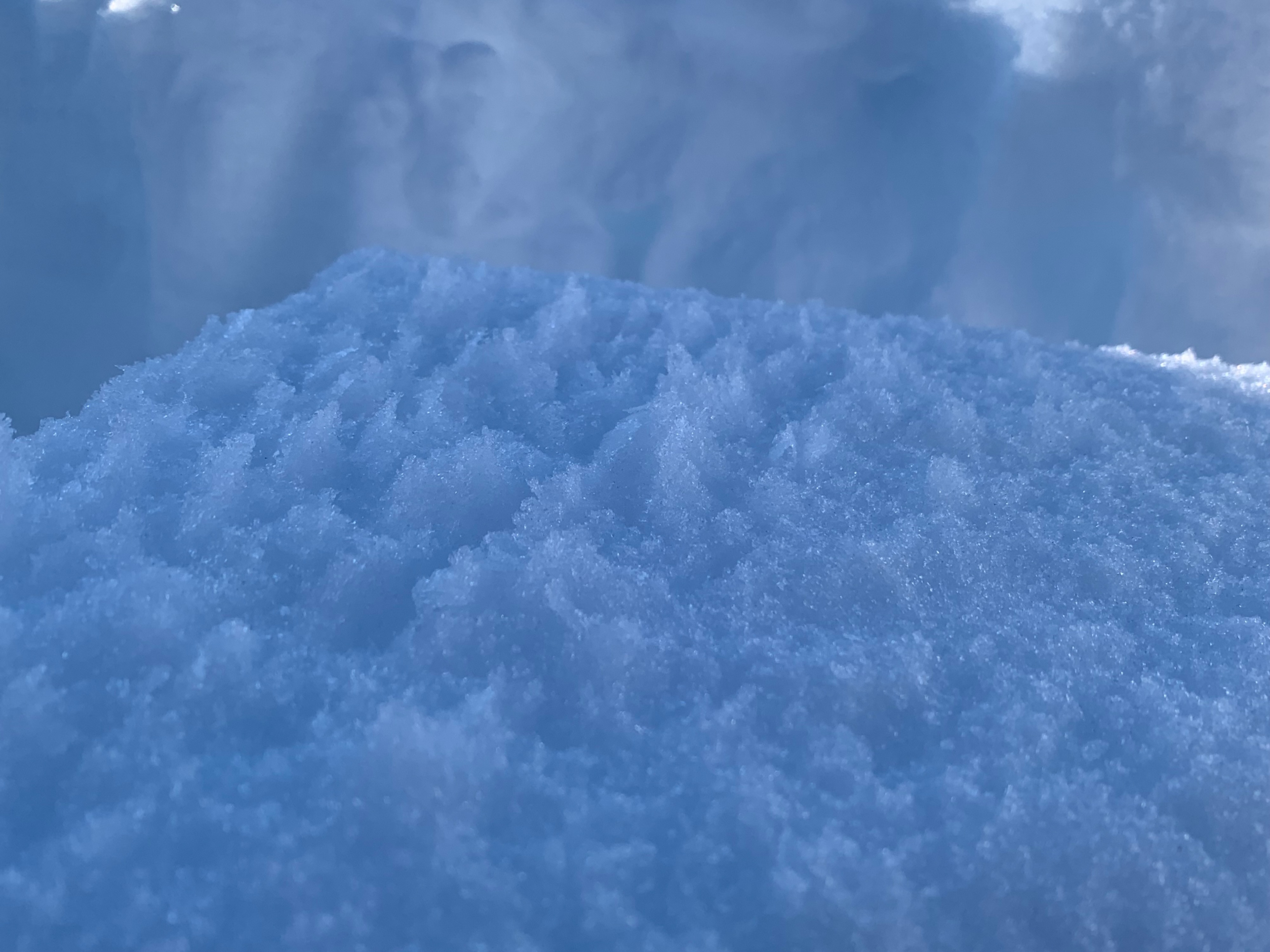
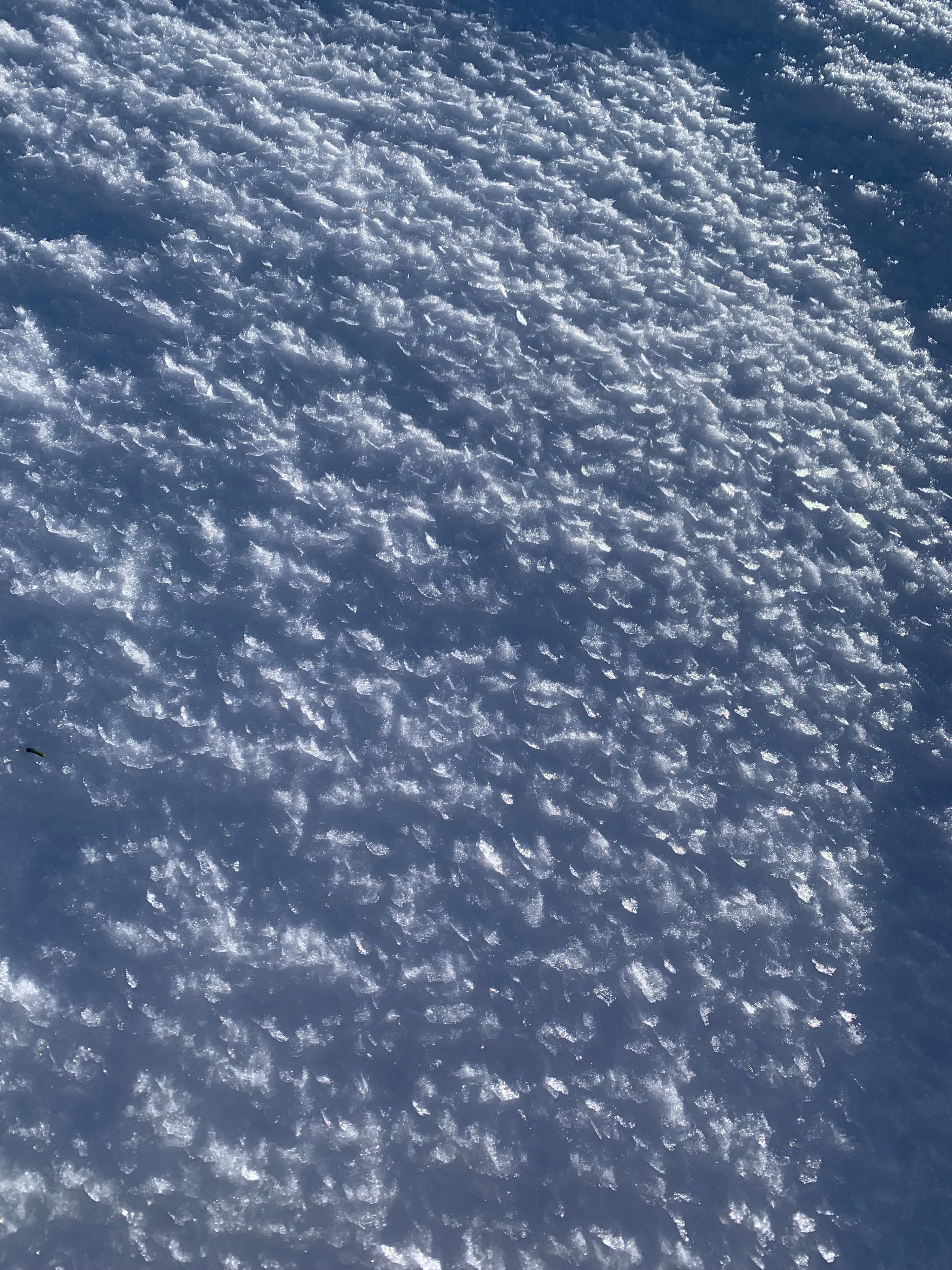
Wind effect has locked up the surface of the snowpack with the majority of areas along the small creek route consisting of a mix of knife hard wind slabs, sastrugi, and old rain crusts (1/15). Soft snow was only found in the most protected areas of the lower canyon and faceted snow was apparent wherever soft snow existed at the surface.
The most recently formed wind slabs from the last smaller wind event (2/24-25) were poorly bonded to the older wind slabs of the significant wind event of 2/19-21). These were isolated and 1 foot deep or less on small test slopes. Deeper sensitive slabs would be possible in isolated terrain such as deep protected gullies.
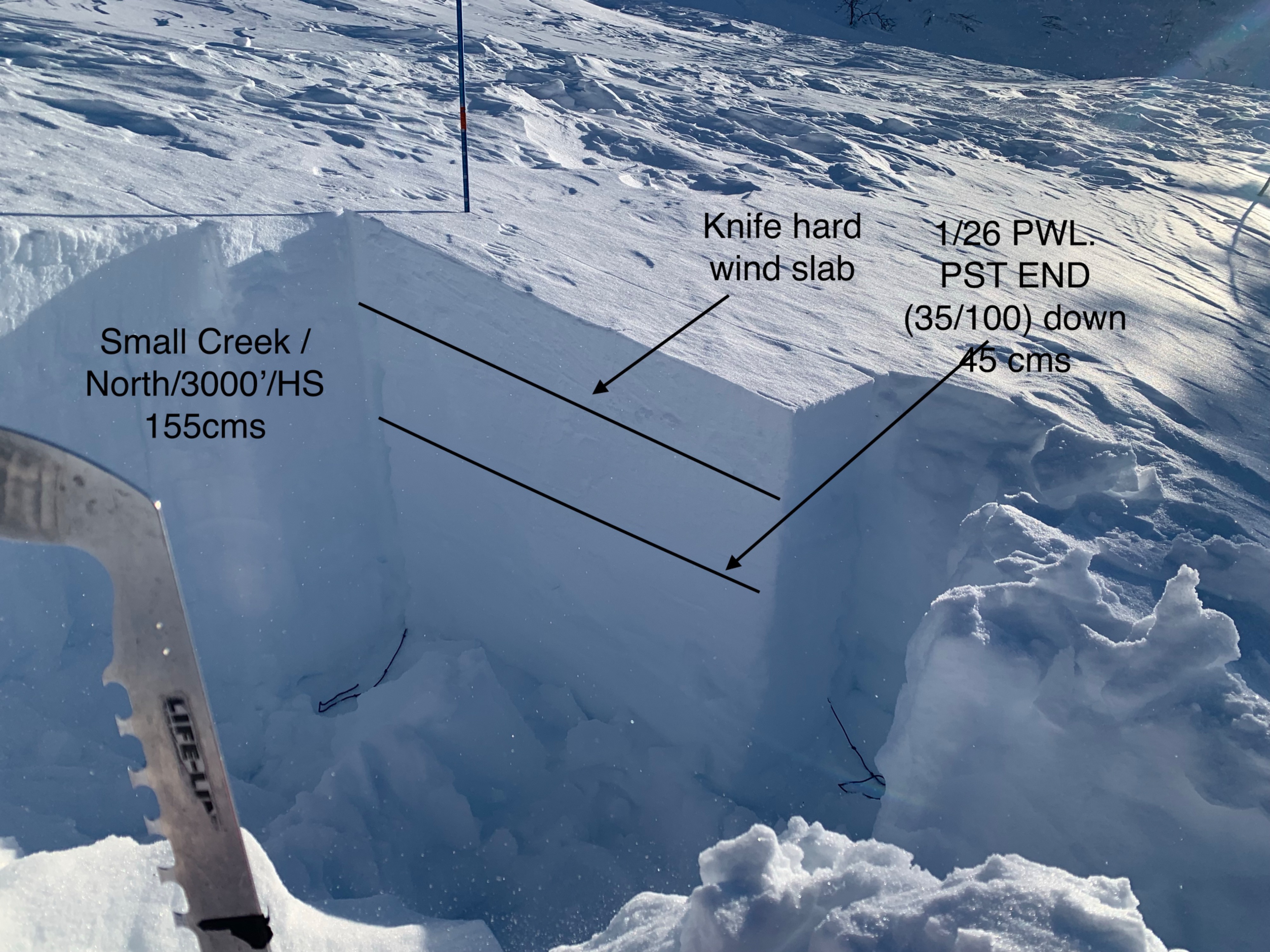
In wind affected areas the 1/26 layer varied from at the surface (no slab) to down 40-60 cms capped by knife hard wind slabs. Hard wind slabs were unreactive however poor structure remains with 1/ 26 buried surafce hoar found upright 2 cms in length down 40 cms on a targeted lee slope where BSH was found reactive in pits previous to wind event. Pit results produced PST END (35/100) down 45 cms 01262026.
In isolated ares soft and shallow wind slabs (< 1') were found to be reactive and poorly bonded to the harder wind slabs that formed 2/19-21.Weather
- Cloud Cover
- clear
- Wind Loading
- previous
- Snow Avail For Transport
- none
Clear, Cold, Moderate to strong winds above 2000'
Snowpack
The snowpack has a lot of spatial variability, with our primary layer of concern (1/26) existing at the surface in stripped areas and down 40-60++ cms on lee slopes. Cold temps are having an effect on our thin snowpack with faceting observed in multiple layers. Poor structure at the base of the snowpack continues to be apparent upon probing.