

Quick report
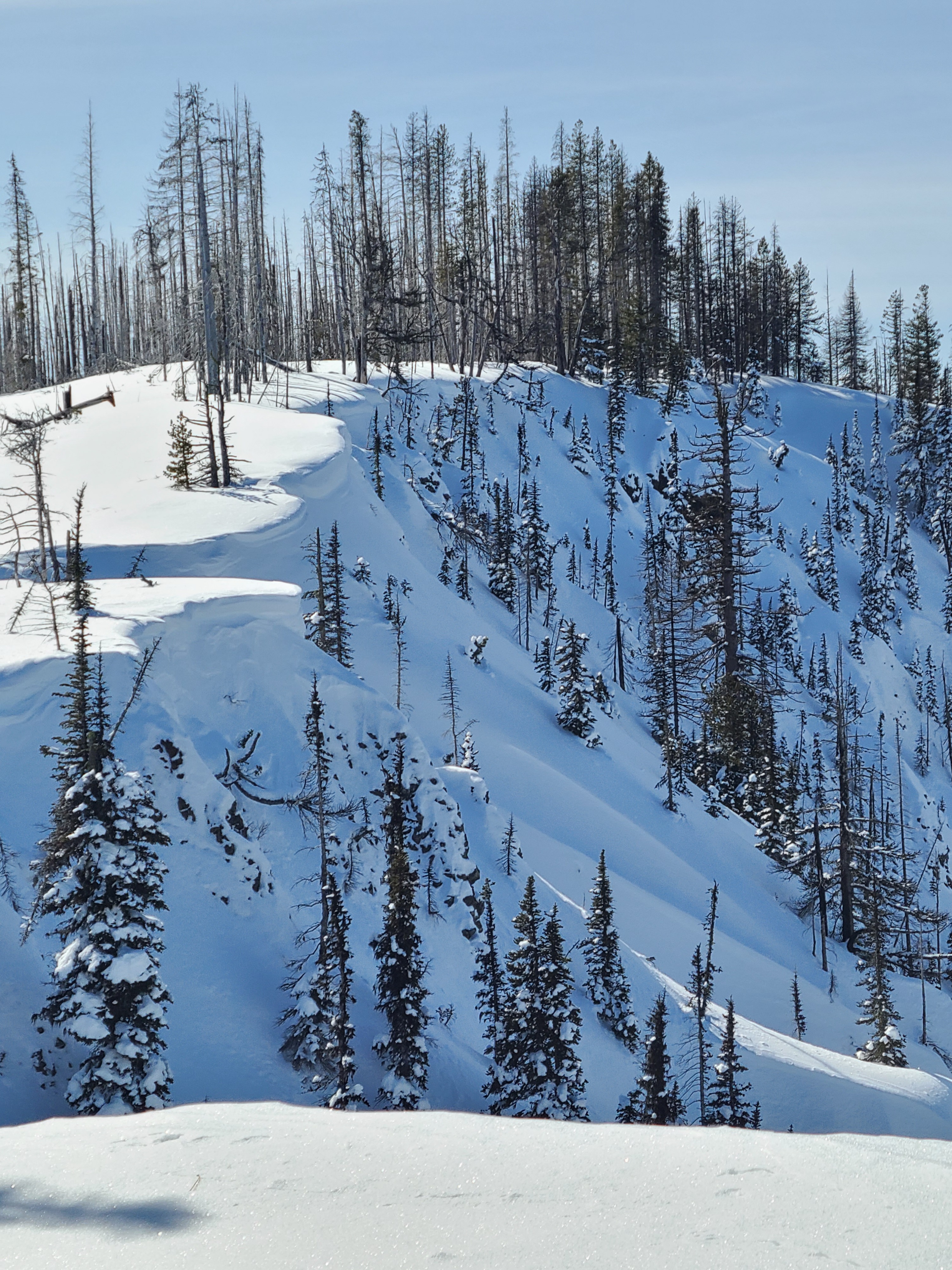
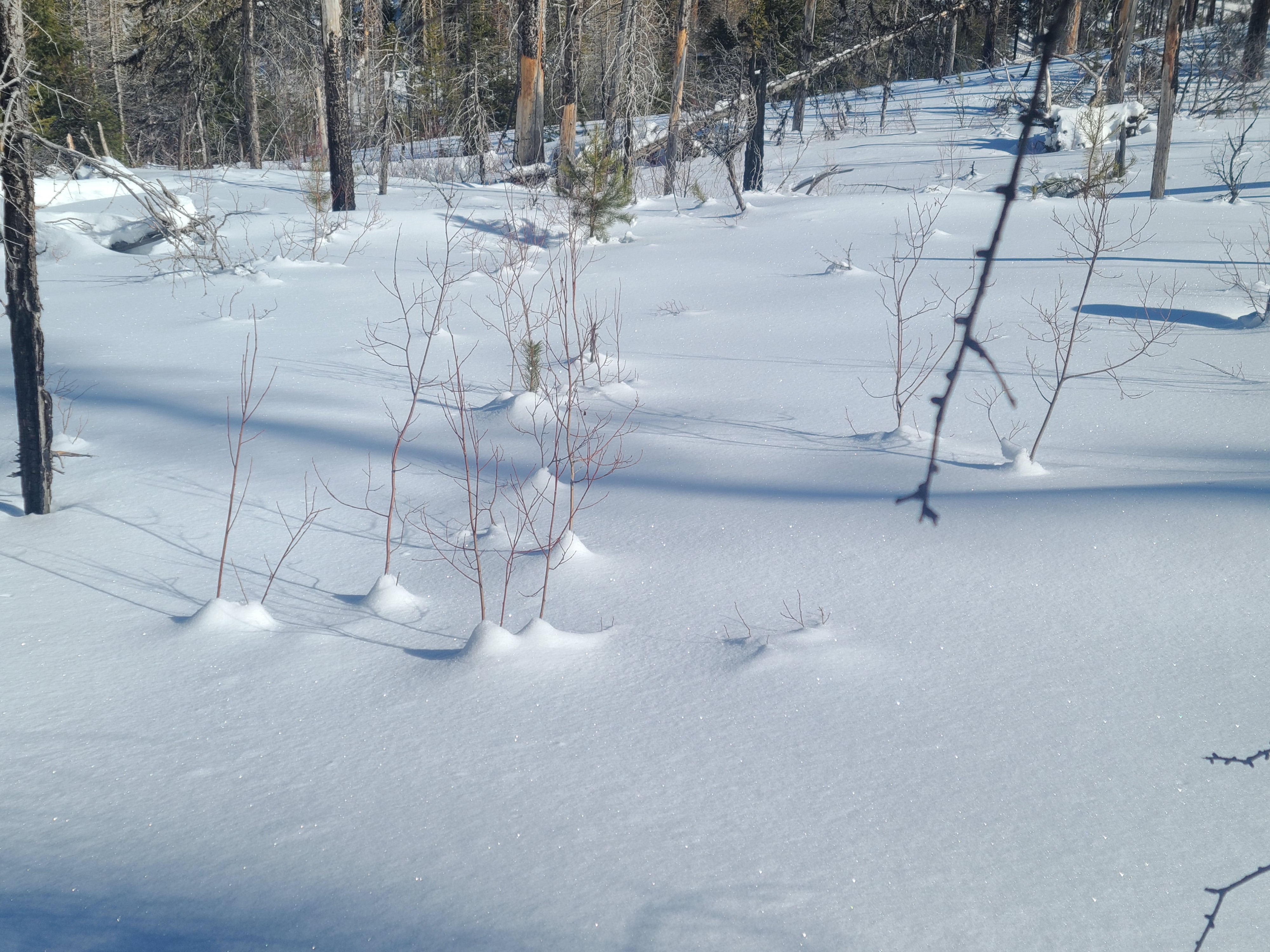
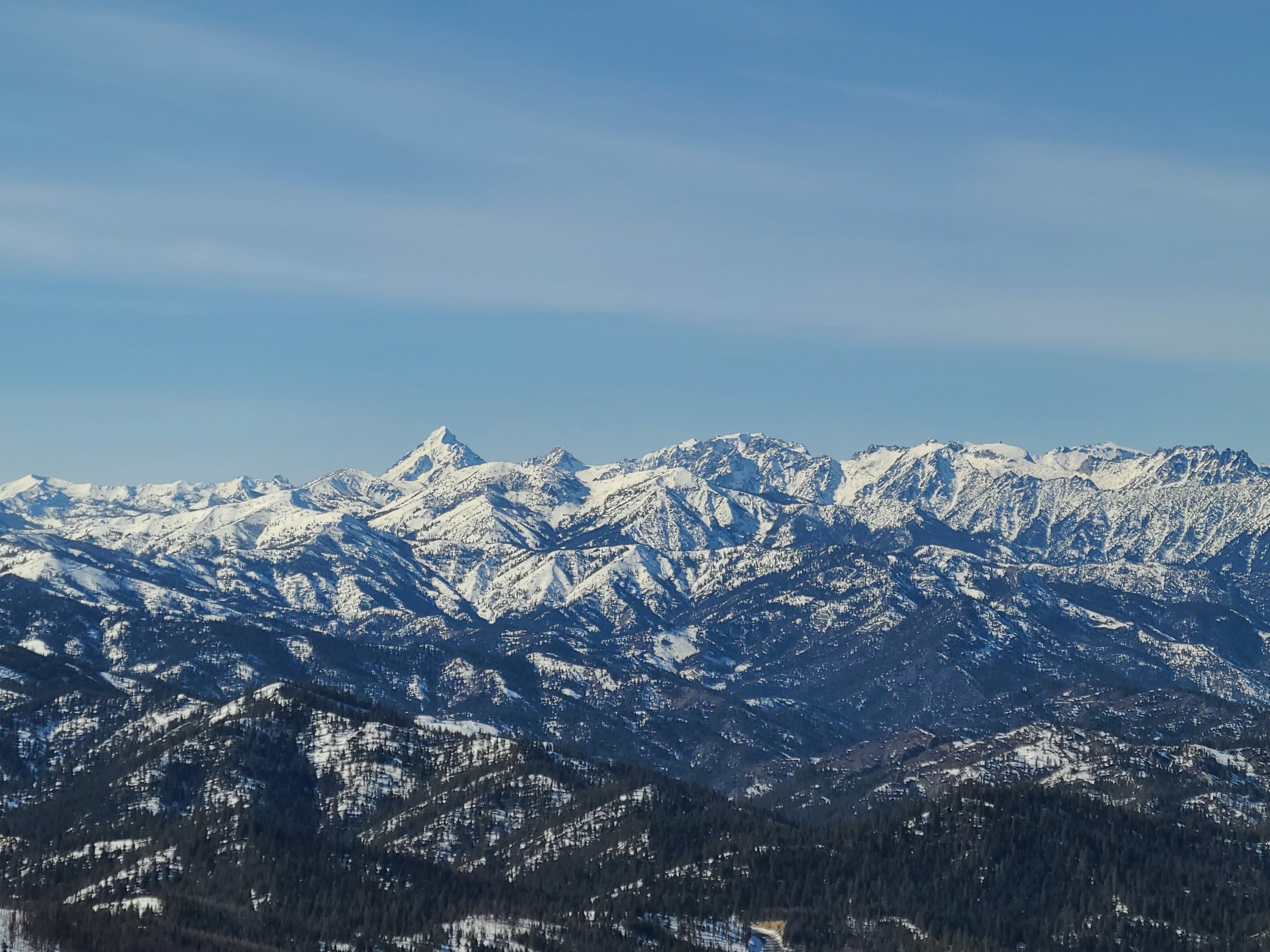
We enjoyed a lovely day in the mountains. The clear skies and calm winds allowed for pleasant travel and good views into the Stuart Range. The cold ambient temperatures preserved soft snow on shady slopes, but sunny slopes have a recent surface crust from the past few days. Despite the stronger March sun, we didn't see any rollerballs or wet loose avalanche activity.
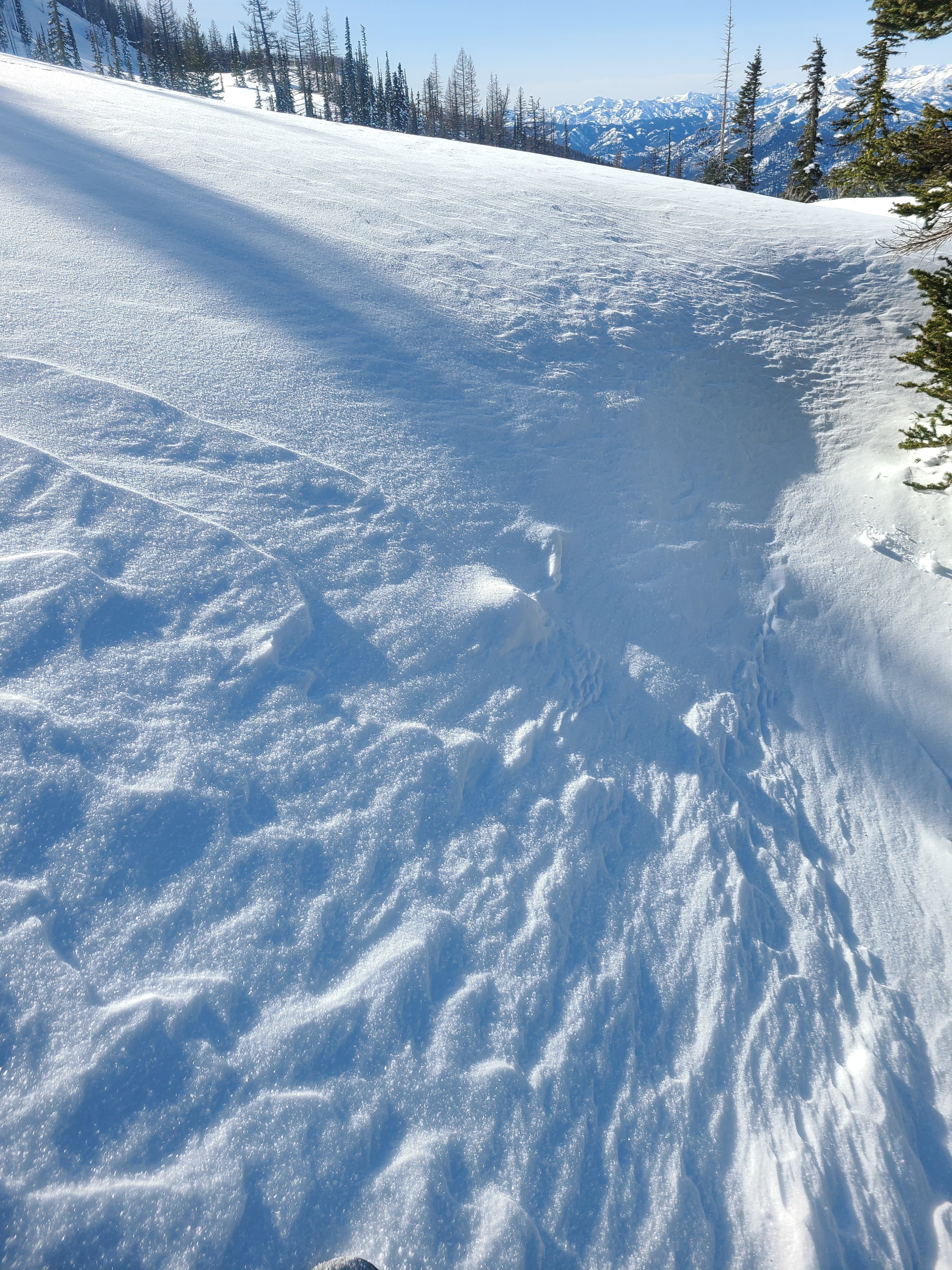
There was previous wind loading and textured surfaces. We found that the old wind slabs were stubborn and experienced no cracking or collapsing on test slopes.
Despite a strengthening of the facets over the EFC and unremarkable stability test results, a recently triggered avalanche visible nearby increased our uncertainty, and we stuck to slopes less than 30 degrees.
Weather
- Cloud Cover
- clear
- Wind Loading
- previous
- Recent Snowfall
- 0
- Snow Avail For Transport
- moderate amounts
It was a beautiful day in the mountains, with sunny skies and calm winds. The cold ambient temperatures created a stark difference between the sun and shade. The shade required puffy jackets for breaks, while the sun felt comfortably warm with light base layers.
Snowpack
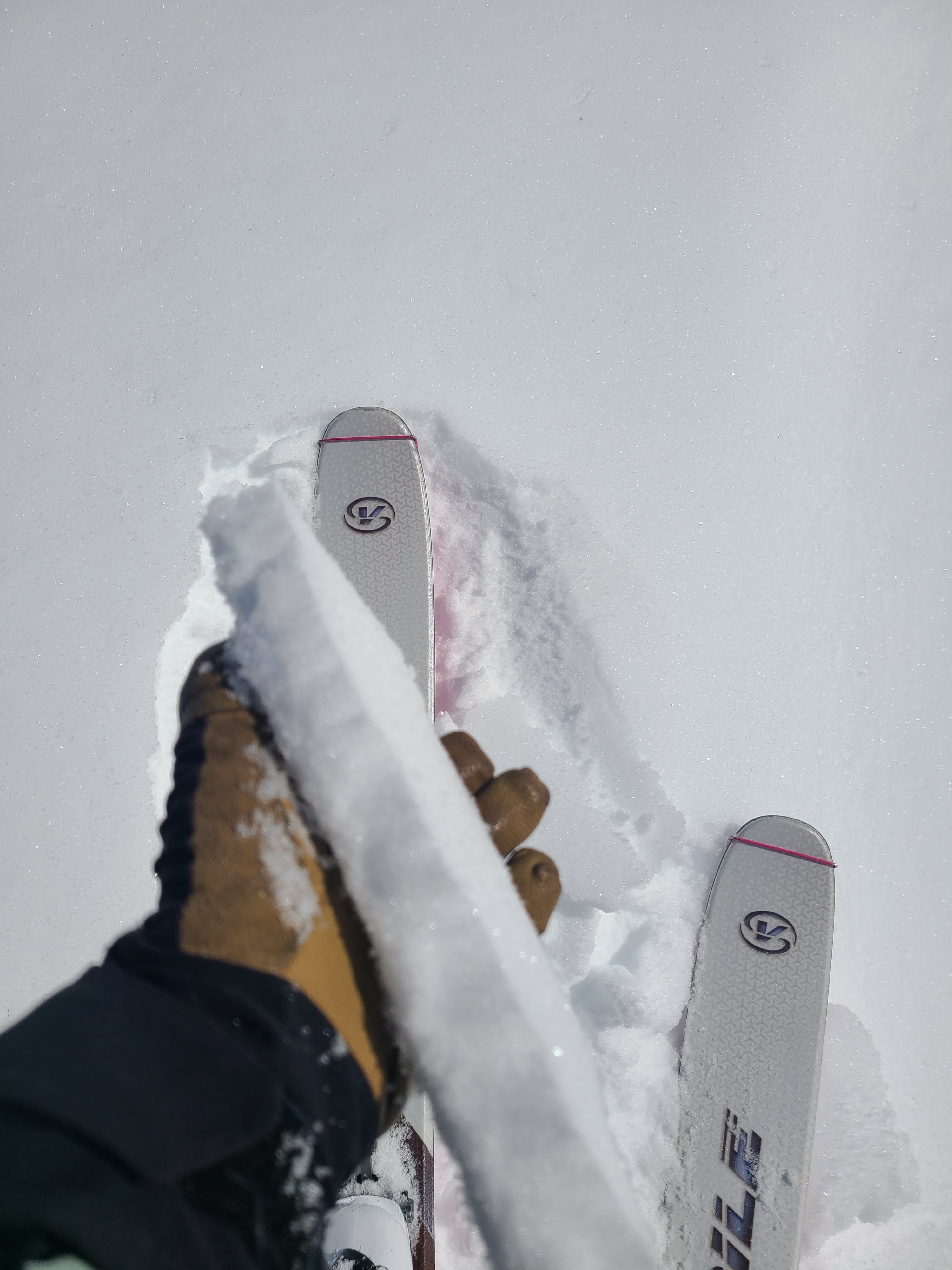
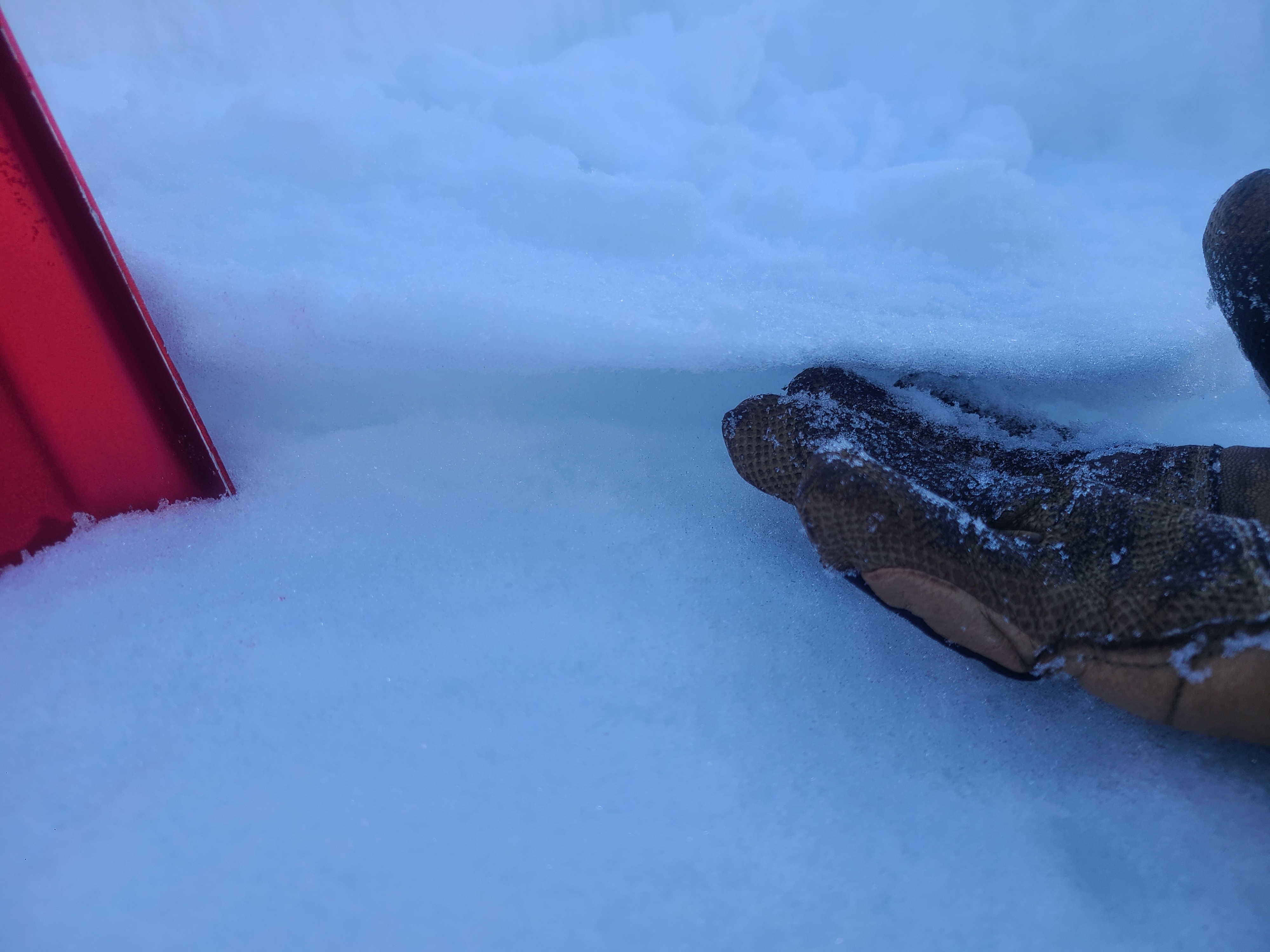
We dug profiles on both southerly and northerly aspects. Overall, the snowpack is weak, with intermittent crust and facet layers. The recent snow is beginning to facet and surface hoar is present on most aspects and elevations. The surface hoar is most preserved in sheltered northern terrain. There are two crusts in the upper snowpack; the February 24th (2/24) crust is buried 20cm deep, and the Early February Crust (EFC) is buried 40cm. There is weak snow above both, although the weak, faceted snow above the EFC is much more well-developed than the smaller facets over the 1/24 crust.
The snowpack is notably weaker on northerly aspects. On southern aspects, the 1/24 crust is thicker and a new sun crust has formed on the surface. Despite the weak snowpack structure, snow stability tests were unremarkable. However, we did get one extended column test to propagate, but well past the standard loading steps of the test. We expect this to be due to spatial variability in the weak layers, as I found a very thin crust on top of the facets over the EFC, which I had not observed previously in this area.
N aspect, 5300ft: HS 92
S aspect, 5800ft: HS 105