
Quick report
- Cracking
- widespread
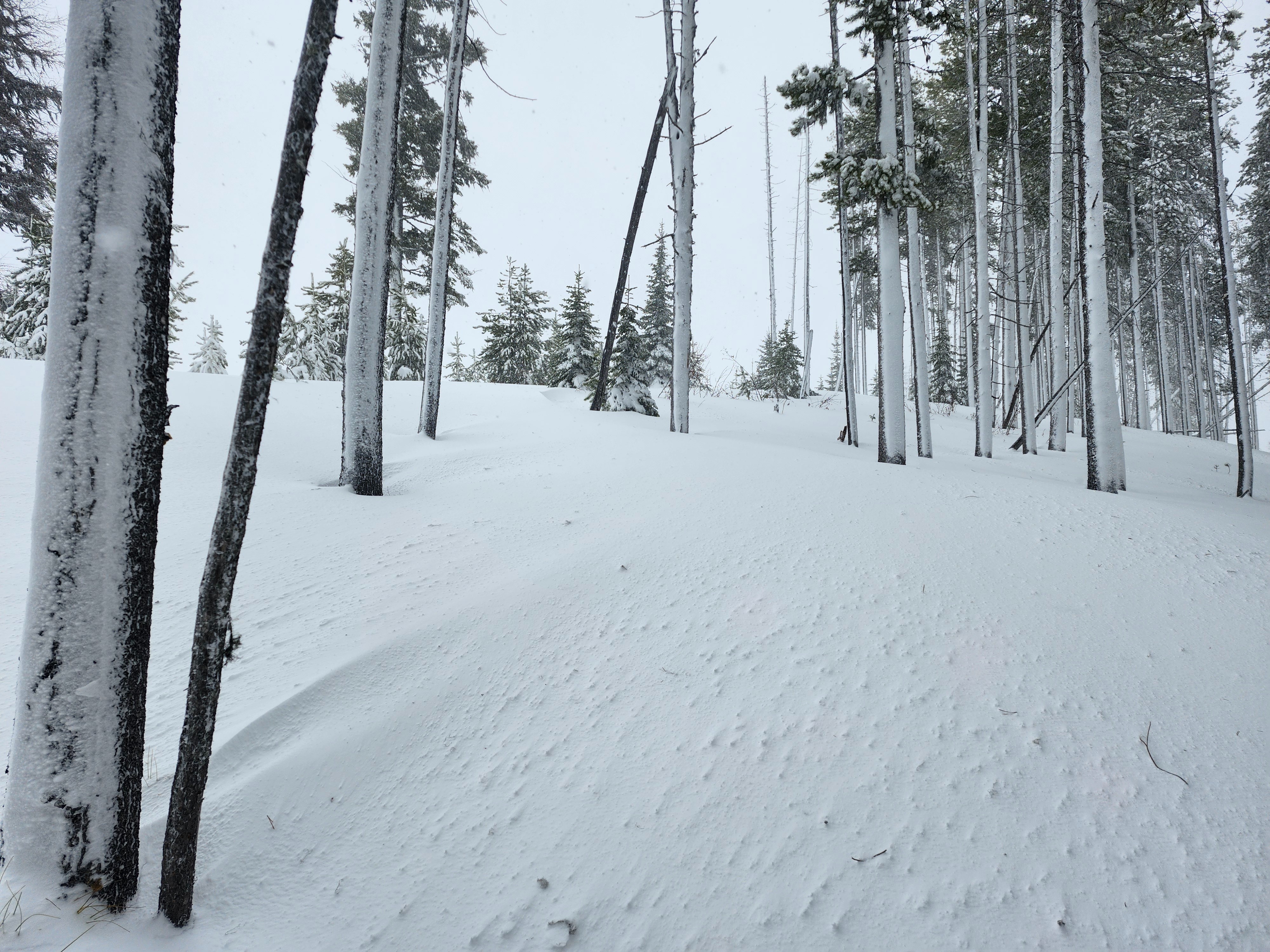
On the drive up, the rain turned to snow rather abruptly around 4500 feet. By the parking lot at 5200 feet, there was already a foot and a half of new snow.
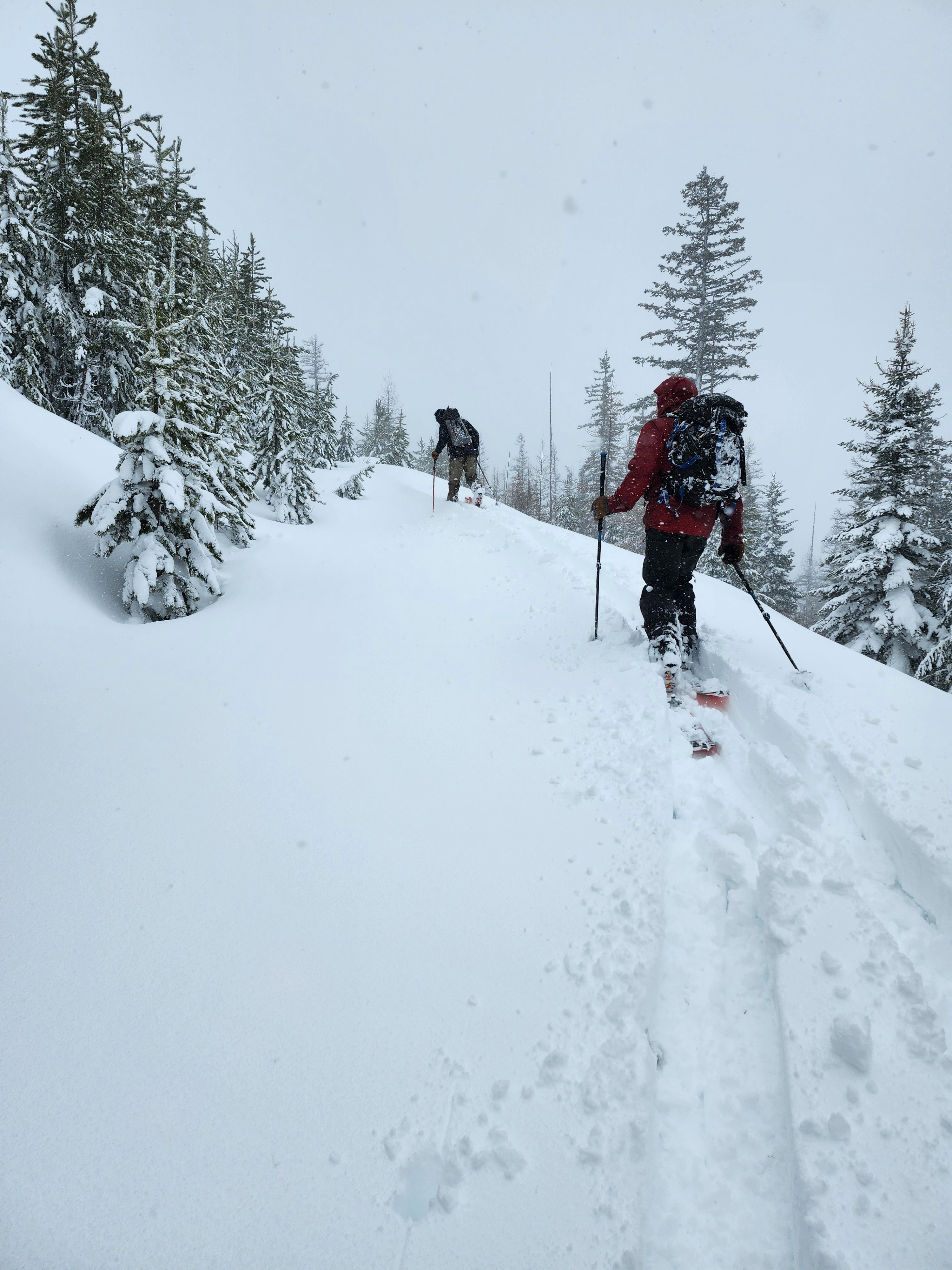
Fortunately, there was already a skin track most of the way, because trail breaking was difficult. The new snow was dense, but so far still dry. It continued to snow even as temperatures climbed to just above freezing.
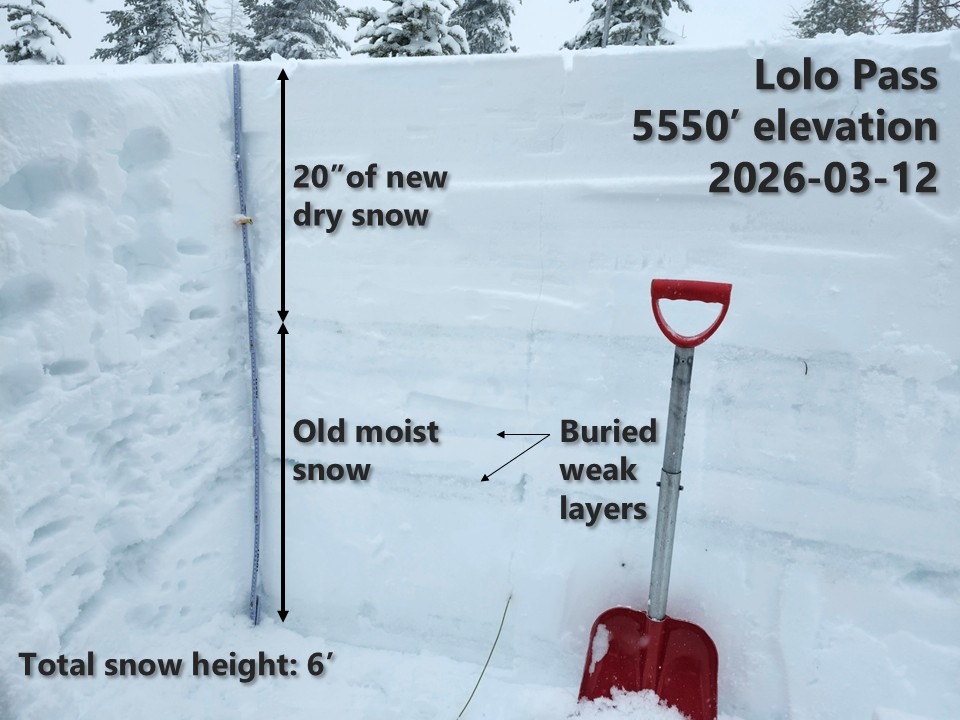
Below the new snow we found a moist old snowpack. Old buried crusts had reverted into melt-form grains, no longer frozen together. Obvious weak layers were still present 2.5-3 feet deep. We got propagating test results on one of them - a sign of instability. With old snow staying moist and new snow piling up, the sensitivity of these layers is only going to increase.
When we returned to the parking lot about two hours later there was just over an inch of snow on the truck. The plow had been circling the parking lot constantly to keep things clear, and the employees at the Visitor Center were still shovelling (we appreciate their work). On the drive down, the rain/snow line had fallen to 4200 feet, or approximately the elevation of Lolo Hot Springs.
We saw cracking around our skis throughout our travels, but cracks were short and did not propagate more than a foot past our ski tips.Weather
- Air Temp
- 35
- Cloud Cover
- overcast
- Wind Loading
- moderate
- Rain Elevation
- 4200
- Recent Snowfall
- 45-55
- Snow Avail For Transport
- large amounts
Snowfall rates of half an inch to one inch per hour. Winds were light to moderate from the southwest with occasional strong gusts.
Snowpack
We found a foot and a half of dry new snow overlying moist old snow. The old snow contained layers of melt-forms, which were former crusts. The February 14th layer was buried 30 inches (77 cm), and consisted of meltforms (old crust) and rounding surface hoar. The January 23rd layer was 33 inches deep (84 cm). It was two crusts separated by 2 inches (5 cm) of rounding facets and surface hoar. We had a propagating extended column test result (ECTP24) between these crusts.
Other results were non-propagating extended column tests on density changes within the new snow. Temperatures were warming as we left, which will lead to grain form changes and density changes in the falling snow. I suspect this will increase instability within the storm snow.