
Quick report
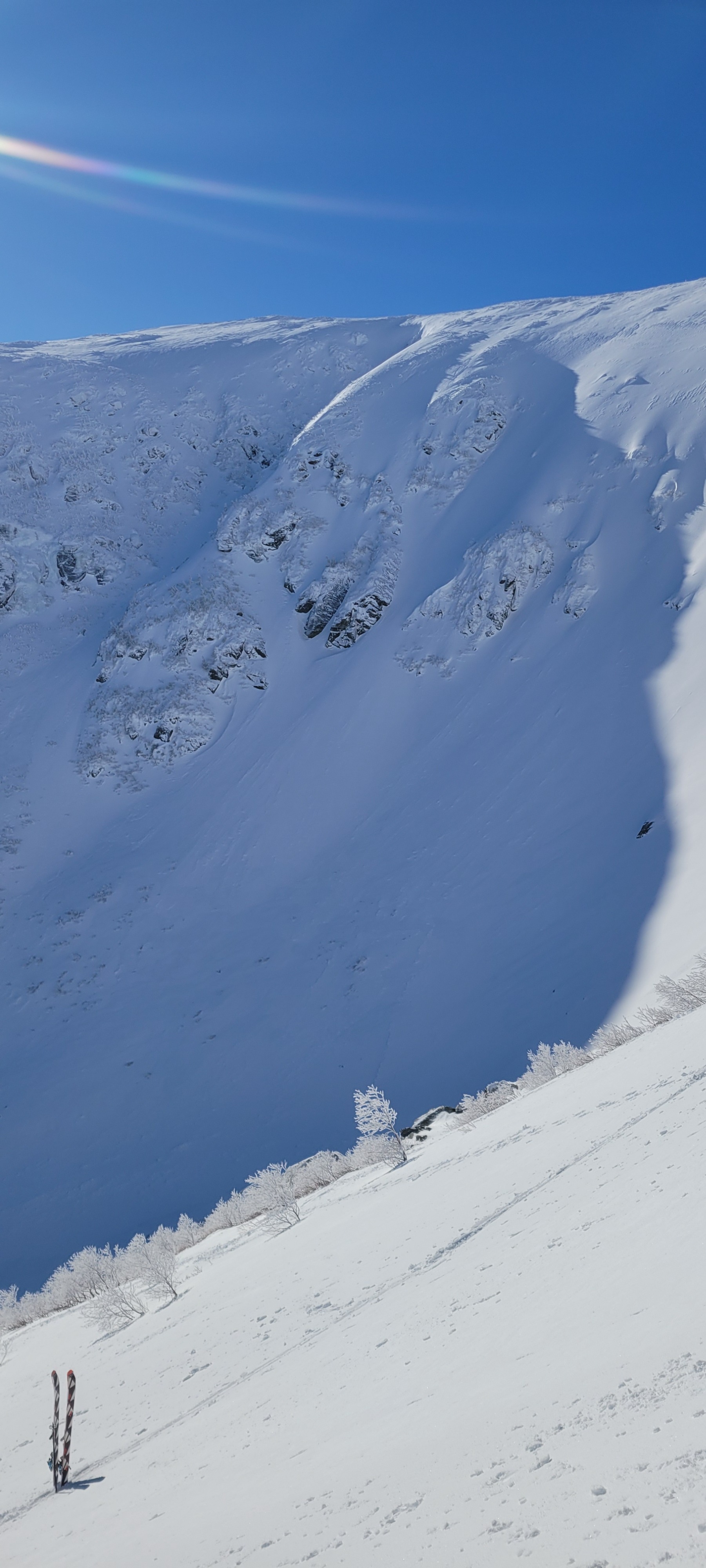
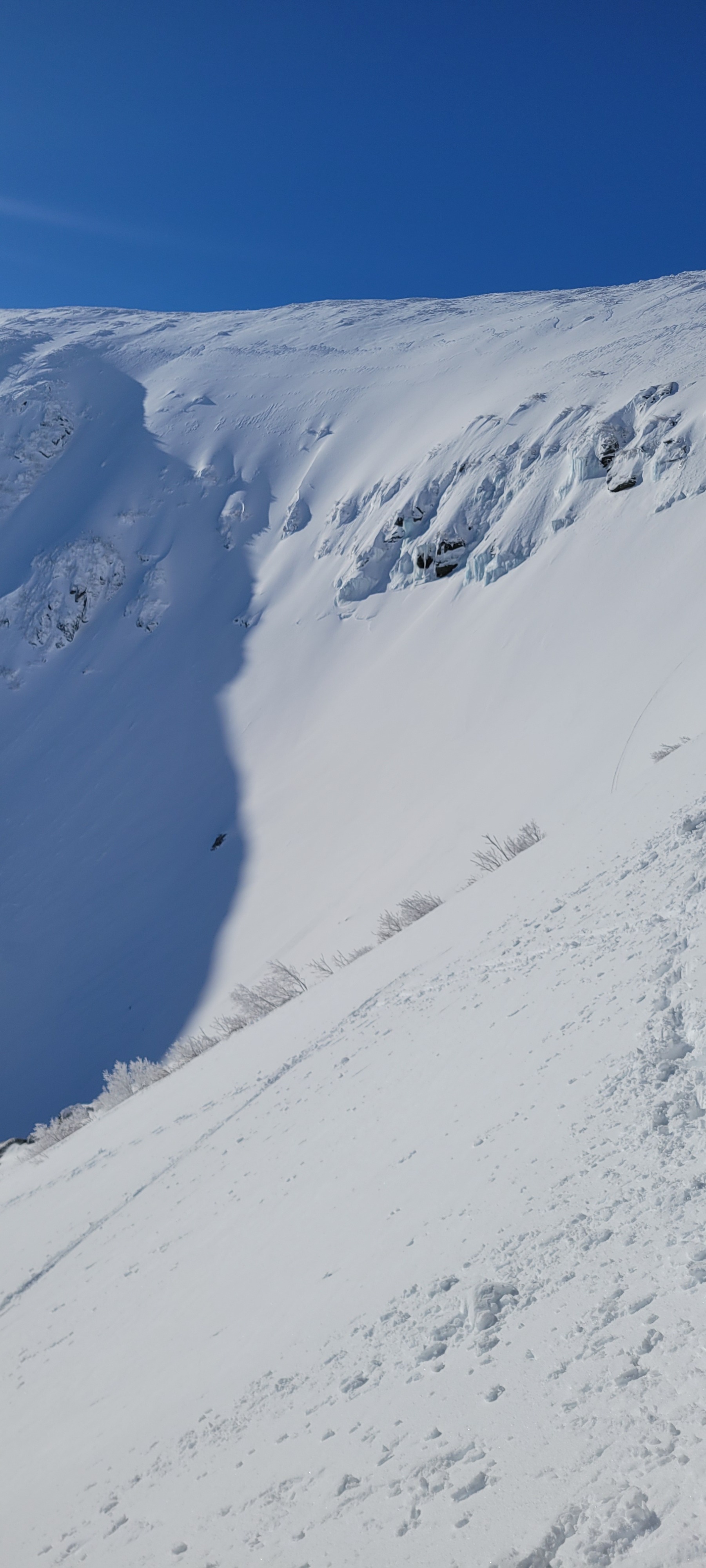
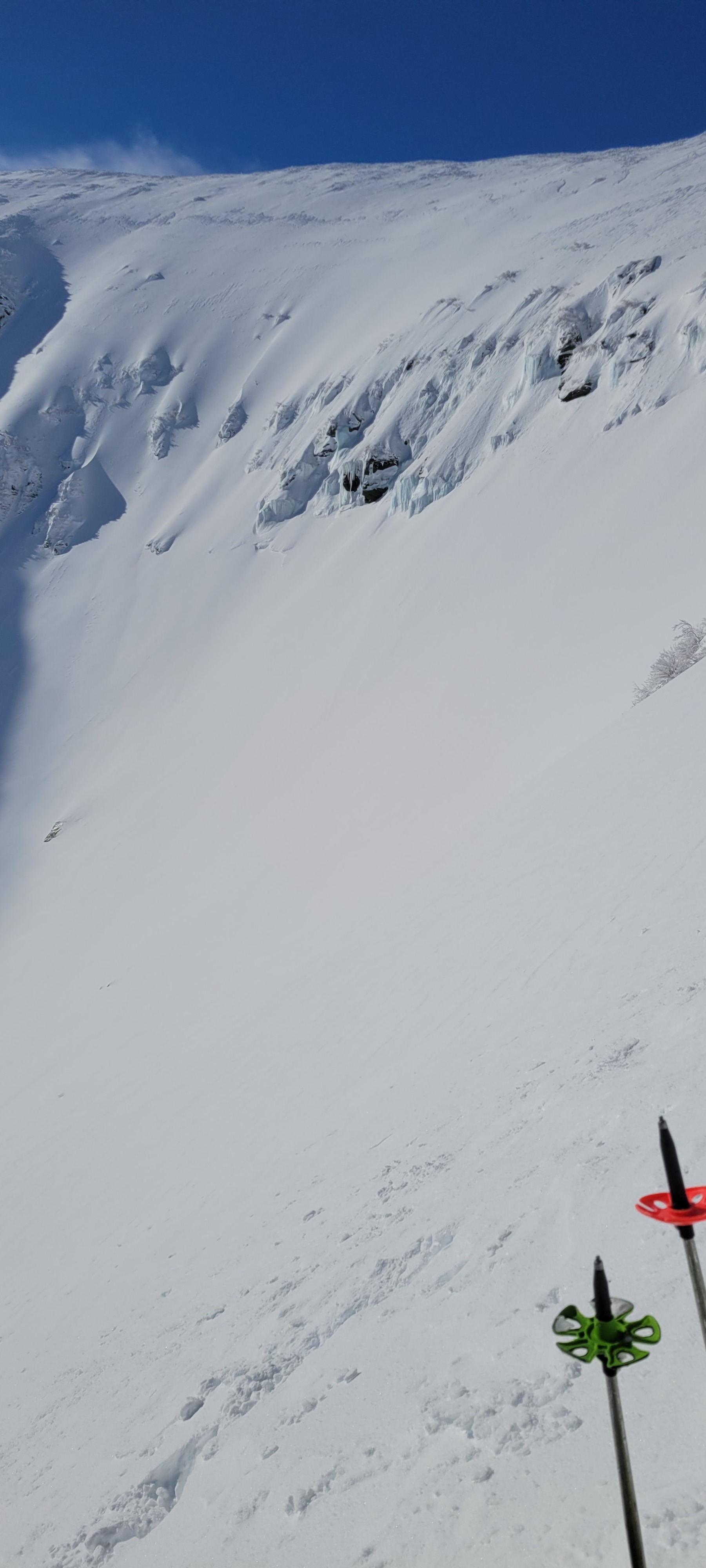
Clearing skies this morning brought great visibility to Tukerman Ravine. Middle terrain across Chute, Center Headwall and the Lip appeared planar and smooth along with terrain in Sluice, Right Gully and Lobster claw. Ridgelines are scoured. The lower section of Left Gully appeared to have more of a wind-affected, textured surface. While traveling through the terrain on a SE aspect above 4000ft we found exposed melt-freeze crust, but wind packed snow was more widespread. Boot penetration varied from 5cm to 30cm. The exposed melt-freeze crust is unsupportive.
Observed a small crown line that began to fill back in, Center Headwall lookers left of the rock/ice.Weather
- Air Temp
- 22
- Cloud Cover
- few
- Wind Loading
- none
- Snow Avail For Transport
- small smounts
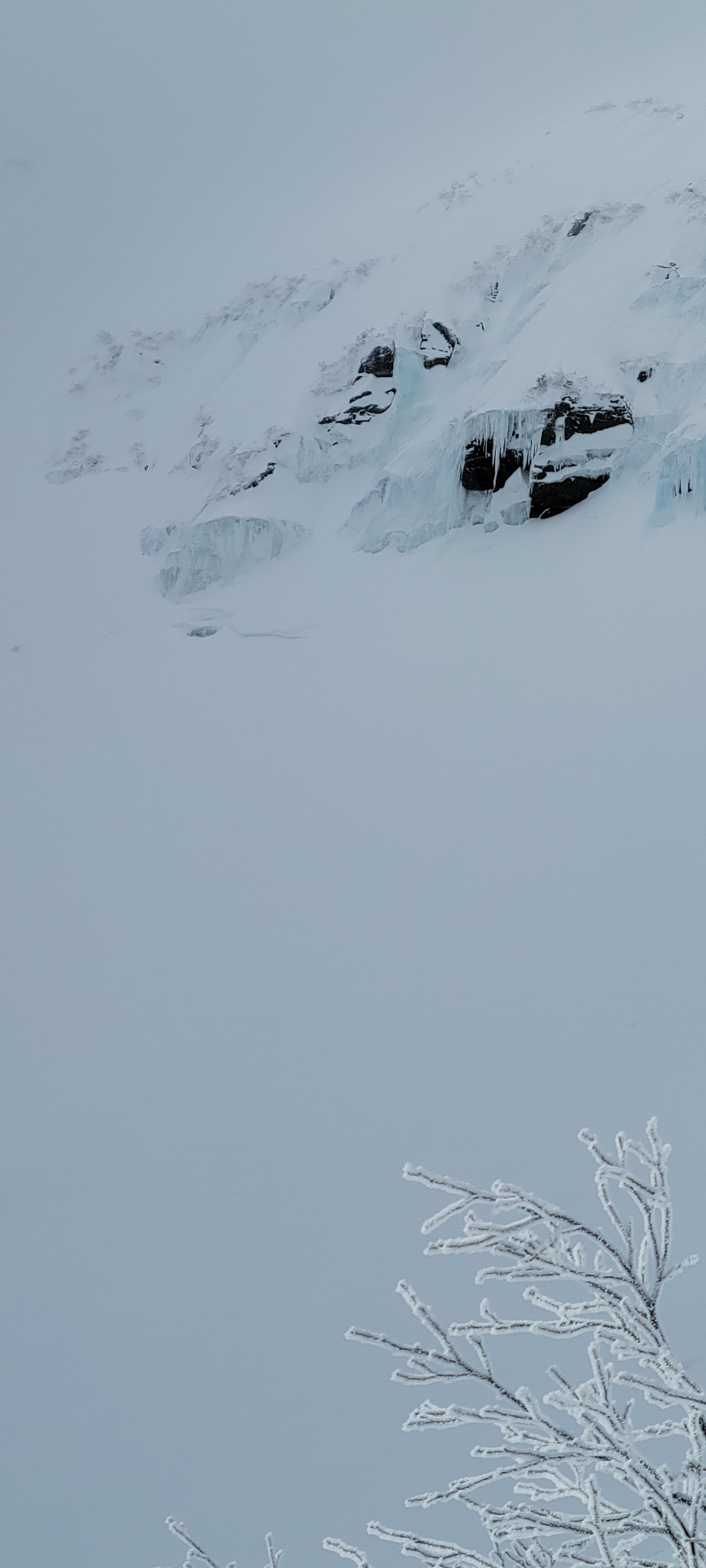
Overcast skies gave way to sunshine late morning. Winds were moderate around 10AM and became calm as the sun broke through. Clouds began to roll back in mid-afternoon, but remained mostly sunny.
Snowpack
We chose to dig a pit adjacent to yesterday's pit location to compare our results and to see if the snowpack was becoming more stable. We performed 2 ECT tests on a 35 degree SE aspect at 4800ft, both resulting in a fracture on a weak layer, just above the melt-free crust within a 3cm 4F hard layer. (ECTP21) Snow above the 4F hard layer was P- hard to the surface. We observed a fracture, with propagation in both pits. In our second location between Right Gully & Lobster Claw we observed similar results. ECTP21 about 50cm down on the same 4F weak layer just above the melt-freeze crust.
While results today were found to be more stubborn than yesterday, our tests showed results indicating there is potential for avalanches to occur. New snow, or a rapid warming event could stress the snowpack making it easier to trigger an avalanche within this layer. The depth of this layer in protected areas is something to keep an eye on as well. It is fairly deep within the snowpack in more sheltered, wind protected areas - about 70cm down. It will take longer for this layer to bond well with the snow above and below it since it is well insulated from the surface.