
Quick report
- Collapsing
- specific
Overall, the snowpack seems very unstable. The weak snowpack structure of facets and depth hoar is becoming reactive again. With heavy snowfall and winds expected in the next 24 hours, conditions will continue to become more dangerous. This structure is widespread in Chugach State Park, especially in areas with deeper pockets of wind-loaded snow on top of weak basal layers, which describes almost all the gullies and snow catchment zones in the forecast zone. It is probably best to avoid avalanche terrain for the time being until this storm moves through and we can better assess how long-lasting this unstable snowpack setup will be.
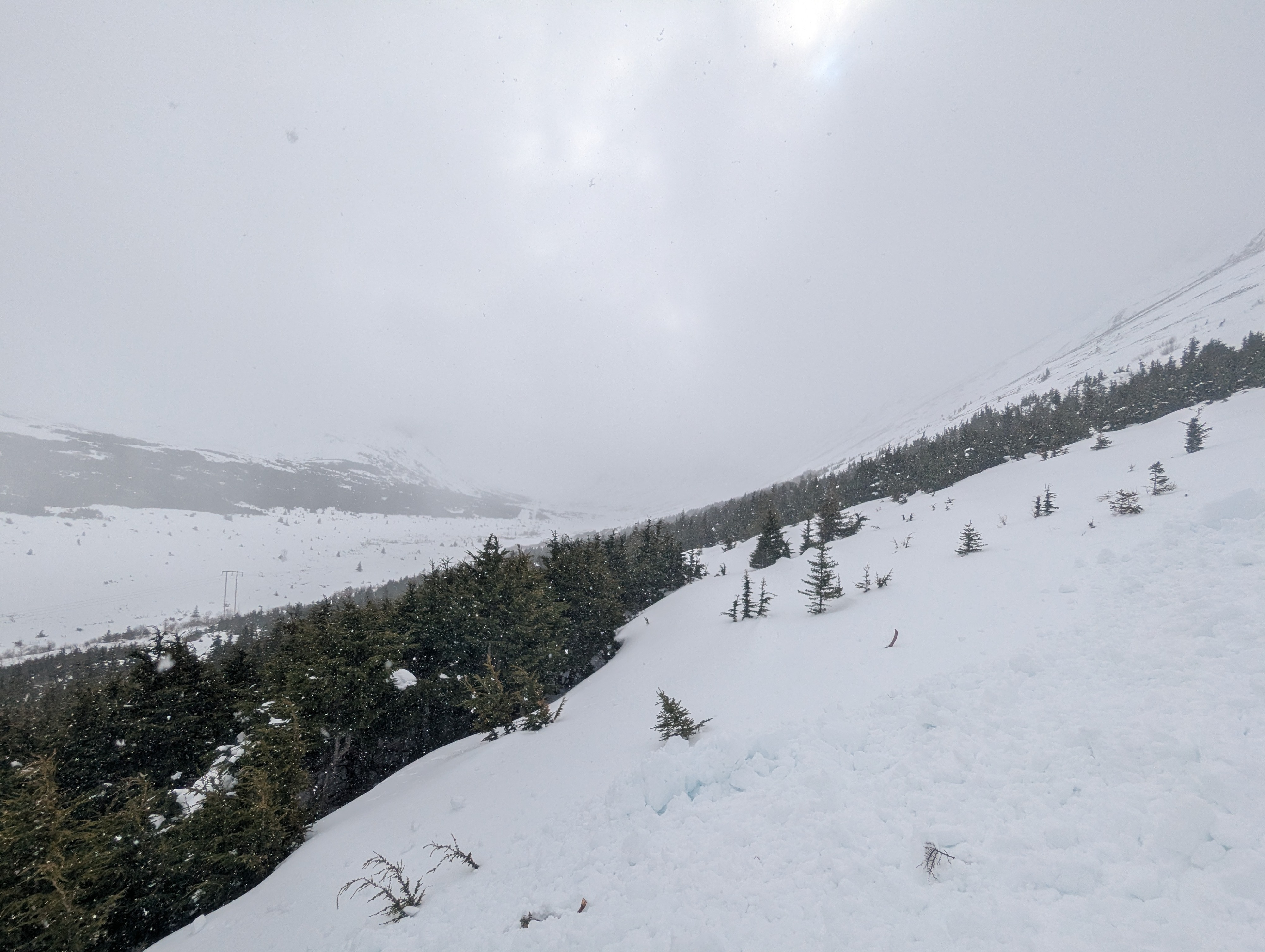
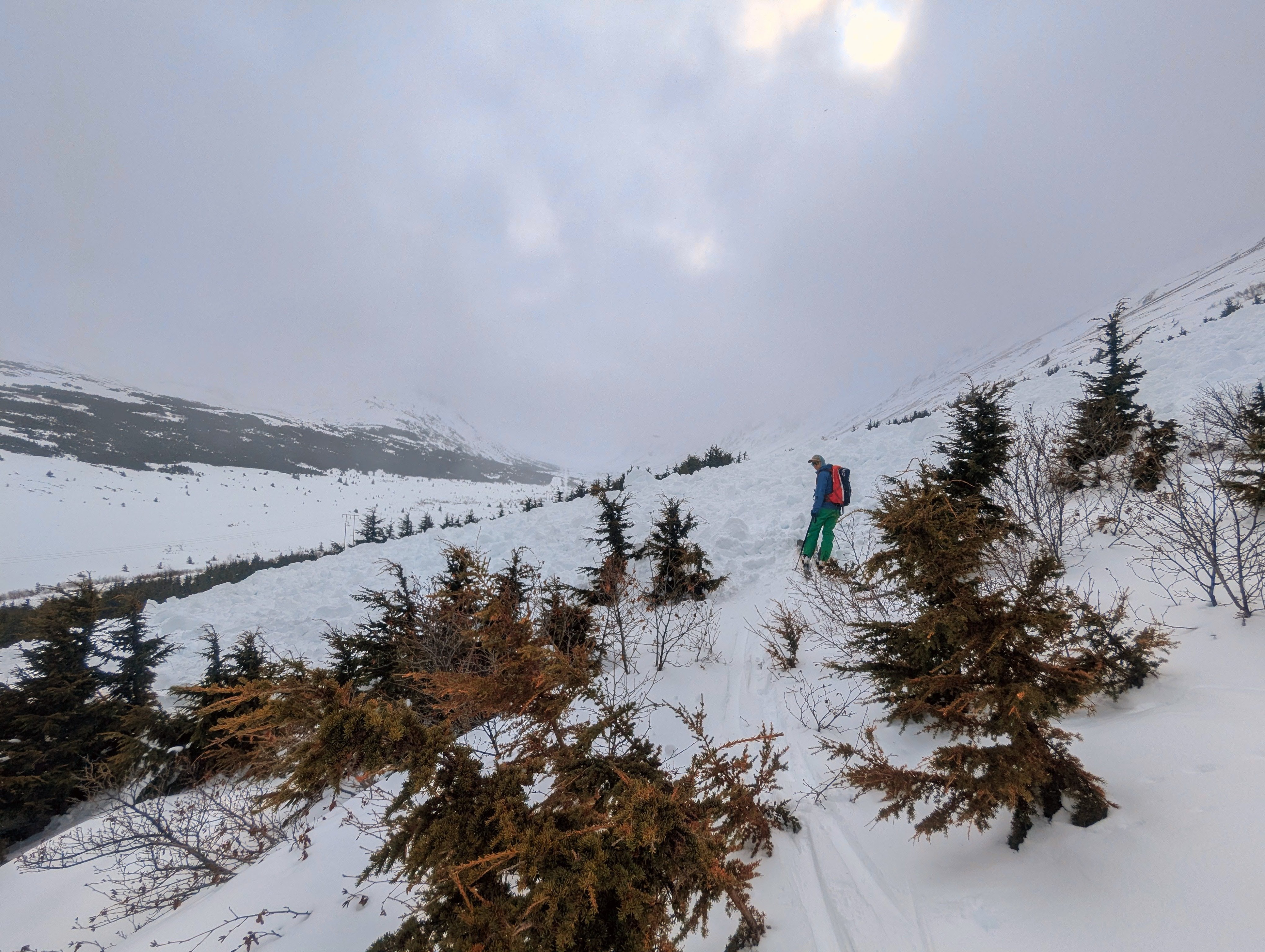
We triggered a collapse as we were touring up to investigate the avalanche and stopped to assess the snowpack. Based on our results and the collapse we elected to just take a closer look at the debris and not continue up onto any steeper terrain.Weather
- Cloud Cover
- overcast
- Wind Loading
- none
- Recent Snowfall
- 3
- Snow Avail For Transport
- small smounts
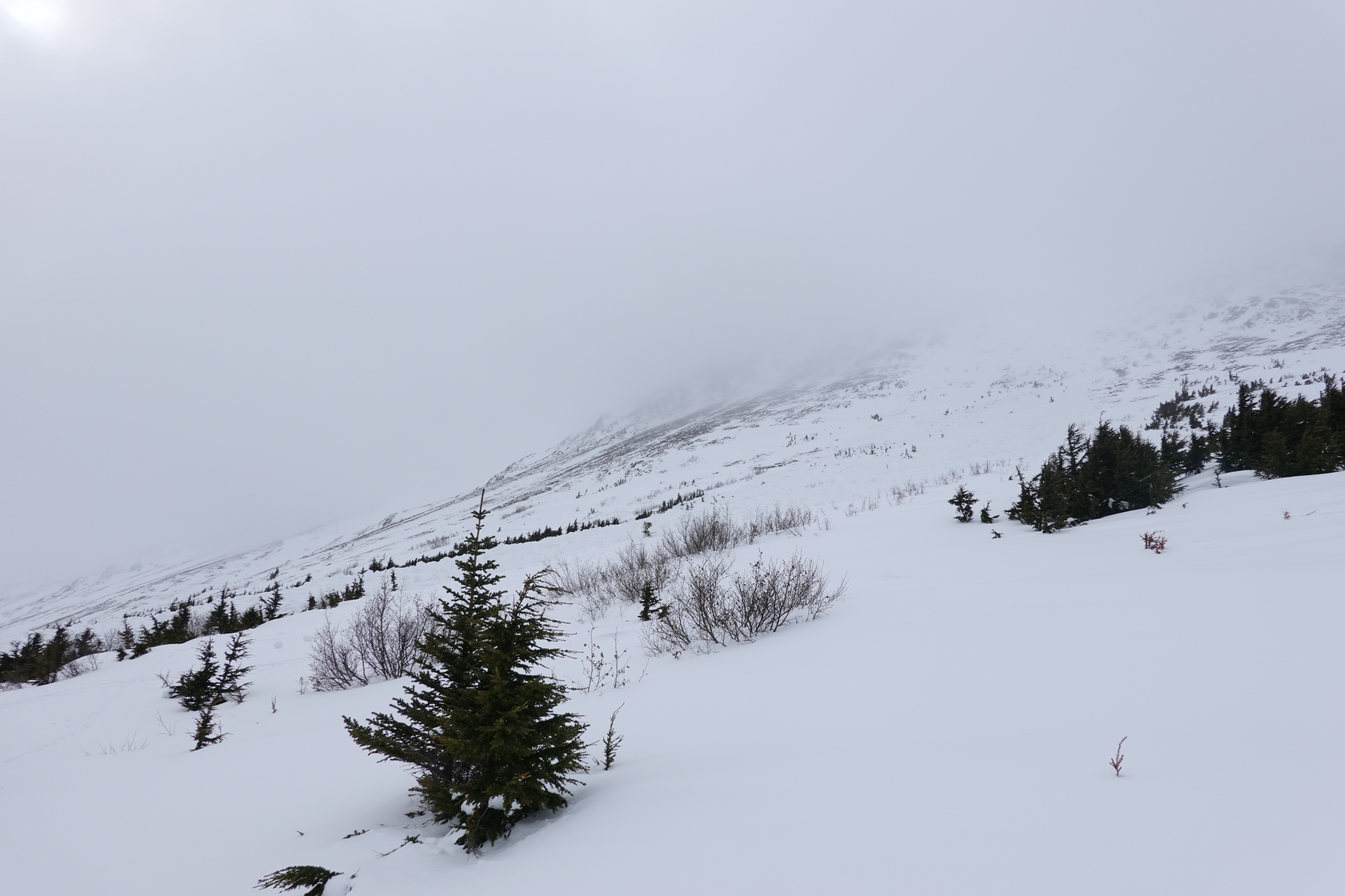
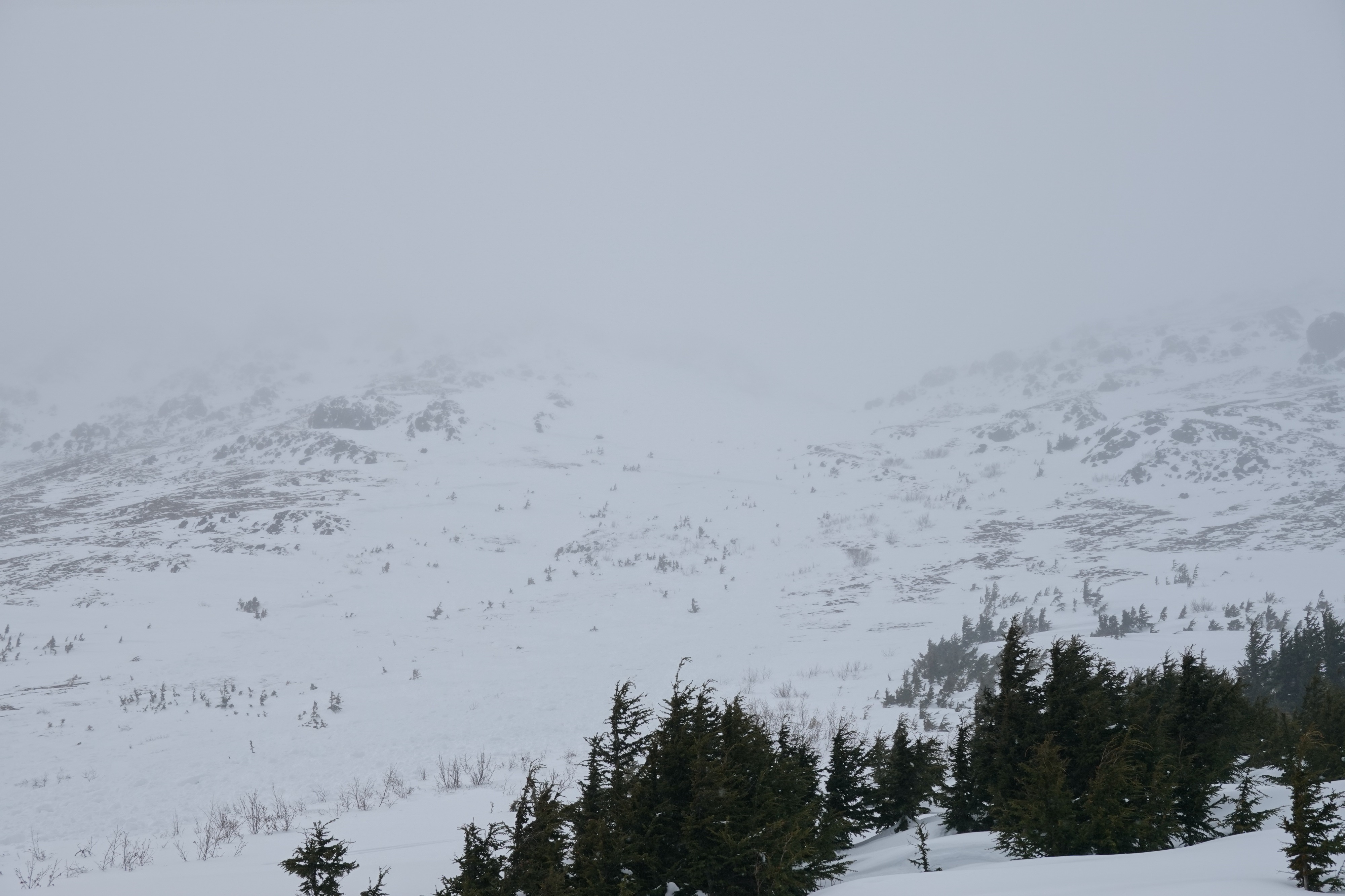
It was snowing lightly for most of our outing, but it started coming down harder as we left the field around 1pm. Cloud cover was alternating between oscured and overcast, with occasional views of the avalnache crown.
Snowpack
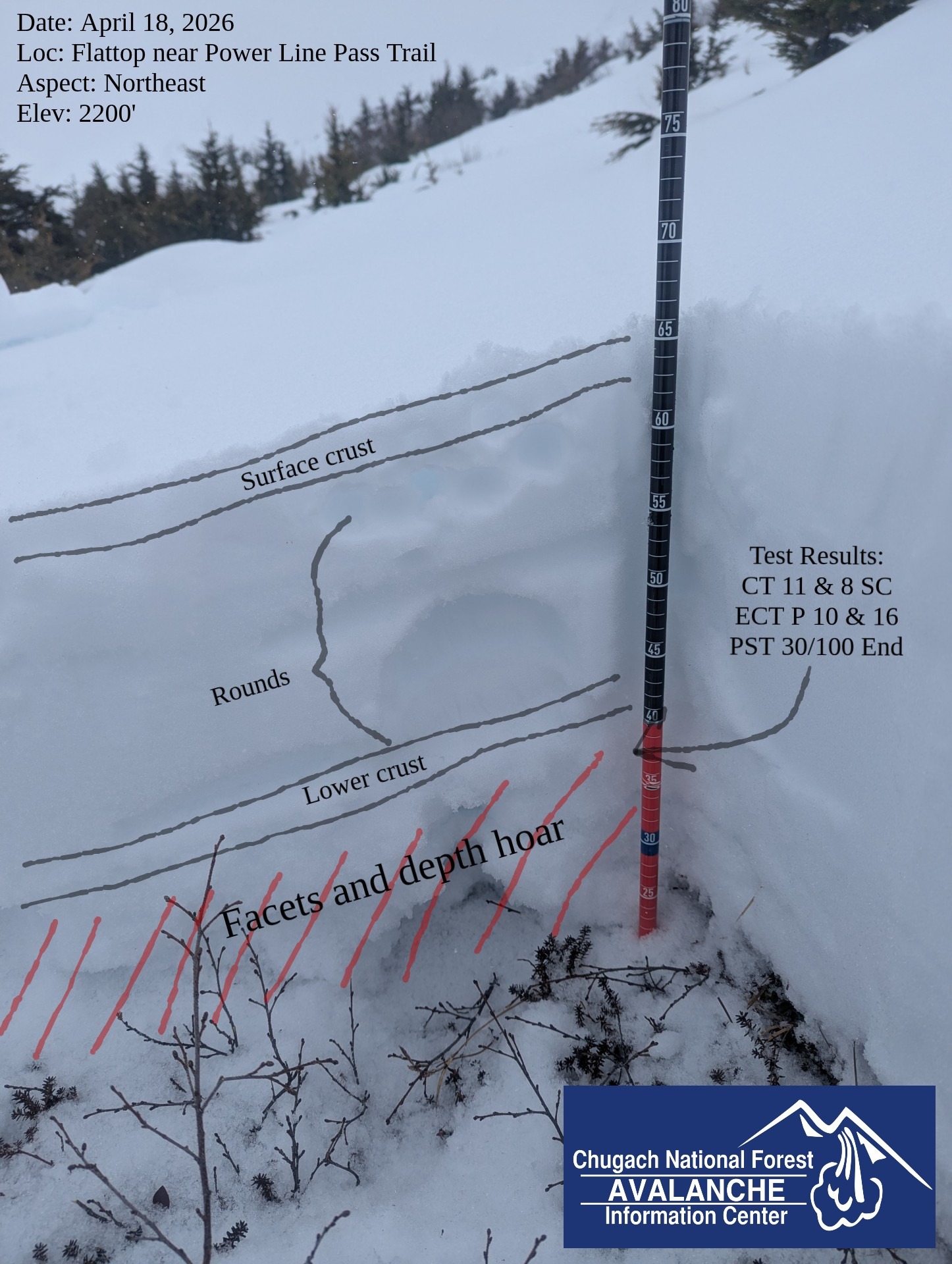
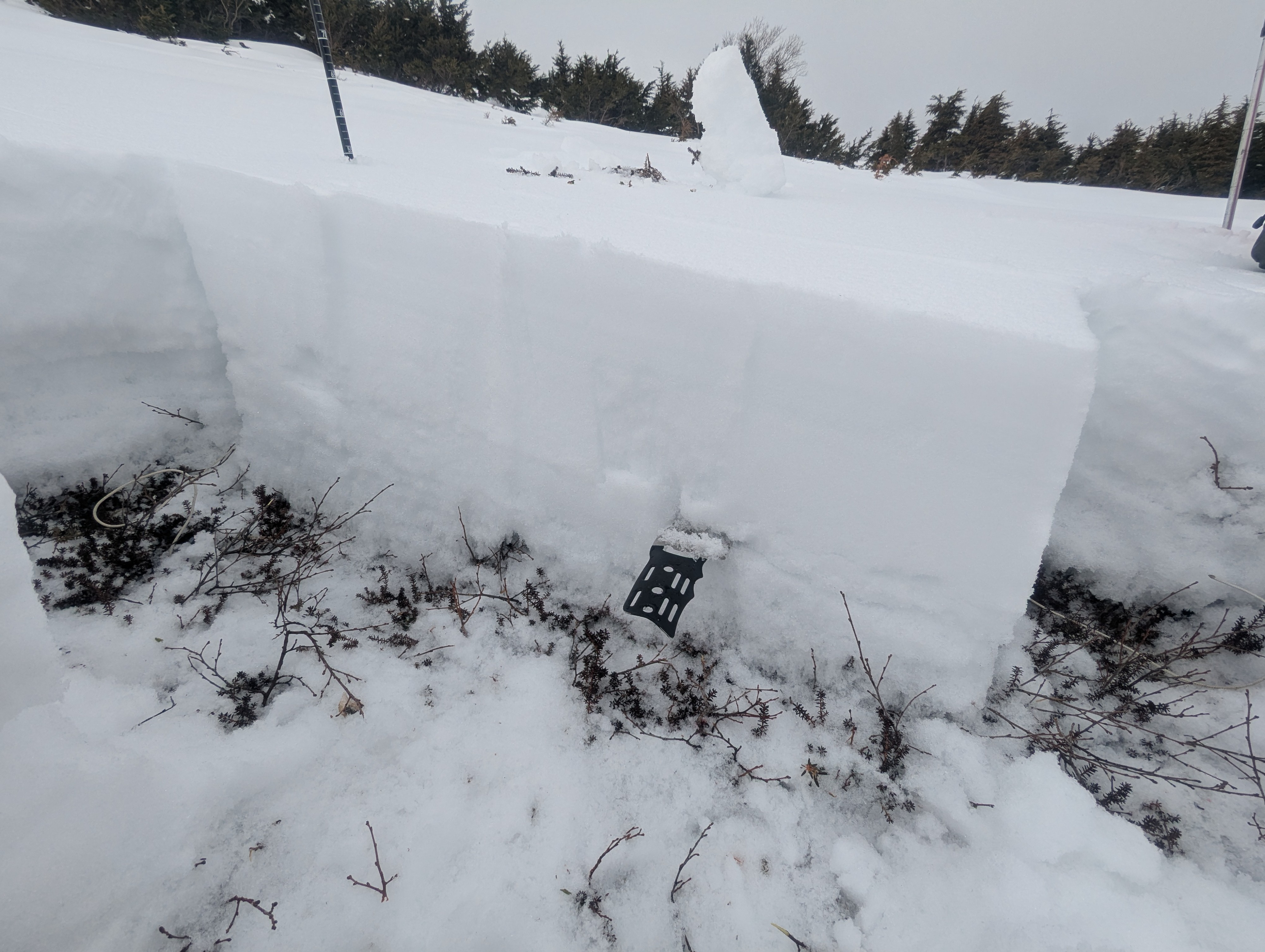
We dug a snowpack adjacent to the debris in a forest clearing. The snowpack was only 65 cm deep at this elevation, with about half that snow being a weak layer of facets near the ground. There were two notable crusts in the snowpack, one on the surface and one about halfway down. The weak layer of facets started below the second crust and continued to the ground. At the top of the weak layer were 1-2 mm faceted grains, which is where our tests were failing. Near the bottom of the weak layer were 4-6 mm depth hoar grains. Our stability tests all produced unstable results, including compression tests, extended column tests, and propagation saw tests (CT 11 & 8 SC, ECT P 10 & 16, PST 30/100 End).
Avalanche
- Size
- D3 R3
- Type
- HS
- Aspect
- NE
- Trigger
- AS
- Elevation
- 3100 ft
A skier triggered a large avalanche with no one caught. The weak layer appears to be a mid-pack facet layer. However, we could only inspect the snowpack near the terminus of the debris, not in the actual start zone. The suspected weak layer consists of 1-2 mm facets located at the upper part of a larger complex of faceted grains. This complex includes very well-developed depth hoar near the ground. In our stability tests, the failure occurred at the top of this faceted layer, roughly halfway down in the snowpack. In some places, the avalanche appeared to have scoured down to the ground, but we had very poor visibility and could only see the crown when the clouds occasionally cleared.