


Quick report
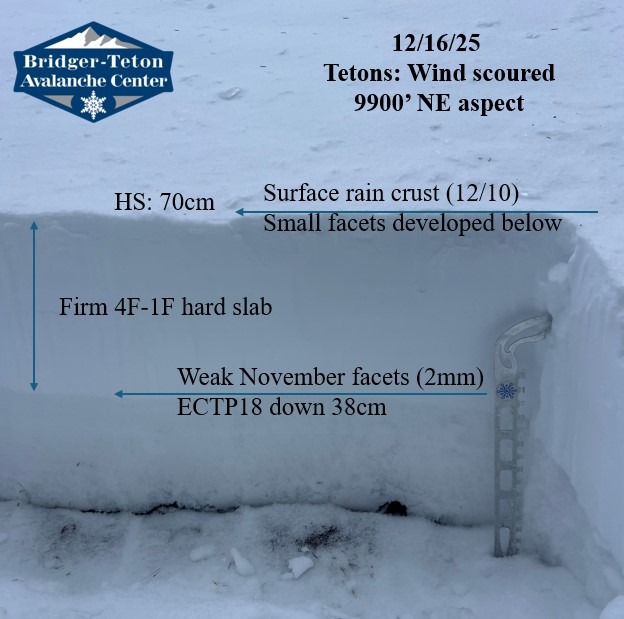
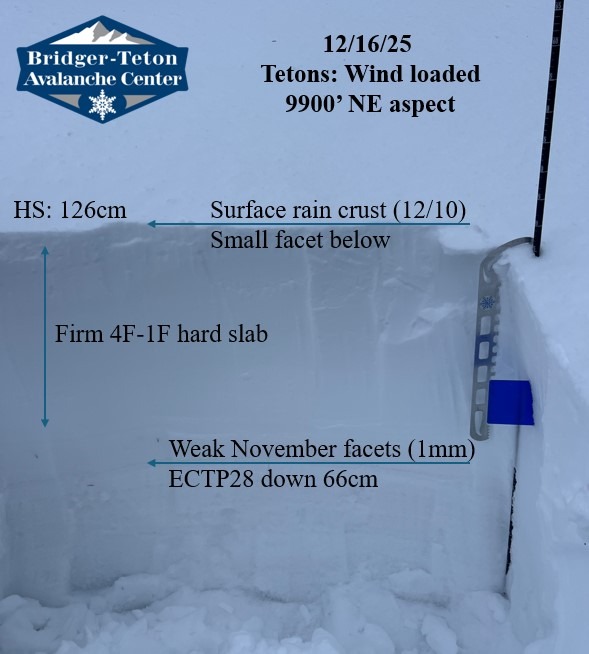
Dug a couple snowpits in close proximity to one another to compare the variability of our current persistent slab avalanche problem. The snowpack structure and stability tests verify that areas with a shallower snowpack are in fact weaker and more reactive. The overlying slab is easier to impact and the facets are larger and more well-developed in areas with a shallower snowpack. It also highlights how one stability test does not correlate directly with stability of an entire slope. This is an important concept to understand while dealing with a persistent slab problem.
These findings highlight our travel advice when we talk about very steep, wind affected, and rocky terrain that contains sensitive areas where triggering a persistent slab avalanche is more likely. Both of these snowpits occured near the same starting zone, and highlight how avalanches can occur after mutiple tracks on a slope and can vary drastically in crown depth.
Snowpack
9900' NE aspect
Wind scoured HS: 70cm ECTP18 down 38cm on 2mm dry facets
Wind loaded HS: 126cm ECTP28 down 66cm on 1mm facets (starting to round)