
Quick report
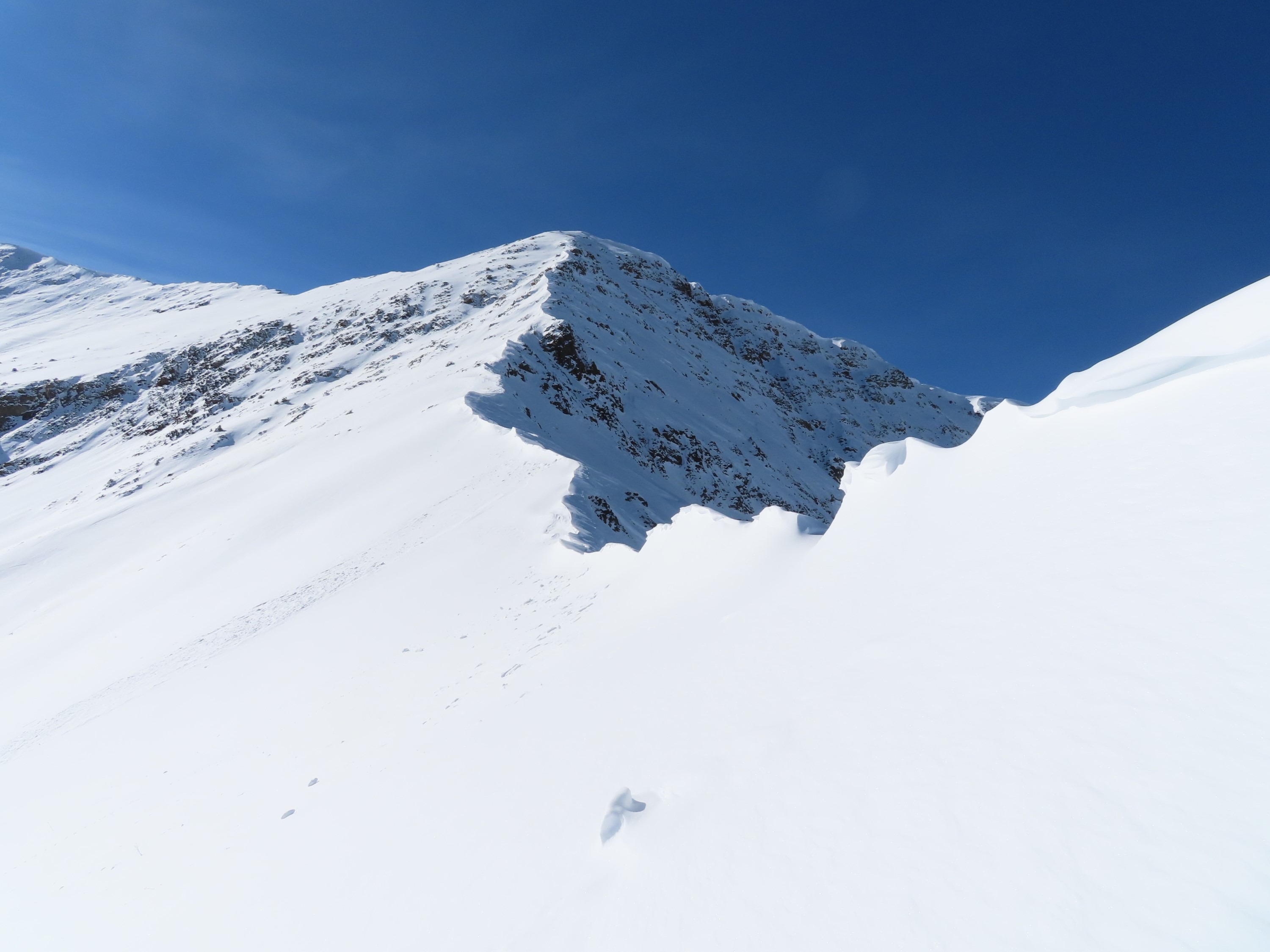
Yesterday's storm instabilities seem to have largely settled out now; the drifts that formed from the shift to northwest winds were stubborn or unreactive underfoot today, localized to just below ridgelines. My main objective was to assess where we will most likely have persistent slab problems develop if next week's storm delivers. Northerly and east-facing slopes have weak snowpack structures that will be problematic. Southerly aspects didn't look as worrisome. See pits and details below. I didn't travel on west-facing terrain. The most recent snow is soft and skiing well at all elevations and will start to facet where it doesn't get cooked.
Minimal cracking today while targeting a handful of drifts that formed yesterday on east and southeast aspects.Weather
- Cloud Cover
- clear
- Wind Loading
- previous
- Recent Snowfall
- 15
- Snow Avail For Transport
- small smounts
Evidence of yesterday's wind transport above 11.5k, most recently from NW winds.
Snowpack
Snowpack structures (not including the 4" to 6" of fist hard, new snow on the surface)
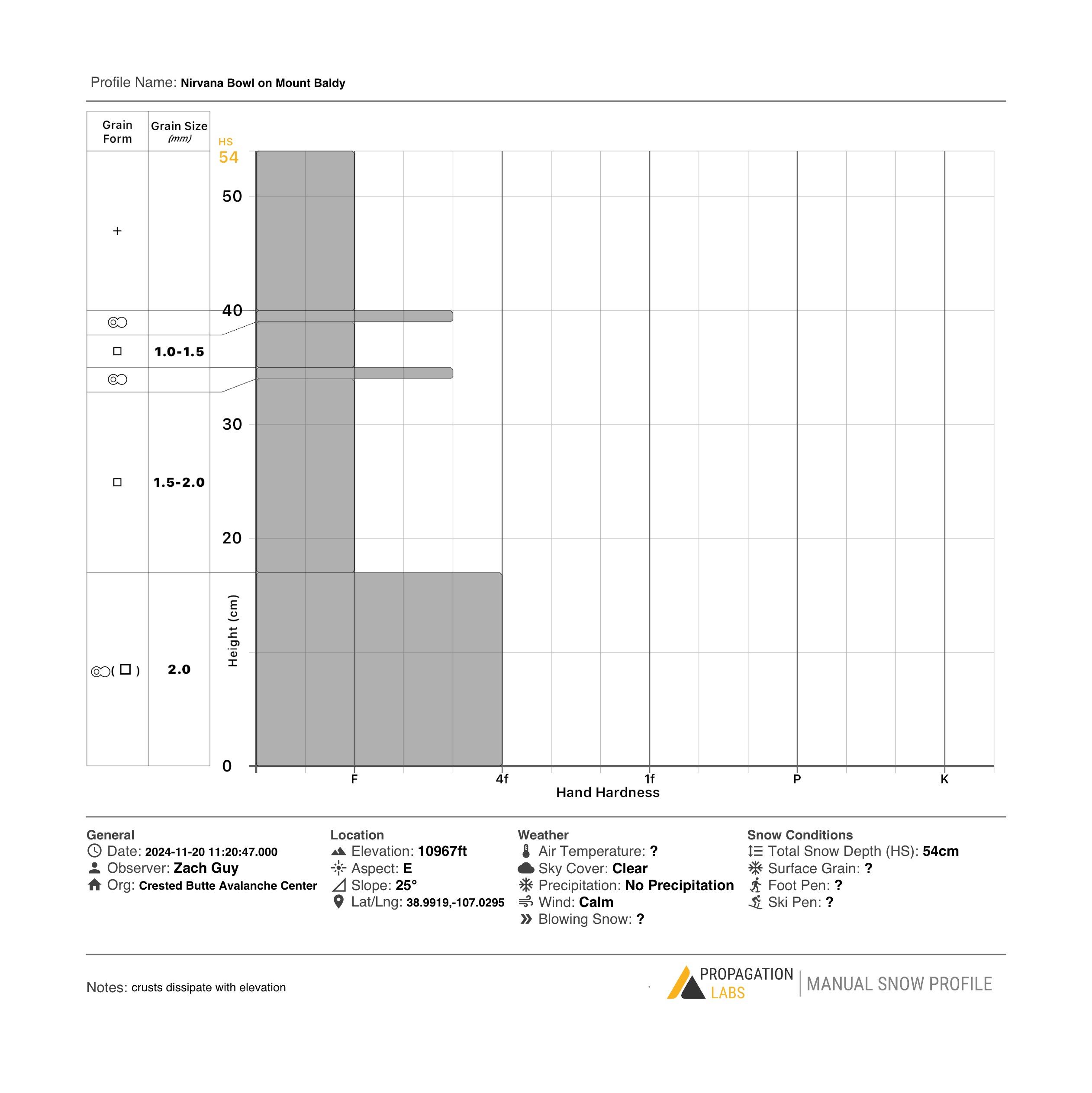
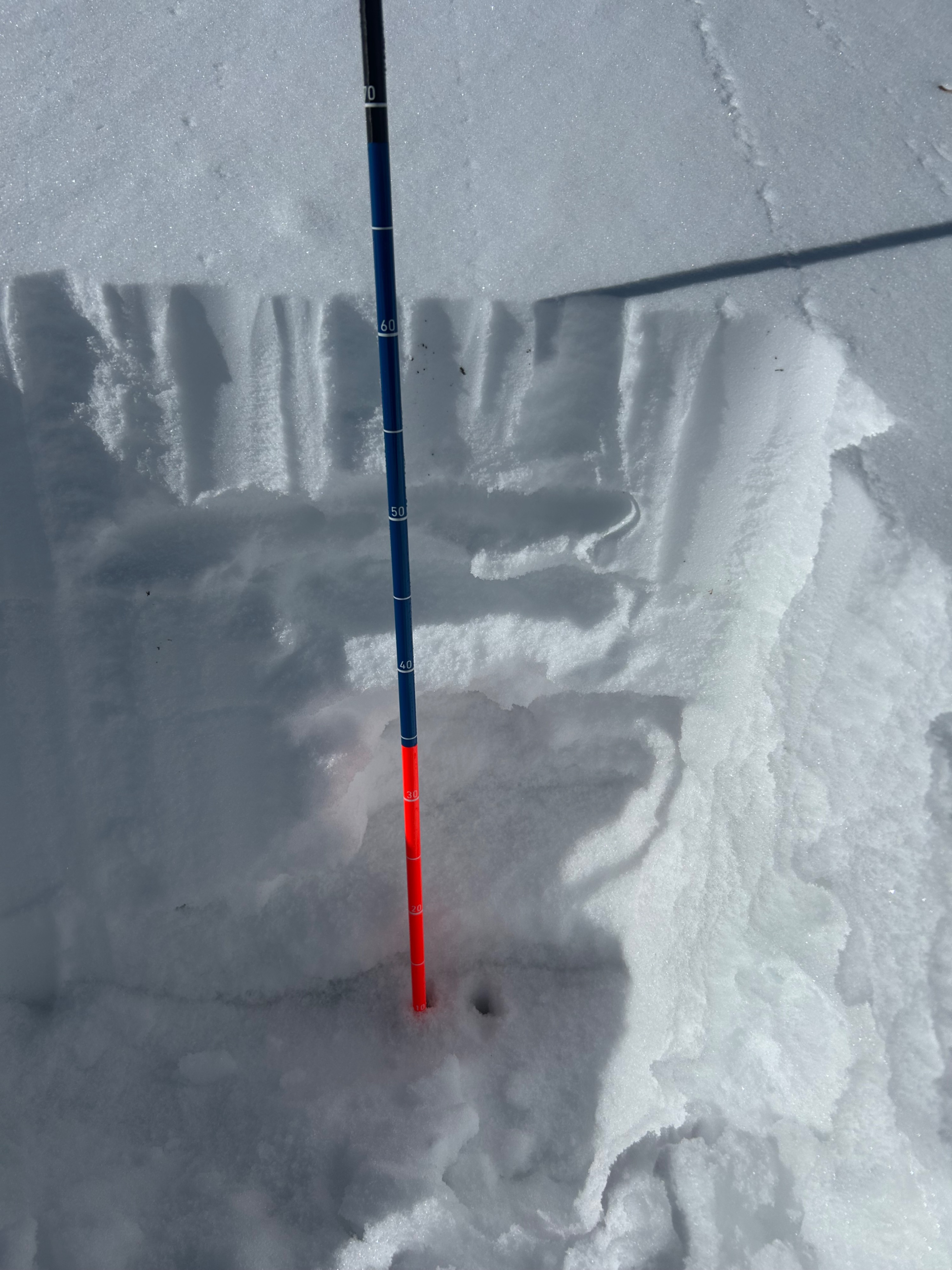
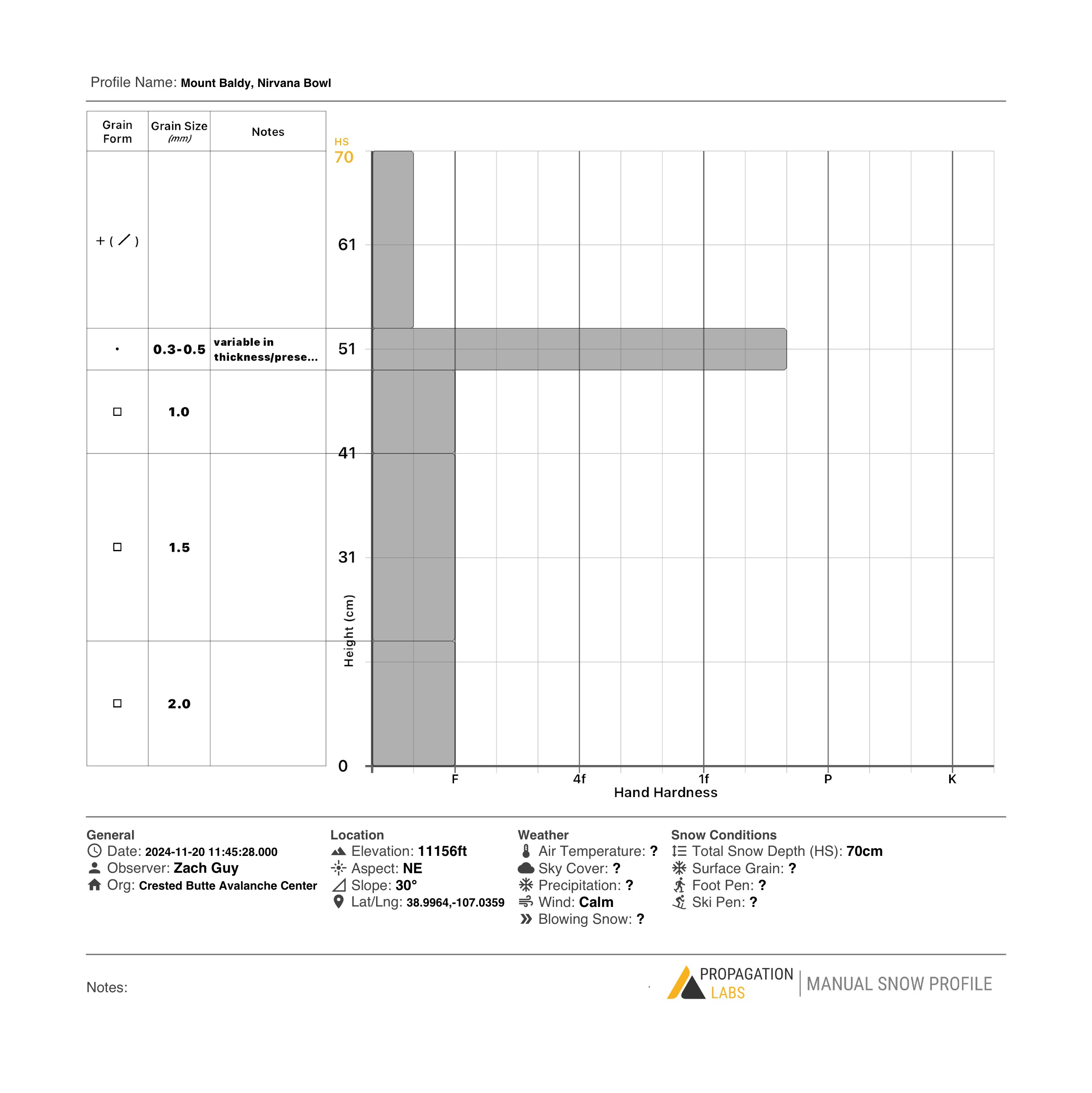
North and Northeast aspects N/BTL: The snowpack is entirely faceted (typically 1-1.5mm, some 2 mm grains near the ground, F or F+). The snowpack is capped by a layer of hard wind crust or old wind slab in some areas as you gain elevation to NTL.
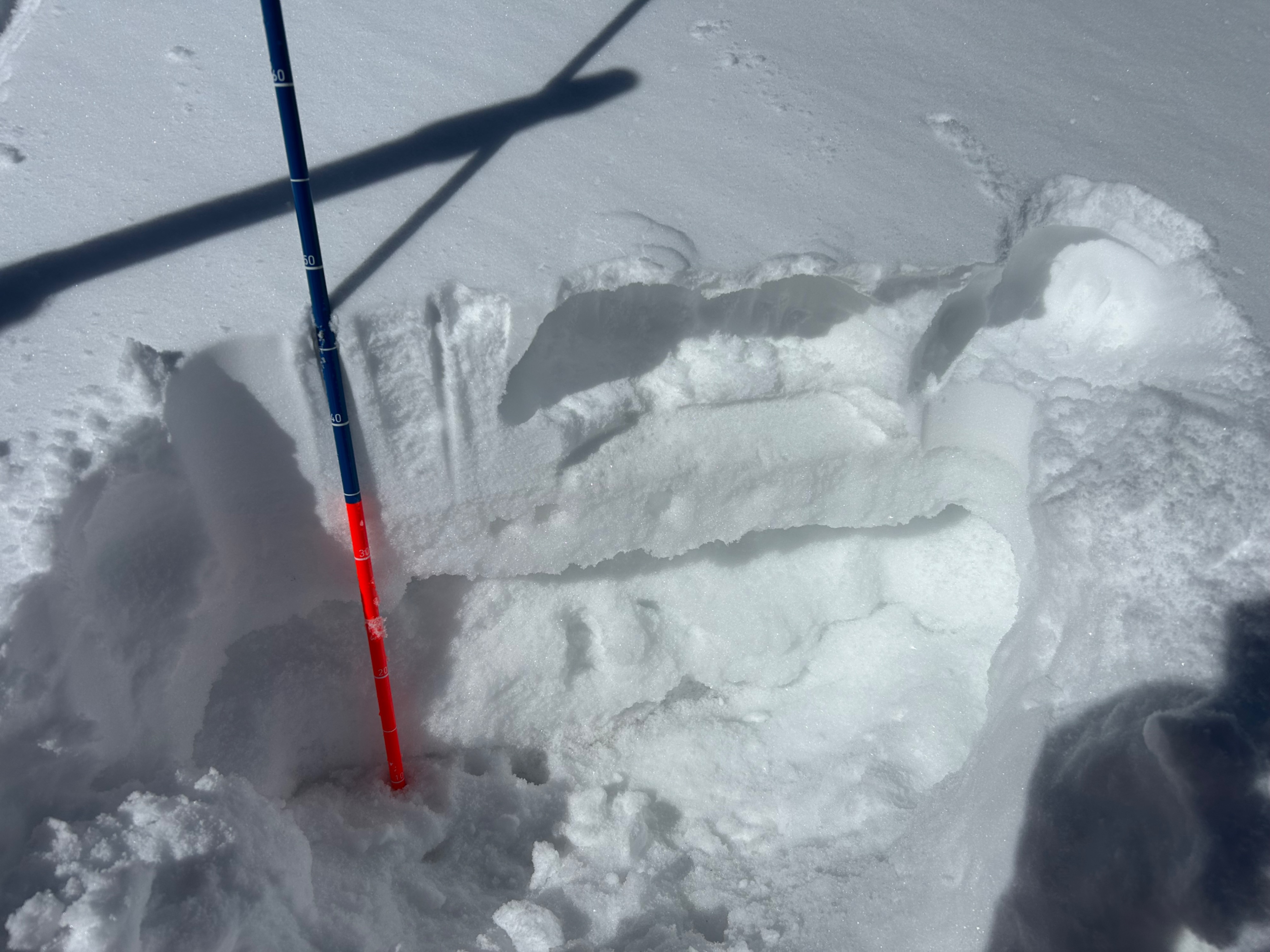
East aspects N/BTL: There are several thin, collapsible crusts sandwiched between facet layers (1-2 mm, F). Crusts dissipate at higher elevations or on more ENE facing slopes. The crust/facet sandwiches look especially troublesome for long-lived persistent issues.
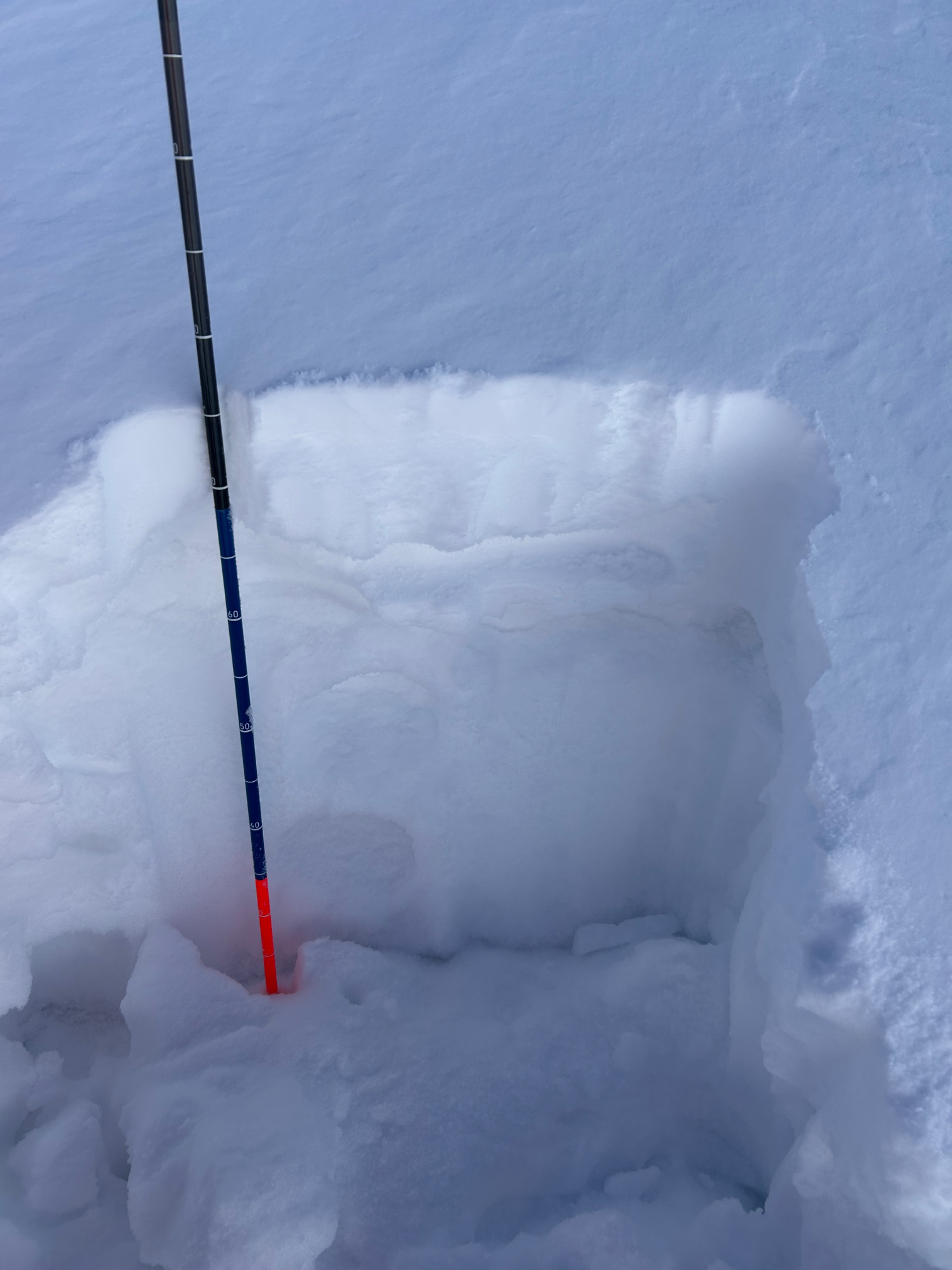
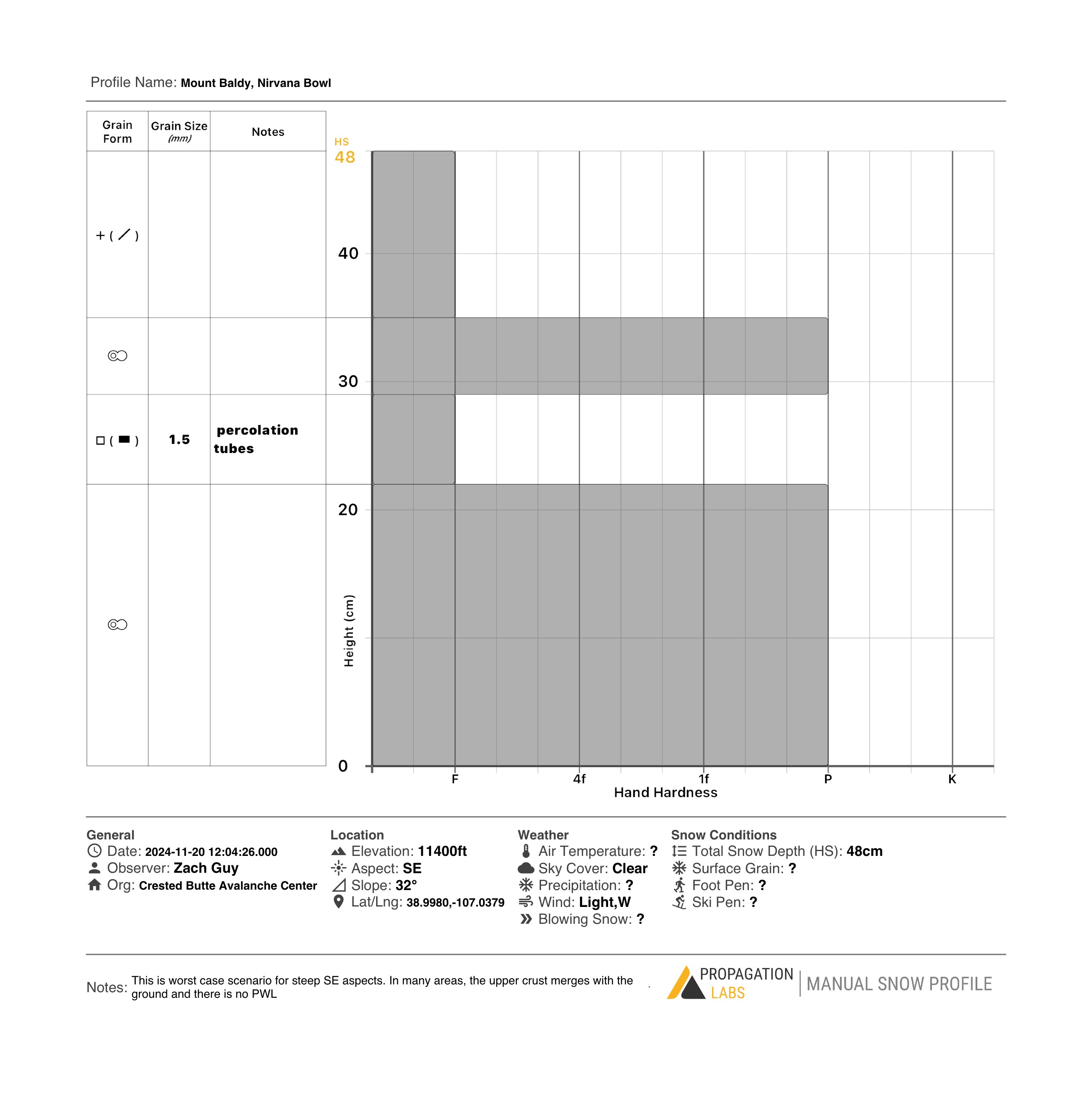
Southeast aspects N/ATL: There is a thick, hard melt-freeze crust below the recent storm snow. In some areas, that crust goes to the ground without any weak layers. On some terrain features with a deeper snowpack, there is a facet layer below this supportive crust, and I found percolation columns through it where I dug. At lower elevations, the recent snow fell on bare ground or a patchwork of crusts.
West/Northwest aspects: The most exposed terrain is wind eroded with discontinuous snow coverage. Sufficient coverage exists elsewhere..
Avalanche
- Size
- D1 R1
- Type
- HS
- Count
- 7
- Aspect
- E
- Trigger
- N
- Elevation
- 12000 ft
Numerous small storm instabilities ran yesterday, both shallow soft slabs and sluffs, from upper elevations. I spotted two avalanches that appeared to step down into older snow involving thin harder slabs that formed during last week's wind event; not sure though. These were mid slope on easterly aspects of Gothic and Baldy, still small in size.