
Quick report
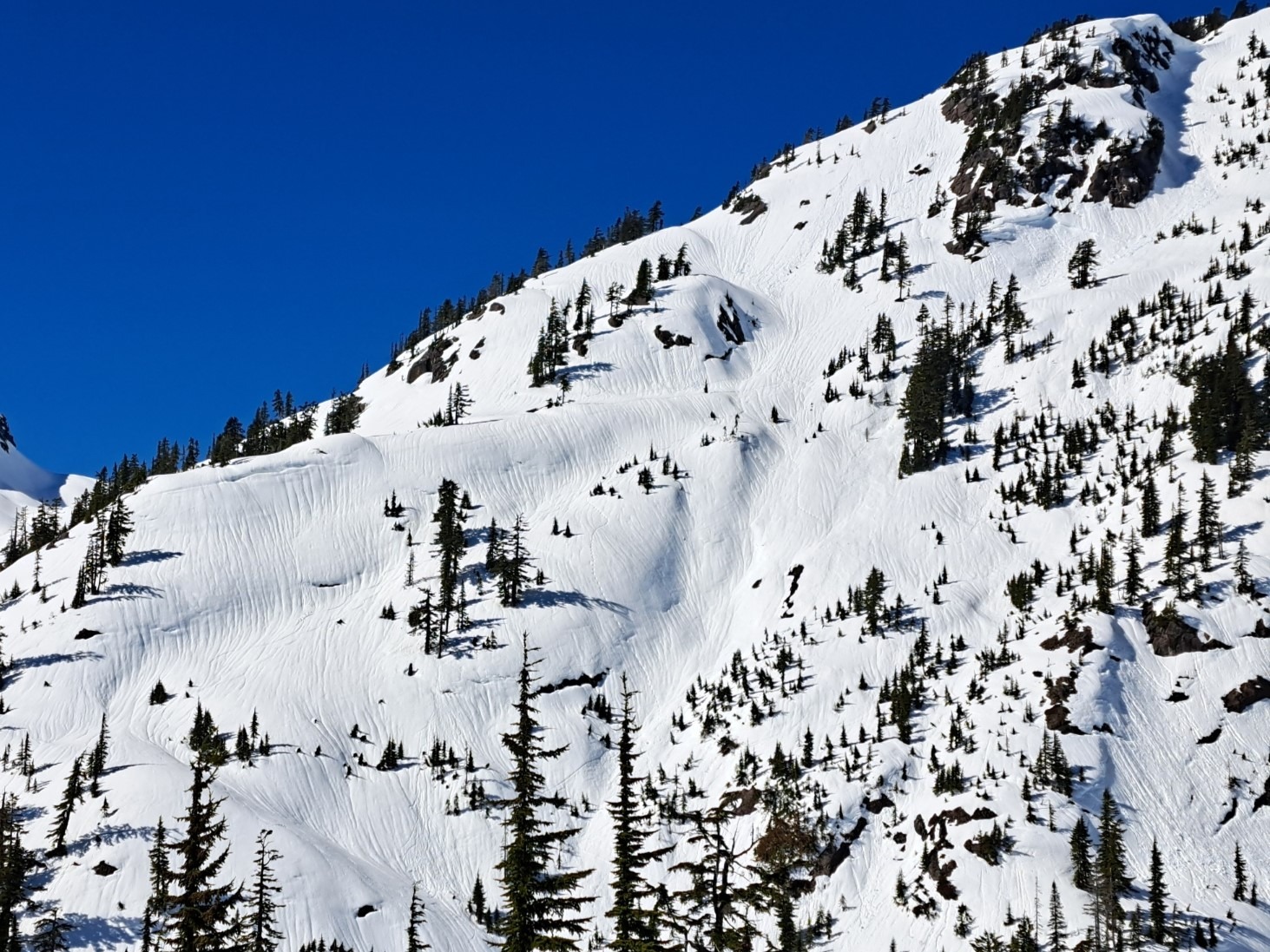
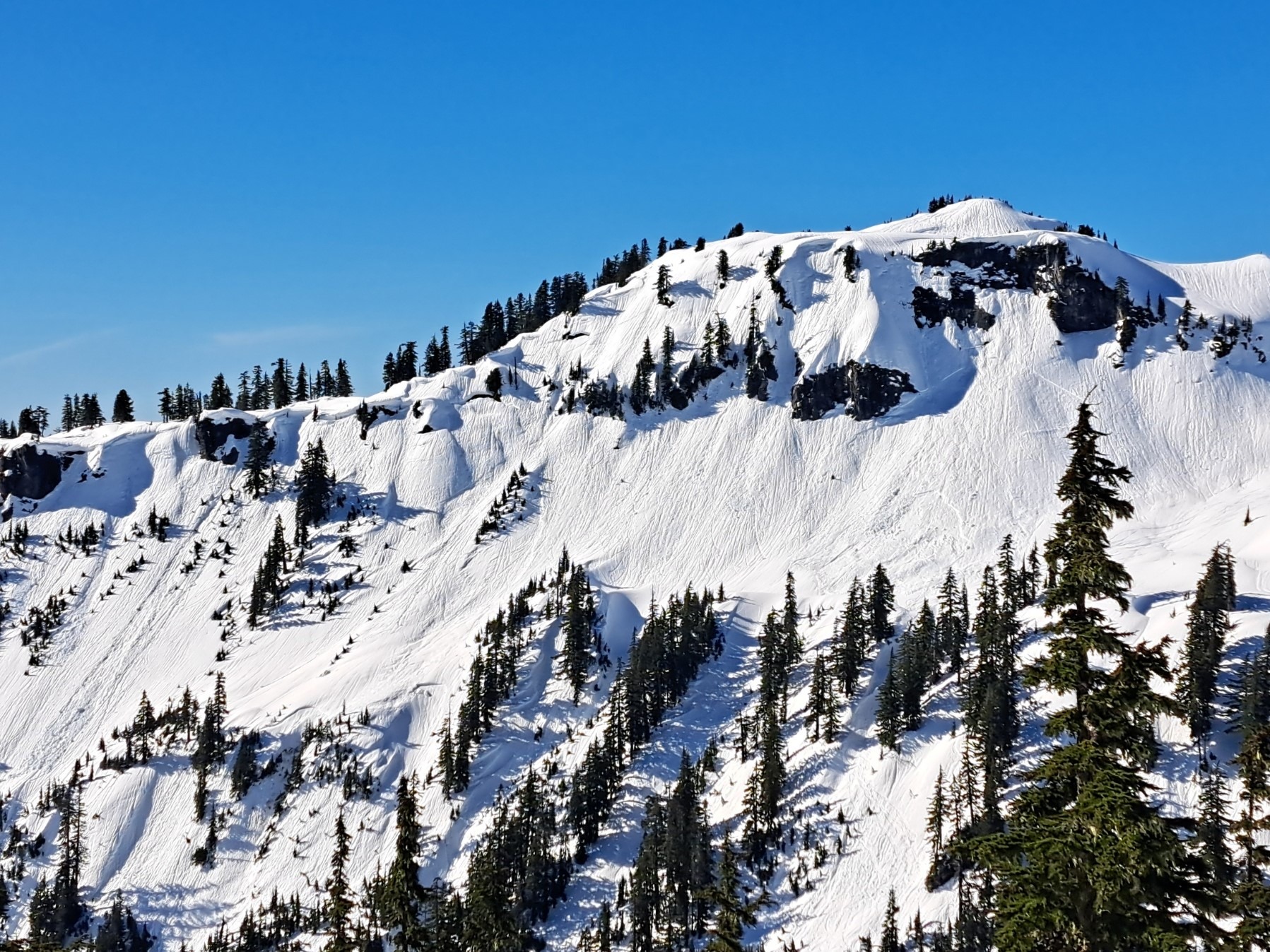
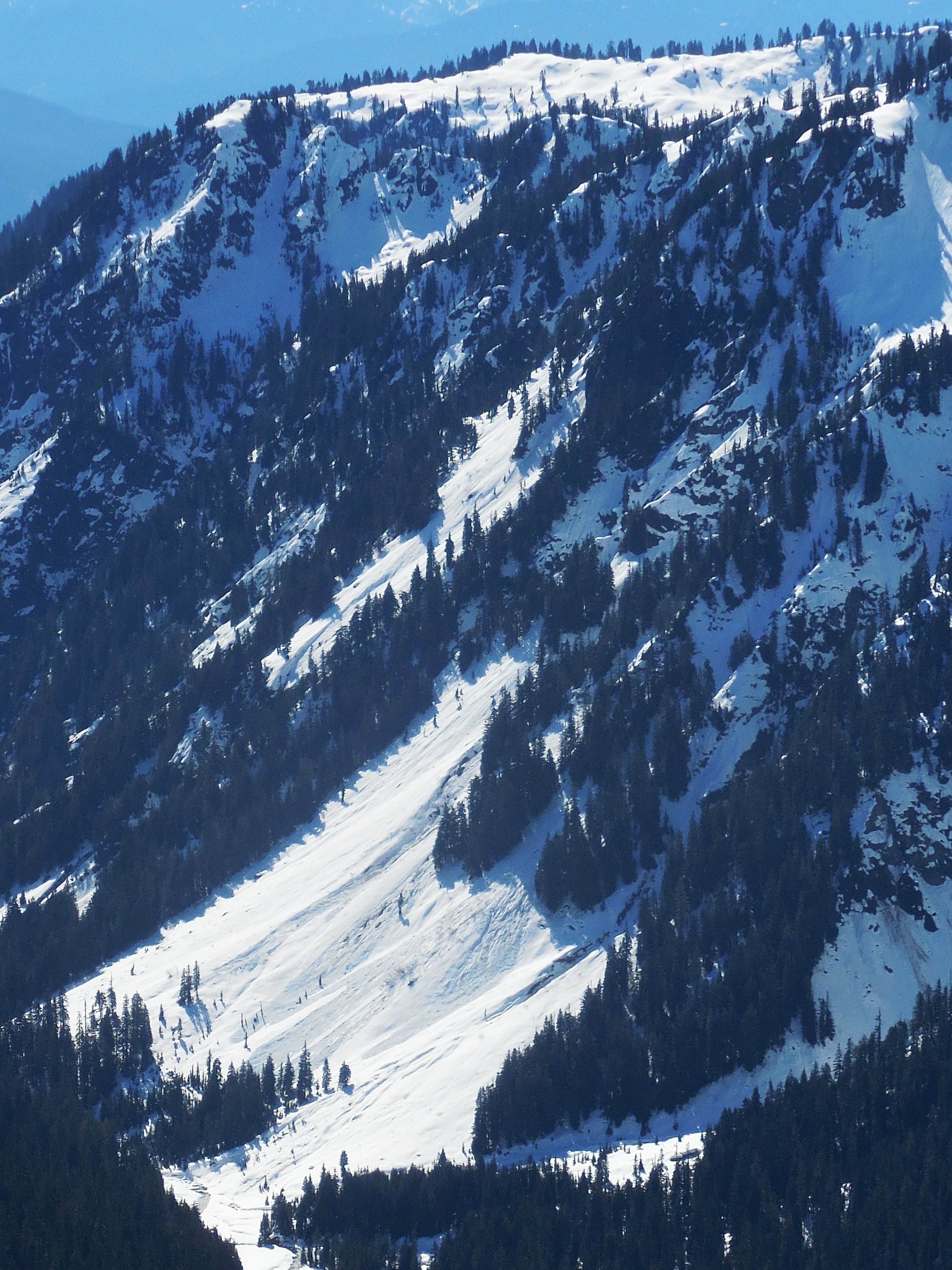
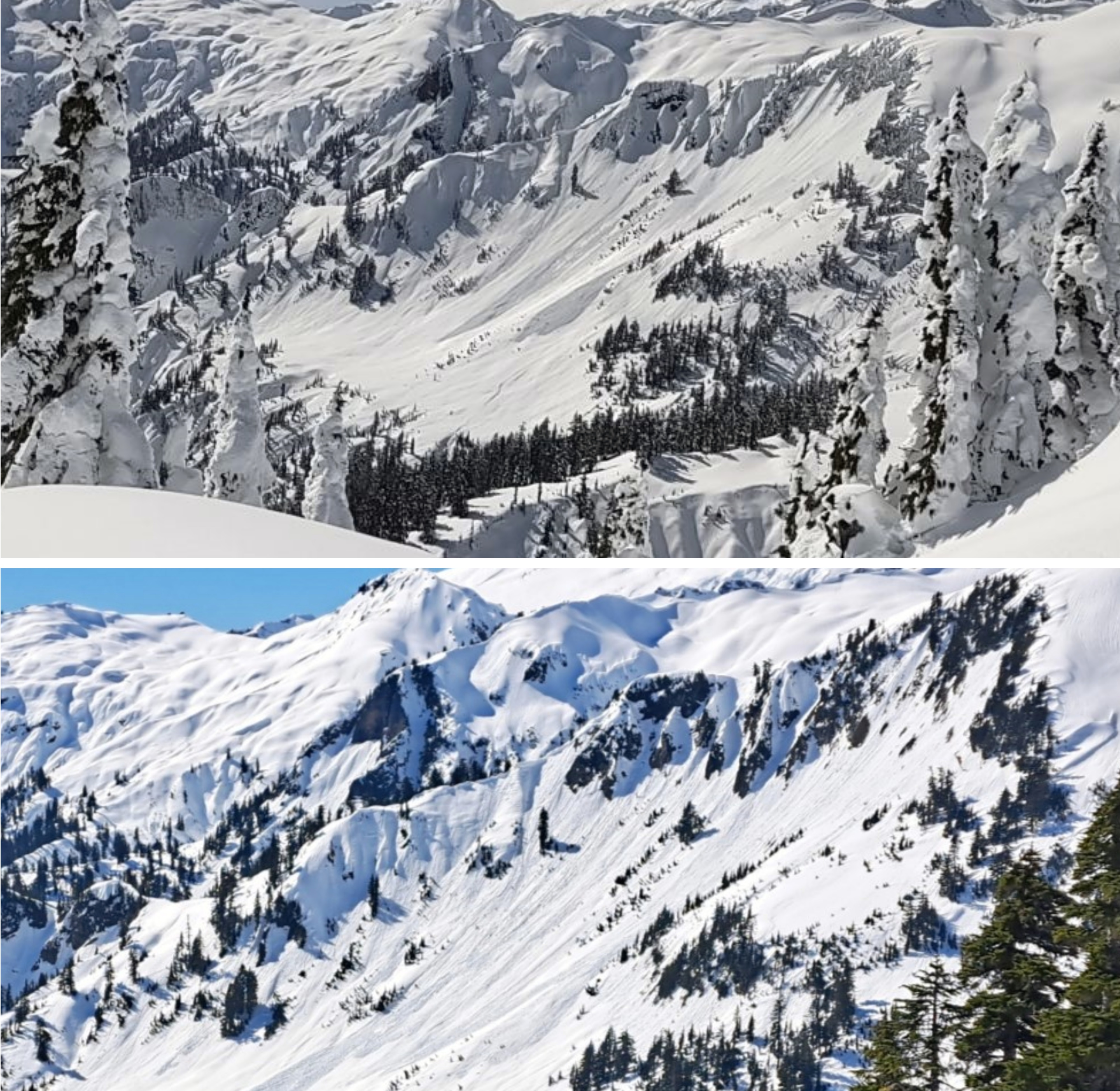
Classic spring day. In some ways, avalanche danger seemed benign, with a low likelihood of triggering a wet loose avalanche other than in the afternoon on steep slopes facing the sun. But there are plenty of cornices that are drooping with the heat, many glide cracks and a few glide avalanches, and lots of wet loose in the surrounding terrain. There is plenty more to come down, even if the peak of natural avalanche activity has passed and they become more sporadic over the next few days.
The biggest take-home from the day is that there is much more of a diurnal cycle than anticipated. Given warm overnight temperatures and very high freezing levels, expected to find wet, unsupportable snow first thing in the morning on all aspects, as reported from many other areas in the Cascades. Instead, there was a semi-breakable crust in the morning, and the upper snowpack was reasonably supportable without floatation, even after the crust had broken down by midday (boot pen 20-40cm).
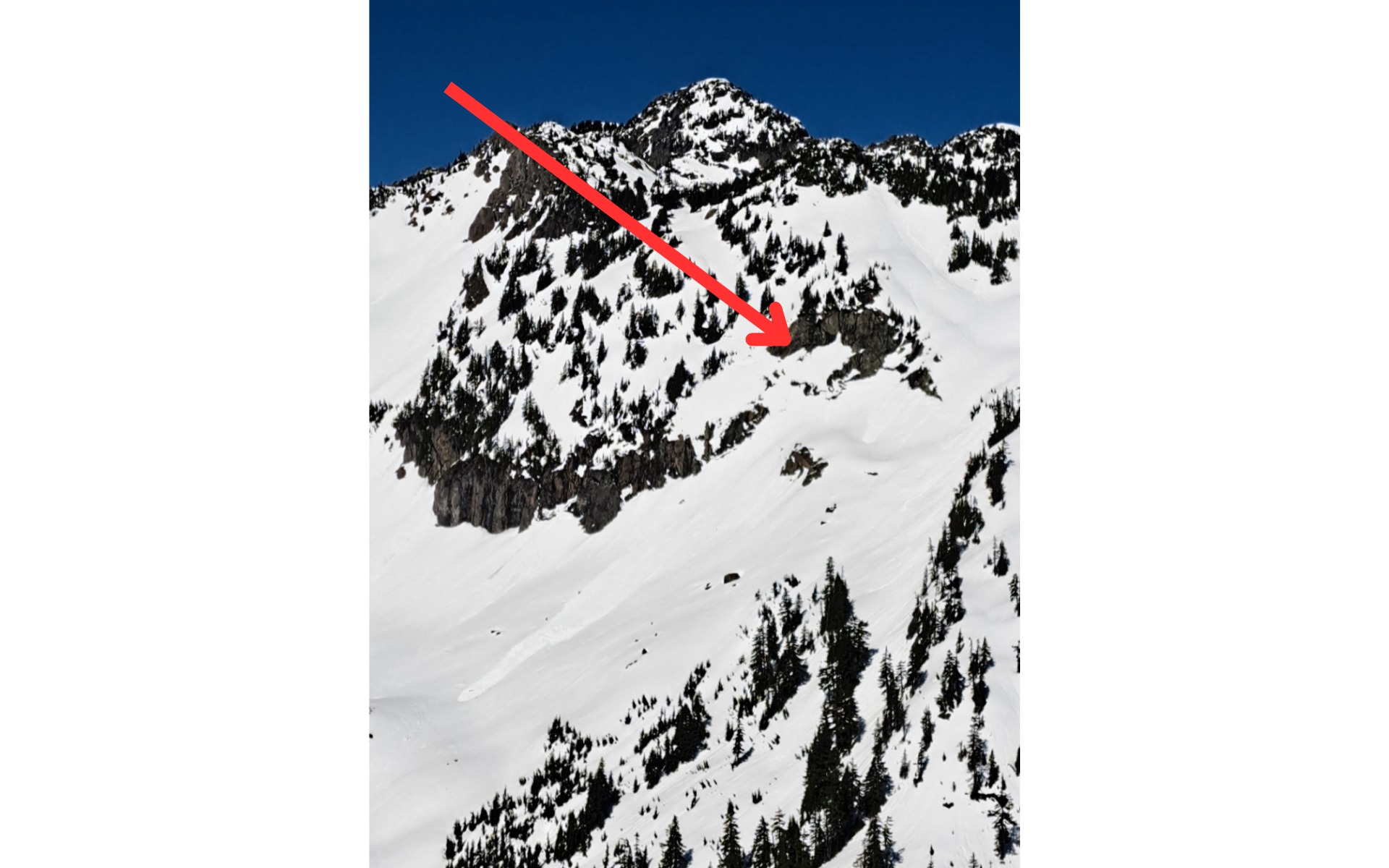
No active signs of instability while in the field other than one D2 wet loose on the south aspect of East Goat and rumbing from wet loose down in Swfit Creek below Artist Point.Weather
- Cloud Cover
- clear
Sunny and warm with calm to light winds. Temperature inversion at 8 am with 49F at Pan Dome and 31F at 2100' at the base of the switchbacks on Hwy 542 before climbing up to Mt. Baker Ski Area.
Snowpack
On northerly aspects, there were 70cm of rounded grains over the thin crust buried on March 9th. Besides the harder surface crust, the new snow layers were right-side up with 1F to P hardness down to 3/9 crust. Below the crust, there was a thin layer of rounded grains, and below that, the surface hoar layer that was responsible for many avalanches 3/10-14. Surface hoar was well-rounded CTN 2x + DTH-SP 1x. Pencil to knife hard rounded grains below. The temperature profile was a bit unexpected, with all measurements varying between -1.2C to -1.9C to the base of pit down 160cm.
Southerly aspects were much more melt affected as expected with alternating layers of moist rounded grains and wet melt forms down 70 to an old sun crust. Very wet melt forms above the crust where water was pooling. Snow above the crust was wet enough that squeezing a handful of snow produced water.
Avalanche
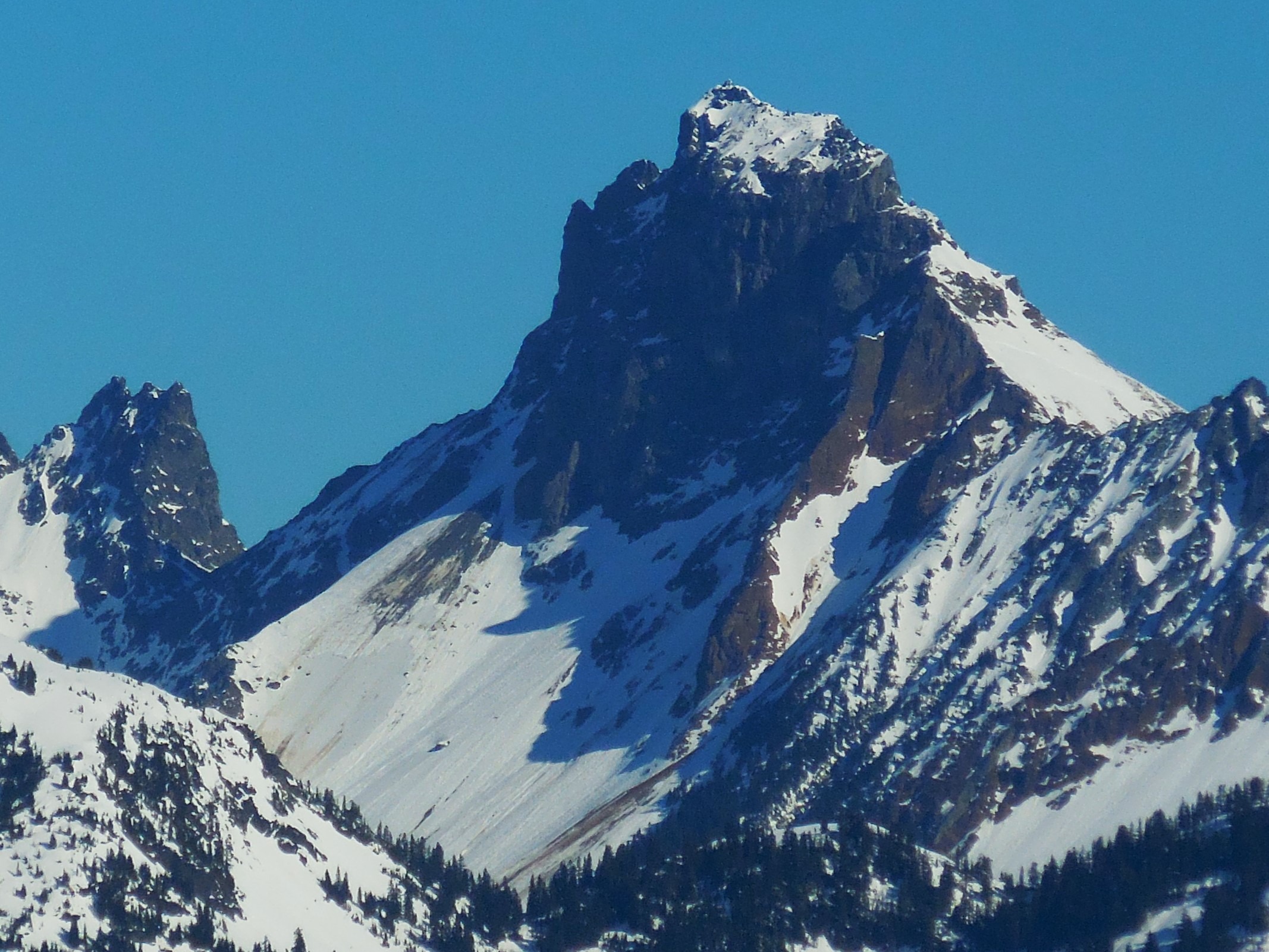
Many of all kinds and sizes. Wet avalanches generally on east, south, and west aspects with glide to D2 and wet loose avalanches to D3. Two notable slab avalanches on Shuksan and another on the north side of Ann - timing unknown.