
Quick report
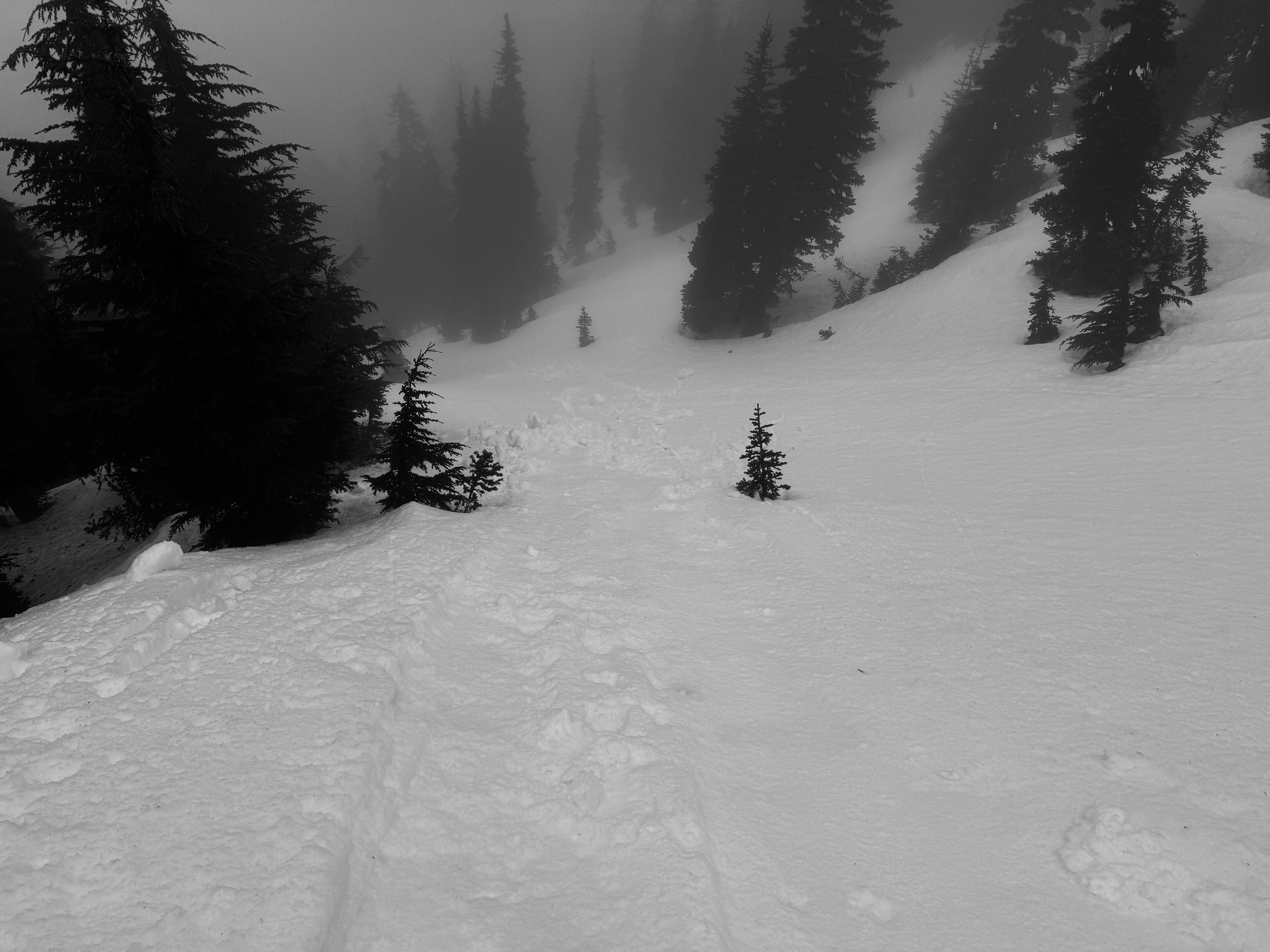
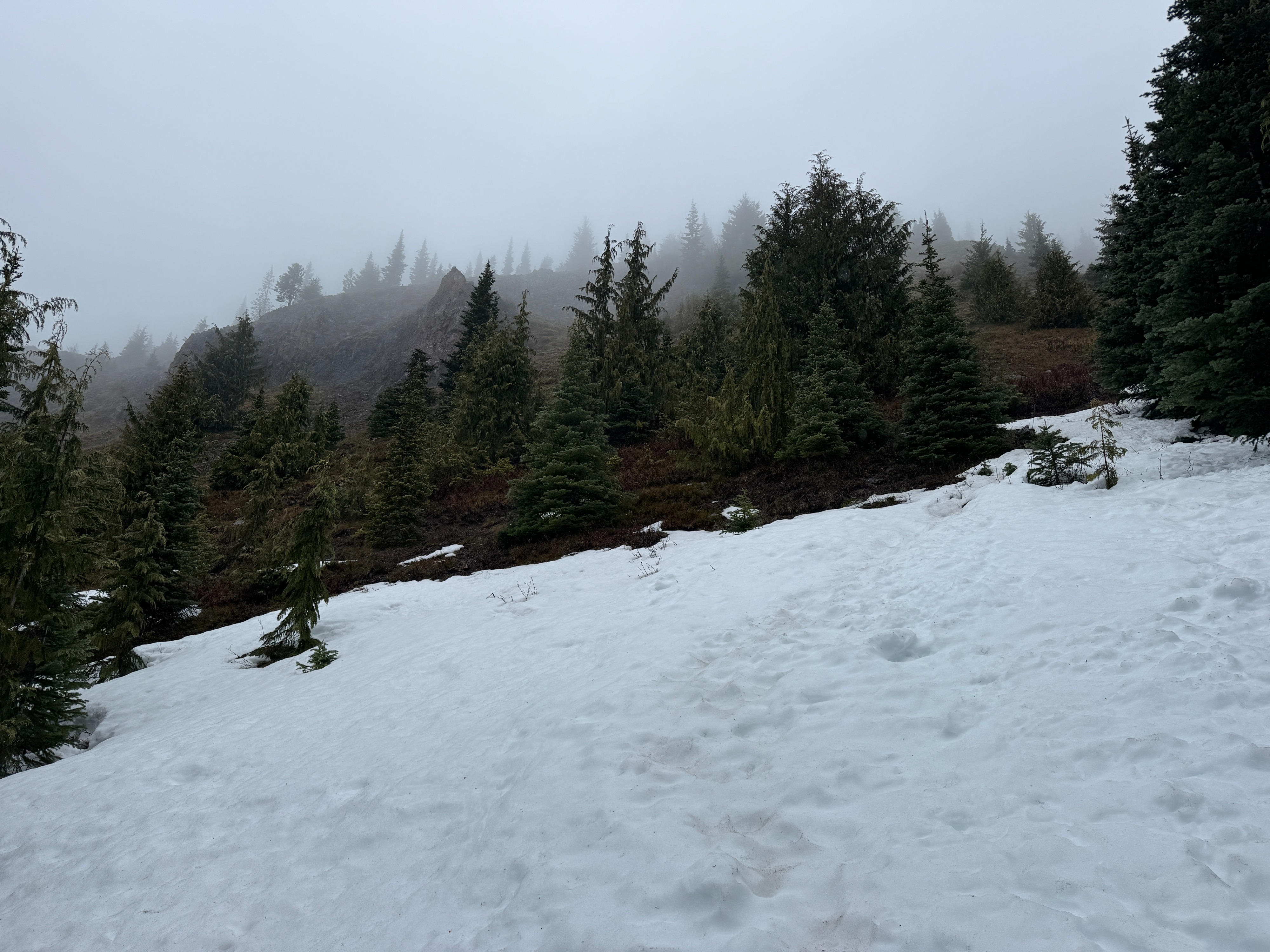
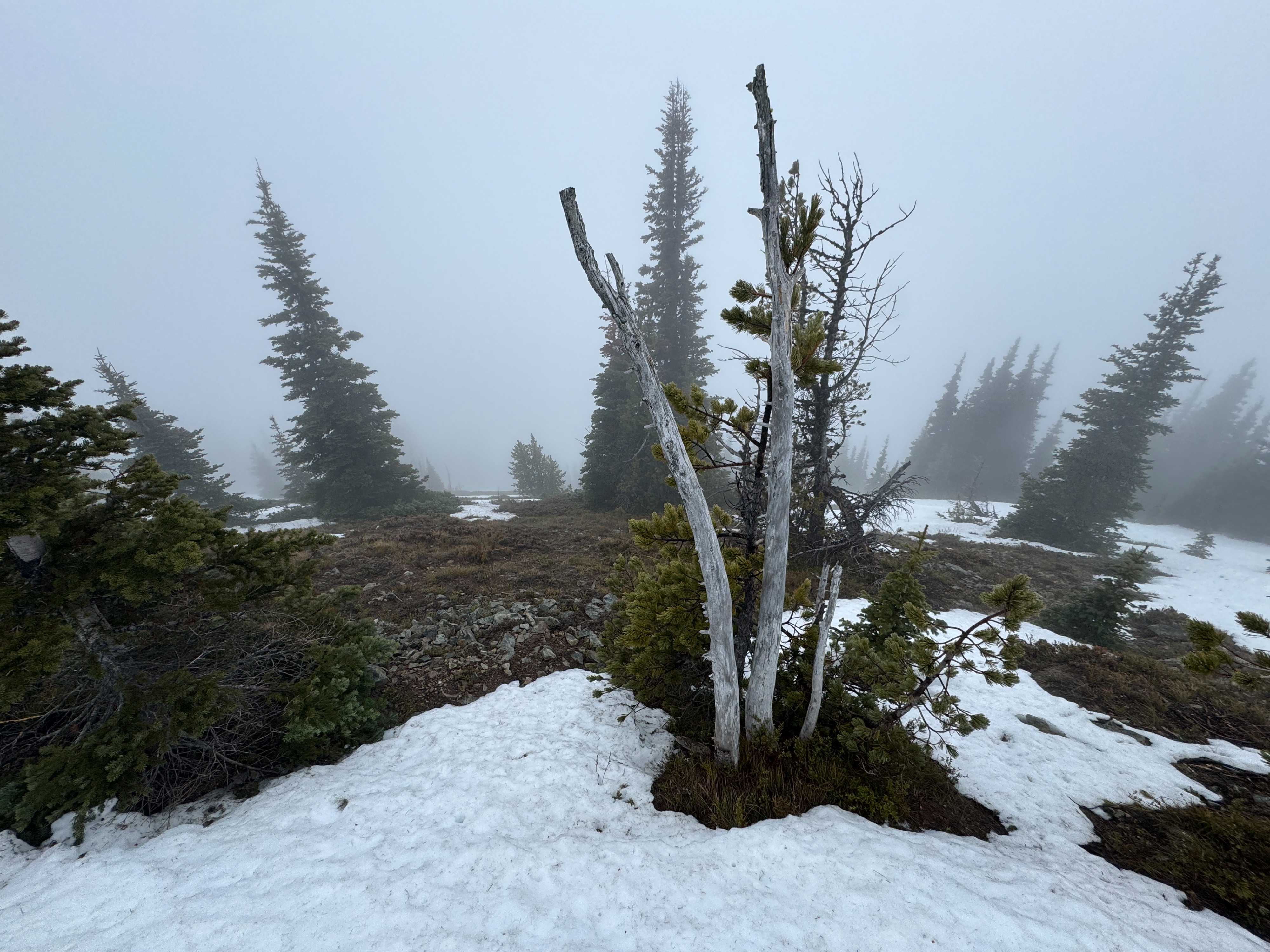
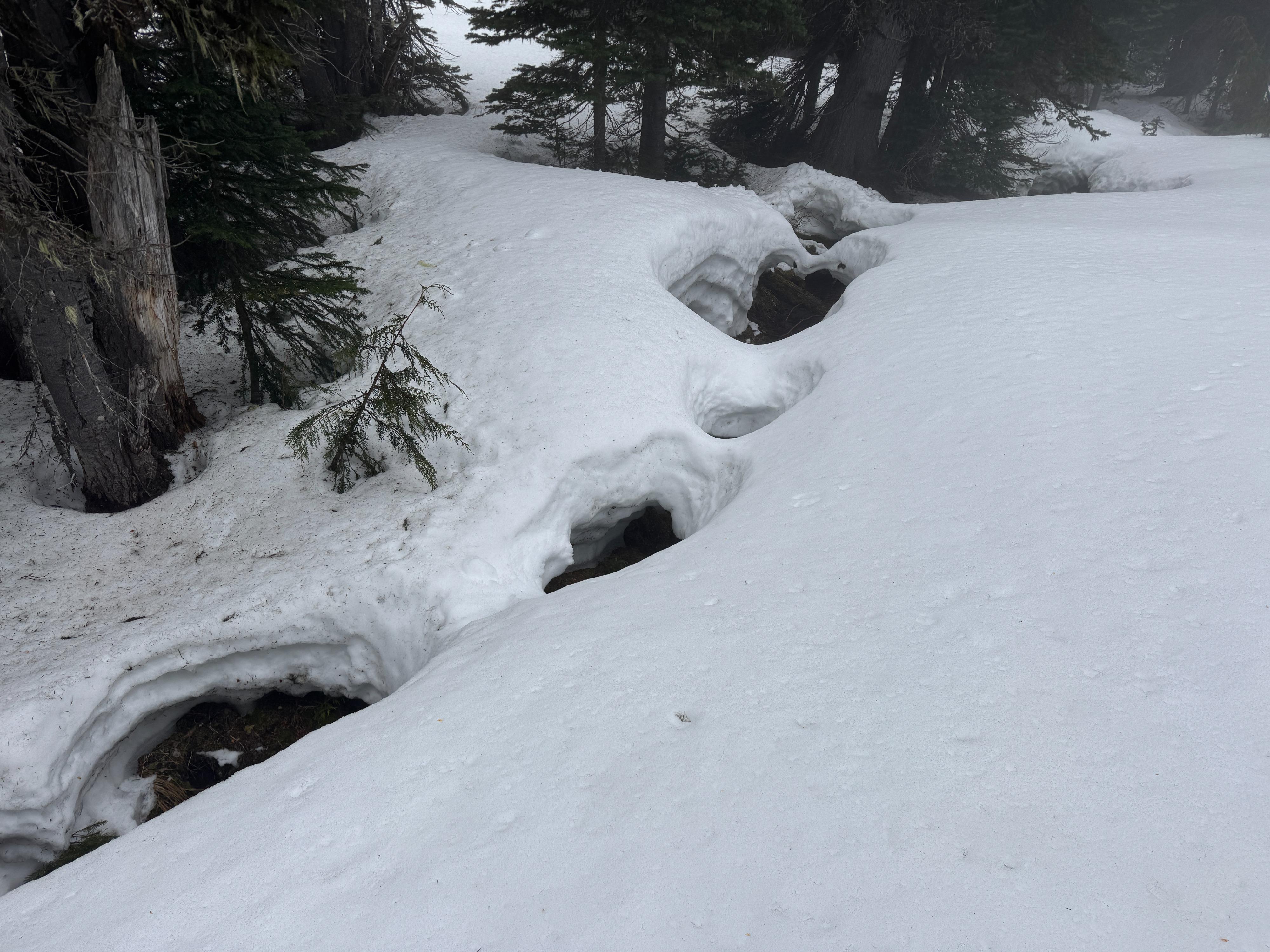
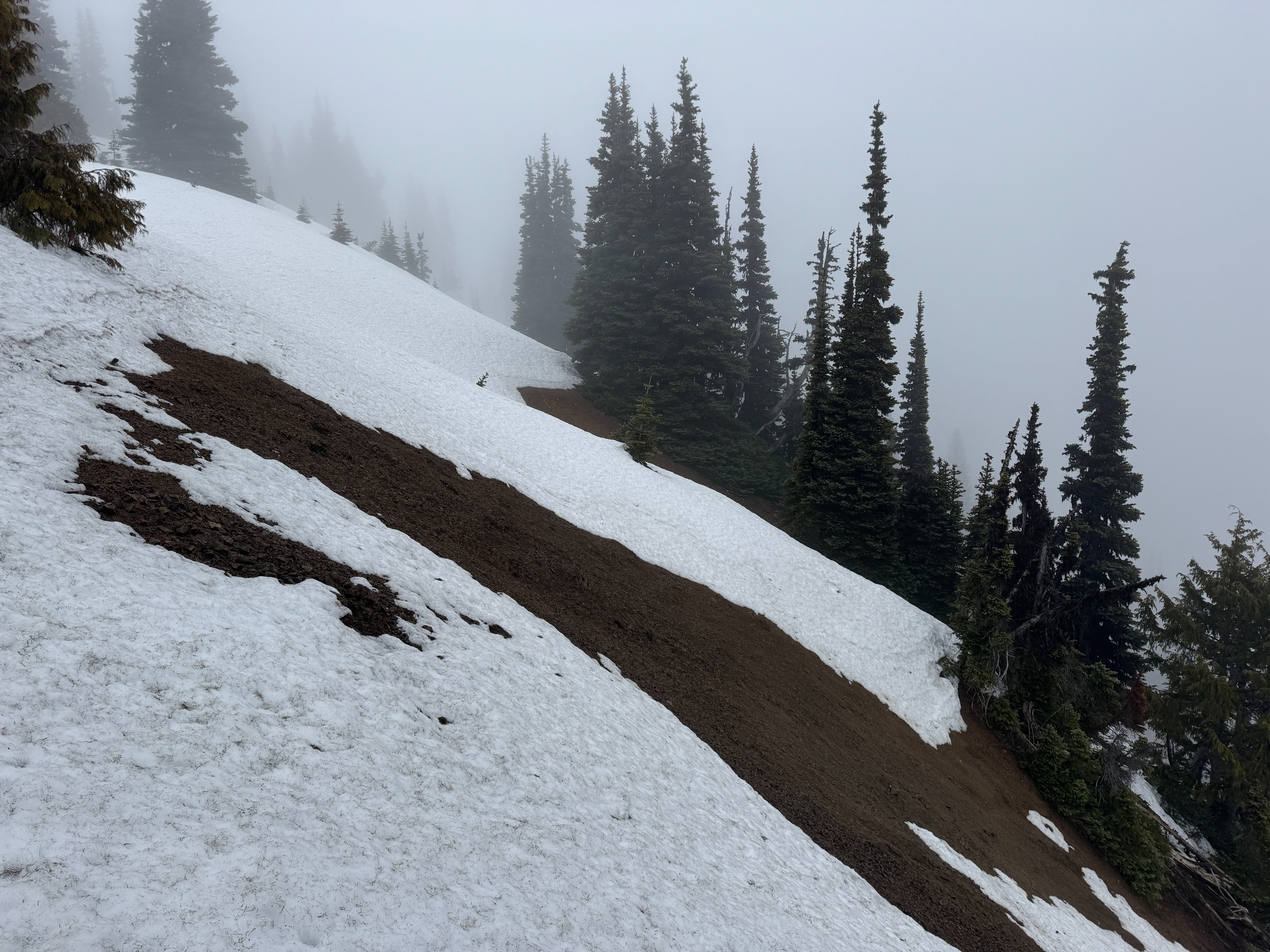
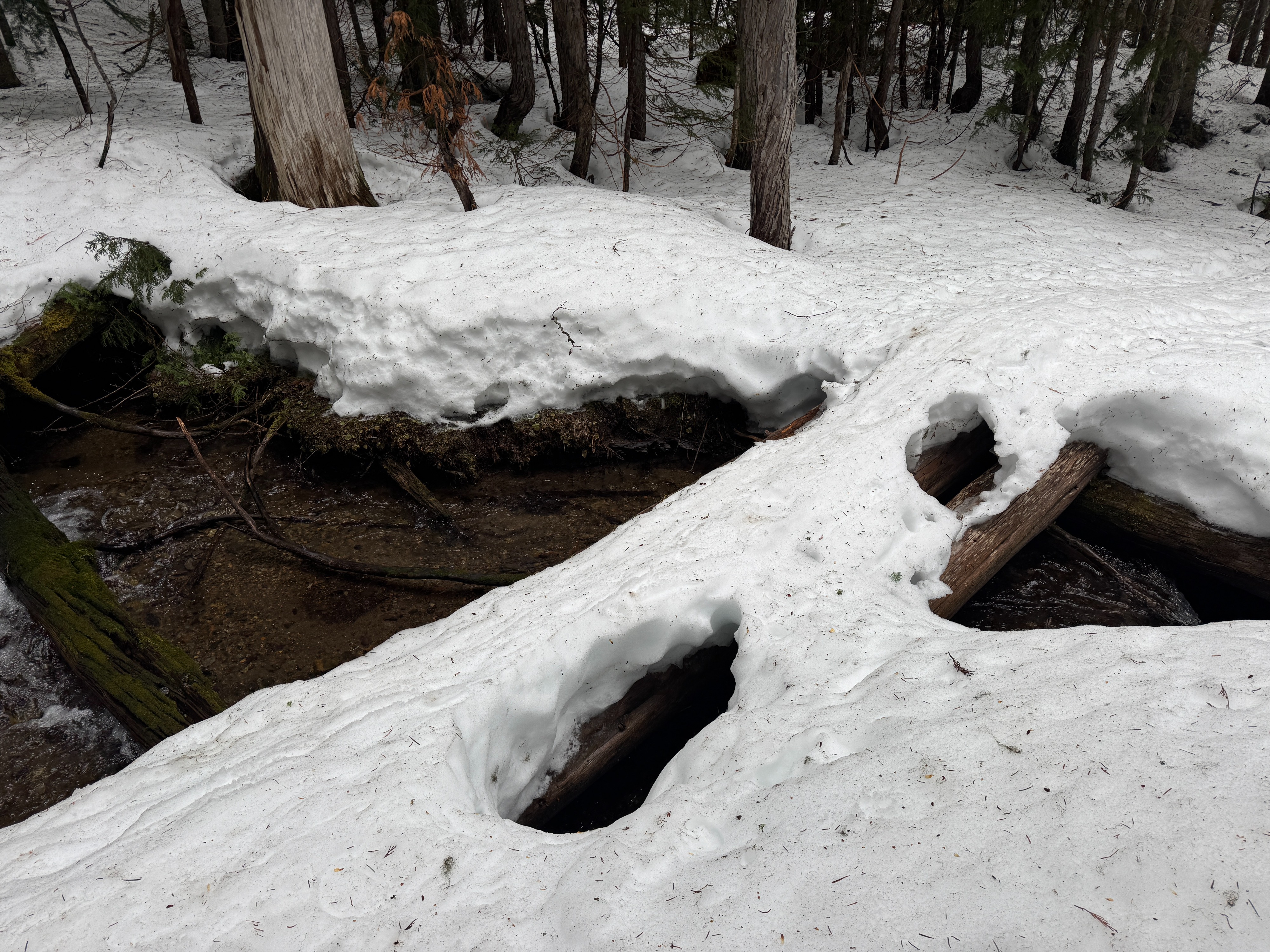
We know the snowpack is much thinner than normal; it has been all year, but we were still surprised today by the lack of coverage on many slopes. If it normally sees sunshine or wind scouring... it's bare. If it's at lower elevations, it's patchy. If it's often shaded or wind loaded.... there's snow! Then you can add in the open creeks, downed logs, exposed rocks... You get the idea. It took longer than normal just to travel, and some routes simply didn't go without significant walking across bare ground.
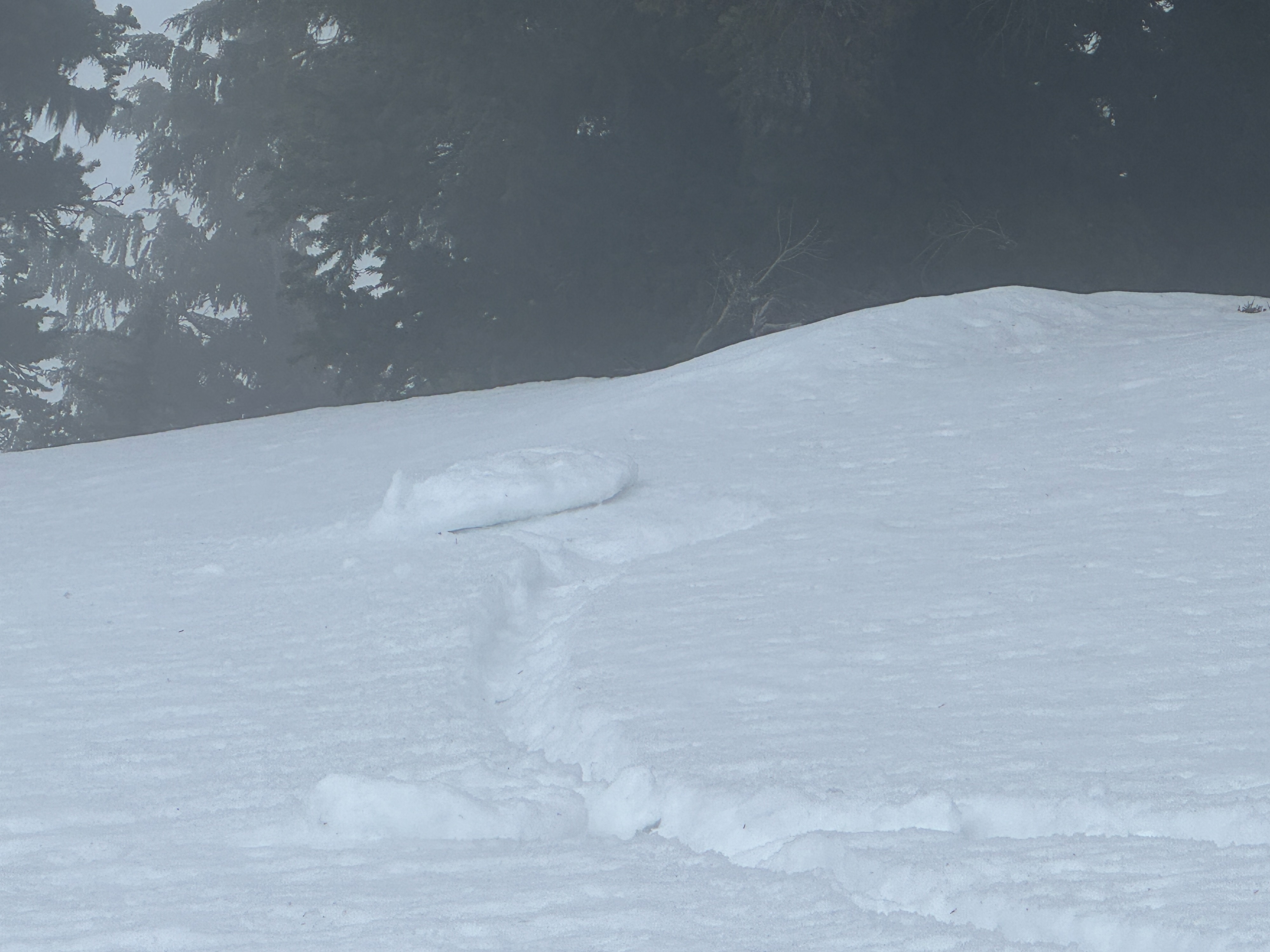
From an avalanche perspective, we were able to trigger very small "push-o-lanches" (wet loose) in old pockets of wind-drifted snow. These tiny slides probably won't pose much of a threat unless you were in very high consequence terrain.
No cracking or collapsing.Weather
- Cloud Cover
- obscured
- Wind Loading
- none
- Rain Elevation
- 7500
- Recent Snowfall
- 0
- Snow Avail For Transport
- none
We spent most of the day in the ping-pong ball. Visibility was very poor! Light mist eventually turned to light rain as we were exiting the field just before 2pm. Winds were generally light out of the SW.
Snowpack
There wasn't much of a freeze Friday night into Saturday. However, the surface remained soft but supportable. Boot penetration never exceeded more than 1-2 inches (3-5cm) in most locations. The only spots it was deeper was either over underlying vegetation or in old pockets of wind drifted snow along the lee margins of chutes.
The biggest story of the day was coverage. Most ot the south through west facing terrain is bare or nearly bare. East through north facing slopes still hold continuous but shallower than normal snowpacks. In the trees and at lower elevations, the snow is painfully thin, if it's present at all. Basically, what little snow was there is going fast. Similarly, creek crossings are becoming thin and hard to come by. If it sounds like travel is getting tricky, you're getting the picture.
The snow from the storms in the last part of March/ first part of April has undergone several melt-freeze cycles and has become quite strong. This snow sits above the obvious 3/25 crust. Overall, the 3/25 crust is still solid, but becoming much less robust. It no longer wants to break you or your shovel. Instead, you can easily dig through it to the wetter, weaker snow below. Even still, today the 3/25 was helping keep the snowpack "locked up," avalanches small, and the danger low where we traveled.
Light rain through the morning didn't really affect the avalanche hazard. The only unstable snow we could find was a few small pockets of older wind loaded snow, which are now wet and sticky. These spots were confined to the margins of chutes and produced very small avalanches.
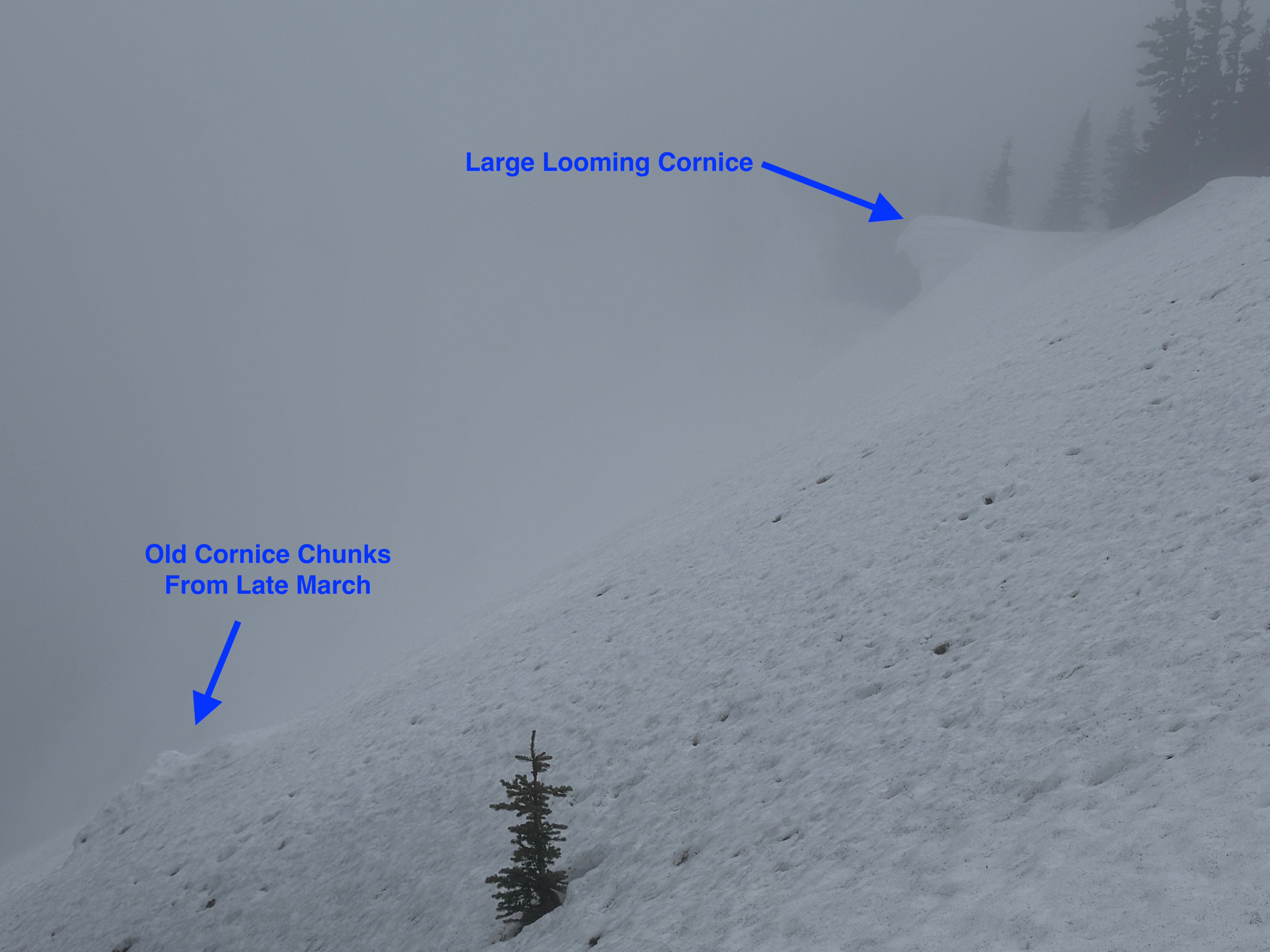
As for cornices... most of them are trimmed back or collapsed during the late March rain events. Even still, a few waves of snow still loom along ridgelines in common locations.
Avalanche
We intentionally triggered a few very small wet loose slides. Even though these avalanches were tiny you could feel their weight tugging at your feet.