
Quick report
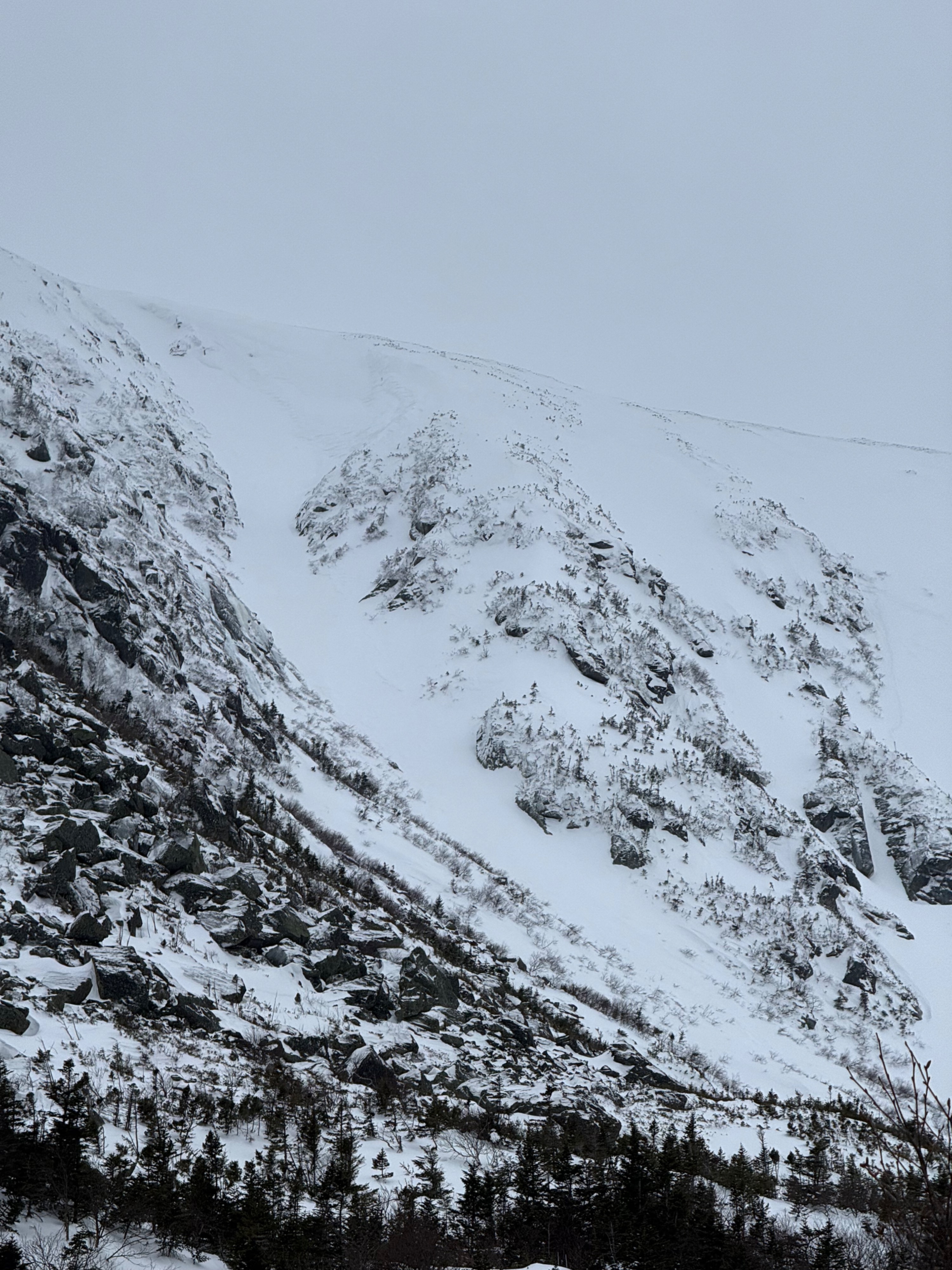
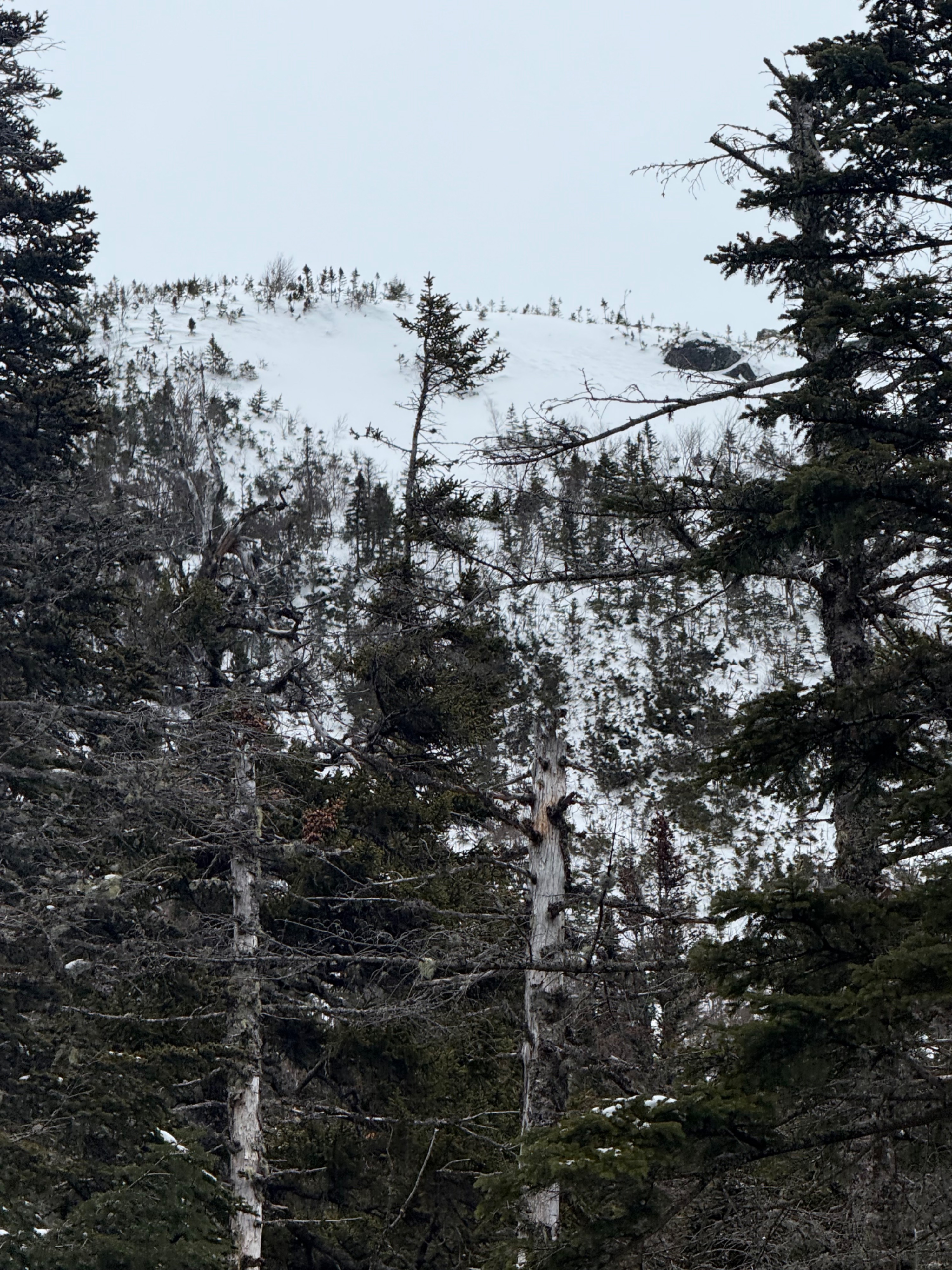
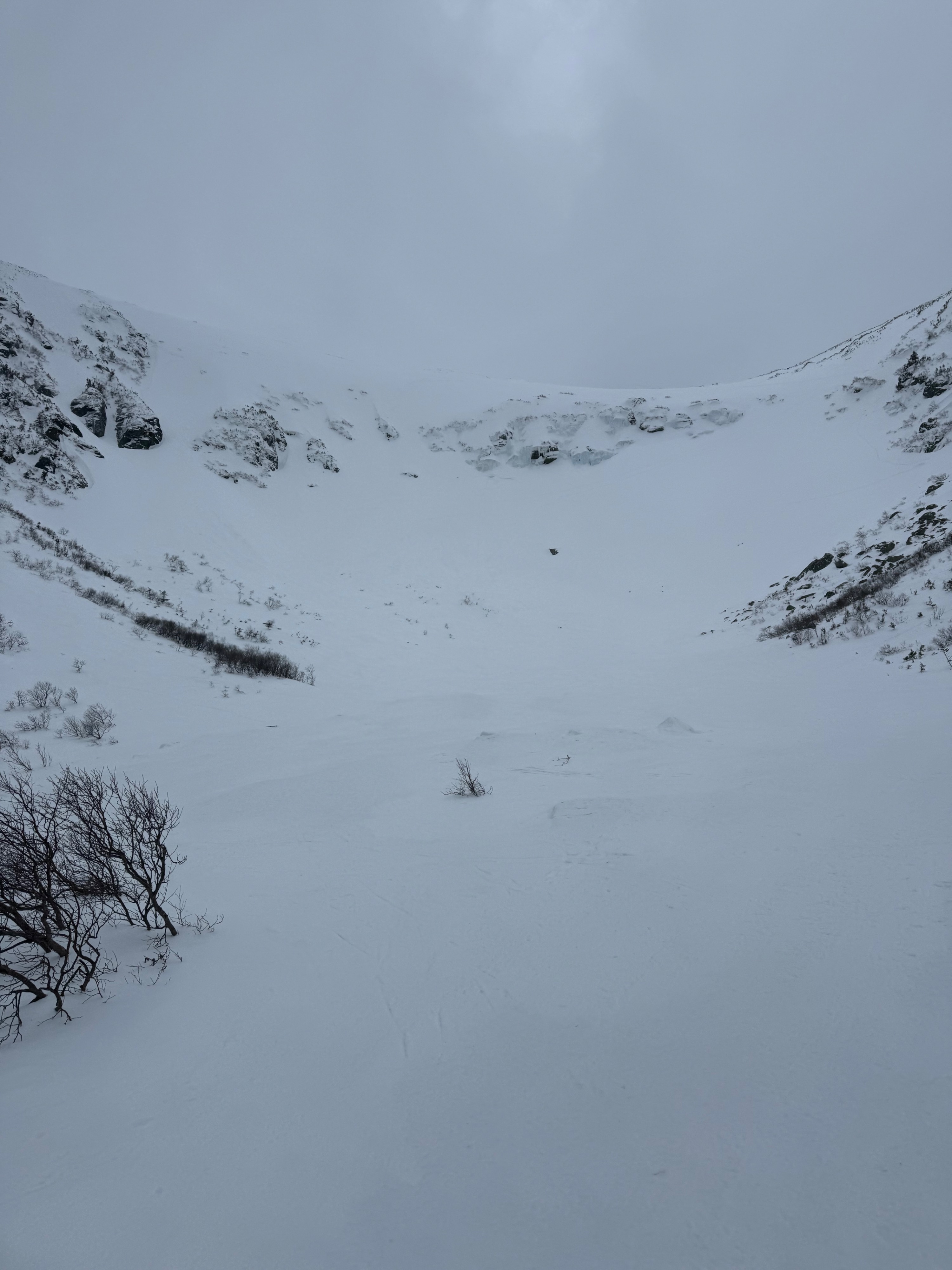
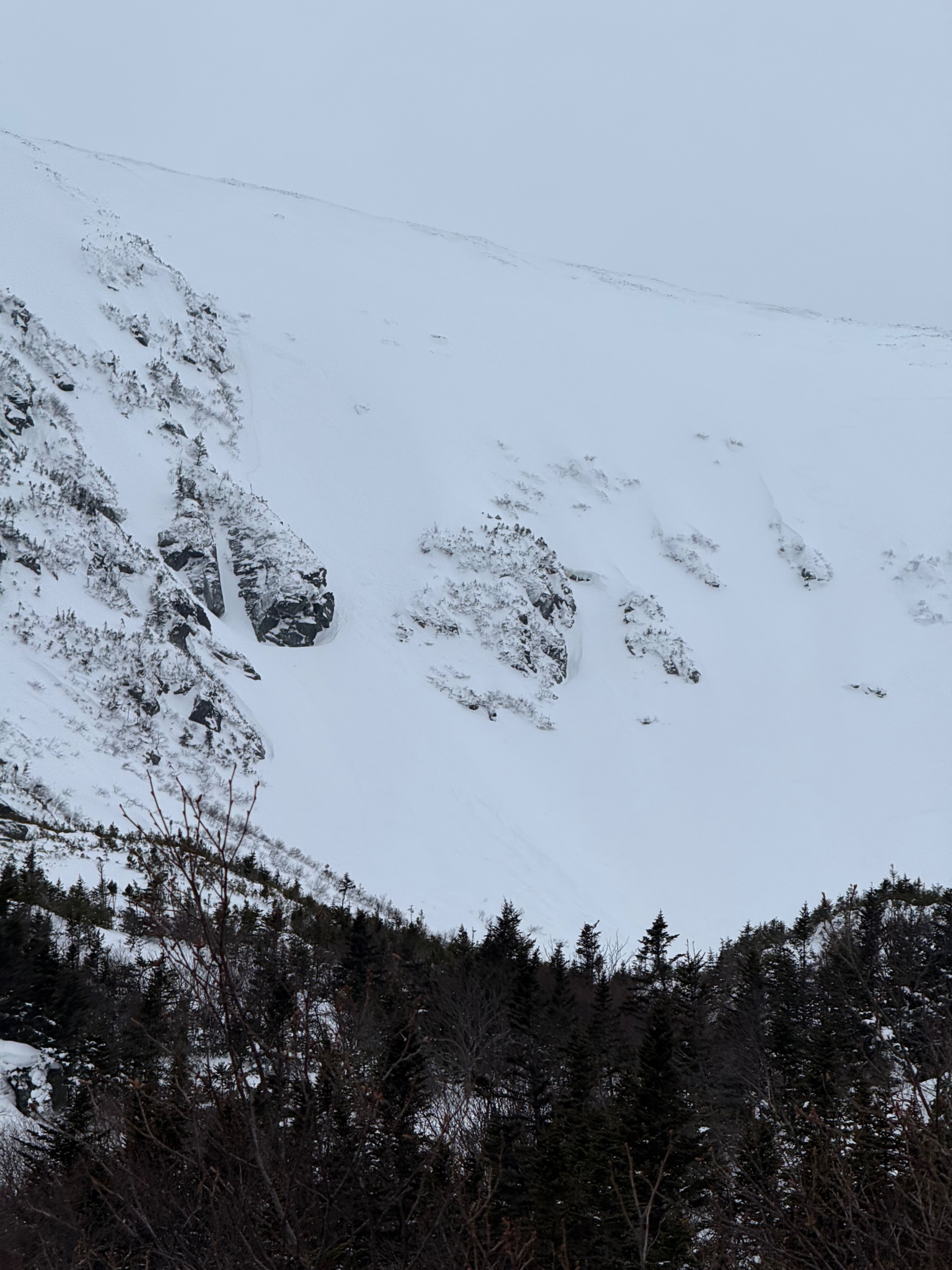
Went into Tuckerman Ravine to assess the continued settlement of wind slabs formed from snow from the 10th and 11th as both time and warm temperatures have helped to prompt settlement.
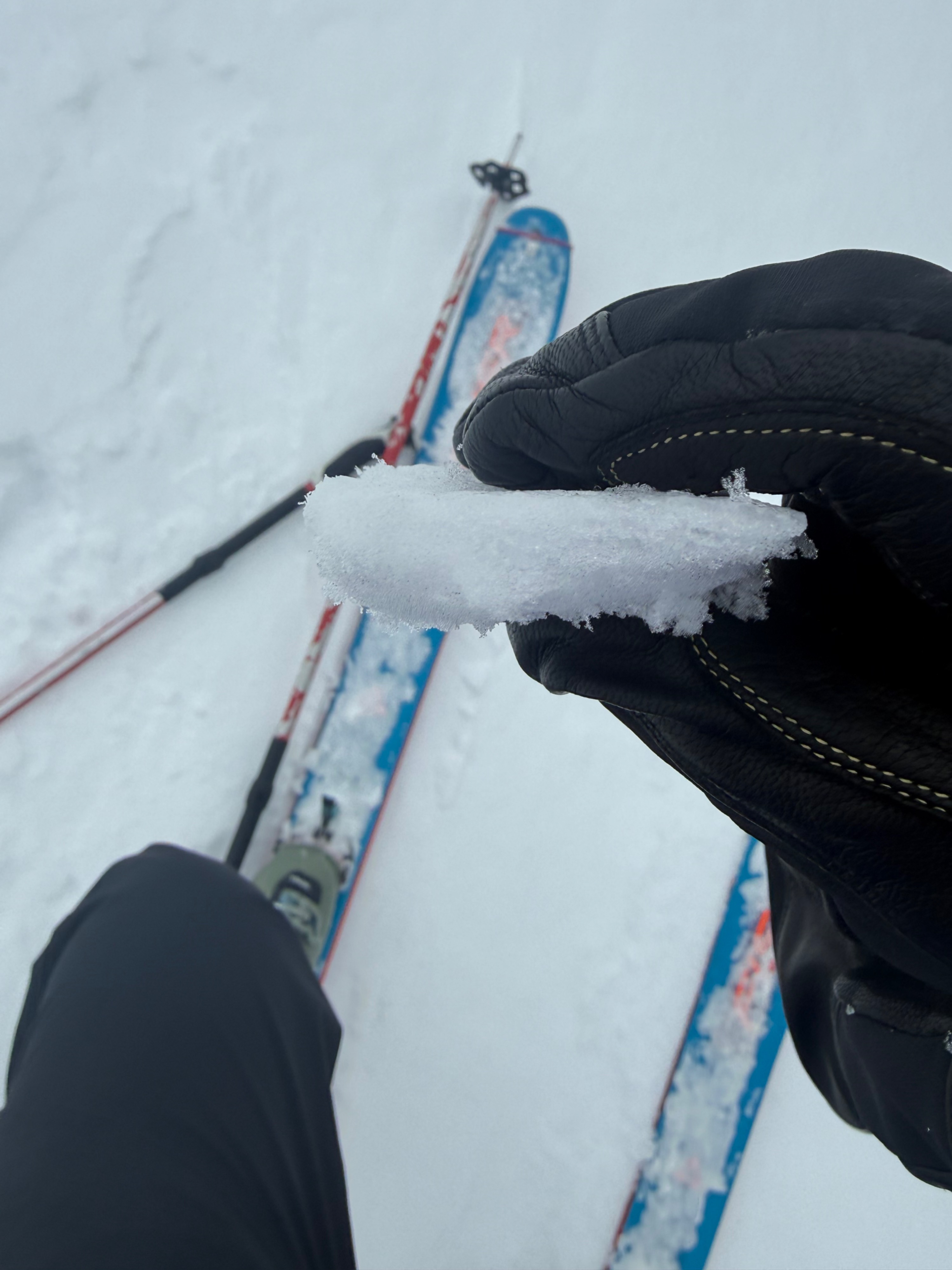
In solar aspects, found a thin melt freeze surface crust (presumably from solar gain the 13th) on steep sun-exposed terrain to about 4600 ft, above that point the crust became significantly thinner and less connected above that point.
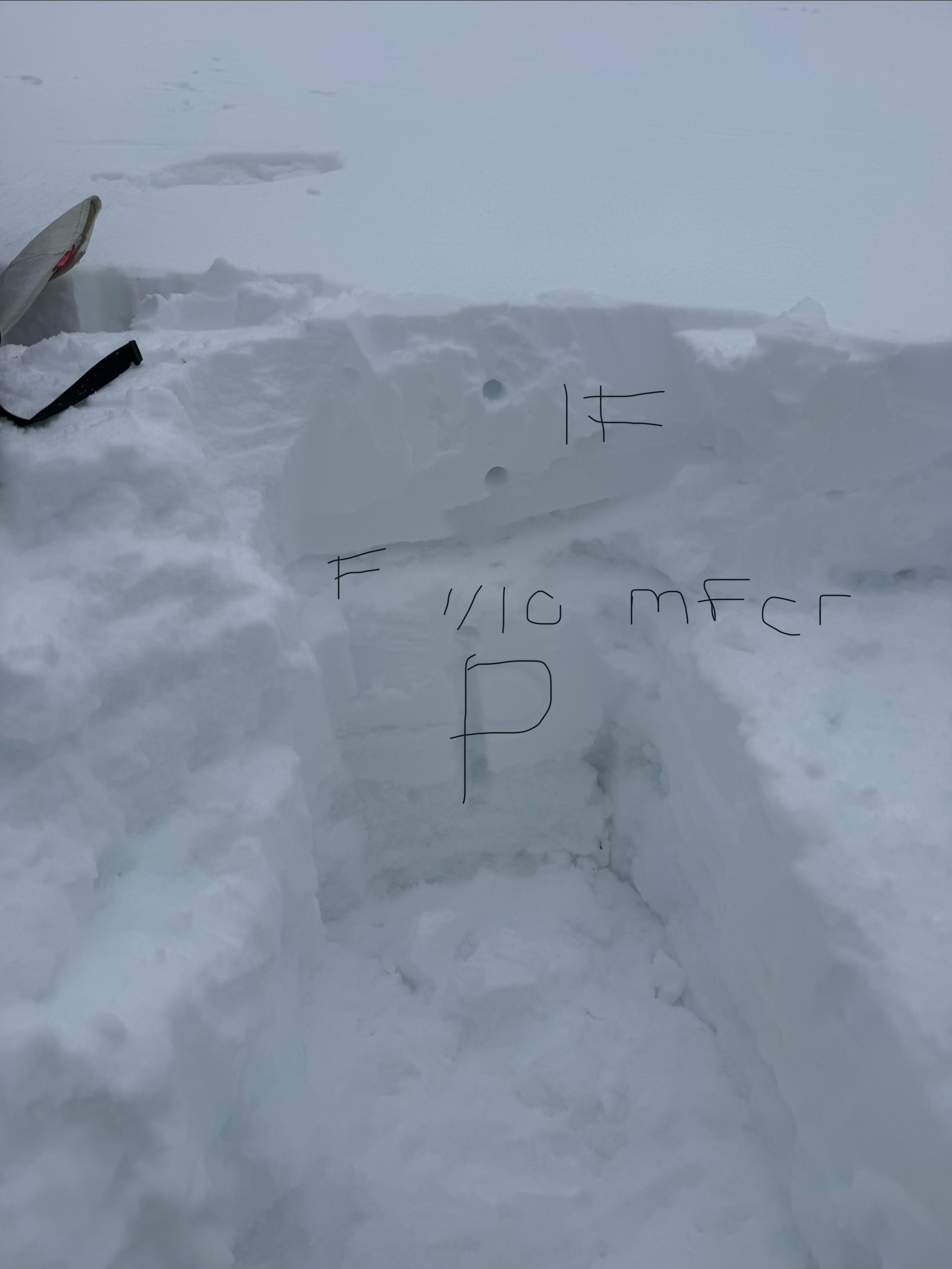
Solar wind slabs show continued settlement, with numerous unreactive results in PST (PST 95/100 end, PST 98/100 end, PST 97/100 end down 25 cm to the looker's right of Right Gully, South aspect, 4700 ft elevation 37 degree slope where I dug two hasty pits).
Time, moderate warm temperatures, and solar gain have settled the bulk of these old wind slabs. While this problem is on a decreasing trend, areas that remained sheltered from the sun and may have stayed colder from the wind would be drifts to assess. If you find evidence of previous warming, like a thin surface melt-freeze crust in recently drifted snow, that is a sign of solar gain, and could indicate settlement of the slab that you are on.
Weather
- Air Temp
- 33
- Cloud Cover
- overcast
- Wind Loading
- none
- Recent Snowfall
- 0.76 (Summit)
- Snow Avail For Transport
- none
Moderate southwest winds with strong gusts, the temperature seemed to be dropping throughout the afternoon, and about 3:30 PM was just below freezing. Really light S-1 snow began to intermittently fall at this time
Snowpack
In solar aspects, found a thin melt freeze surface crust (presumably from solar gain on the 13th) on steep sun-exposed terrain to about 4600 ft, the crust became significantly thinner and less connected above 4600 ft. The depth of wind-drifted snow ranged from 30 cm to 70 cm, but the structure was consistently found moving throughout the terrain.
The general composition observed is as follows:
1F slab (25-70 cm)
3-5 cm F hard weak layer
1/10 crust
I intentionally selected a later start to see if the continued warm temperatures would increase the settlement of these slabs. Leaving Hermit Lake just after 12:30, surface snow had wetted slightly and was easily clumped by your hand and on skins. In areas with more wind, this was not observed, and as temperatures began to drop after 1:30 PM this surface wetting disappeared, likely hardening with falling temps and will be another surface melt-freeze crust.
Looking for untracked snow, I found an area to the looker's right of Right Gully, South aspect, 4700 ft elevation 37 and 39 degree slope where I dug two hasty pits. My intention was to perform a few PST and see if the cut lengths increased over time, however, all of the PST I performed were unreactive results with: 95/100 END, 98/100 END, 97/100 END, this area was 25 cm down. This settlement is likely from a combination of time and moderately warm temperatures (yesterday and this continued today).
Moving towards Sluice, I performed hand shears in the interest of time (also with limited snow that was not compacted from skier traffic) and found deeper drifts, very similar structure, and results to what I found in a thinner snowpack closer to Right. The hand shears took some force to remove the slab from the 3-5 cm weak layer on top of the 1/10 melt-freeze crust.
The majority of wind slabs seem to have settled; however, this observation was limited to solar aspects. In Chute, a group chose to avoid a pocket of wind slab that had remained shaded, as it was easily avoidable. This type of pocket would be the snow to continue to assess.