

Lawinenlagebericht

Southeast Mountains

Crested Butte Avalanche Center
Auf der Karte ansehen

Lawinengefahr

Mon
Hochgebirge
3 · Erheblich
Waldgrenze
3 · Erheblich
Unterhalb
3 · Erheblich
Veraltet — dieser Lagebericht ist 4 years ago abgelaufen. Du siehst vergangene Verhältnisse, nicht den aktuellen Bericht.

Kernpunkte

Recent destructive avalanches on Ruby Peak, Mineral Point, and Castle Peak highlight how weak layers near the ground are still struggling.   Persistent slabs up to several feet thick remain sensitive to human triggers, and you can remotely trigger them from adjacent terrain, like this avalanche yesterday on Coney's.   Make conservative terrain choices on slopes that have old, weak snow near the ground.  The most troublesome aspects are well documented and described below.

Lawinenprobleme

  • Persistent Slabs

    • Hochgebirge
    • Waldgrenze
    • Unterhalb der Waldgrenze
    Wahrscheinlichkeit
    Likely
    Größe
    1.5–2.5

    Continuous snowfall and blowing snow last week built large persistent slabs that remain sensitive to human triggers.  There's a widespread weak layer of facets and faceted crusts buried by 2 to 3-foot slabs on west to north to southeast aspects. Concerns also exist on some alpine south and southwest-facing terrain features.  Slabs are largest in leeward terrain at higher elevations.   Persistent slabs are notorious for erratic feedback and unusual behavior, such as remote triggering and wide failures.   To avoid the problem, choose routes that keep you off and out from under terrain steeper than about 30 degrees that holds old, weak snow near the ground.    

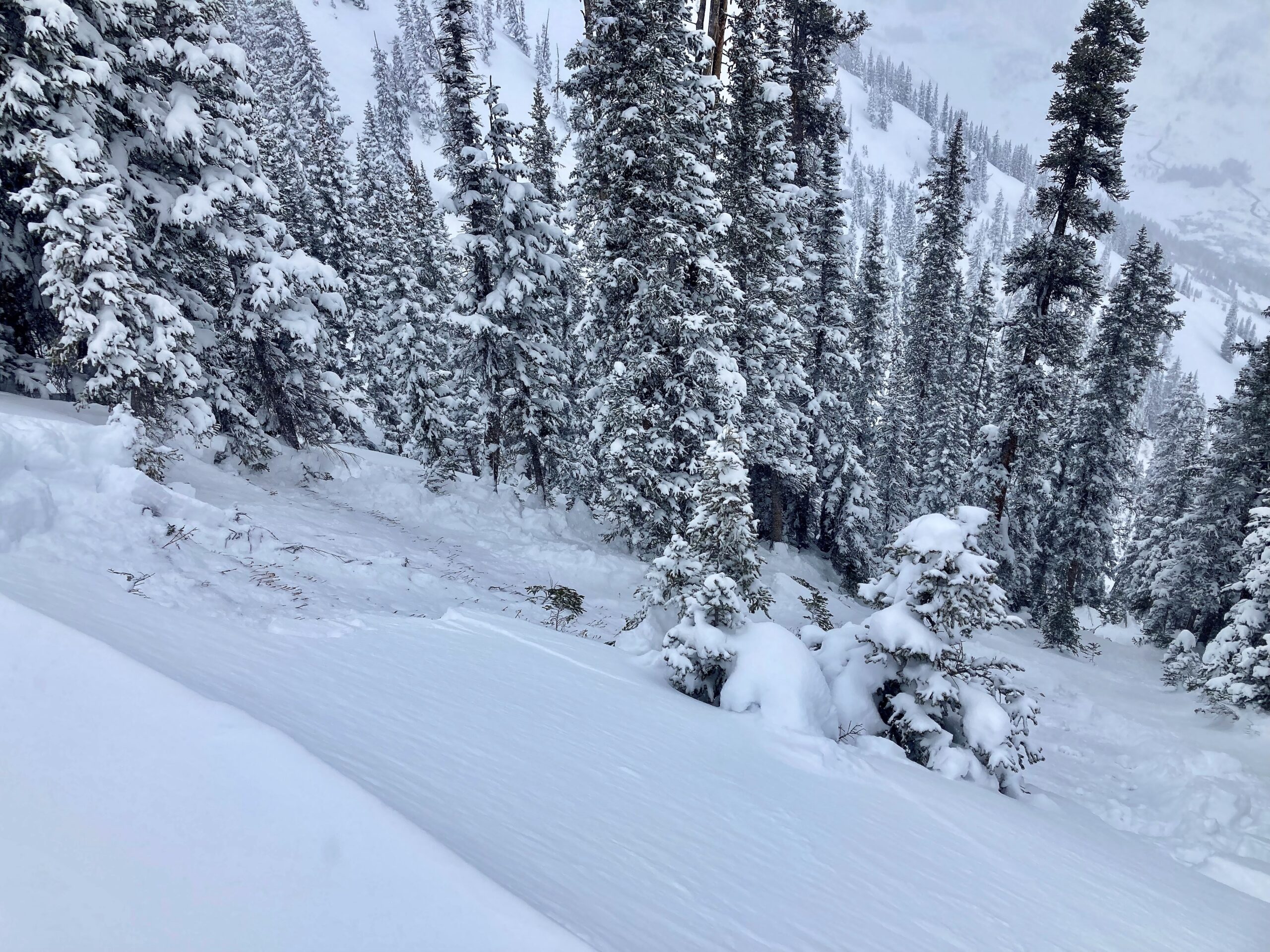
    A recent natural avalanche in the Southeast Mountains zone (Castle Peak).  This is a good representation of the size and propagation potential of triggered avalanches.
Avalanche Discussion

It's not common that we see natural activity continuing for days after the storm has ended.  Yesterday's natural on Castle Peak, and Friday's naturals on Mineral Point and Ruby Peak highlight just how tenuous our snowpack is.  Although the large to very large avalanches releasing out of leeward alpine bowls sure catch everyone's attention, you can just as easily get into trouble on a smaller slope below treeline.  Be just as cautious of small openings in the trees or smaller terrain features that drain into gullies.  Our problematic aspects are well documented.  You can explore the patterns of the hundreds of natural avalanches over the past two weeks here.   Our persistent slab distribution rose above covers 99% of the terrain where all persistent slabs have occurred this month.   After yesterday's warmup, the softest powder is now on the most problematic aspects. If you're getting drawn to those aspects, make conservative terrain choices.  Low angle is your safest bet.  Small, rolling terrain is much safer than bigger paths or slopes above gullies,  benches, or trees.  

Feedback from our buried weak layers is becoming more erratic.  Some terrain is still producing constant collapses, while other areas are starting to quiet down.   Where slabs are thickest and strongest, it's becoming harder to impact the weak layer now.  The catch-22 is that resulting avalanches will be larger and more dangerous.  Our buried weak layers were so fragile going into this month that they are very slow to gain strength.   Punch your ski pole or boot through the slab (or dig a quick pit), and you'll realize just how poor the snowpack structure is, even if you aren't getting collapses.  The snowpack is shallow and variable enough right now that it's not that hard to find a shallow spot that can bring down the whole slope to the ground.  


Abgedeckte Regionen