Lawinenlagebericht

Southeast Mountains

Crested Butte Avalanche Center
Auf der Karte ansehen

Lawinengefahr

Wed
Hochgebirge
2 · Mässig
Waldgrenze
2 · Mässig
Unterhalb
1 · Gering
Veraltet — dieser Lagebericht ist 3 years ago abgelaufen. Du siehst vergangene Verhältnisse, nicht den aktuellen Bericht.

Kernpunkte

You can find the best conditions and safer terrain options by seeking out soft snow on slopes protected from the prolonged southwest wind event.  Hard and smooth, wind-drifted slabs are common on leeward terrain features at upper elevations and become less common as you descend to lower elevations.  Recent Wind Slab formation overlaps with deeper instabilities at upper elevations.  If you avoid recently drifted terrain, you can reduce your chance of triggering a dangerous avalanche.  Several cornice falls have triggered large avalanches in recent days so it would be wise to give looming cornices a healthy amount of space.  

Lawinenprobleme

  • Wind Slabs

    • Hochgebirge
    • Waldgrenze
    • Unterhalb der Waldgrenze
    Wahrscheinlichkeit
    Possible
    Größe
    1–2

    Strong to extreme southwest winds since Saturday afternoon formed drifts of varying thickness and hardness in wind-affected terrain.  Some slabs will be thick and dense enough to break above you.  Wind slabs are most common near and above treeline, but also exist on a few open slopes below treeline.  Cracking or collapsing drifts are obvious signs of instability, though feedback will become more erratic now.  Use visual clues to identify potential issues:  slabs will look smooth and rounded, typically below ridgelines, in gullies, or behind rollovers.   You can avoid the problem in wind-protected or wind-eroded slopes.   

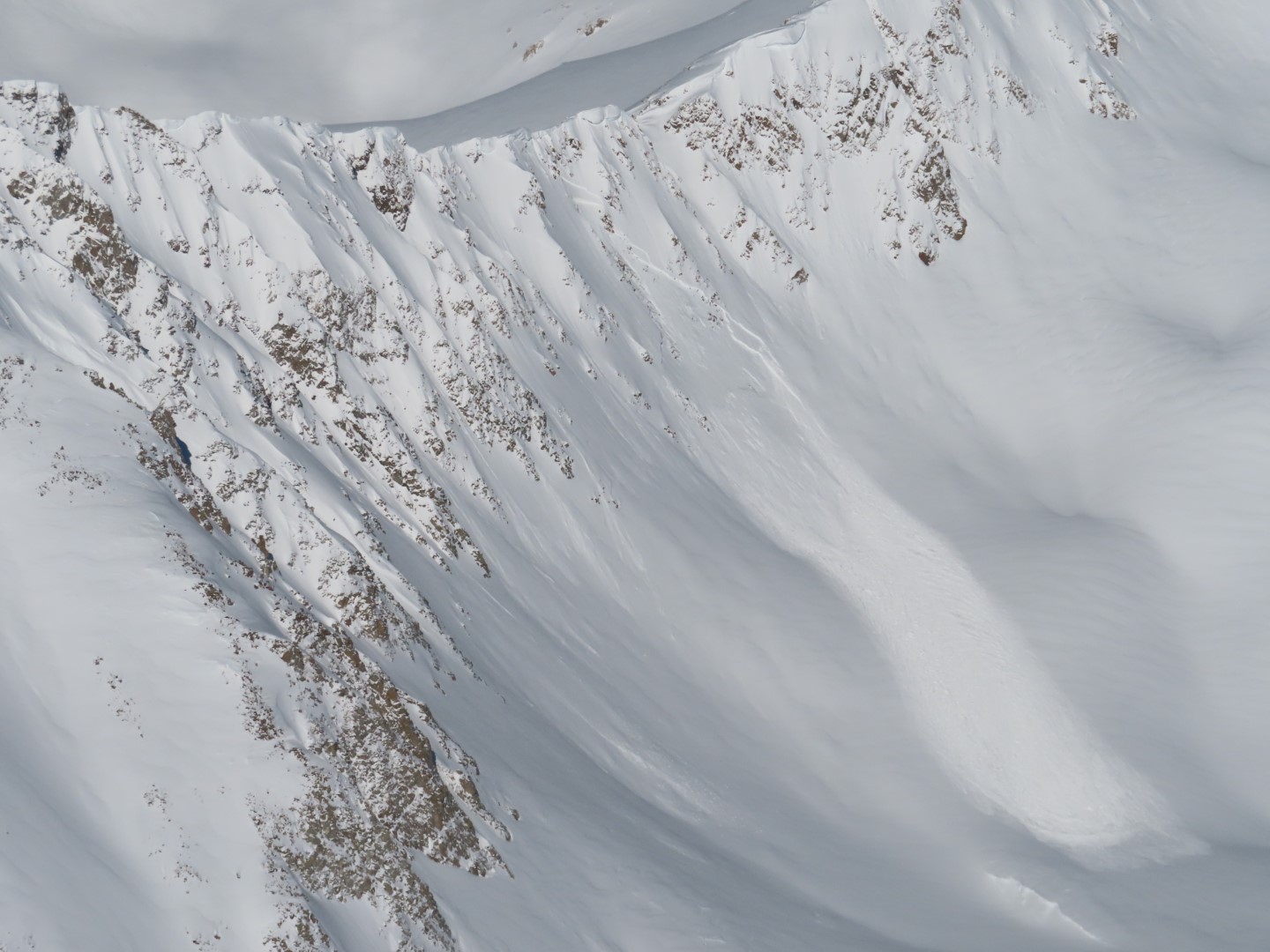
    Several natural wind slabs ran in Redwell Basin on 3/5.  

  • Persistent Slabs

    • Hochgebirge
    • Waldgrenze
    • Unterhalb der Waldgrenze
    Wahrscheinlichkeit
    Possible
    Größe
    2–2.5

    Over the past few weeks, we have observed a relatively infrequent but continuous pattern of large avalanches or collapses failing on weak, faceted layers deeper in the snowpack.  Persistent slab activity has been most problematic on wind-loaded terrain at higher elevations, though isolated instabilities exist below treeline.  Carefully assess the snowpack structure and give yourself a margin for error in handling this problem because there is a high degree of variability across the region and on different aspects.  Some examples of recent persistent slab activity include a large natural in Conundrum Creek on 3/4, a very large skier-triggered avalanche near Aspen Highlands on 3/2, a remotely triggered avalanche near Friends Hut on 3/1, and a natural step-down avalanche near Coffee Pot Pass around 3/1. 

    A large persistent slab that ran over the weekend (3/4-3-5) near Ashcroft.

Avalanche Discussion

Strong to extreme winds this past weekend produced a notable loading event on leeward terrain features.  During the wind-induced loading period, several natural and human-triggered avalanches occurred.  Even though strong winds persisted at upper elevations on Monday and linger into today, soft snow in windward areas has largely dried up and prevented further loading from happening.  As time increases from the loading period, the likelihood of triggering a Wind Slab slowly decreases.  On Monday, field reports from the Northwest Mountains(Baldy Mountain) and Southeast Mountains(Star Pass) suggest that drifted slabs from the weekend have become stubborn, or even unreactive, to human triggers.  Even though the likelihood continues to decrease, it would be wise to give drifted terrain a bit more time because the hard Wind Slabs would probably break above you and could be large enough to bury or injure you.

Each loading period over the past month has produced a couple of Persistent Slab avalanches around Crested Butte, typically occurring in the Southeast Mountains.  This past weekend several cornice falls triggered deep-breaking avalanches in the Northwest Mountains (Peeler Basin 1, Peeler Basin 2, Schuylkill Peak).  With very little soft snow in windward areas to fuel cornice growth, natural cornice fall is becoming less of a threat.  It would be prudent to give a wide berth to all cornices if you are traveling above them and to minimize your time below.  The last Persistent Slab avalanches documented in the Southeast Mountains occurred on Wednesday, March 1st near the Friends Hut and Coffee Pot Pass during a stormy period.  Concerns linger for you to trigger a similar avalanche on leeward terrain at upper elevations, particularly where you encounter crusts and facets in the upper snowpack.  Take the time to perform snowpack tests where you find cohesive slabs resting above facets or facet/crust structures in the upper snowpack or a safer option is to favor wind-sheltered slopes where Persistent Slab problems are less likely to be found and the riding conditions are better.

Abgedeckte Regionen