Lawinenlagebericht

Southeast Mountains

Crested Butte Avalanche Center
Auf der Karte ansehen

Lawinengefahr

Sun
Hochgebirge
3 · Erheblich
Waldgrenze
3 · Erheblich
Unterhalb
3 · Erheblich
Veraltet — dieser Lagebericht ist 4 years ago abgelaufen. Du siehst vergangene Verhältnisse, nicht den aktuellen Bericht.

Kernpunkte

Up to 9" of snow in the Southeast Mountains and gusty west winds through last night brought the snowpack to, or potentially past, its tipping point once again. You can trigger a dangerous avalanche on many steep slopes at all elevations, and some could release naturally.  Slabs will break a few feet thick below treeline and drifted terrain could produce wide and unsurvivable avalanches, such as the recent wall-to-wall slide in Red Lady Bowl.  Conservative terrain selection is paramount until our buried weak layers catch a break from the ongoing loading over the past 10 days.

Lawinenprobleme

  • Persistent Slabs

    • Hochgebirge
    • Waldgrenze
    • Unterhalb der Waldgrenze
    Wahrscheinlichkeit
    Likely
    Größe
    1.5–3

    Persistent weak layers in the middle and bottom of the snowpack were overloaded by 3 to 6 + feet of new snow in the past 10 days. Destructive avalanches have released around the compass and at all elevations recently, and plenty of other slopes are hanging in the balance waiting for a human trigger.  Persistent slab avalanches can propagate widely through the terrain, or be remotely triggered from low-angle slopes connected to steeper slopes. Leeward start zones at higher elevations could release naturally today with additional wind loading, with the potential for very large natural avalanches (up to D3+).  At lower elevations, persistent slabs are sensitive to triggers on many slopes and are more commonly large (D2) in size.   You can avoid the problem by traveling on slope angles that are consistently less than 30 degrees without overhead hazards. Give yourself a wide margin for error given how active and consequential the problem is right now. 

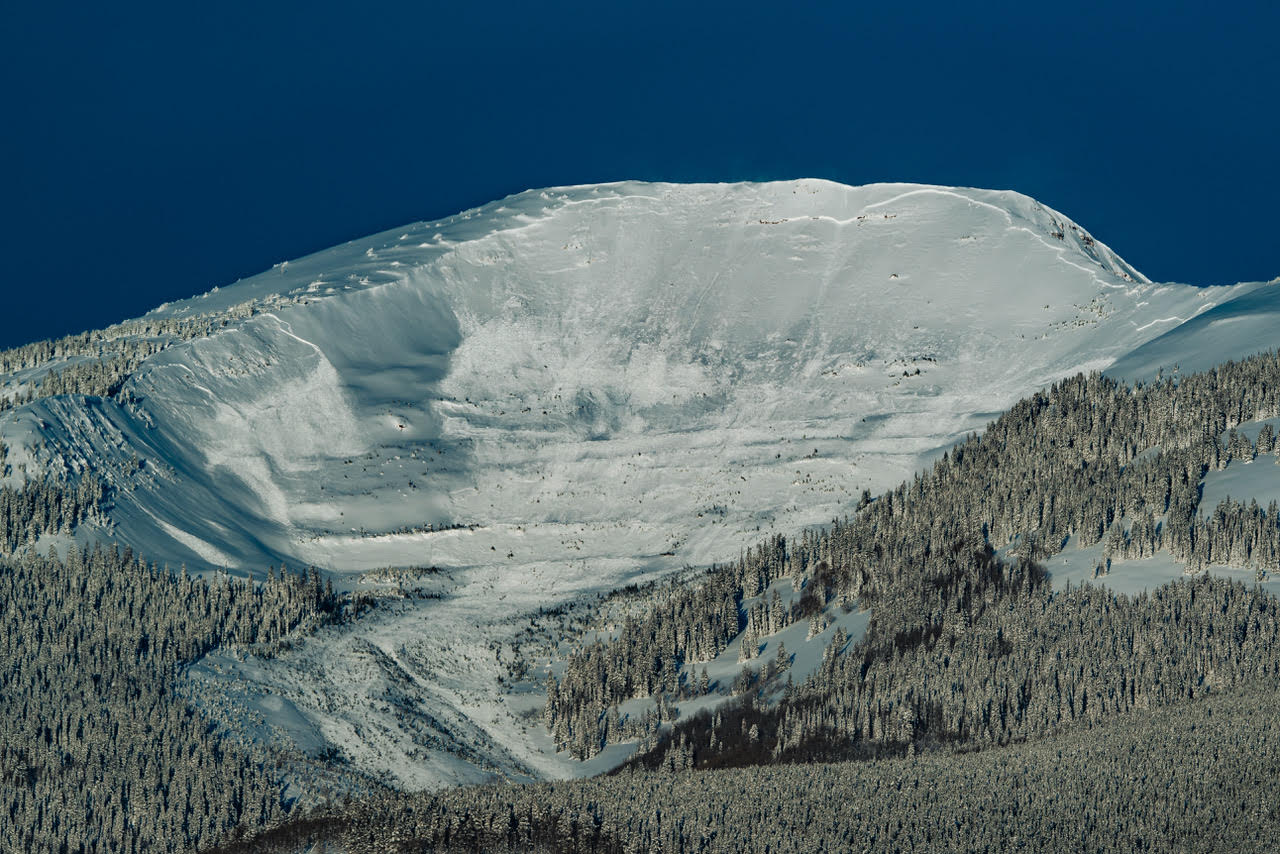
    1/4:  A destructive natural avalanche in Red Lady Bowl broke full width on Wednesday.  This avalanche would be hard to survive.

  • Wind Slabs

    • Hochgebirge
    • Waldgrenze
    • Unterhalb der Waldgrenze
    Wahrscheinlichkeit
    Likely
    Größe
    1–2

    Up to 9 inches of snow paired with gusty westerly winds formed sensitive slabs of drifted snow on leeward and cross-loaded terrain features at higher elevations.  These drifts could pose a hazard themselves or step down and trigger a much larger persistent slab.  Avoid travel on or below recently drifted slopes. 

    1/3:  A pair of soft slabs involving the new snow, skier triggered on a drifted rollover.  

Avalanche Discussion

Relentless storms since December 27th have kept the snowpack teetering near or past failure.  The storm over-delivered late yesterday and last night, and I won't be surprised to see more destructive naturals from the past 12 hours, particularly from higher elevation, windloaded slopes.  If winds continue to transport snow today, the same threat remains. Today's danger is most pronounced on leeward and cross-loaded terrain near and above treeline where slabs are largest and daily drifting has compounded stress on deeply buried weak layers.  Those types of slopes have produced the most activity in the past few days, such as these recent crushers off of Climax Chutes, Schuylkill Ridge, Peeler Peak, Red Lady Bowl, and Axtell.   Alpine slopes continue to produce every time the wind has snow available for transport, so we are expecting them to remain reactive today after yesterday's storm brought gusts to 50 mph.  You may not see obvious signs of instability underfoot, but finding a thin trigger point in wind-affected terrain is easy enough in steep terrain.  Notice how this slope on Peeler Peak has dozens of thin areas where the slab thins out.  Furthermore, a triggered wind slab can gather enough mass to easily step down to our deeper layers.  

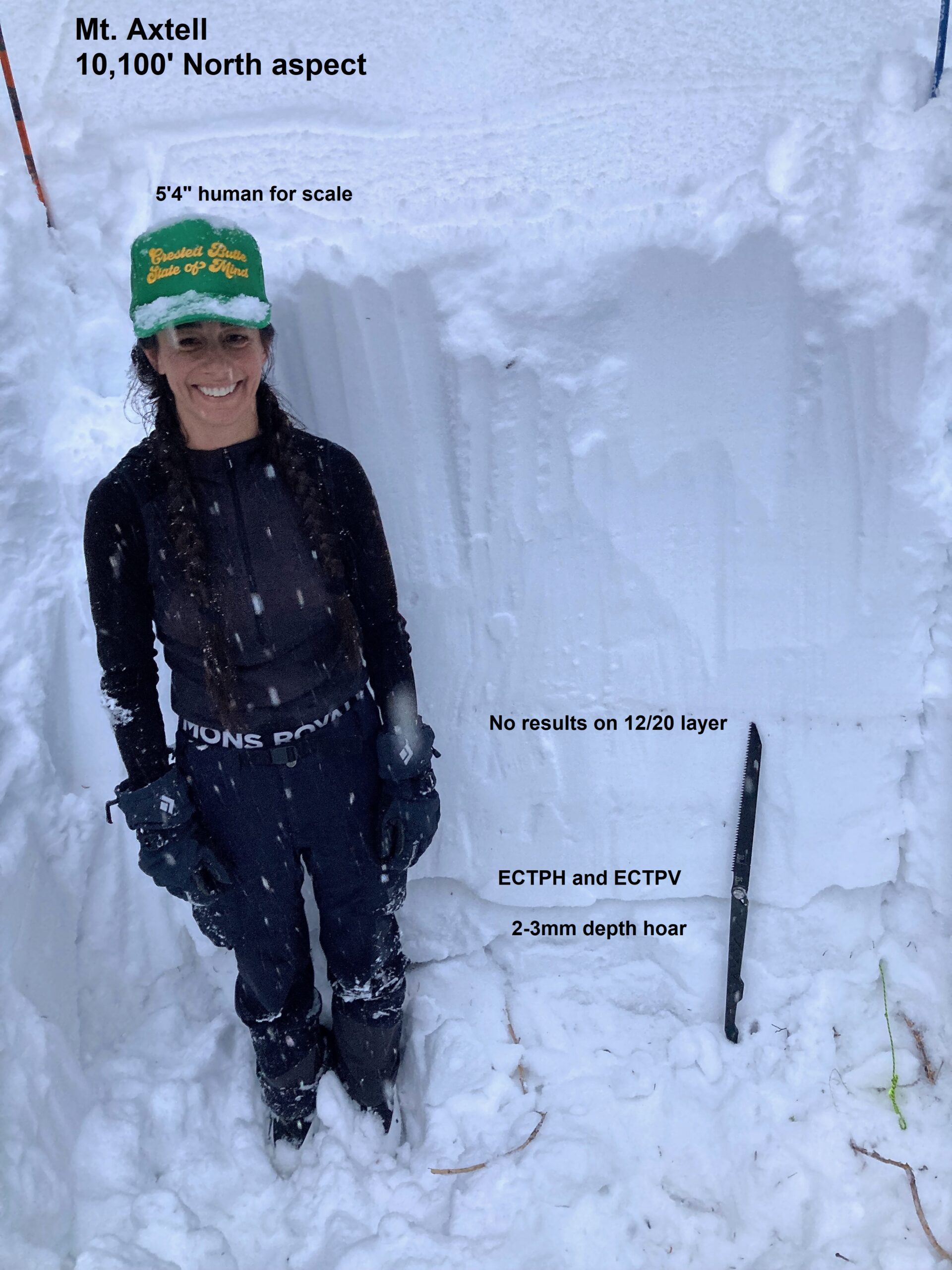
Below treeline is more nuanced.  Slabs are becoming more stubborn to human triggers in the deeper Northwest Mountains. We are starting to see improvements with some buried weak layers, and the slabs are so thick that weak layers are harder to impact.  It might take a stuck snowmobile, an area where the snowpack is thinner, or stepping off your skis deeper into the snowpack to produce the dreaded collapse, which is still a clear possibility based on propagating test results yesterday below treeline on Mt. Axtell and Ohio Pass.  The decreasing sensitivity has been slower near and east of town, where we have gotten regular reports of collapses and remotely triggered slides all week (ex. Cement Creek, Snodgrass).   Below treeline in the Southeast Mountains, slabs are thinner and are perched over more fragile weak layers, making them more reactive to human triggers.   

Abgedeckte Regionen